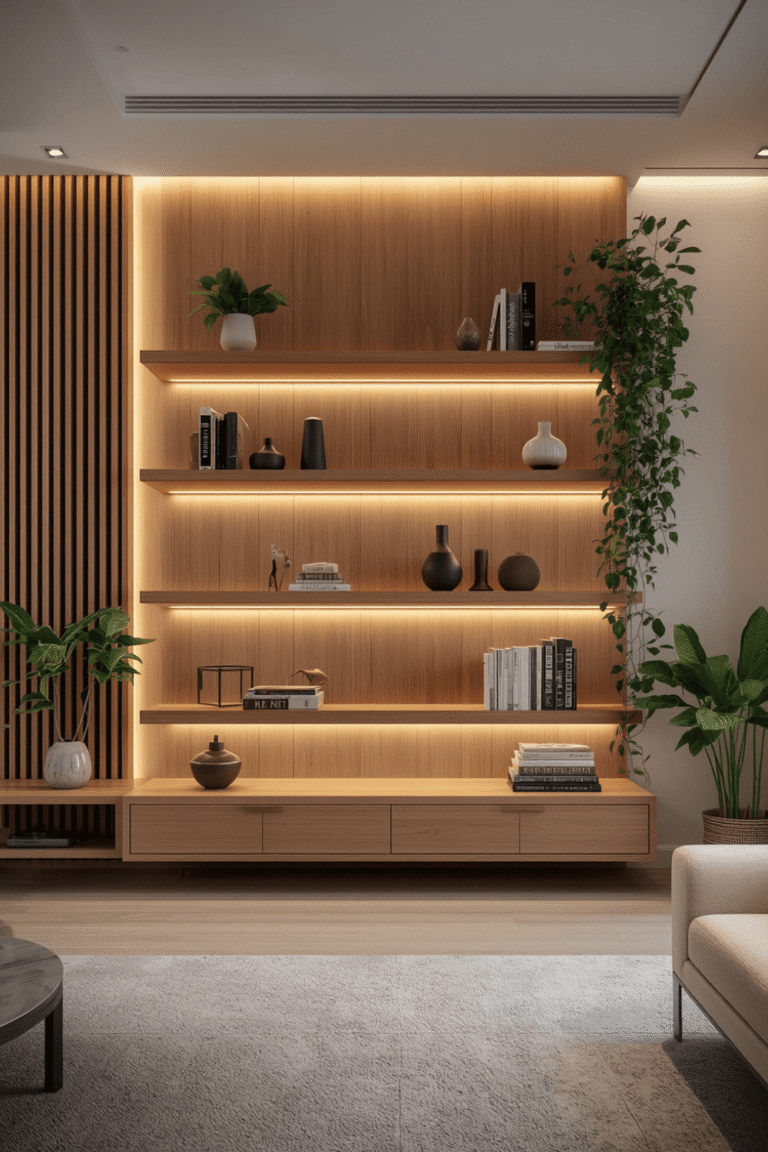
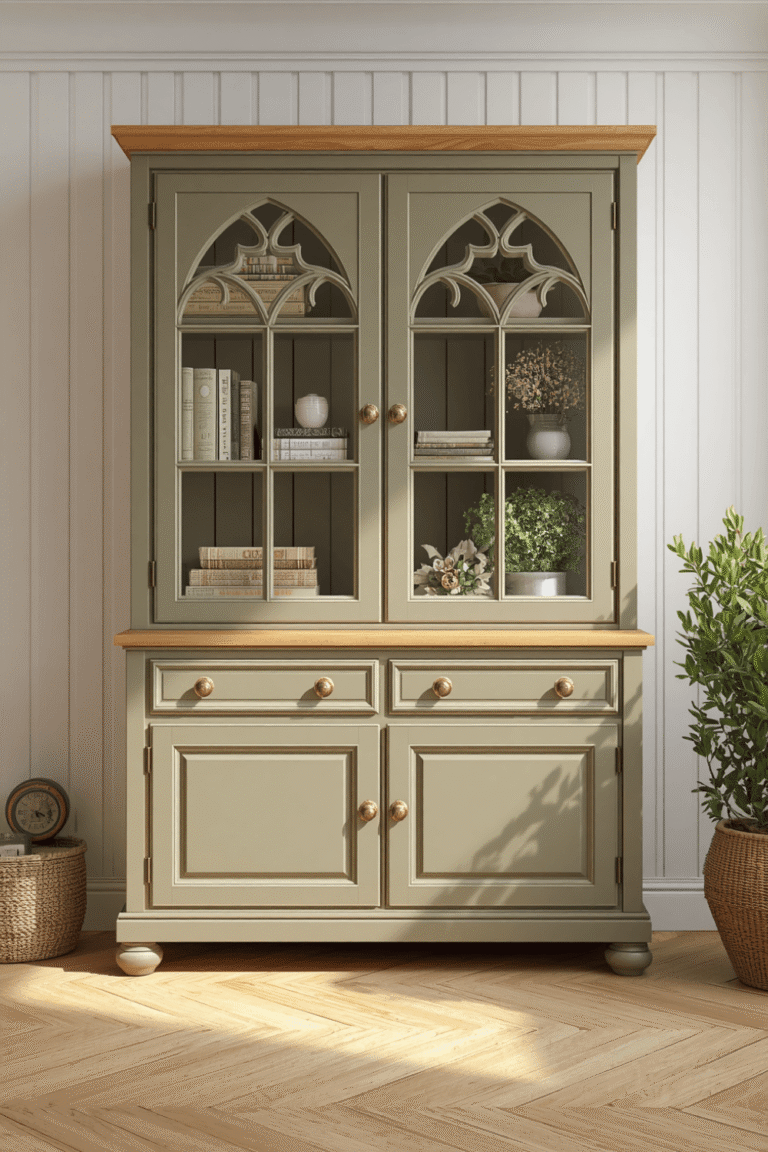
Built-In Wardrobe Ideas That Make Mornings Easier
I used to think a built-in wardrobe was a luxury reserved for fancy hotel suites and magazine spreads. Then I stood in one that was actually designed well, with every shelf and hanging rail planned around real clothes, and realized it’s less about luxury and more about finally having a system that works.
If your current closet feels cramped, chaotic, or just plain uninspiring, let’s fix that. These built-in wardrobe ideas work whether you’re planning a full custom build or just rethinking what you already have.
Why a Built-In Wardrobe Beats Freestanding Furniture
Let’s start with the obvious question: why not just buy a standalone wardrobe and call it done
A built-in wardrobe is designed around your specific wall, ceiling height, and storage needs. That fit makes a bigger difference than most people expect.
What you gain with built-ins:
- Every inch of wall space gets used, with no dusty gaps above or beside the unit
- Storage, shelving, and hanging space work together as one planned system
- The whole thing looks like part of the architecture, not furniture pushed against a wall
Reality check: Built-ins cost more upfront and usually involve a carpenter or custom cabinetry company. If you’re staying put for a few years or longer, though, it’s one of those upgrades you appreciate every single morning.
Floor-to-Ceiling Wardrobe Design for Maximum Storage
If you want to get the most out of your space, go vertical.
A floor-to-ceiling wardrobe uses the full height of the wall, including the awkward upper zone most freestanding units leave empty. That top section is perfect for items you only need occasionally, like luggage, spare bedding, or out-of-season clothes.
Why this approach works so well:
- It maximizes storage without taking up extra floor space
- It makes ceilings feel taller, since vertical lines draw the eye upward
- It creates a clean, finished look with no wasted gap between the wardrobe and ceiling
Practical tip: Put everyday items between knee and shoulder height, where they’re easiest to reach, and save the highest and lowest sections for things you rarely touch.
Wooden Wardrobe Finishes for Natural Warmth
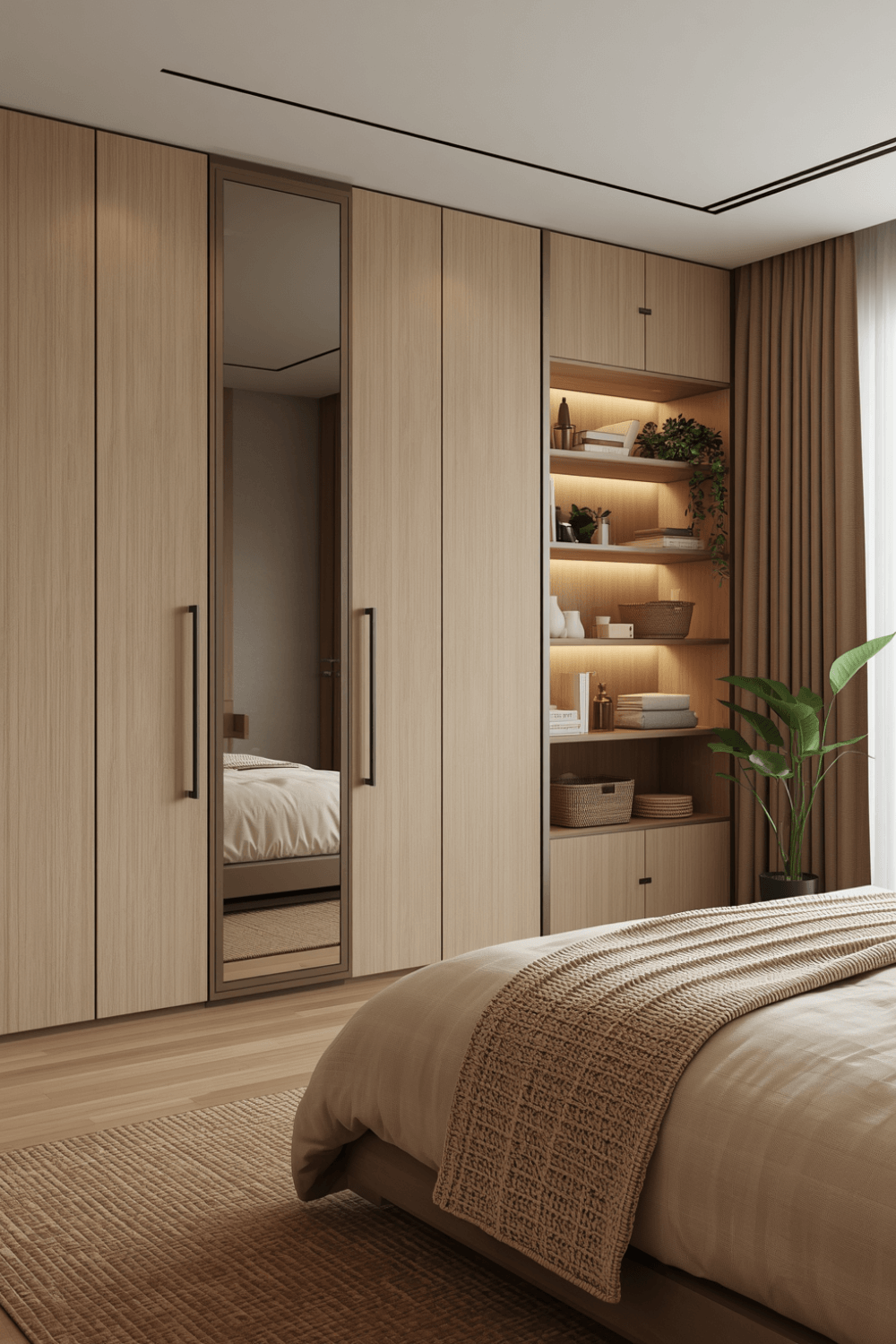
Material choice shapes the whole mood of the room, so it deserves real thought.
A wooden wardrobe brings warmth and texture that painted or laminate finishes often can’t match. Visible grain adds depth, and wood tones pair naturally with neutral bedrooms.
Popular options:
- Light oak for an airy, Scandinavian feel
- Warm walnut for richer, more dramatic presence
- Natural veneer in a matte finish for budget-friendly warmth with a modern look
Quick tip: Match your wardrobe’s wood tone to your bed frame or flooring family. Warm with warm, cool with cool, and the room feels cohesive instead of mismatched.
Minimalist Wardrobe Doors for a Calm Look
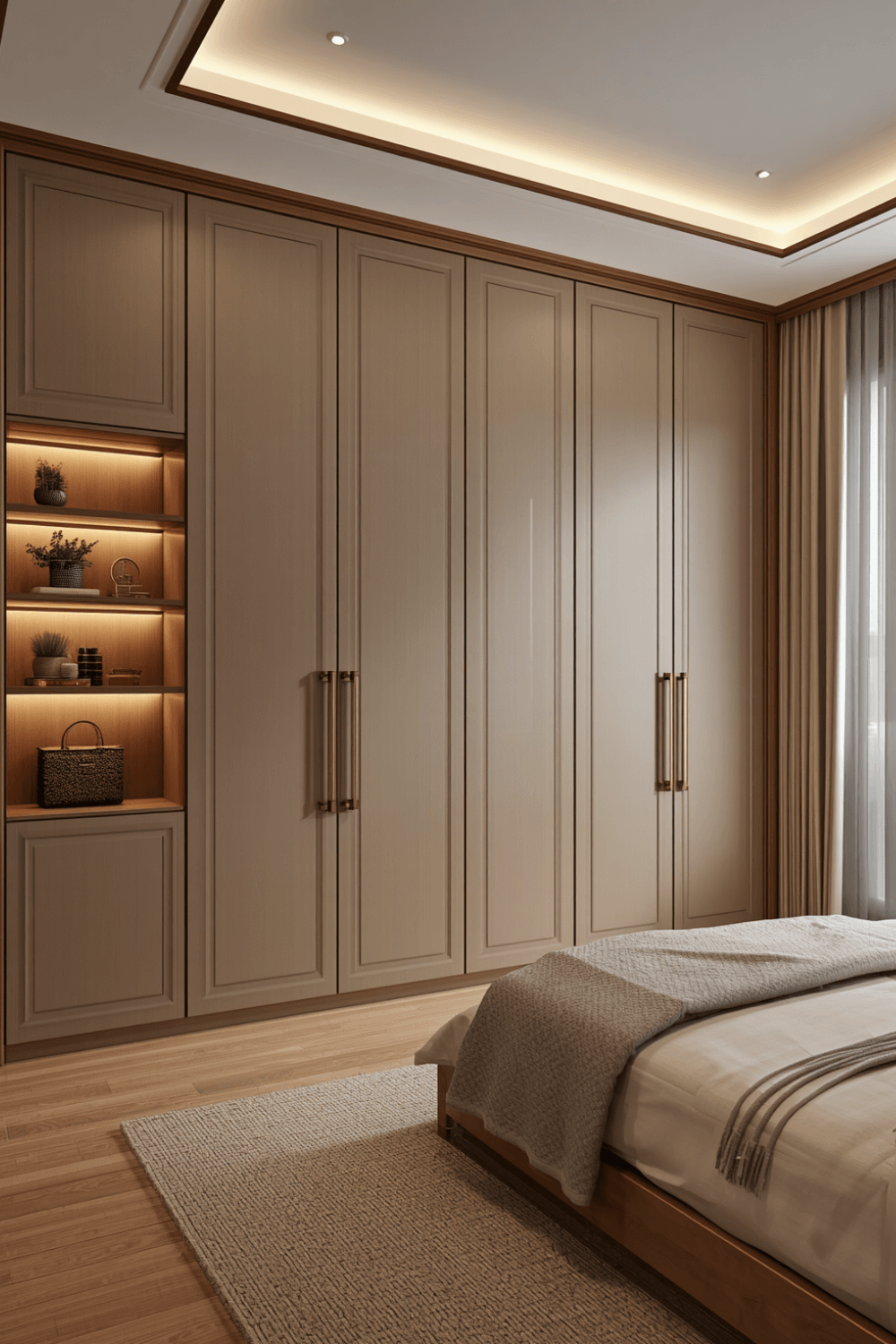
If visual clutter stresses you out, a minimalist wardrobe might be exactly your style.
- Flat-front doors with no visible handles, using push-to-open or recessed pulls
- A consistent finish across all doors so the wall reads as one calm surface
- Hidden interior organization, so the outside stays clean while the inside does the work
This approach pairs especially well with smaller bedrooms, since a smooth, uninterrupted wall feels less busy than a patchwork of mixed furniture.
Mirrored Wardrobe Doors: Function Plus Light
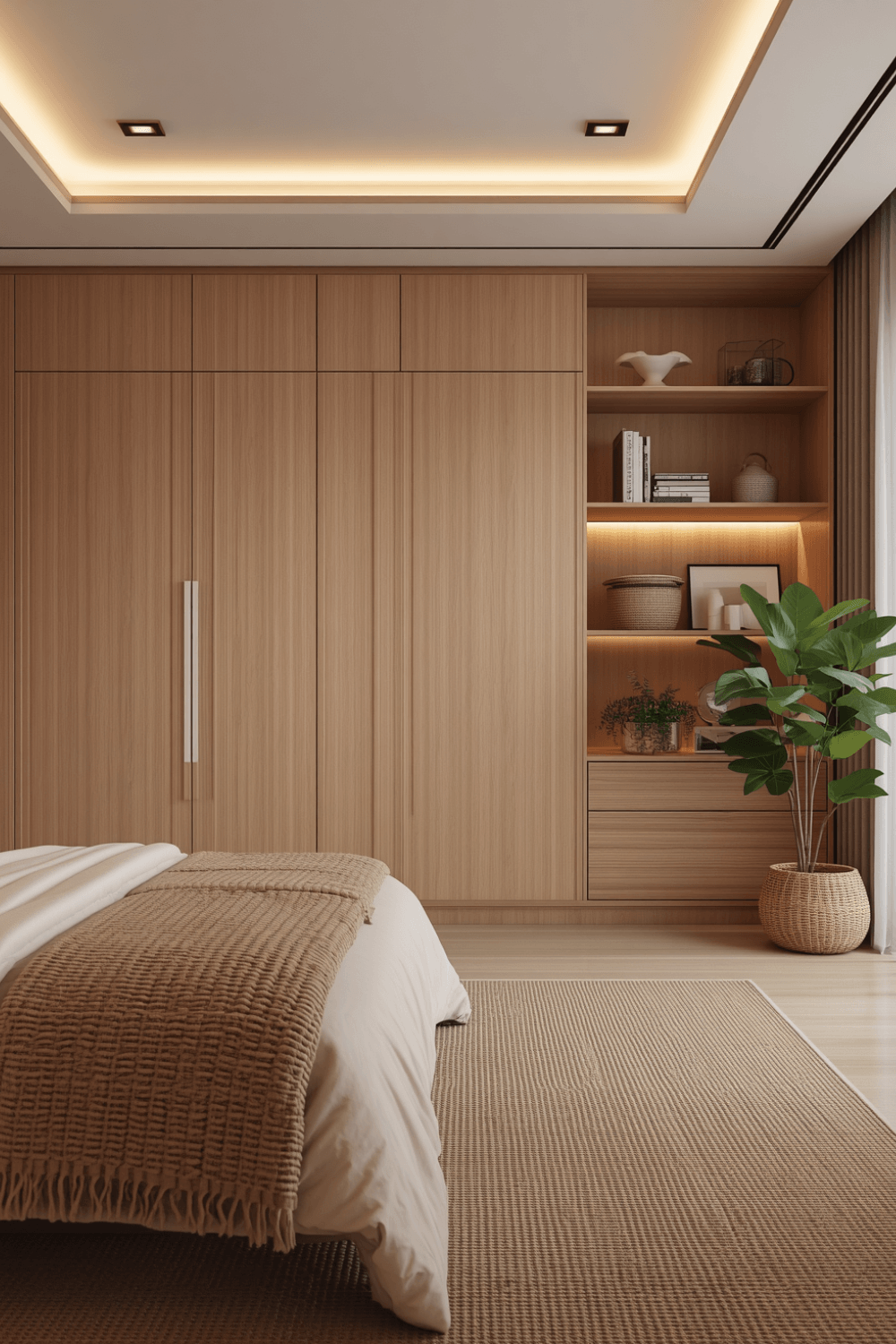
Mirrors do double duty in a bedroom, and wardrobe doors are the perfect place for them.
A mirrored wardrobe gives you a full-length mirror without needing a separate piece of furniture. It also bounces light around the room, which can make a smaller space feel noticeably larger.
Styling tips:
- Choose mirror panels with slim frames for a modern look rather than heavy, ornate edges
- Mix mirrored doors with solid wood doors for a balanced, less reflective overall effect
- Position the wardrobe opposite a window if you can, to maximize the bounced daylight
Quick tip: If a full wall of mirror feels like too much, try mirrored panels on just one or two doors. You still get the function without the “dance studio” vibe.
Open Display Shelves to Break Up the Storage
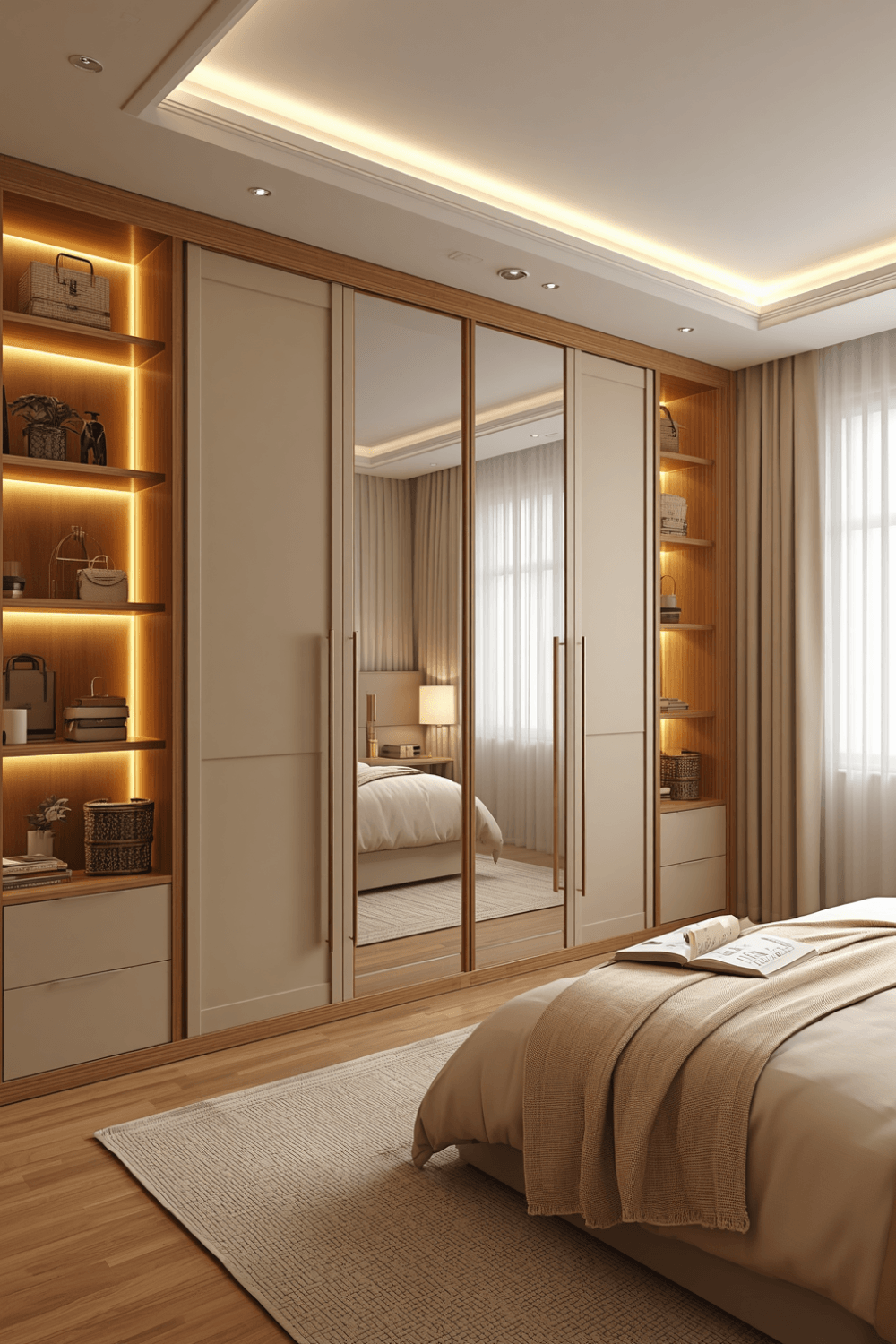
A wall of closed doors can feel heavy. Open display shelves add breathing room and personality.
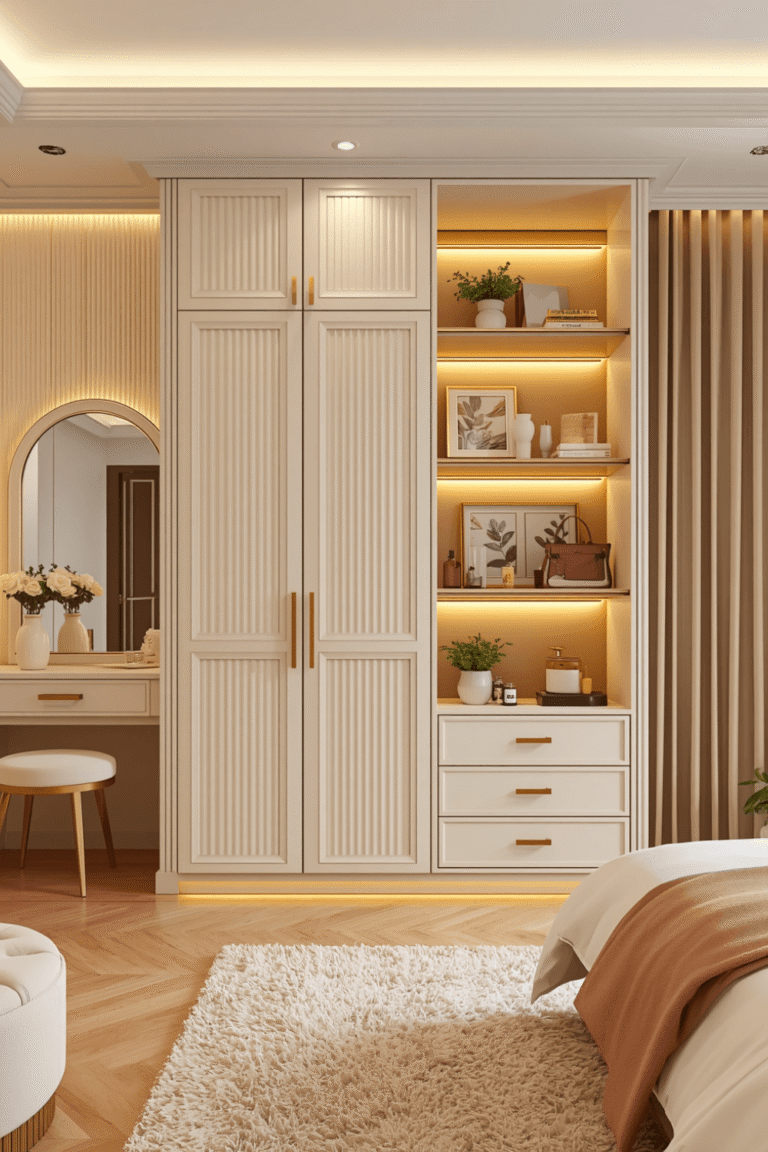
Open display shelves built into the wardrobe unit are perfect for:
- A few folded sweaters or neatly stacked scarves
- Handbags or shoes you actually like looking at
- A small plant, a framed photo, or one decorative object
Styling rule: Keep it curated. Three or four intentional items per shelf look styled, while a fully packed shelf just looks like clutter with a nicer backdrop.
Warm LED Lighting Inside and Around Your Wardrobe
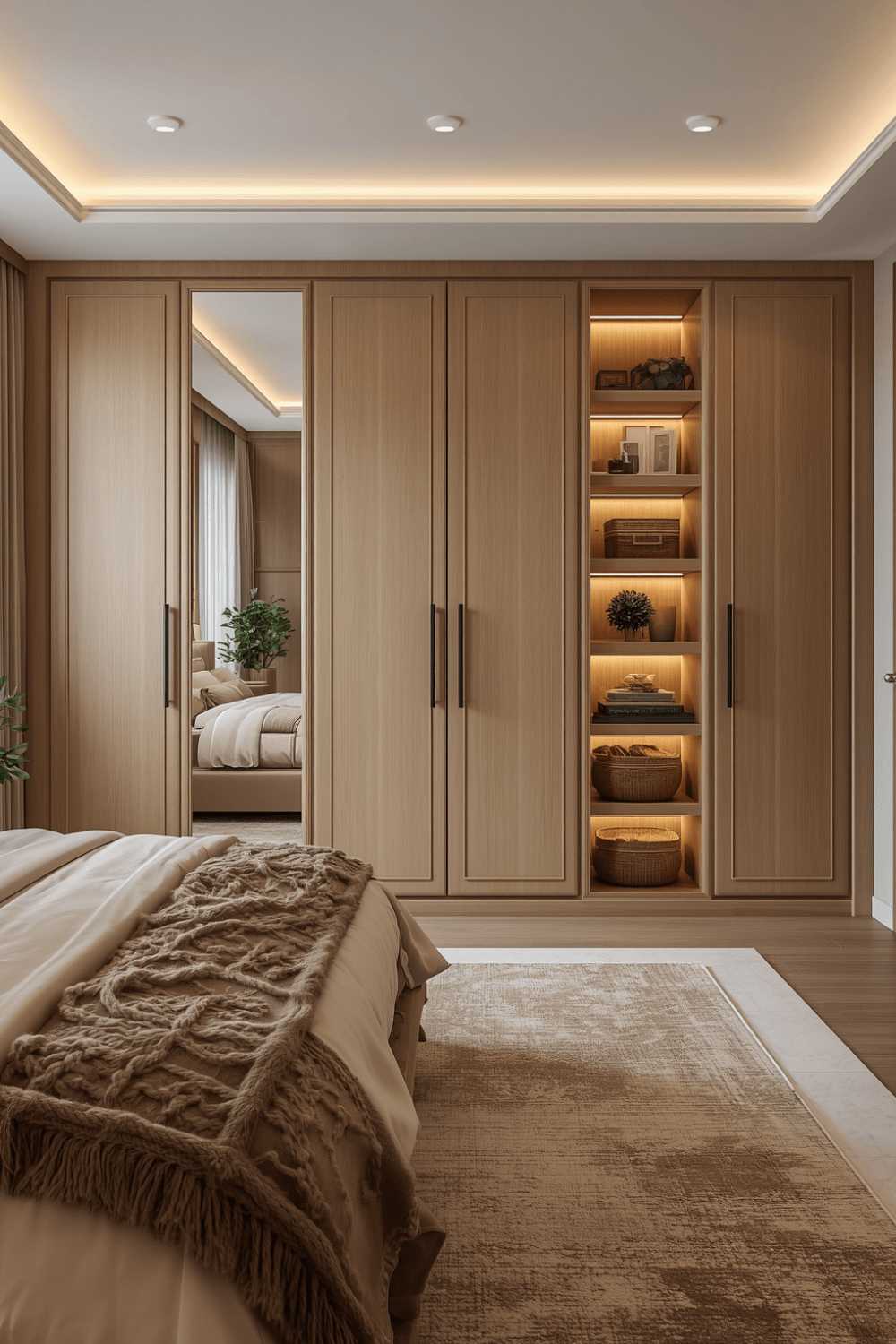
Here’s the detail that separates a good wardrobe from a genuinely beautiful one.
Warm LED lighting tucked into shelves, along hanging rails, or beneath upper cabinets does two jobs at once. It makes finding clothes easier, and it adds a soft glow that makes the whole wardrobe feel like a boutique display.
Where to add it:
- Inside the wardrobe along the hanging rail, activated by door sensors
- Beneath open shelves to highlight what’s displayed
- Along the top edge of the unit for subtle ambient glow at night
Custom Closet Layouts That Actually Match How You Live
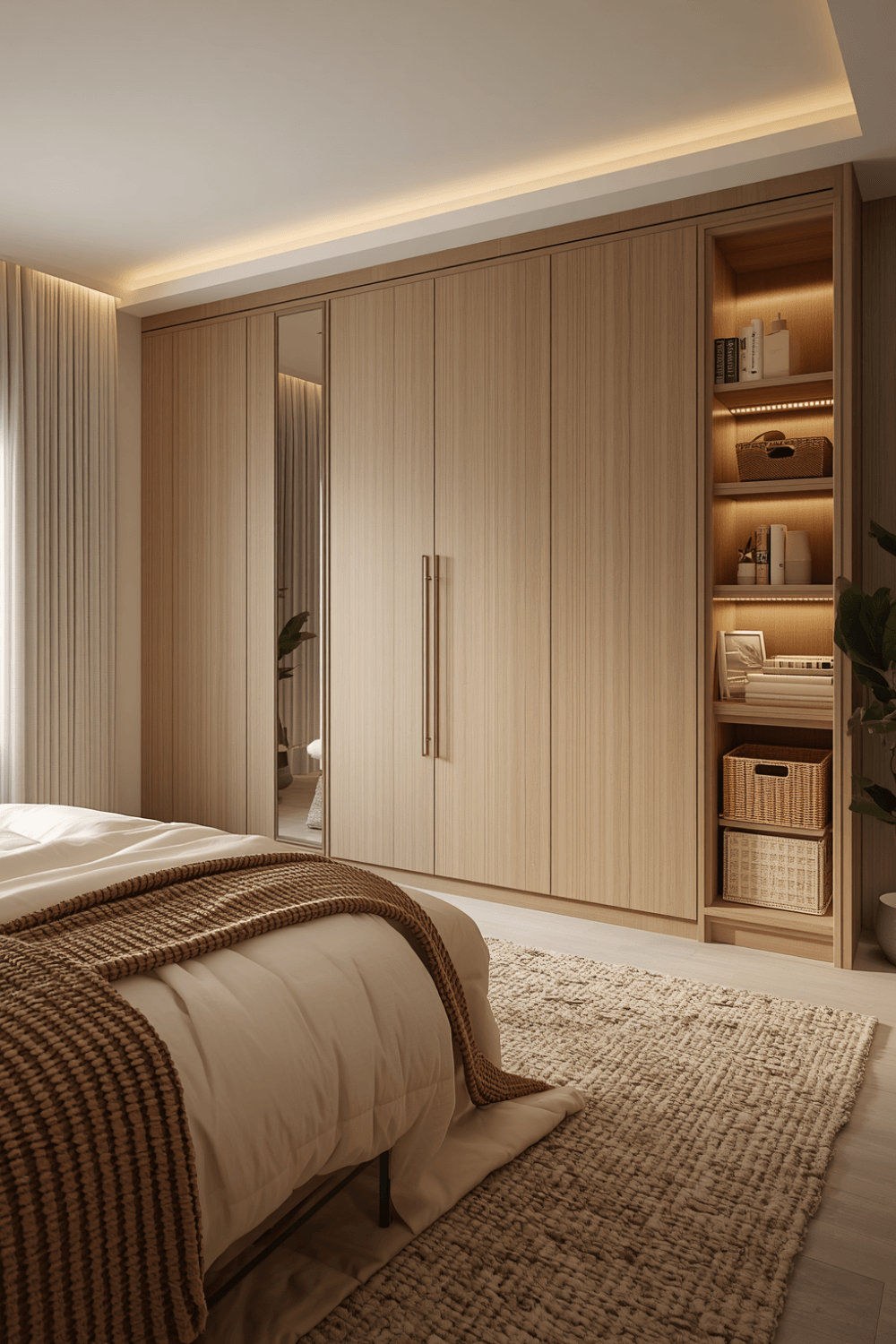
A custom closet is only as good as the thinking behind it. Before you finalize anything, take stock of what you actually own.
A simple layout formula:
- Long-hang section for dresses and coats
- Double-hang section for shirts and pants
- Drawers for folded items and accessories
- Shelves at the top for occasional items and baskets
Planning around your real wardrobe, not a generic catalog layout, is what makes a custom build genuinely worth it.
Modern Closet Design Principles That Hold Up
Whatever your style, modern closet design relies on a few consistent ideas.
- Clean lines with minimal ornamentation
- Consistent materials and finishes throughout
- Smart internal organization, such as pull-out racks, tie and belt drawers, and shoe shelves
- Lighting planned from the start, not added as an afterthought
Think of the inside as seriously as the outside. A beautiful wardrobe front hiding a chaotic interior misses the point.
Bedroom Organization Habits Your Wardrobe Can Support
A great wardrobe helps, but a few habits keep it working.
Bedroom organization tips that pair well with built-in storage:
- Use matching hangers for a cleaner, more uniform look
- Group clothes by type, then by color, so finding things takes seconds
- Do a quick seasonal edit twice a year, donating what you haven’t worn
- Give every category a “home,” so putting things away is automatic
The goal isn’t Pinterest-perfect. It’s a system simple enough that you’ll actually maintain it on a busy Tuesday.
Woven Basket Decor for Texture and Hidden Storage
Baskets are one of the easiest ways to add warmth and function at the same time.
Woven basket decor on upper shelves or inside open cubbies:
- Hides smaller items like scarves, hats, or gym gear
- Adds natural texture that softens all the clean lines of cabinetry
- Looks intentional even when slightly imperfect, which suits a relaxed, cozy feel
Quick tip: Choose baskets with lids or liners for items you don’t want visible, and open baskets for things you grab daily.
Indoor Plants to Soften the Wardrobe Wall
A bit of green keeps a storage-heavy wall from feeling stiff.
Indoor plants work beautifully near a wardrobe, either on a nearby shelf or on the floor beside the unit:
- A trailing pothos on an open shelf for movement and softness
- A snake plant beside the wardrobe, which tolerates low light and neglect
- A small potted plant on a nearby dresser to tie the wardrobe wall into the rest of the room
If your bedroom doesn’t get much light, a good faux plant does the visual job without any maintenance.
Neutral Bedroom Palettes That Let Your Wardrobe Shine
A neutral bedroom is the ideal backdrop for a built-in wardrobe, especially a wooden one.
- Warm whites, soft beiges, and gentle greige on the walls
- Natural linen or cotton bedding in cream or oatmeal
- Wood and woven textures as your main sources of interest
Neutral doesn’t mean boring. It means your wardrobe’s grain, your baskets, and your plants get to do the visual talking.
Cozy Bedroom Decor Touches That Complete the Look
Once the wardrobe is in place, a few small details make the whole room feel finished.
Cozy bedroom decor worth adding:
- A soft area rug that extends beyond the foot of the bed
- Warm bedside lamps that echo the glow of your wardrobe lighting
- A textured throw blanket folded at the foot of the bed
- One piece of art or a mirror to anchor the opposite wall
Luxury Wardrobe Details Worth the Splurge
If you want your wardrobe to feel truly high-end, a few upgrades go a long way.
Luxury wardrobe features to consider:
- Soft-close doors and drawers for a quiet, quality feel
- Velvet-lined jewelry drawers or tie organizers
- Integrated LED lighting with motion sensors
- A built-in dressing bench or small vanity zone if space allows
None of these require a mansion-sized room. A few thoughtful upgrades make even a modest wardrobe feel like a boutique.
Final Thoughts: Storage That Feels Like Design
At the end of the day, a built-in wardrobe isn’t just about hiding clothes. It’s about turning one of the biggest, most-used surfaces in your bedroom into something that works hard and looks good doing it.
Key takeaway: Plan the layout around how you actually live, choose a warm finish that suits your space, and add lighting and a few soft touches like baskets and plants. That combination makes a built-in feel like part of the home, not just storage.
Frequently Asked Questions
1. Are built-in wardrobes worth the cost?
If you plan to stay in your home for several years, usually yes. The custom fit uses space far more efficiently than freestanding furniture, and it can add to your home’s appeal. For short-term living, a quality freestanding unit may make more sense.
2. How deep should a built-in wardrobe be?
Most are around 24 inches deep, which comfortably fits standard hangers. Shallower units, around 16 to 20 inches, can work in tight rooms if you use side-facing rails or sliding doors.
3. Sliding doors or hinged doors: which is better?
Sliding doors save space and suit smaller bedrooms, since there’s no door swing to account for. Hinged doors give you full access to the whole interior at once, which many people find more convenient in larger rooms.
4. Can I add LED lighting to an existing wardrobe?
Yes, in most cases. Adhesive LED strips with motion or door sensors are easy to install yourself, and battery-powered options work if you don’t want to run any wiring.
5. How do I stop a mirrored wardrobe from feeling too reflective?
Use mirrored panels on just a few doors and pair them with solid wood or painted panels for balance. Slim frames and a matte surrounding finish also help the mirrors feel like a design choice rather than a wall of glass.
6. What’s the best way to organize a built-in wardrobe?
Group items by type first, then by color or season. Use shelves and drawers for folded pieces, baskets for small accessories, and keep your most-worn items between knee and shoulder height for easy access.