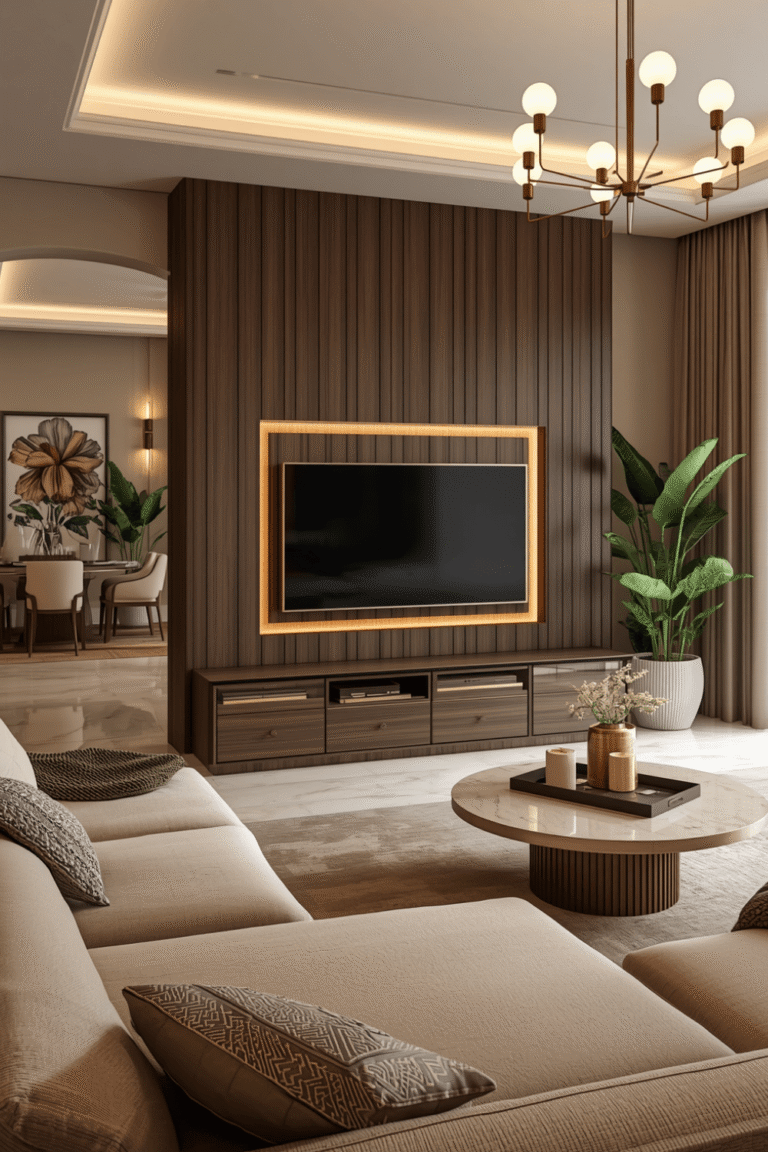
Modern TV Wall Design Real Mounting and Styling Tips
Modern TV Wall Design: What I Learned After My TV Wall Looked Like an Afterthought
For way too long, my TV just hung on a plain white wall with a tangle of visible cords dangling underneath it and a random assortment of cable box, gaming console, and streaming devices stacked awkwardly on a shelf below. It worked, technically, but it looked like nobody had actually designed that wall at all, just accepted whatever setup was easiest.
It took a proper plan, including a mounting height correction I genuinely got wrong the first time, before that same wall started looking like an intentional design feature instead of a functional afterthought. Here’s everything that actually made the difference.
A TV Wall Deserves the Same Design Attention as Any Other Feature Wall
I used to treat my TV wall like it was purely functional, somewhere the television needed to go, with design considerations reserved for the rest of the room. Once I started treating it as an actual design opportunity instead, similar to how I’d approach any other feature wall, the whole space came together noticeably better.
That mental shift from “just where the TV goes” to “an intentional design element” changed almost every decision I made afterward.
My Mistake: Mounting the TV Too High
My original mount placed the TV higher than it needed to be, mostly because I was worried about it being at a bad angle from my couch. In practice, that height meant looking slightly upward for extended periods, which got genuinely uncomfortable during longer viewing sessions, and it also threw off the overall visual balance of the wall.
I ended up remounting it lower, positioning the center of the screen roughly at eye level while seated on my couch, and both the comfort and the visual proportion of the whole wall improved immediately.
Step-by-Step: Designing a Modern TV Wall That Actually Looks Intentional
1. Mount the TV at proper eye level for your main seating
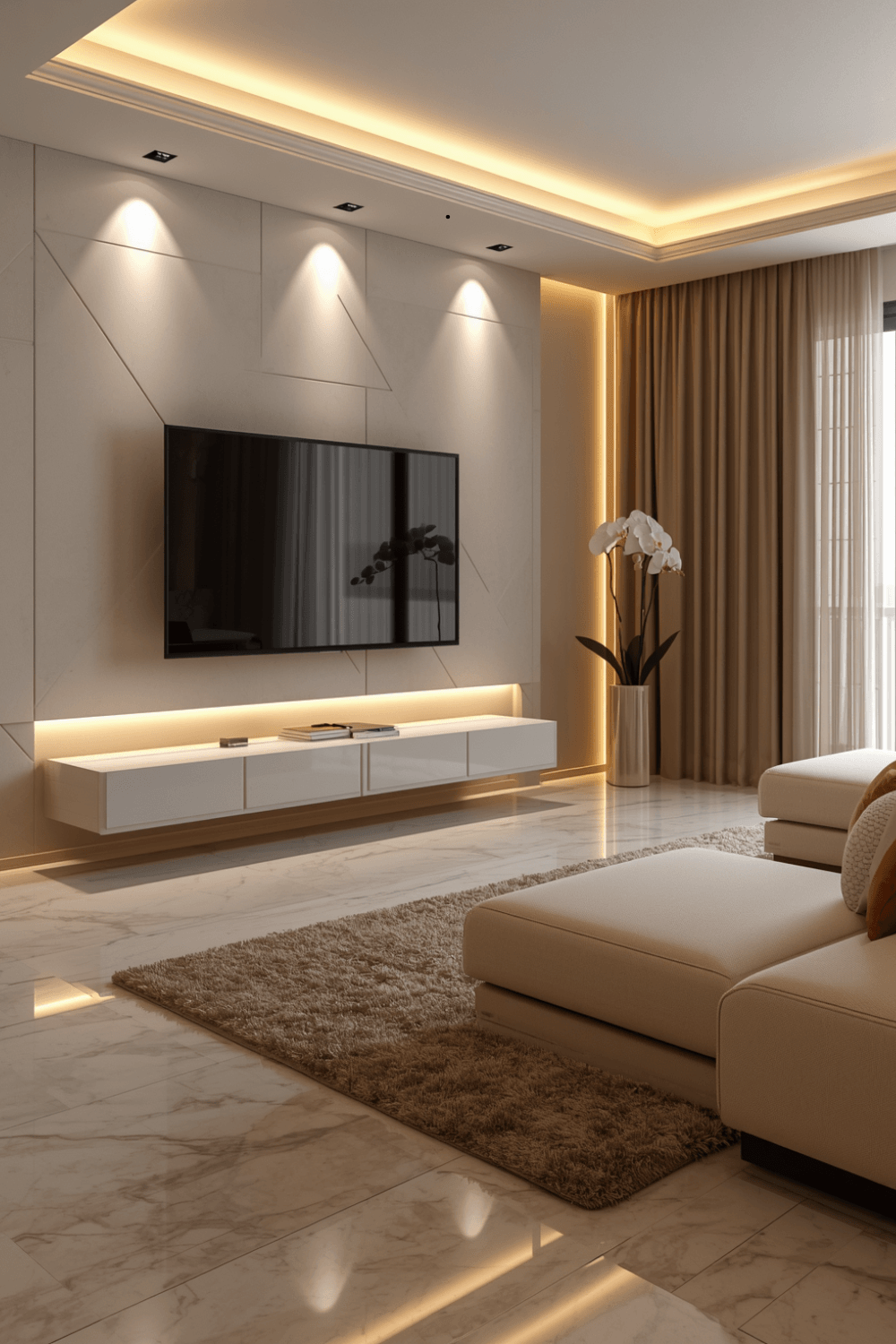
I now use the general guideline of positioning the center of the screen at eye level while seated, roughly 42 inches from the floor for most standard seating heights, though this varies based on your specific couch and viewing distance. Getting this measurement right affects both comfort and how balanced the whole wall looks.
2. Conceal cords for a cleaner overall look
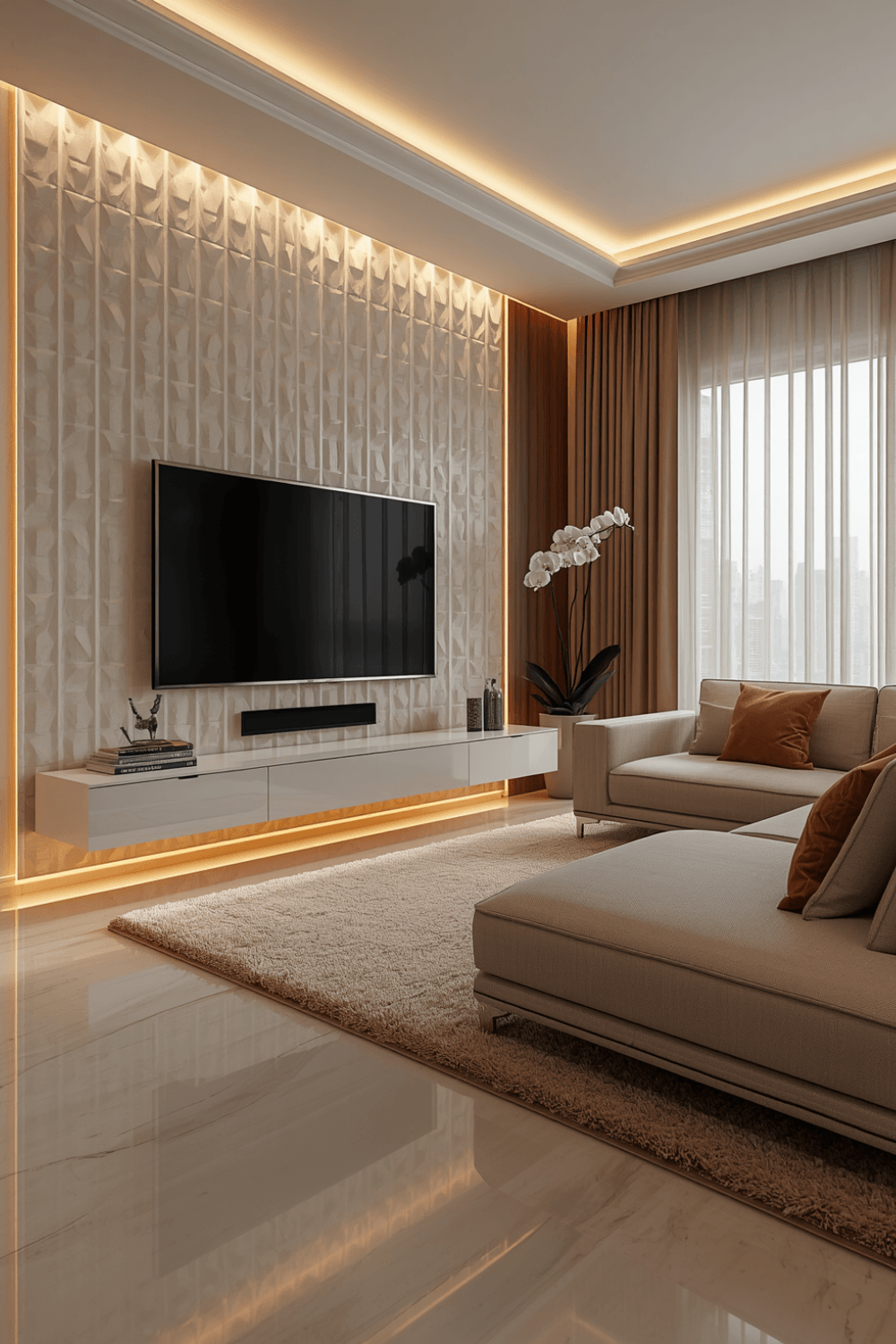
I ran an in-wall cord concealment kit specifically rated for TV installations, which routes all the cables from the TV down to the outlet and equipment below without any visible wiring on the wall’s surface. It’s a relatively affordable upgrade that made a bigger visual difference than almost anything else on this list.
3. Add a media console sized appropriately for your equipment
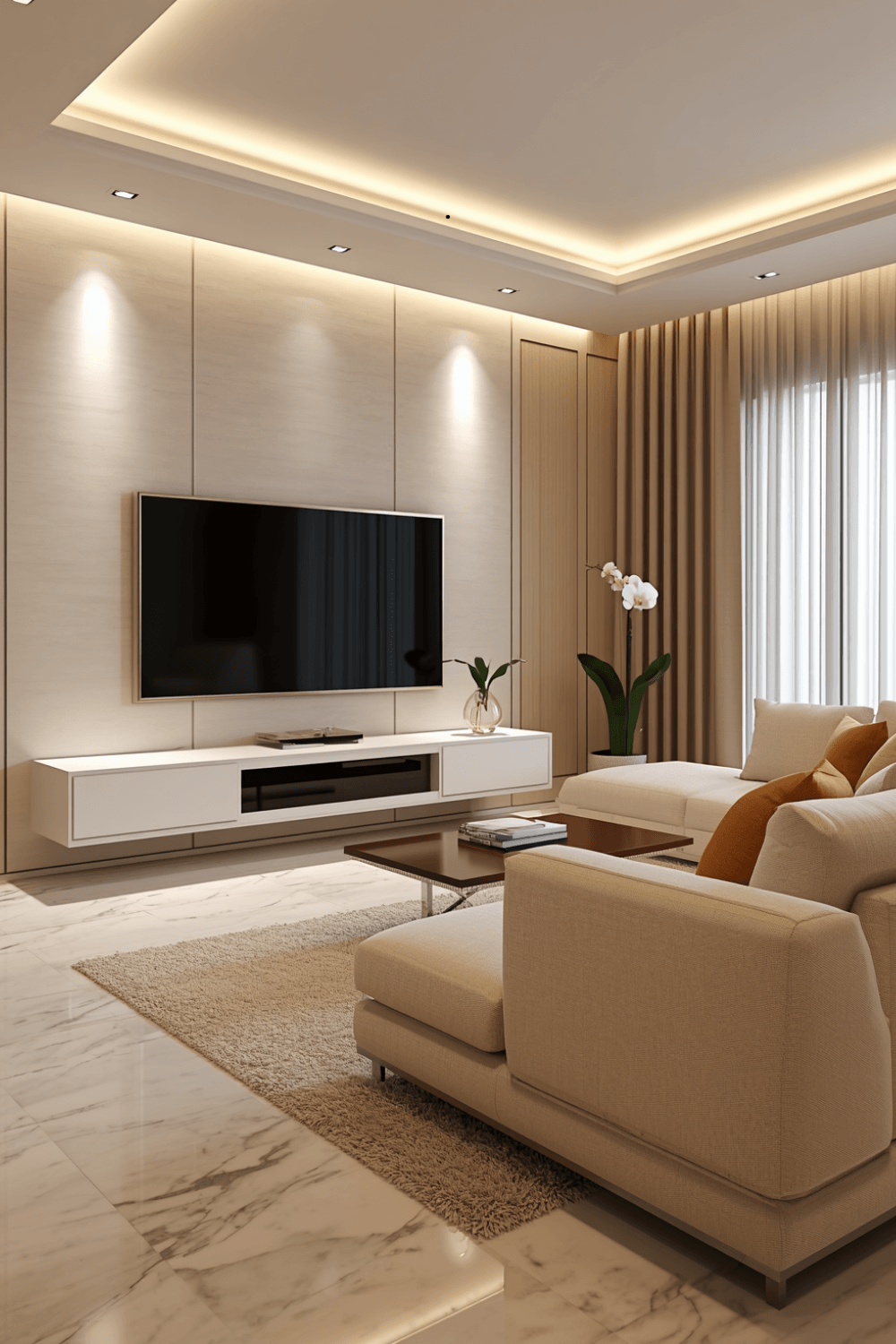
My original console was too small for my actual equipment, which meant devices got stacked awkwardly on top of each other with poor ventilation. I sized up to a console with adequate width and ventilated cubbies specifically for my cable box, gaming console, and soundbar, keeping everything organized and properly ventilated.
4. Consider an accent wall treatment behind the TV
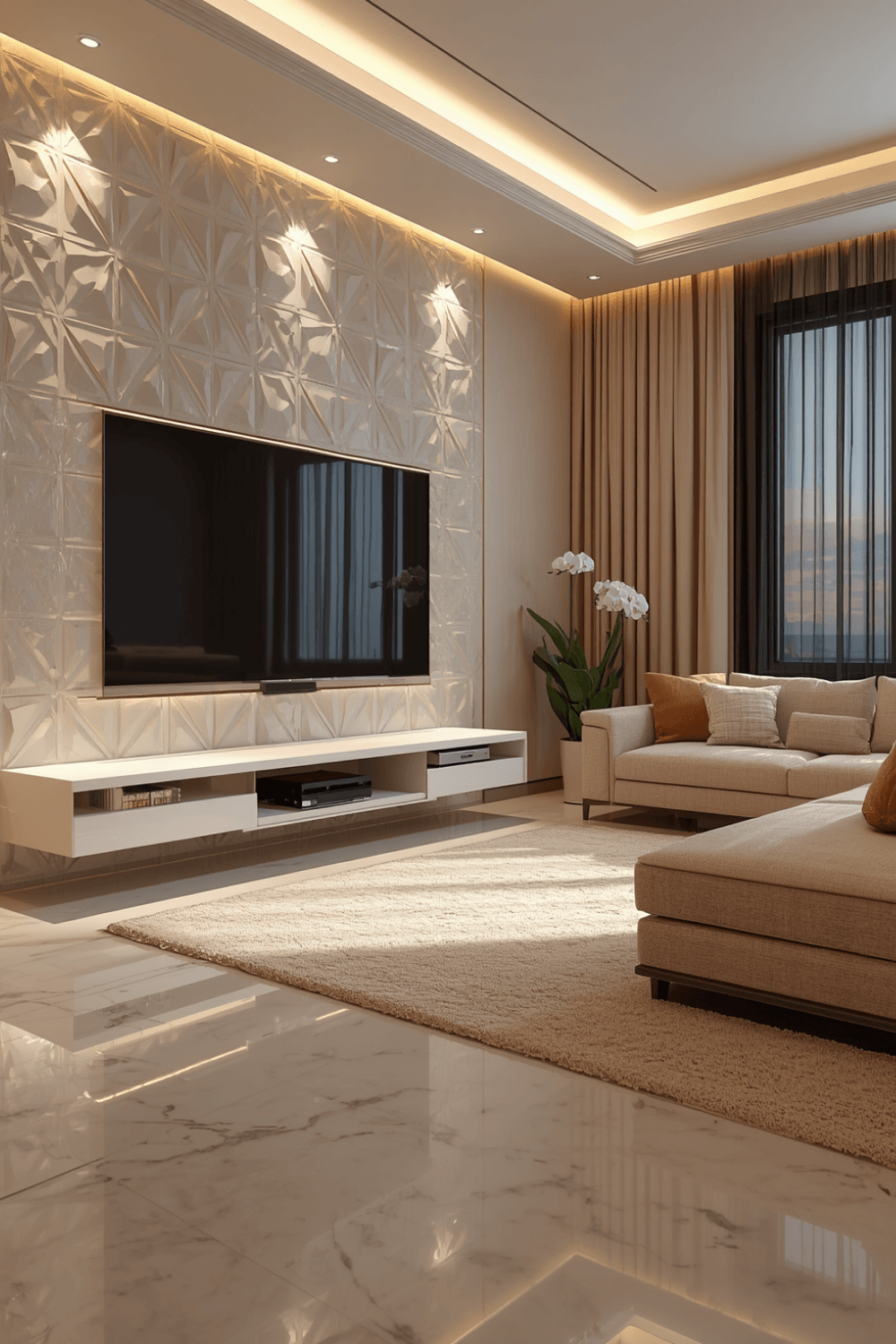
I added a wood slat panel treatment behind my TV, which gave the wall visual texture and depth instead of it being flat and plain aside from the screen itself. Other popular options include a stone veneer accent, a bold paint color, or wallpaper, depending on your overall room style.
5. Balance the TV with symmetrical or intentional asymmetrical decor
I added matching floating shelves on either side of my TV, styled with a mix of books, small plants, and a couple of framed pieces. That symmetry helped the TV feel like part of a cohesive designed wall instead of the sole focal point with nothing else around it.
6. Add ambient lighting behind or around the TV
I installed a bias lighting strip behind my TV, which adds a soft glow around the screen during evening viewing and reduces eye strain compared to watching in a completely dark room. It also adds a nice ambient design element to the wall even when the TV itself is off.
7. Keep decor around the TV simpler than you might in other areas
I learned that an overly busy gallery wall or heavily patterned decor around the TV can actually compete with the screen and make the whole area feel visually cluttered. Simpler, more restrained styling around the TV tends to let the screen remain the natural focal point when it’s actually in use, while the wall still looks designed when it’s off.
Real Examples From People I Know
A friend built a full built-in cabinetry unit around her TV, seamlessly integrating storage on either side with the television centered in a recessed niche. It required more upfront carpentry investment, but the finished result looks like custom architecture rather than a television simply mounted on a wall.
Another friend went a completely different direction, mounting her TV on a swiveling bracket over a fireplace and adding a large piece of art on a separate track system that slides to cover the screen entirely when not in use. It’s a more involved solution, but she says it completely solved the “black rectangle dominating the room” feeling when the TV isn’t in use.
Common Mistakes to Avoid
Mounting the TV higher than actual eye level for comfort. It can cause neck strain over time and often throws off the wall’s overall visual balance.
Leaving cords fully visible and tangled beneath the TV. Cord concealment makes a bigger visual difference than most other individual upgrades on this list.
Choosing a media console too small for your actual equipment. It leads to stacked devices with poor ventilation and a generally disorganized look.
Leaving the wall around the TV completely bare and unstyled. Some intentional decor or texture helps the TV feel like part of a designed space rather than an isolated appliance.
Over-decorating around the TV with busy patterns or clutter. It can compete with the screen itself and make the whole wall feel visually chaotic rather than balanced.
Final Thoughts
My TV wall didn’t need an expensive built-in or major renovation to finally look intentional, it needed proper mounting height, concealed cords, and a little thoughtful styling around it instead of treating it as purely functional space. The height correction alone fixed both comfort and the overall visual balance of the wall.
If you’re working on your own TV wall, start with proper mounting height and cord concealment before considering anything more involved. Those two fixes alone solved most of what was making my own setup look like an afterthought instead of an actual design feature in the room.