Modern Mudroom Ideas That Look Good and Actually Work
I used to think a mudroom was just a fancy word for “the place where clutter goes to multiply.” Then I saw one actually designed well — built-in bench, proper cubbies, warm wood everywhere — and realized the chaos wasn’t inevitable. It was just missing a system.
If your entry space currently looks like a losing battle against shoes and jackets, let’s fix that. These modern mudroom ideas balance real function with a look you’ll actually be proud of.
Why a Proper Mudroom Changes Everything
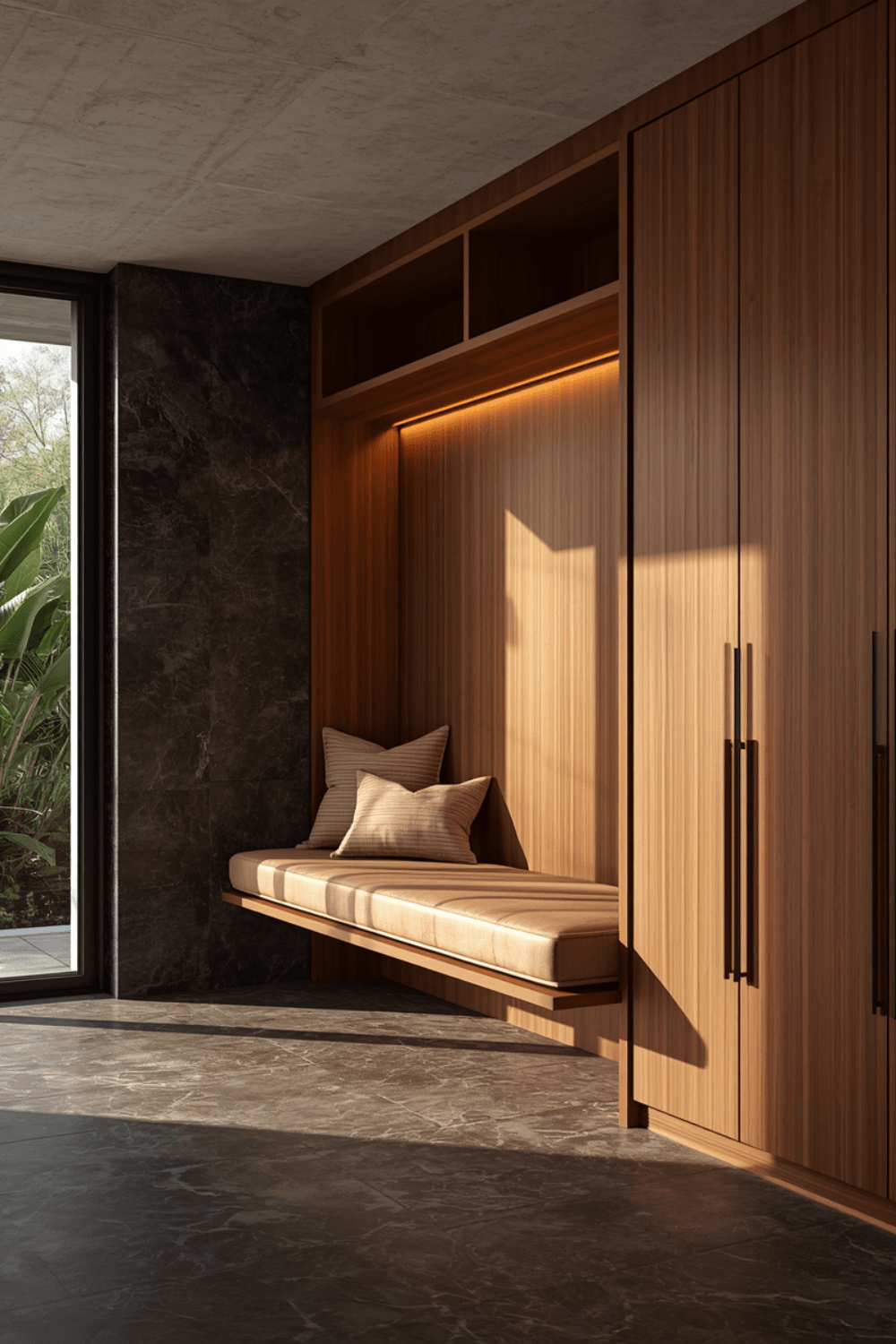
Let’s be honest about why this space matters so much. It’s not really about aesthetics first — it’s about ending the daily scramble.
A well-designed mudroom does a few specific jobs:
- Gives every item (shoes, coats, bags) an actual designated spot
- Creates a buffer zone so outdoor mess doesn’t immediately track into your main living space
- Makes leaving the house and coming home genuinely less stressful
Modern mudroom ideas take this functional need and wrap it in a design that actually looks intentional, not like storage furniture got shoved into a hallway as an afterthought.
What Makes a Mudroom Feel “Modern”
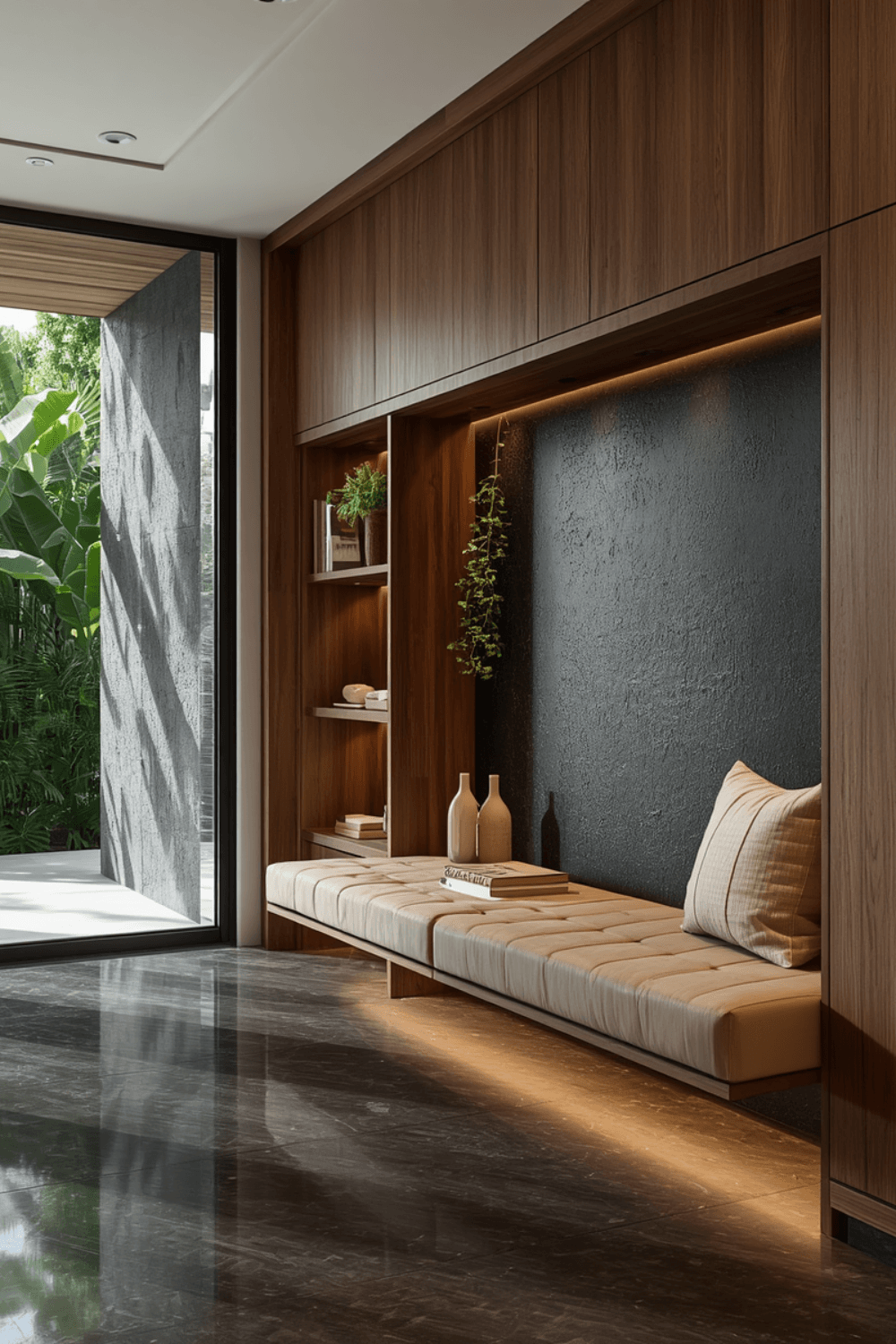
Before diving into specifics, let’s define the look we’re going for, since modern mudroom design has a pretty distinct set of characteristics.
Modern style here typically means:
- Clean lines and simple door fronts, no ornate detailing
- A restrained, cohesive color palette — often wood tones paired with black or white
- Function built directly into the design rather than bolted on as an afterthought
- Open cubbies mixed with closed storage for the best of both worlds
Modern entryway design overall leans toward “less but better,” and mudrooms genuinely benefit from that same philosophy, maybe even more than other rooms given how much stuff needs to be organized here.
Built In Mudroom Setups: The Gold Standard
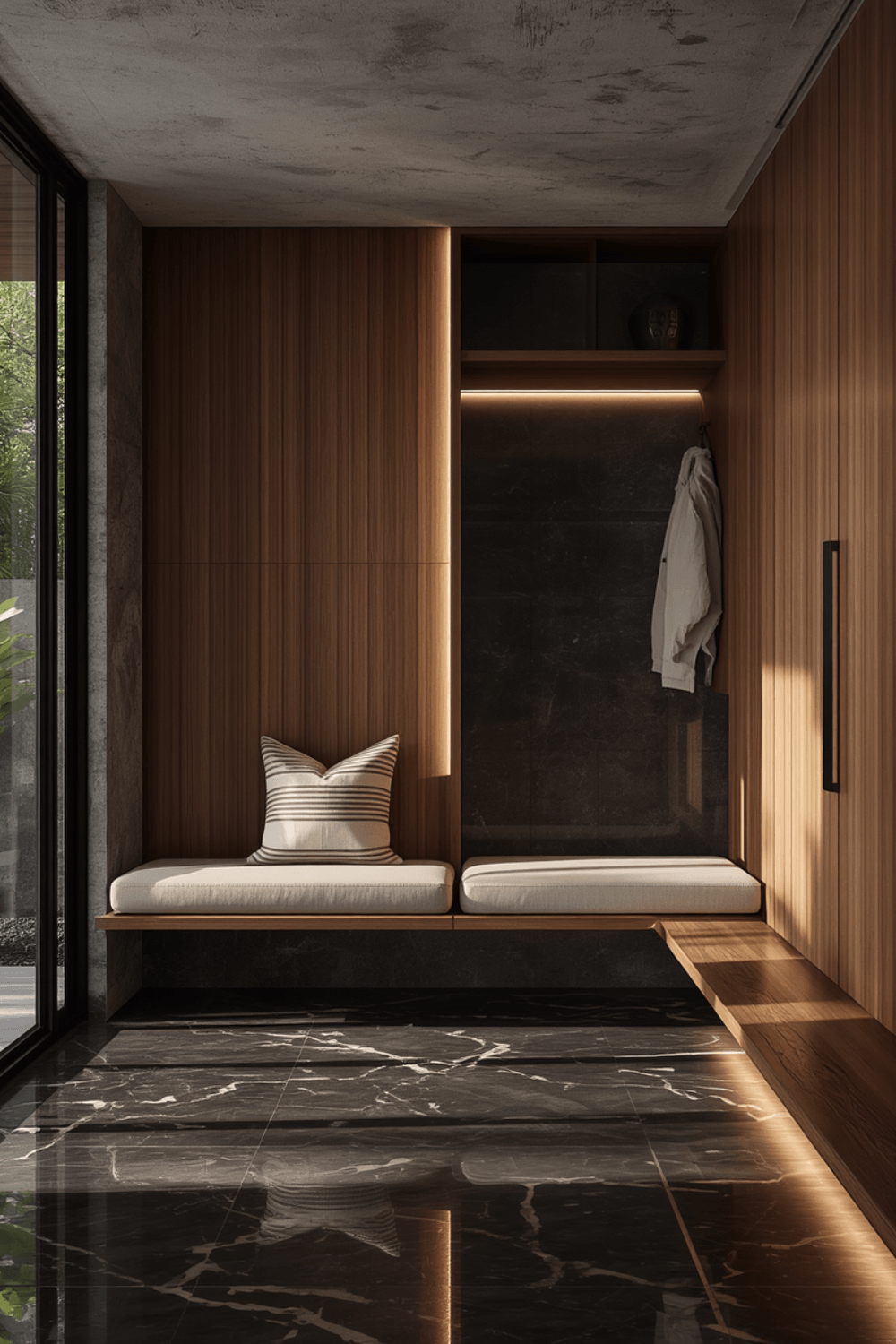
If you want your mudroom to actually solve your storage problems long-term, a built in mudroom is genuinely the best option available.
Why built-ins outperform standalone furniture:
- Every inch of your specific wall space gets used, no awkward gaps
- Storage, seating, and hanging space work as one cohesive unit
- It looks like a genuine architectural feature, not furniture that happened to end up there
A great built-in setup usually combines a bench with storage underneath, open cubbies or hooks above for bags and coats, and often a tall cabinet section for out-of-season items or cleaning supplies.
Reality check: Built-ins cost more upfront and typically require a carpenter or cabinetry company. But if you’re in your home long-term, this is genuinely one of those investments that pays off daily — every single time you walk through that door with your hands full.
Custom Wood Cabinetry for a Tailored Look
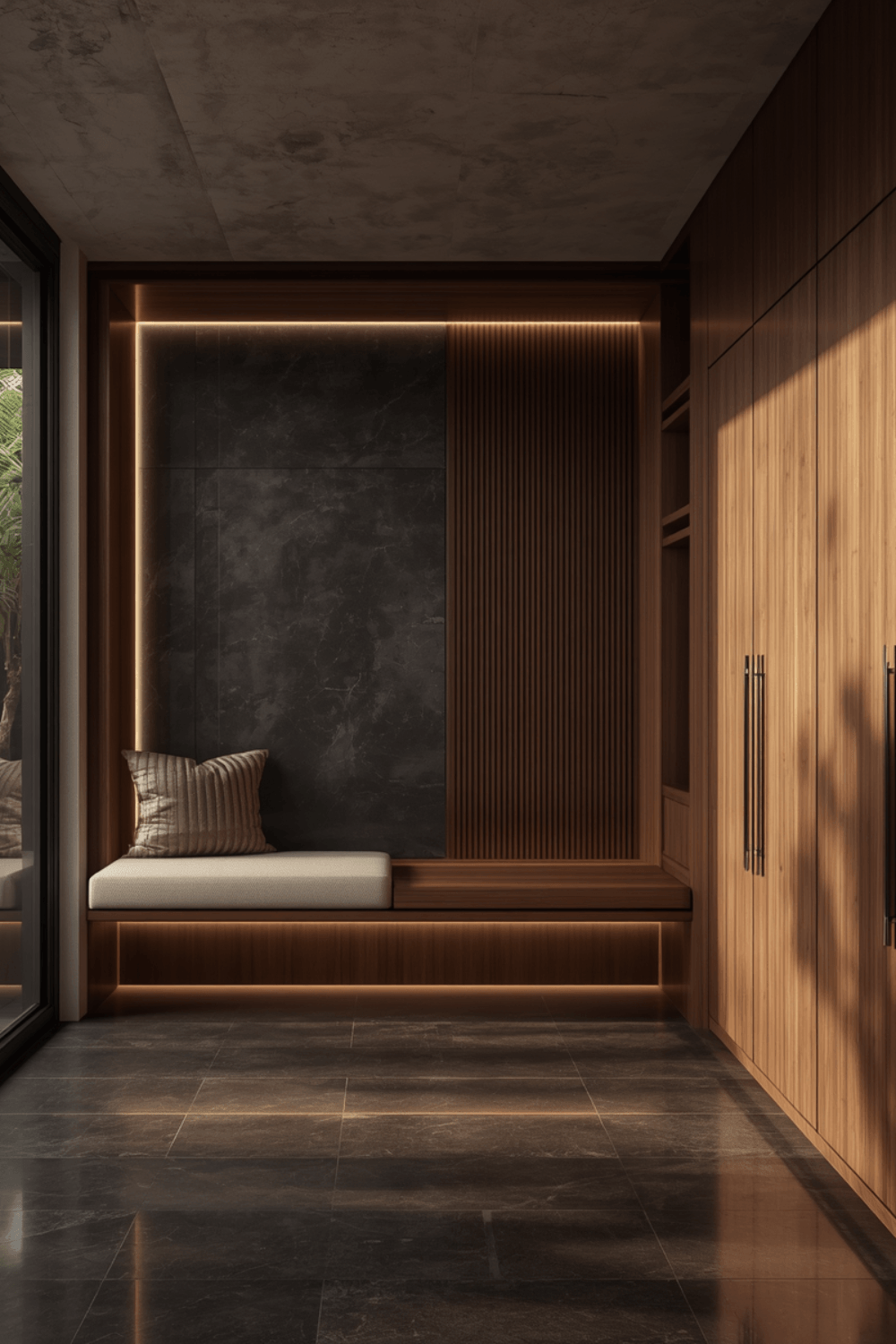
Once you’ve committed to a built-in approach, custom wood cabinetry is what actually makes it feel high-end rather than just functional.
Benefits of going custom:
- Cabinetry fits your exact space, including any awkward angles or windows
- You can mix storage types — drawers, closed cabinets, open shelving — based on what you actually need
- The wood tone and door style can match the rest of your home’s design language
Modern wood cabinet design for a mudroom specifically tends to favor simple slab or shaker-style doors, letting the wood grain itself provide the visual interest rather than fussy panel detailing.
Wood Mudroom Design: Choosing Your Tone
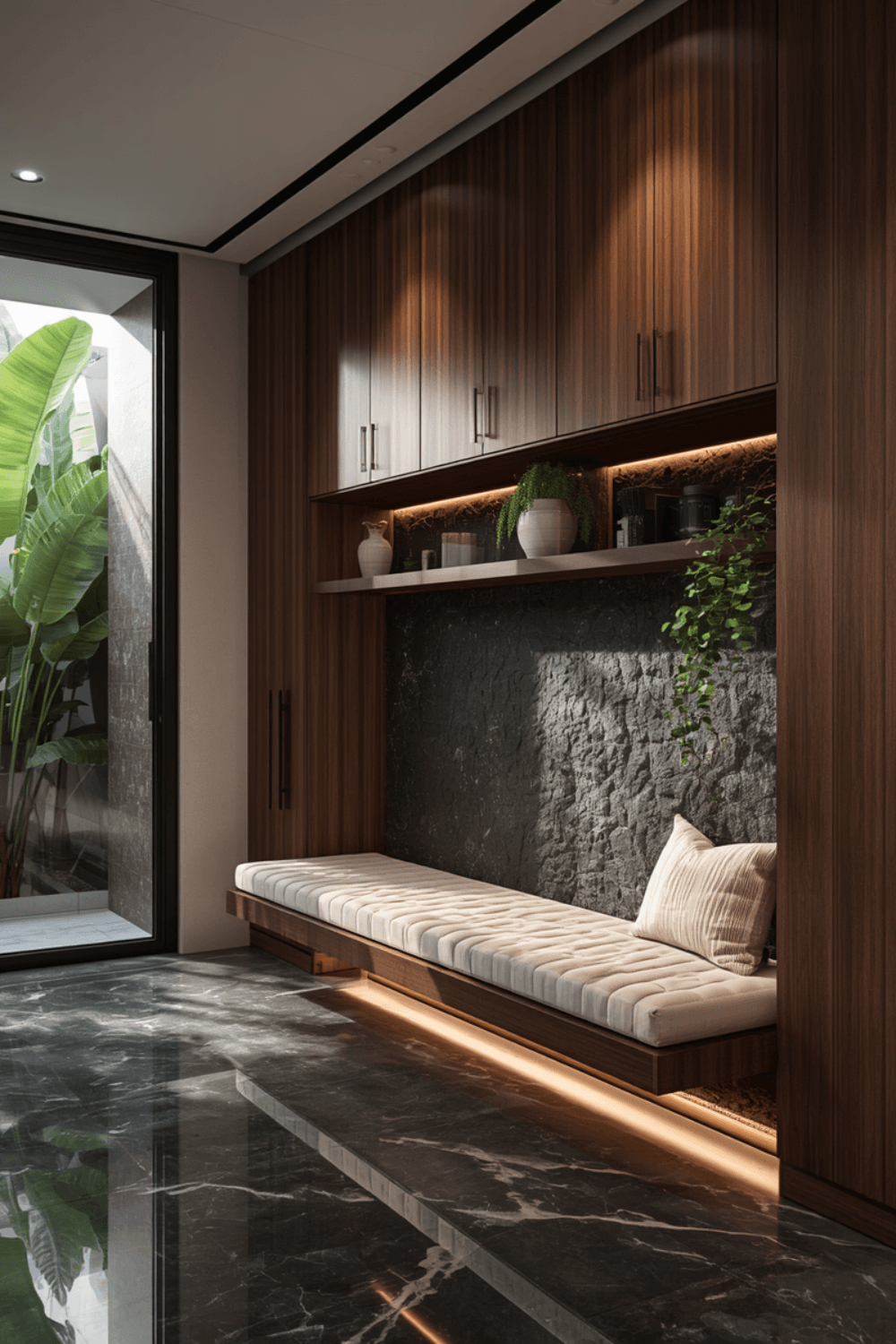
The wood tone you choose sets the entire mood of the space, so it’s worth thinking through before committing.
Wood mudroom design options:
- Light oak — feels airy and Scandinavian, great for smaller or darker mudrooms
- Warm walnut — richer and more dramatic, works well with plenty of natural light
- Natural pine — budget-friendly, takes stain well if you want to customize the tone later
Quick tip: If your mudroom doesn’t get much natural light, lean toward a lighter wood tone. Dark wood in a dim space can start to feel a bit heavy and cave-like, no matter how nicely it’s designed.
Dark Wood Mudroom for Drama
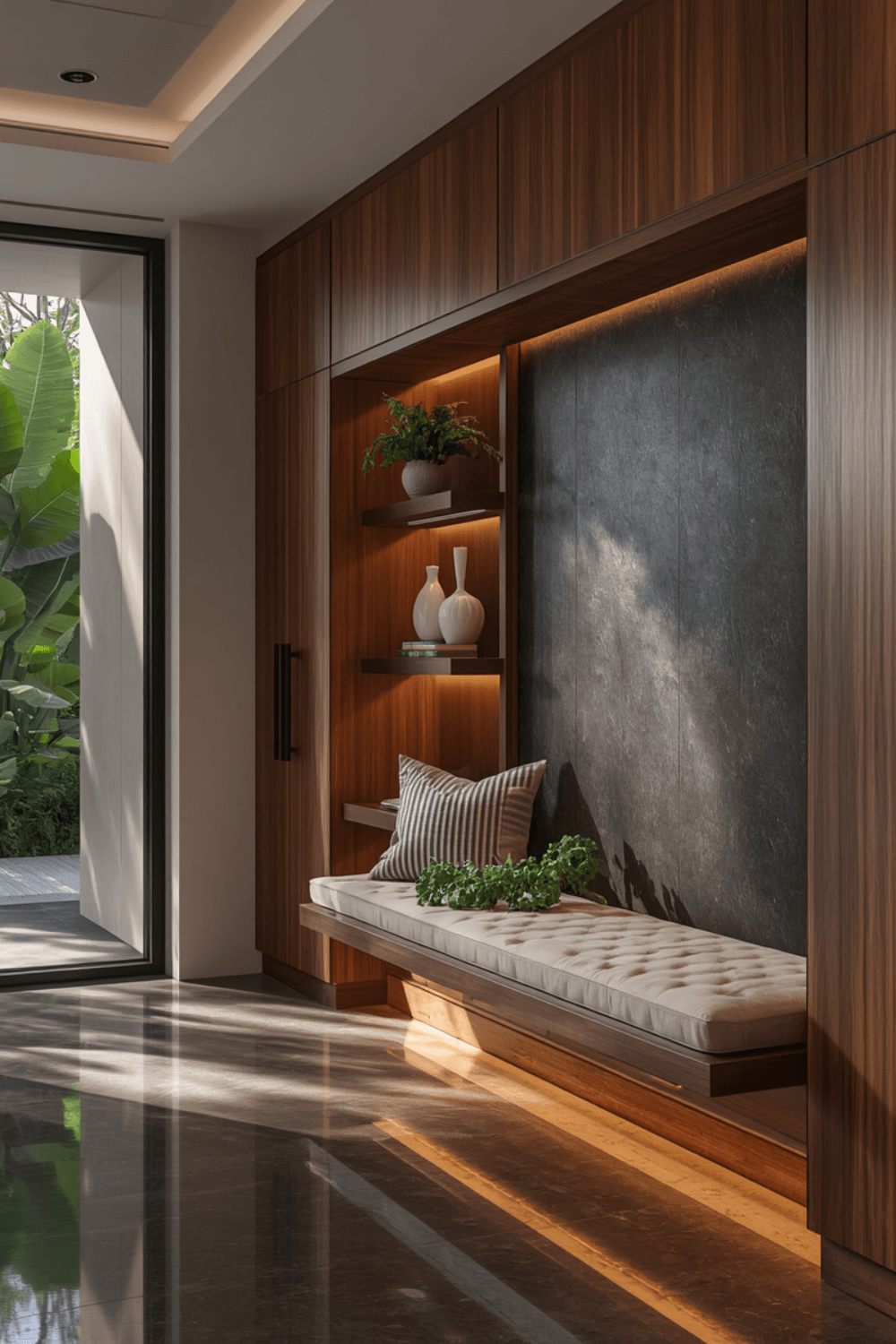
If your space does get good light, or you simply love a bolder look, a dark wood mudroom creates serious visual impact. Deep walnut or espresso-toned cabinetry paired with black hardware reads as genuinely sophisticated, especially against lighter walls or flooring.
Built In Bench Seating: The Non-Negotiable
If you only add one thing to your mudroom, make it this. A built in bench seating area solves the single most common mudroom frustration — nowhere to sit while dealing with shoes.
What makes a good mudroom bench:
- Sturdy enough for daily use, not just occasional sitting
- Storage built into the base — drawers or lift-top compartments work well
- A comfortable seat height, similar to a standard chair
Entryway Storage Bench Combos
An entryway storage bench that combines seating with drawer or cubby storage underneath is honestly the most efficient use of space in the whole room. You get somewhere to sit and a place to stash shoes, all in one footprint.
Mudroom Cubbies Ideas for Organized Chaos
Cubbies are where the real organizational magic happens, especially in households with multiple people (and multiple pairs of shoes, backpacks, and jackets).
Mudroom cubbies ideas worth considering:
- One open cubby per family member, so everyone has a designated spot
- A mix of upper cubbies for bags and lower cubbies for shoes
- Labeled or color-coded sections if you’ve got younger kids who need visual cues
Practical tip: Open cubbies work better than closed doors for daily-use items like shoes and backpacks — the friction of opening a door for every single item is genuinely enough to make people just dump things on the floor instead.
Wood Panel Wall Ideas for Texture Behind the Storage
Once your storage and seating are handled, the wall itself is an opportunity most people skip entirely.
Wood panel wall ideas behind a mudroom bench or cubby system add warmth and texture that a plain painted wall just can’t match.
- Vertical wood slats for a clean, modern rhythm
- Shiplap-style horizontal panels for a slightly softer, more casual feel
- A contrasting wood tone from your cabinetry for subtle visual interest
This detail genuinely elevates the whole space from “functional storage area” to “a room someone actually designed with intention.”
Mudroom Storage Ideas Beyond Cubbies and Benches
A great mudroom layers multiple storage types together rather than relying on just one system.
Mudroom storage ideas to round things out:
- Hooks at two different heights — one for adults, one lower for kids
- A small drawer or tray for keys, sunglasses, and other daily essentials
- Baskets for smaller items that don’t have an obvious dedicated spot (dog leashes, gloves, umbrellas)
A simple layering approach:
- Hooks for what you’re wearing right now (coats, bags)
- Cubbies or open shelving for shoes and daily-use items
- Closed cabinets or drawers for things you don’t need immediate access to
Indoor Bench Nook Placement Tips
Where you position your indoor bench nook matters just as much as how it’s designed. Ideally, it should sit directly adjacent to your main entry point, so putting on or taking off shoes happens naturally right there, not somewhere disconnected from the actual door.
If you’re working with a genuine architectural nook — a recessed wall area, for example — building the bench directly into that space creates an especially polished, custom look.
Minimalist Mudroom Ideas for a Calmer Approach
If a fully loaded cubby-and-cabinet system feels like more than your space (or your household) actually needs, minimalist mudroom ideas strip things back considerably.
- A single bench with one or two hooks above, nothing more elaborate
- Closed storage only, so nothing is visually on display
- A simple, neutral color palette with minimal contrast
This approach works particularly well in smaller entryways or for households that genuinely don’t accumulate much daily clutter. Sometimes less really is enough.
Warm Minimalist Interior for a Softer Feel
Warm minimalist interior design brings the calm of minimalism without feeling cold or stark. This usually means:
- Warm wood tones instead of stark white or gray finishes
- Soft, ambient lighting rather than harsh overhead fixtures
- A few natural textures (a woven basket, a jute doormat) to add warmth without clutter
This pairs beautifully with a mudroom specifically, since the space needs to feel inviting even while handling a genuinely utilitarian job.
Organic Modern Entryway Touches
If you want your mudroom to connect stylistically to the rest of your home’s design, organic modern entryway principles work well here too.
- Natural materials (wood, rattan, stone) over anything synthetic
- A neutral, earthy color palette
- Simple, clean furniture lines paired with organic textures like a woven basket or wood grain
This approach genuinely makes the mudroom feel like a natural extension of your home rather than a purely utilitarian add-on that doesn’t match anything else.
Luxury Mudroom Ideas for an Elevated Feel
Want your mudroom to feel a bit more high-end? A few upgrades genuinely change the whole impression.
Luxury mudroom ideas worth considering:
- A statement light fixture instead of a basic flush-mount
- High-quality hardware — brass or matte black pulls on every drawer and cabinet
- A cushioned bench seat in a durable, textured fabric rather than bare wood
- Natural stone or patterned tile flooring instead of standard vinyl or basic tile
None of this requires a full renovation. Sometimes it’s just the hardware, the lighting, and one nice textile detail that push a mudroom from purely functional to genuinely elevated.
Modern Living Room Entrance Coordination
If your mudroom connects directly to a more visible living space, it’s worth coordinating the wood tones and color palette between the two. A modern entryway decor approach that flows naturally into your main living areas keeps the whole home feeling cohesive rather than like the mudroom is a completely separate design decision.
Final Thoughts: A Mudroom Should Work as Hard as You Do
At the end of the day, modern mudroom ideas aren’t just about looking nice in photos — they’re about building a system that actually stops the daily chaos of shoes, bags, and coats taking over your entryway.
Key takeaway: Start with function first — a solid bench, a mix of open and closed storage, hooks at the right heights — then layer in the wood tones, lighting, and details that make it feel genuinely designed. Both matter, but function comes first.
Frequently Asked Questions
1. Are built-in mudrooms worth the investment?
If you’re staying in your home long-term and dealing with regular clutter, yes — the custom fit and dedicated storage genuinely solve problems that standalone furniture often can’t. For renters or shorter-term situations, a quality freestanding bench and storage combo is a more practical choice.
2. What’s the best wood tone for a small mudroom?
Lighter tones like oak work particularly well in smaller or dimmer mudrooms, since they help the space feel more open rather than closed in. Save darker wood tones for mudrooms with more natural light or larger square footage.
3. Should mudroom storage be open or closed?
A mix works best — open cubbies and hooks for daily-use items like shoes and bags, since they’re easier to actually use consistently, and closed cabinets for things you don’t need immediate access to. Purely closed storage often leads to items getting dumped on the floor instead.
4. How many cubbies do I need for a family mudroom?
Generally, one dedicated cubby per family member works best, so everyone has an obvious spot for their own things. If space is tight, at minimum aim for separate zones even if they’re not fully individual cubbies.
5. Can a mudroom work in a small entryway without a dedicated room?
Absolutely — even a narrow wall with a slim bench, a few hooks, and one small cubby section can function as an effective mudroom. The same organizational principles apply regardless of the space’s overall size.
6. What flooring works best for a mudroom?
Durable, easy-to-clean materials like tile, stone, or luxury vinyl work best, since this space deals with dirt, water, and general wear more than most other rooms. Avoid delicate materials like hardwood unless it’s properly sealed and you’re prepared for extra maintenance.