Modern Bathroom Lighting Ideas That Actually Work (Real Tips)
Modern Bathroom Lighting Ideas: What I Learned After Years of Bad Vanity Lighting
For years, I did my makeup and skincare routine under a single harsh overhead light that cast shadows straight down my face, making me look tired even on days I actually felt fine. I didn’t think much of it until a friend saw a photo I took in that bathroom mirror and asked, half-joking, if I was feeling okay.
That comment actually pushed me to finally research bathroom lighting properly instead of just accepting whatever fixture came with the house. It turns out most bathrooms are lit completely wrong for actual daily use, and fixing mine made a bigger difference than almost any other change I’ve made in that room. Here’s everything that helped.
Bathroom Lighting Has One Job Most Fixtures Fail At
The whole point of vanity lighting is to light your face evenly without harsh shadows, since that’s where you’re actually looking at yourself most of the time. A single overhead light does the opposite of that job. It creates shadows under your eyes, chin, and nose exactly where you don’t want them, which is why so many people feel like they look worse in their bathroom mirror than they do anywhere else in natural light.
Once I understood that the goal was even, front-facing light rather than just “enough light,” choosing fixtures got a lot more straightforward.
My Mistake: Relying on One Centered Overhead Fixture for Everything
My original bathroom had exactly one recessed can light positioned directly above the mirror. It technically lit the room fine for general use, but for anything involving my actual face, it was genuinely the worst possible placement, throwing shadows down instead of lighting me evenly from the front.
Adding proper vanity-level lighting on either side of my mirror fixed the shadow problem almost entirely, and I noticed the difference the very first morning I used it.
Step-by-Step: Designing Modern Bathroom Lighting That Actually Works
1. Add vertical lighting on both sides of your mirror
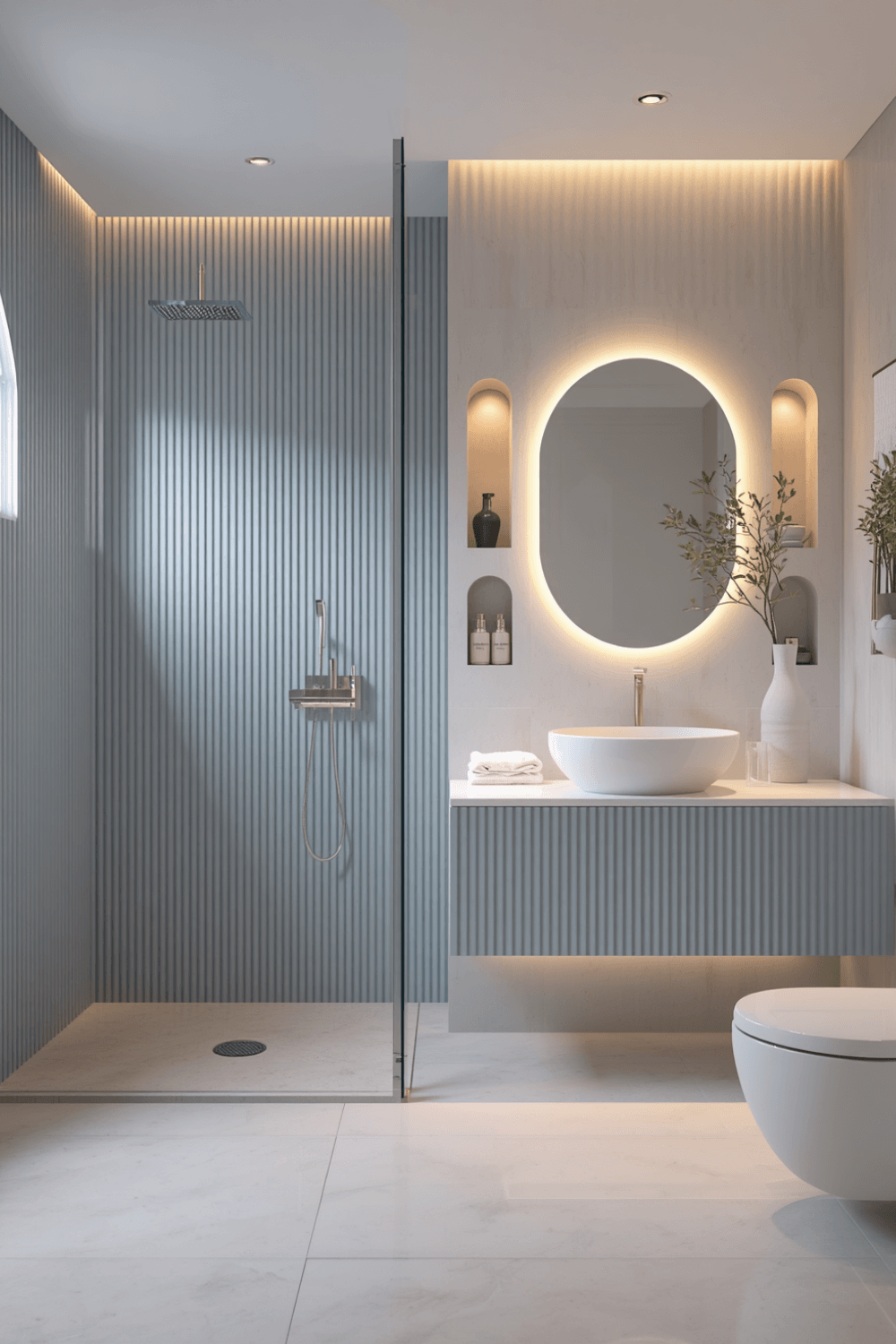 This was the single biggest fix in my own bathroom. I added a pair of vertical LED sconces flanking my mirror at roughly eye level, which lights the face evenly from both sides instead of casting shadows from above. If your mirror is wide enough, this setup alone solves most bathroom lighting complaints.
2. Choose a warm-to-neutral color temperature for vanity lighting
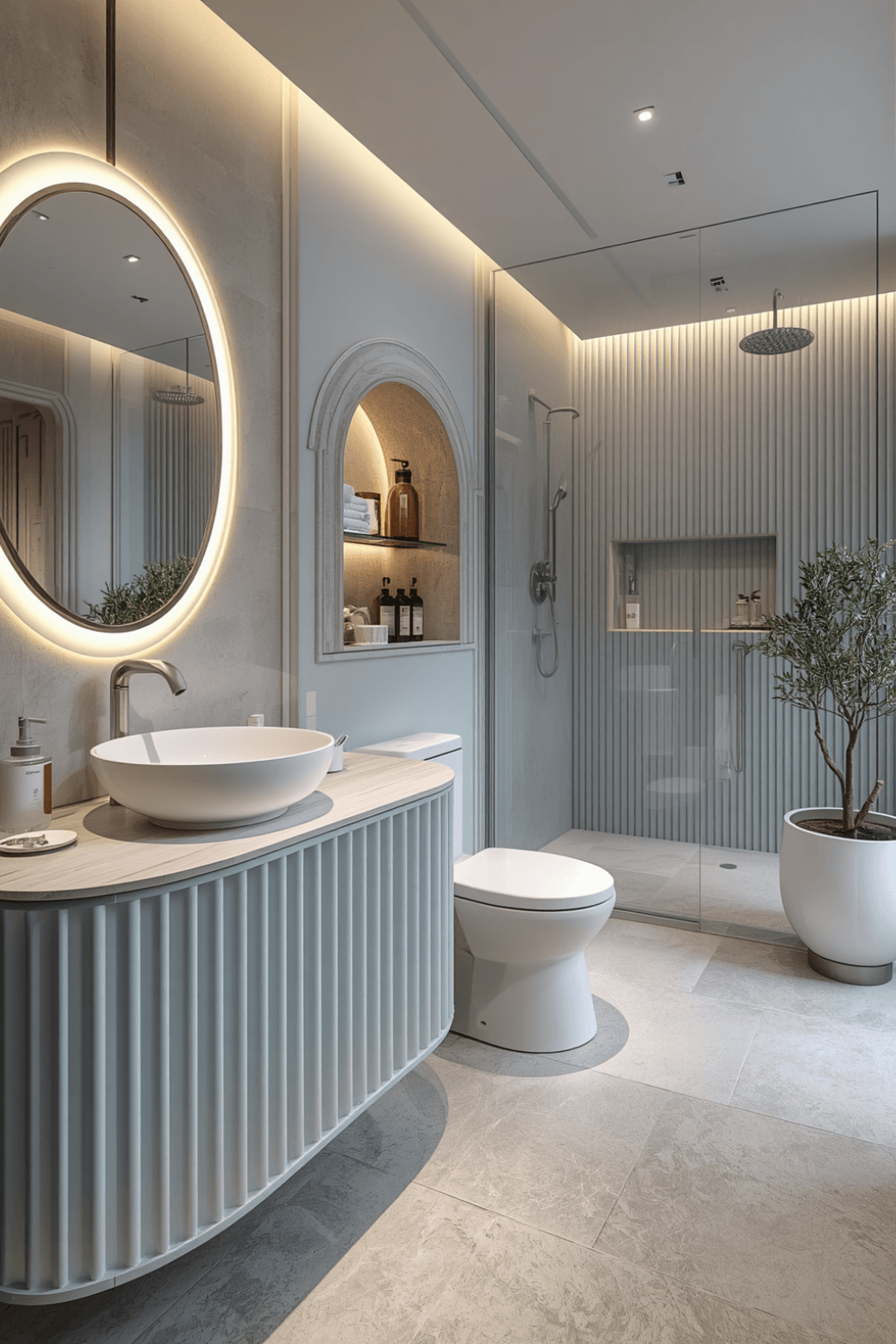 I switched my bulbs to a 3000K warm white temperature, which renders skin tones accurately without the harsh blue-white cast that cooler bulbs, usually 4000K and above, tend to create. Cooler temperatures can be useful for general room lighting, but they’re rarely flattering for a mirror you’re looking directly into.
3. Layer in general ambient lighting separately from vanity lighting
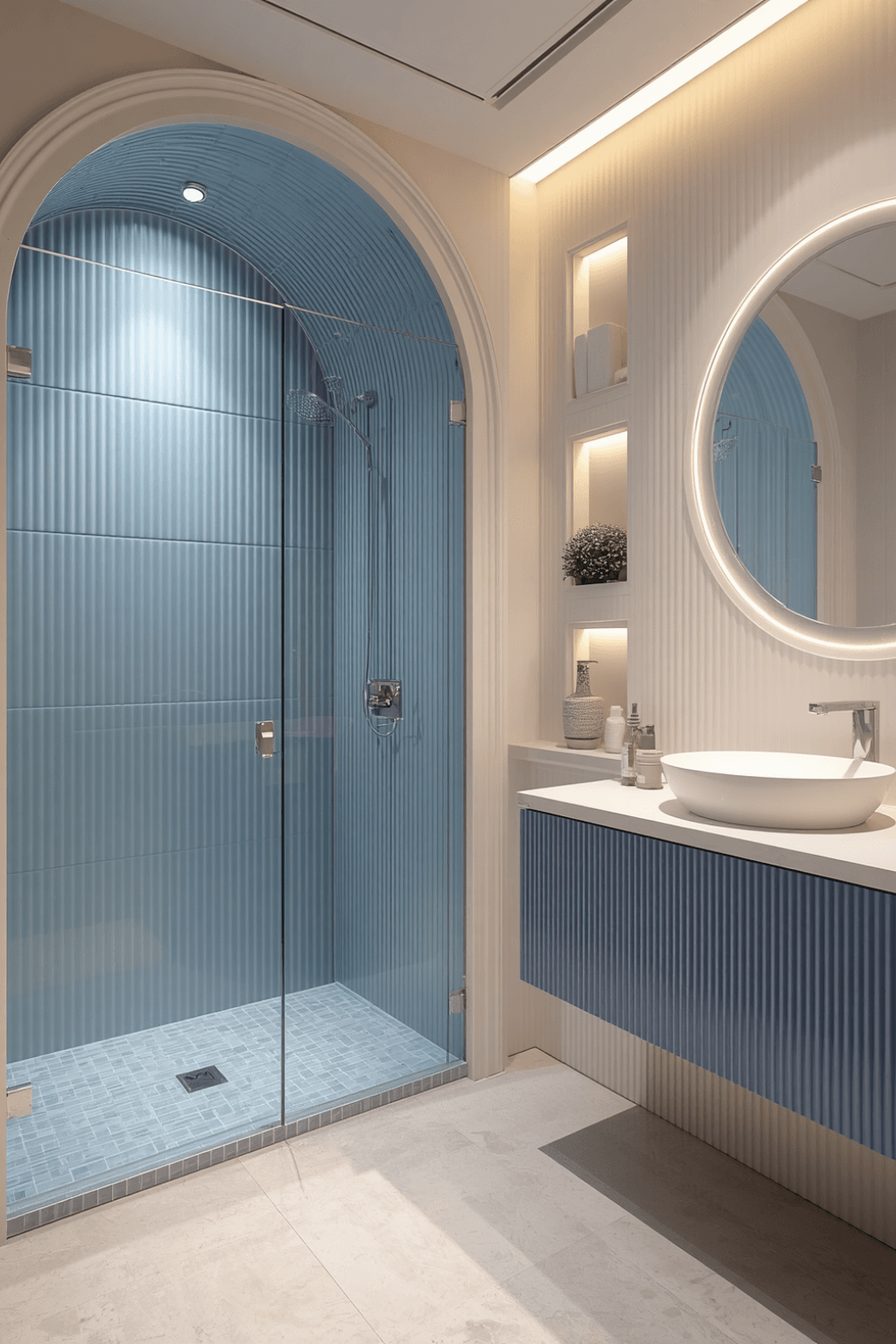 I kept a recessed ceiling light for overall room brightness, but treat it as separate from my vanity lighting rather than expecting it to do both jobs. Splitting these functions means I can have bright, functional light for cleaning or general use, and softer, more flattering light specifically for the mirror area.
4. Add a dimmer switch if your fixtures support it
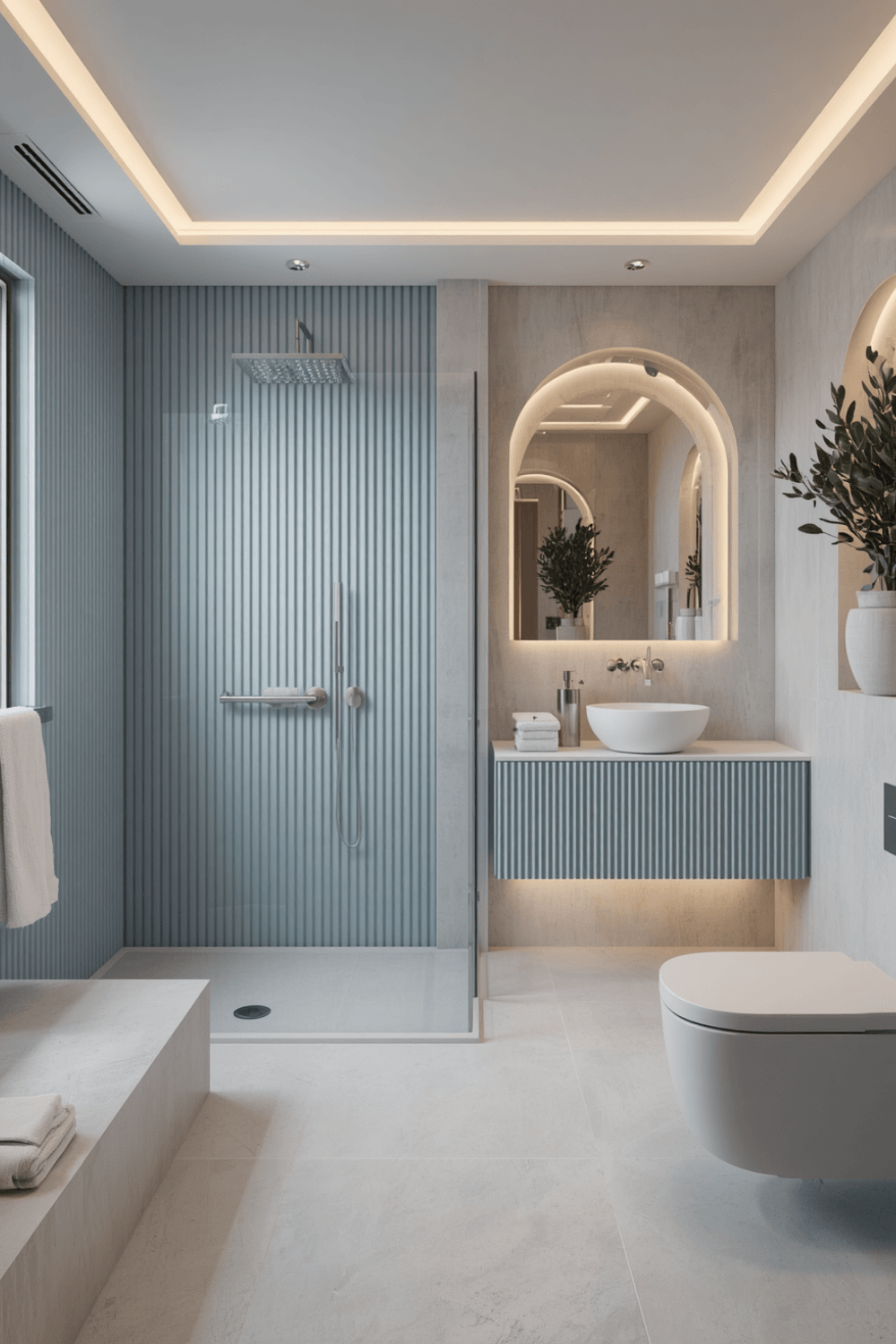 I installed a simple dimmer on my vanity lighting circuit, which lets me shift between bright task lighting in the morning and a softer, more relaxing glow in the evening. It’s a relatively inexpensive electrical upgrade that made the room feel noticeably more adaptable to different times of day.
5. Consider a lighted mirror for smaller bathrooms without much wall space
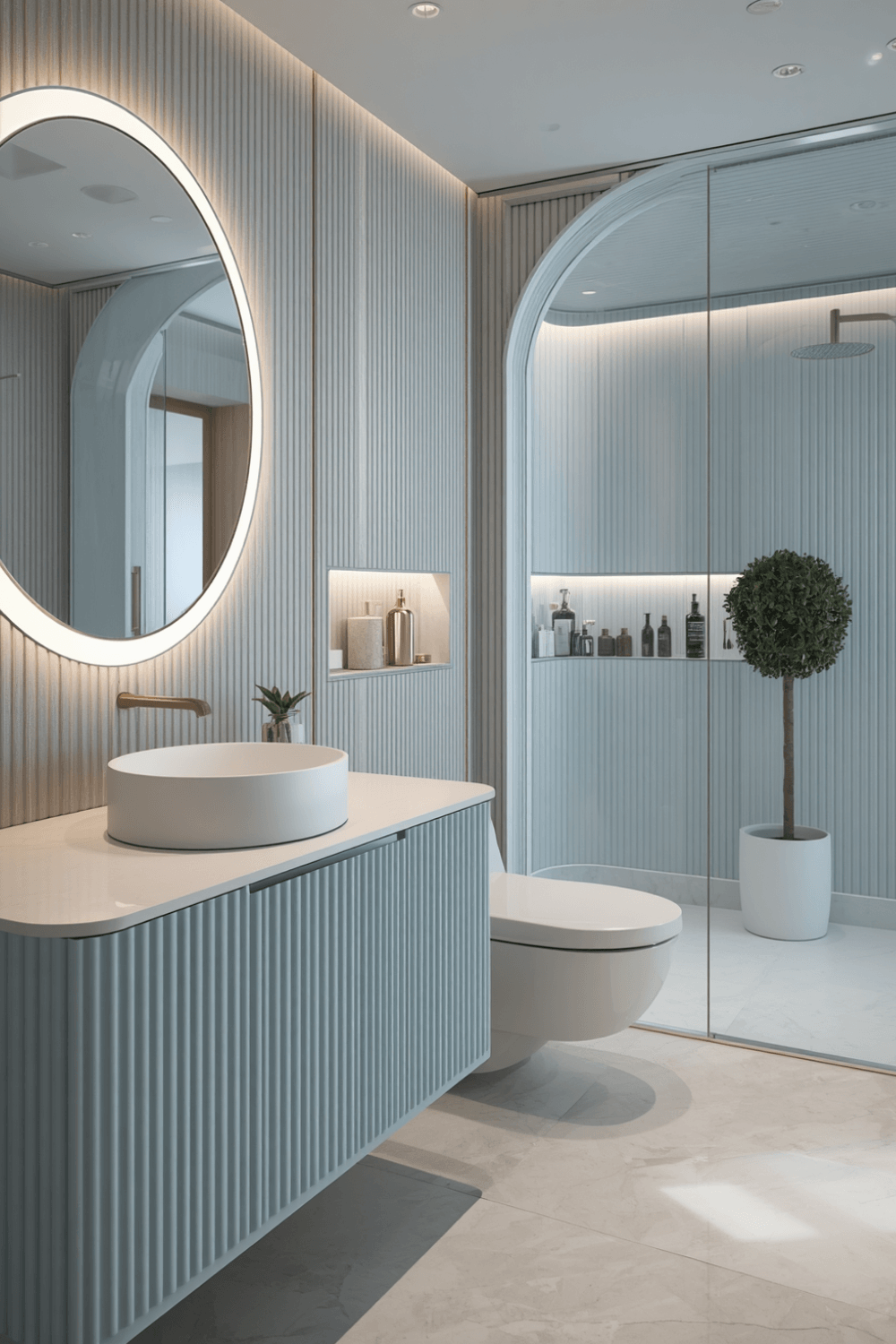 In a small guest bathroom where I didn’t have room for separate side sconces, I used a mirror with built-in LED lighting around the frame instead. It achieves a similar even, front-facing light effect without needing additional wall-mounted fixtures on either side.
6. Don’t forget shower and tub area lighting
My shower originally relied entirely on light spilling in from the vanity area, which left it noticeably dim, especially in the evening. I added a dedicated waterproof-rated recessed light directly above the shower, and it made a genuinely surprising difference in how usable and safe that space feels now.
7. Match your fixture finish to your other bathroom hardware
I chose matte black sconces to match my existing faucet and cabinet hardware, which pulled the whole space together visually instead of introducing yet another separate metal finish into the room. Lighting fixtures are functional, but they’re also a design element that should coordinate with everything else in the space.
Real Examples From People I Know
A friend with a small bathroom used a single wide LED light bar mounted directly above her mirror instead of side sconces, since her mirror wasn’t wide enough to accommodate flanking fixtures. It still provides much more even coverage than a single overhead can light, and it was a simpler installation for her specific layout.
Another friend added smart bulbs throughout her bathroom lighting setup, controlled through a basic app, which lets her switch between a bright white for cleaning and getting ready and a warmer, dimmer setting for evening baths without needing physical dimmer switches installed.
Common Mistakes to Avoid
Relying on a single overhead light for everything. It almost always creates unflattering shadows on the face and doesn’t serve both general and vanity lighting needs well.
Choosing a cool color temperature for vanity lighting. It tends to distort how skin tones actually look, making warmer 3000K bulbs a better choice for mirror areas.
Skipping shower or tub lighting entirely. These areas often end up dimmer than expected when they rely only on spillover light from elsewhere in the room.
Ignoring how your fixture finish coordinates with existing hardware. Mismatched metal finishes can make an otherwise well-designed bathroom feel slightly unplanned.
Forgetting a dimmer option when your fixtures support one. It’s a relatively small upgrade that adds a lot of flexibility for different times of day and different tasks.
Final Thoughts
My bathroom lighting fix didn’t require a full renovation, just an honest look at where my previous setup was actually failing me every single morning. Adding proper side lighting and switching to a warmer bulb temperature made more of a visible difference than almost any other change I’ve made in that room.
If your bathroom lighting has been quietly working against you the same way mine was, start with vertical lighting on either side of your mirror and a warmer bulb temperature before considering anything more involved. That combination alone solves the majority of common bathroom lighting complaints.