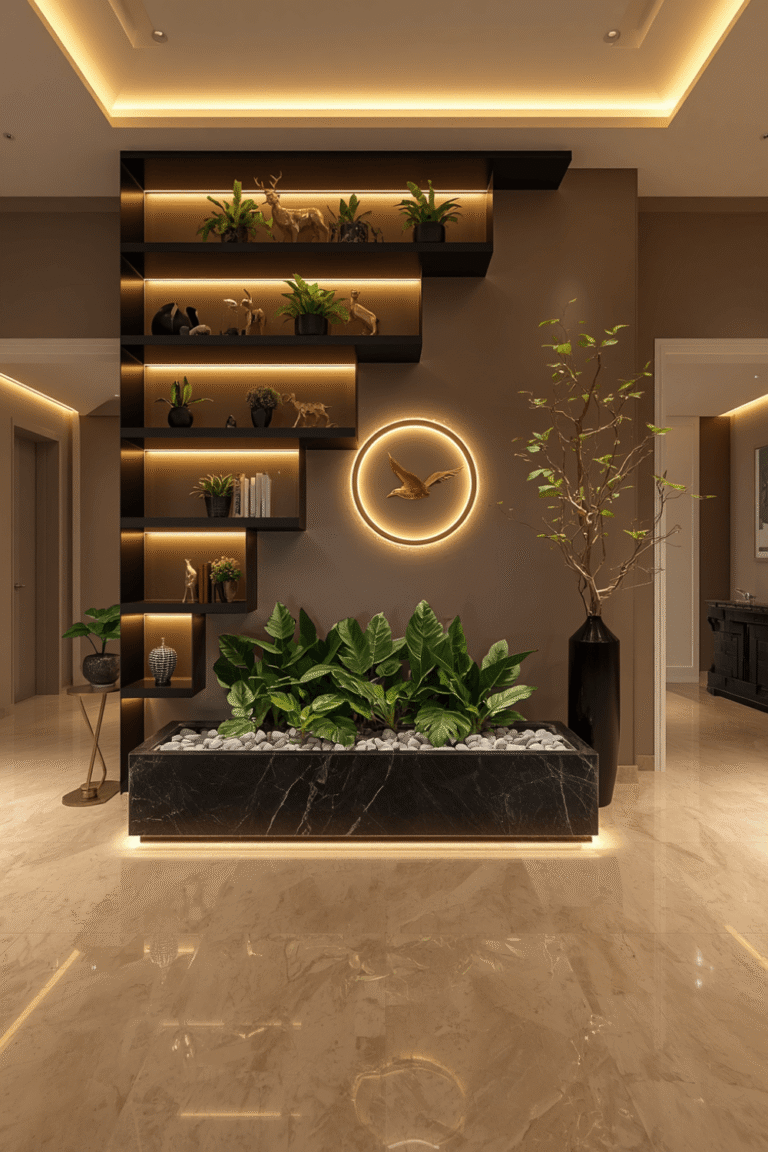
20 Luxury Staircase Ideas with Stunning Indoor Garden Designs
The aesthetic case is stronger. Modern staircase design particularly floating wooden stairs and open-riser configurations already has a transparency to it. You can see through and past the structure. Adding greenery beneath amplifies this: the staircase appears to float above a garden rather than rest on a floor. It’s a visual trick that works in photographs and in person.
Then there’s the atmosphere piece. Indoor plant decor in a high-traffic transitional space (which a staircase always is) means people pass through it constantly. Greenery in that location has a disproportionate effect on how the home feels calmer, fresher, more alive. Several interior designers working in zen interior design note that the entry experience sets the emotional tone for the whole house. Under stairs gardens do exactly that.
Ideas 1–5: Simple Indoor Plant Arrangements for Any Home
1. A Tiered Plant Stand With Trailing Species
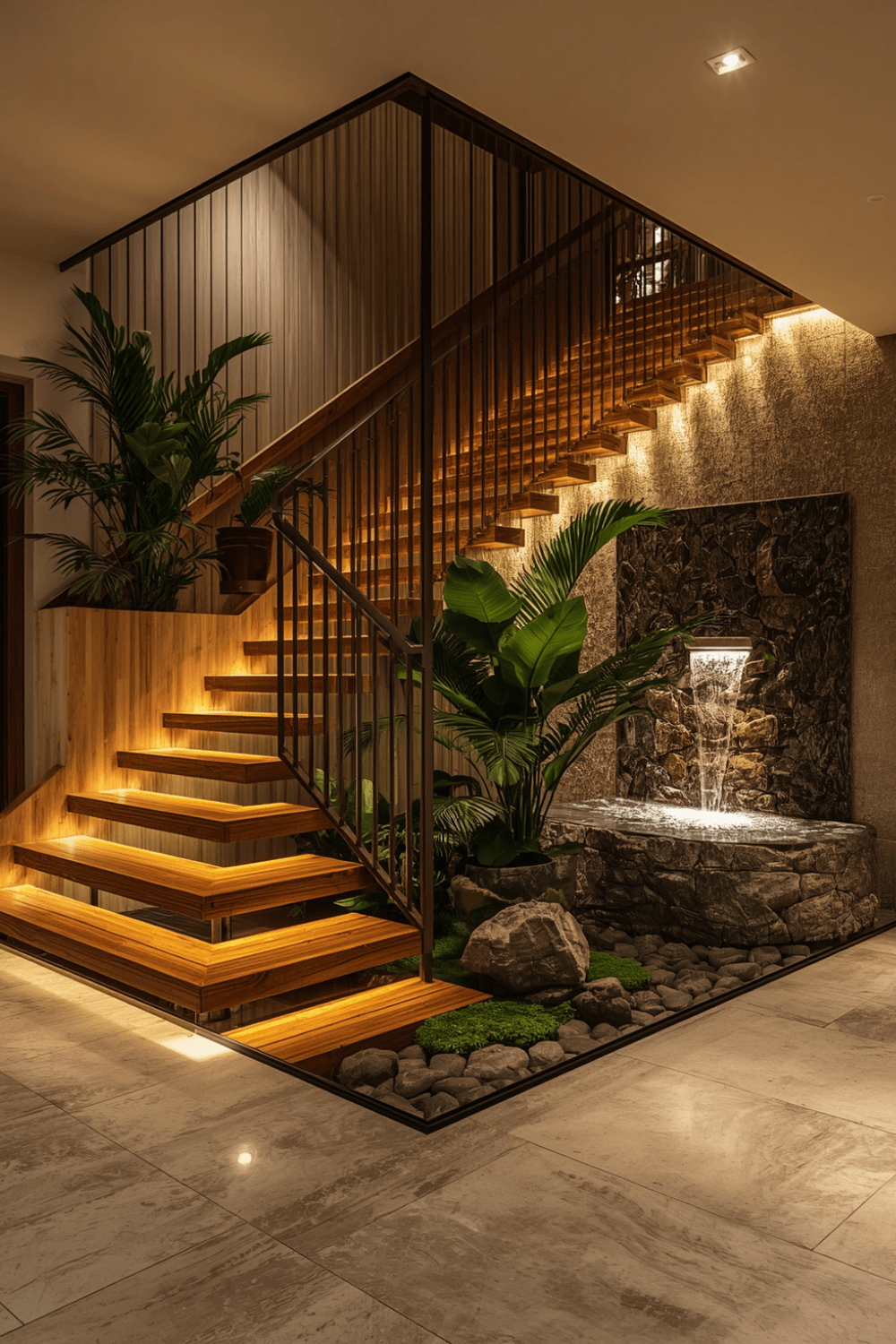
A tall tiered plant stand tucked into the corner beneath a staircase gives height variation without requiring any built-ins. Combine trailing species at the top pothos, heartleaf philodendron, string of pearls with mid-height plants in the middle and low ground-cover types at the base. The cascade down mirrors the angle of the stair itself.
2. Built-In Shelving With Recessed Grow Lights
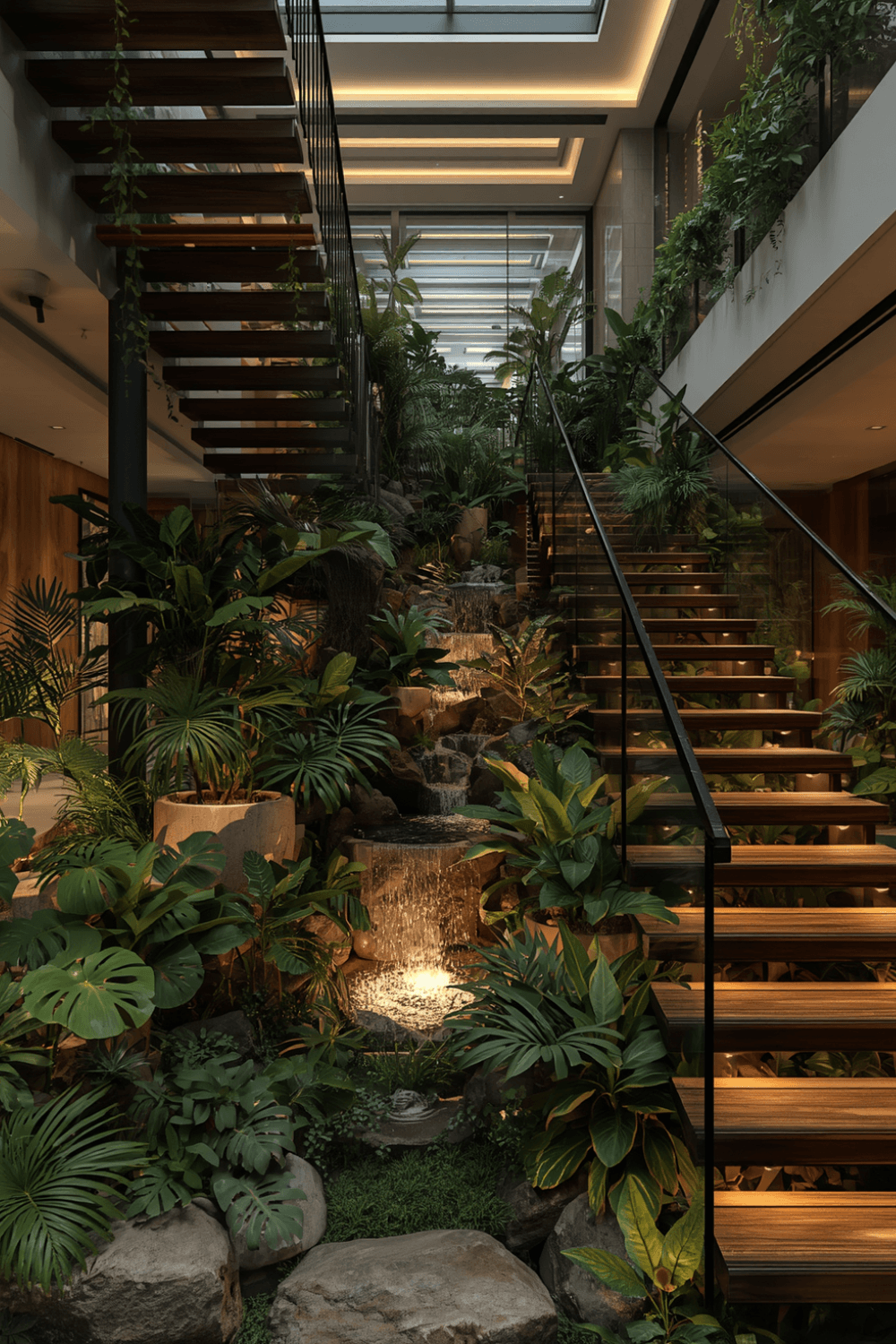
If there’s no natural light reaching the space, built-in shelving with recessed LED grow lights solves the problem entirely. Warm-spectrum grow lights to ambient lighting while actually supporting plant growth. Ferns, peace lilies, and pothos all do well under this setup. The shelving itself becomes an indoor landscaping idea — a living wall you walk past every day.
3. A Single Large Statement Plant in a Sculptural Pot
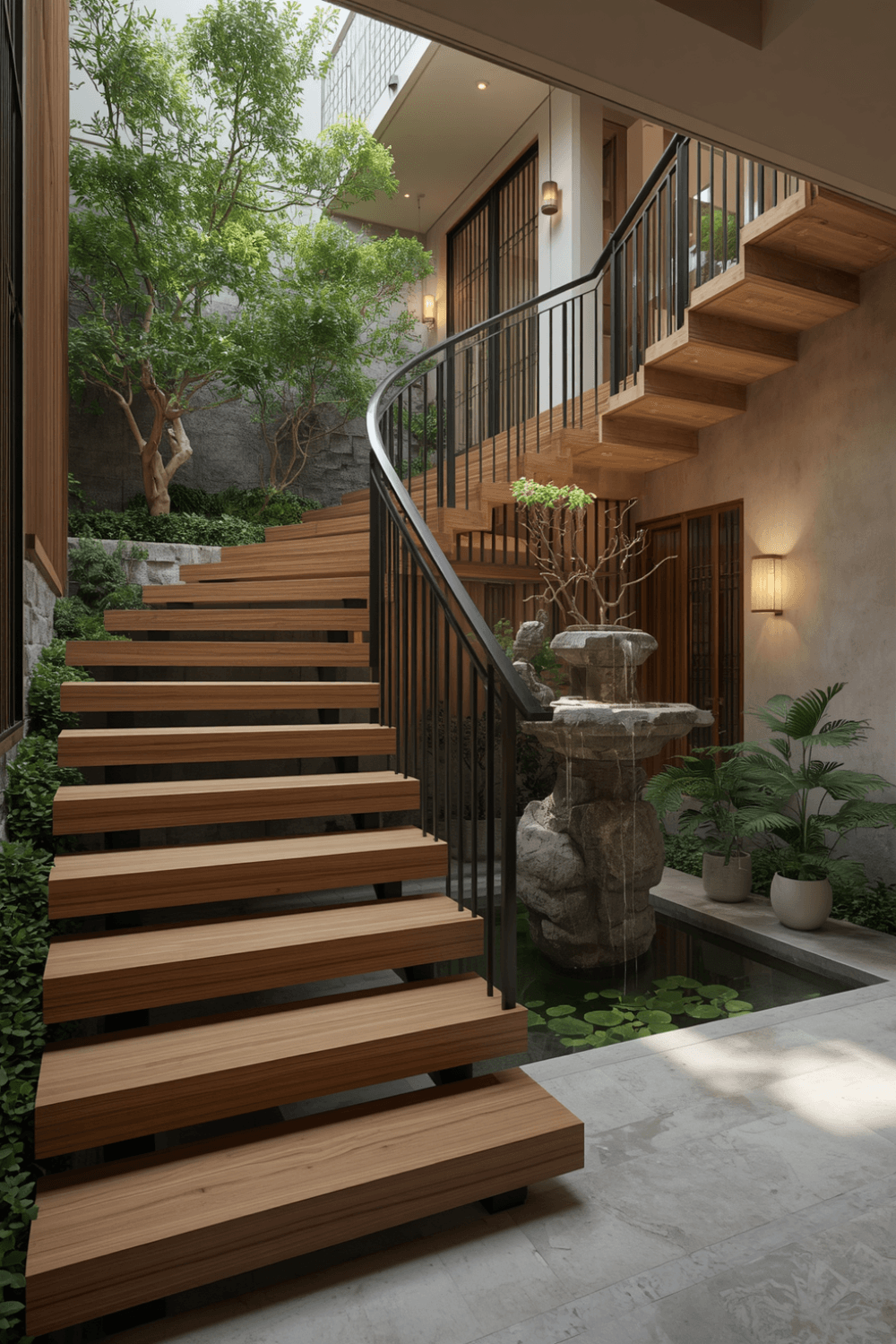
Sometimes one plant does more than twelve. A large fiddle-leaf fig, bird of paradise, or monstera deliciosa in a sculptural concrete or ceramic pot placed beneath an open-riser staircase is a complete design statement. The key is scale the pot and plant need to be large enough to hold their own against the staircase above them.
4. Clustered Tropical Plants for a Jungle Corner
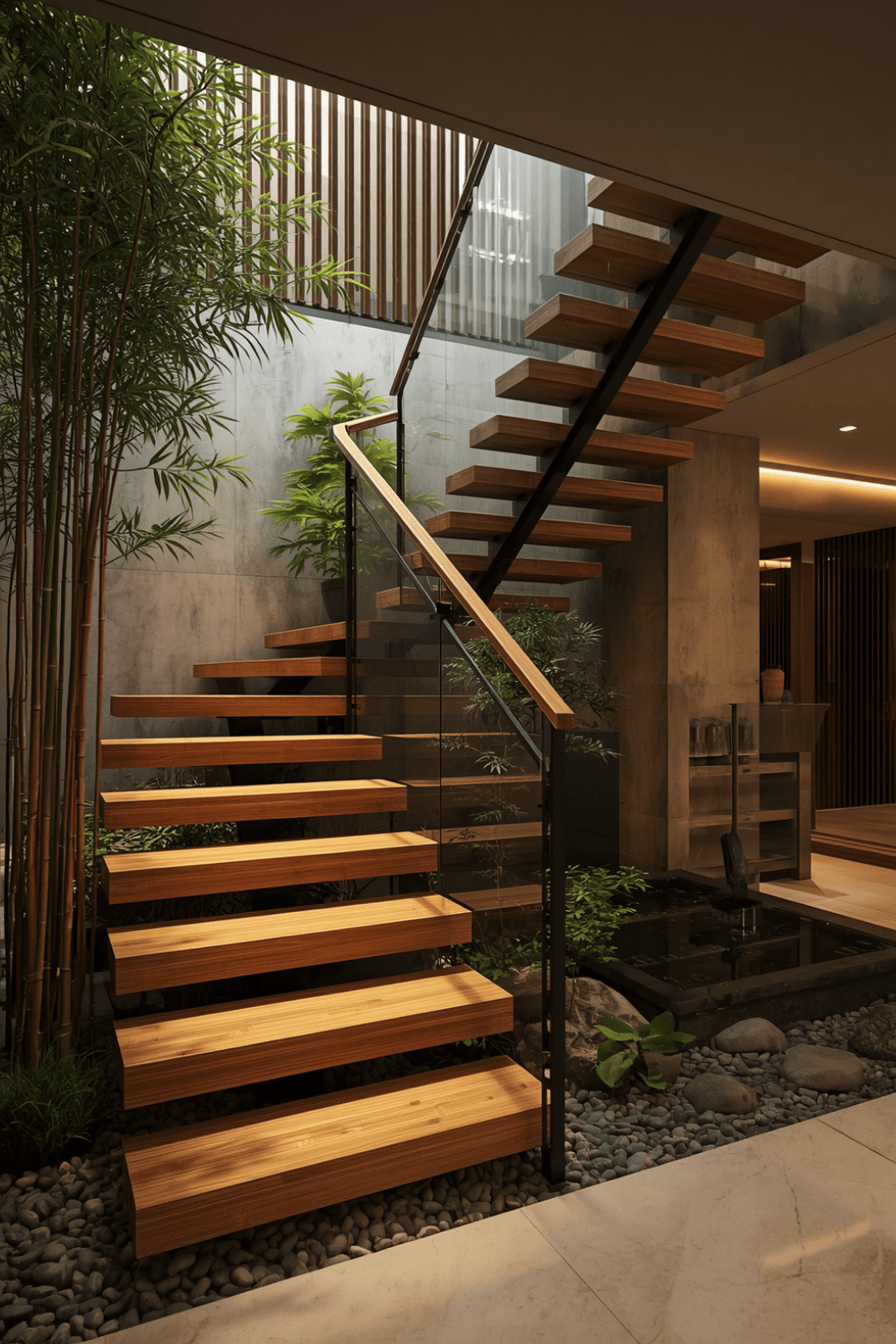
Grouping plants together rather than spacing them evenly creates density and a more naturalistic feel. A cluster of tropical species under the stairs ) in a mix of pot sizes and heights reads as deliberately curated rather than incidentally placed. Add a layer of pebbles on top of the soil in each pot to tie the arrangement together visually.
5. A Moss Wall Panel as a Backdrop
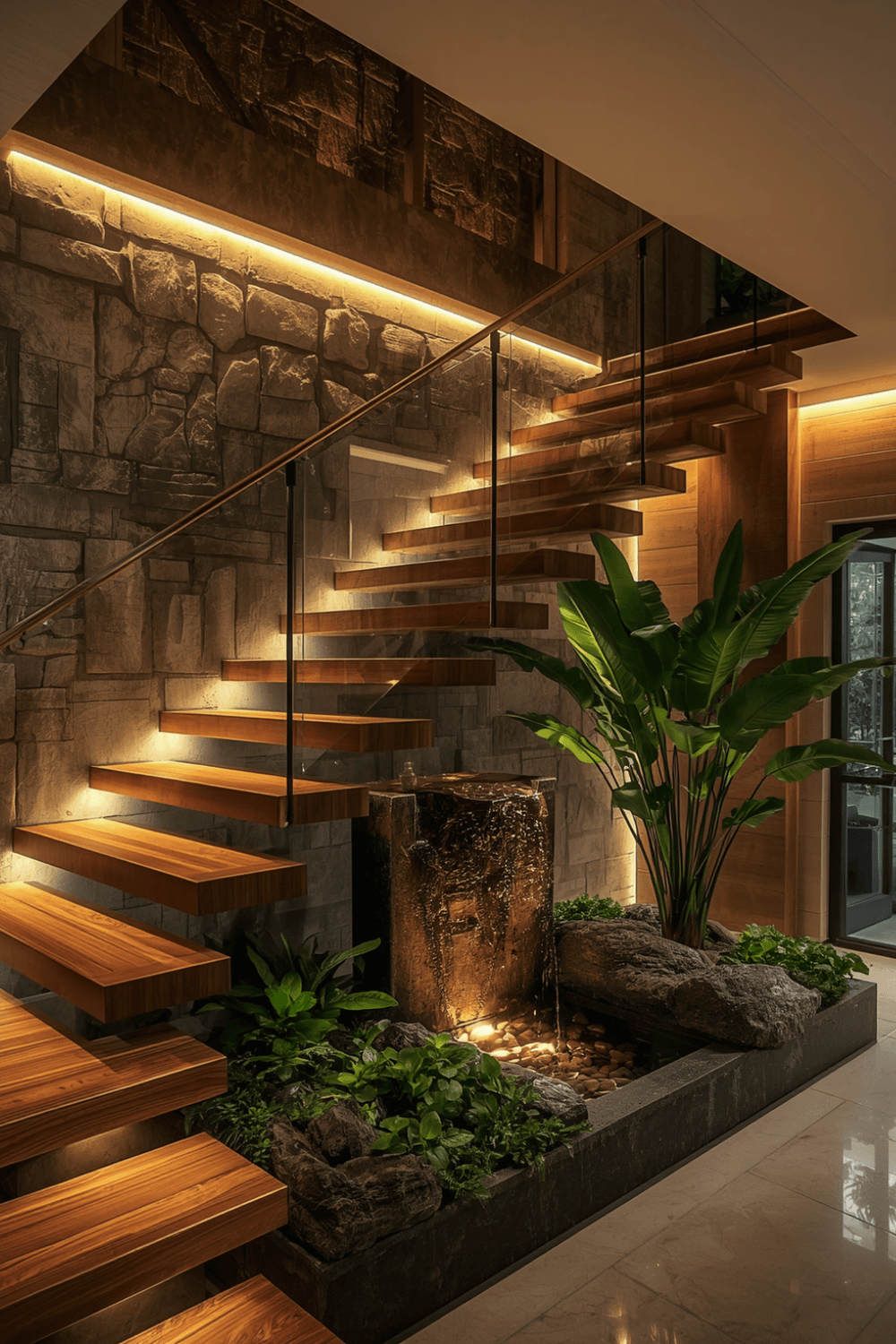
Preserved moss panels require no watering, no light, and almost no maintenance. Fixed to the wall beneath a staircase as a backdrop for freestanding plants, they add texture and depth that a painted wall simply can’t match. They’re particularly effective in minimalist interior design schemes where the palette is neutral and the moss becomes one of very few organic elements.
Ideas 6–10: Water Features Under Stairs That Transform the Entry
6. A Small Indoor Water Fountain in a Stone Basin
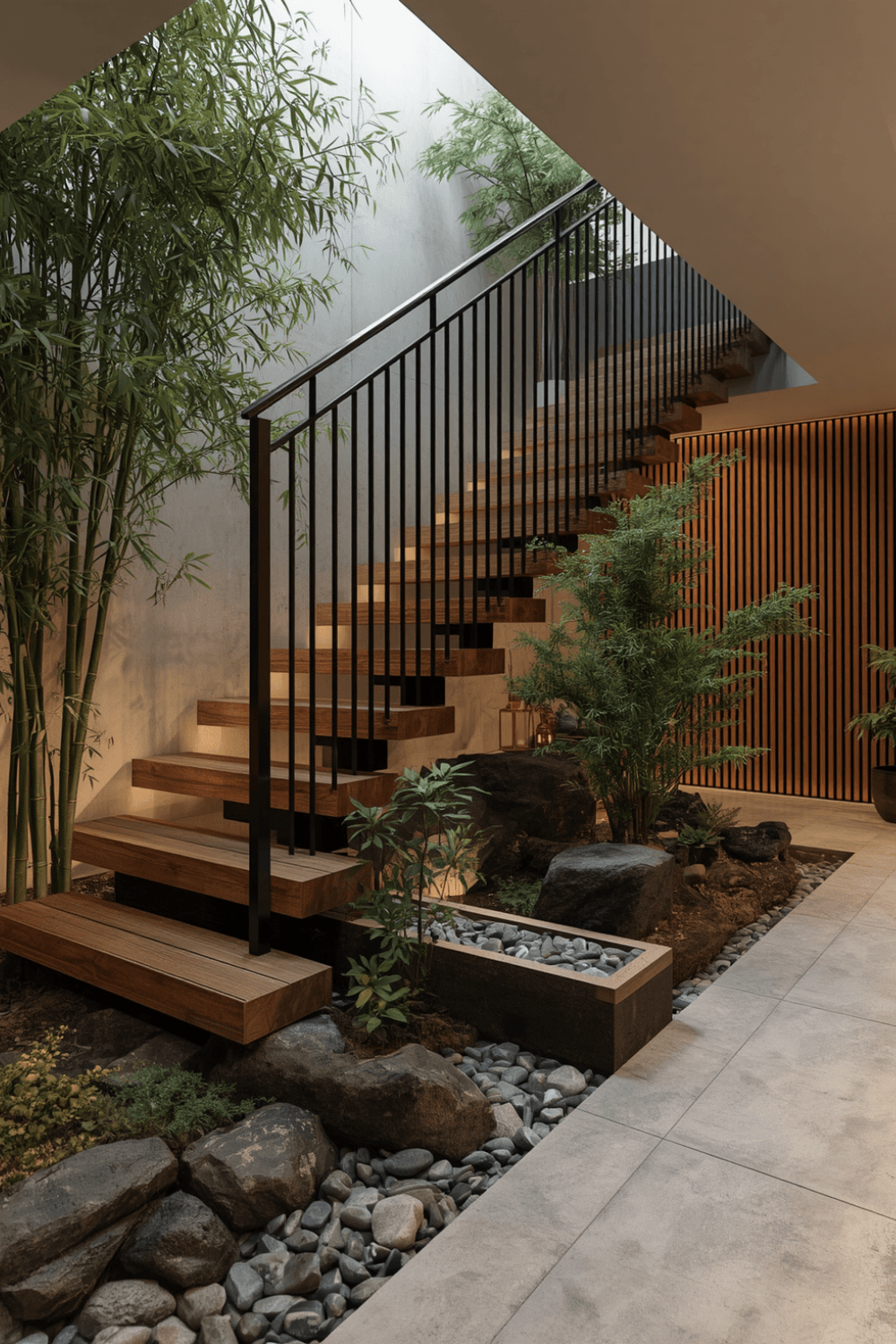
A compact indoor water fountain water bubbling up through river stones into a shallow basin works beautifully beneath a staircase. The sound carries through the entry and lower floor without being loud. The visual is calm and grounding. This setup is common in zen interior design and Japanese zen garden indoor aesthetics, where the combination of stone, water, and minimal planting creates something genuinely meditative.
7. A Recirculating Stream Through a Planted Bed
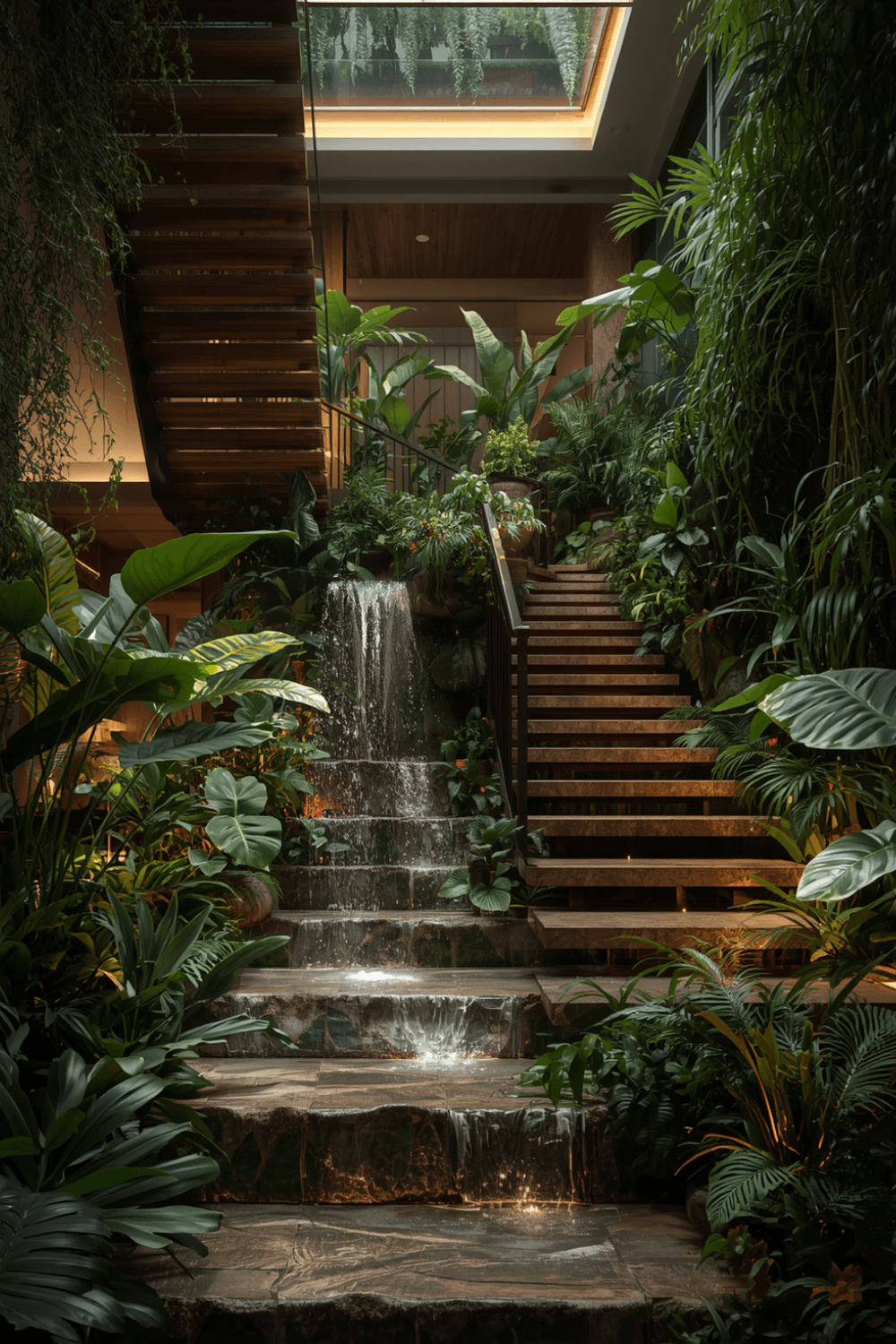
In larger under-stair spaces particularly in modern luxury house designs with double-height entries a shallow recirculating stream running through a planted bed creates an indoor courtyard design feel. Stone-edged, planted with moisture-loving species at the margins, it looks like a section of garden has been brought inside and placed beneath the staircase.
8. A Zen Gravel Garden With Water Feature
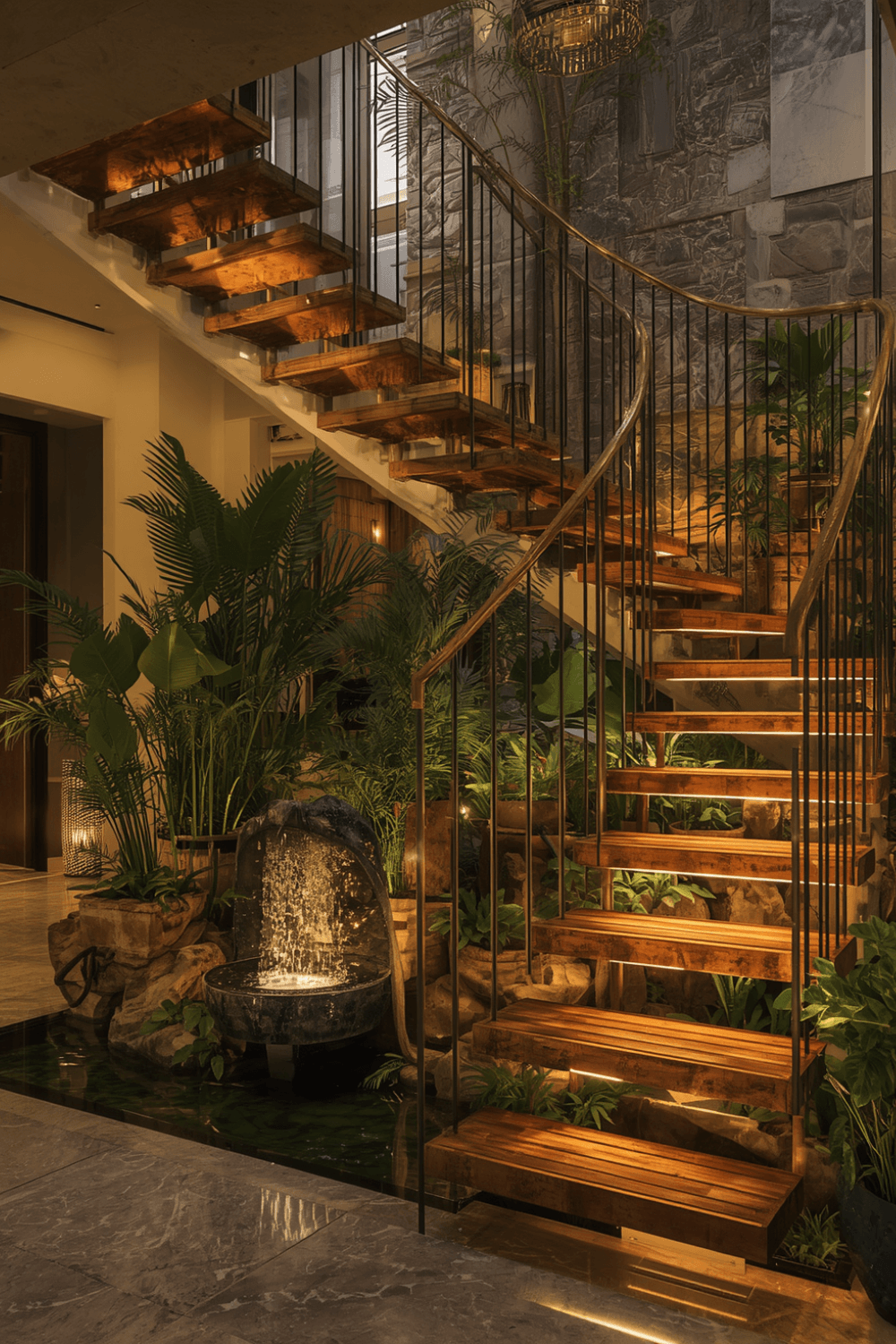
Combine raked gravel, a few carefully placed stones, and a single bubbling water source for a Japanese zen garden indoor installation. The gravel can be raked into traditional wave patterns. A single bonsai or compact bamboo clump adds the plant element. The whole thing fits into a shallow tray with a sealed base no complicated plumbing required. This aesthetic has broad global appeal and works particularly well beneath the clean lines of a contemporary staircase.
9. Wall-Mounted Water Blade Into a Planting Trough
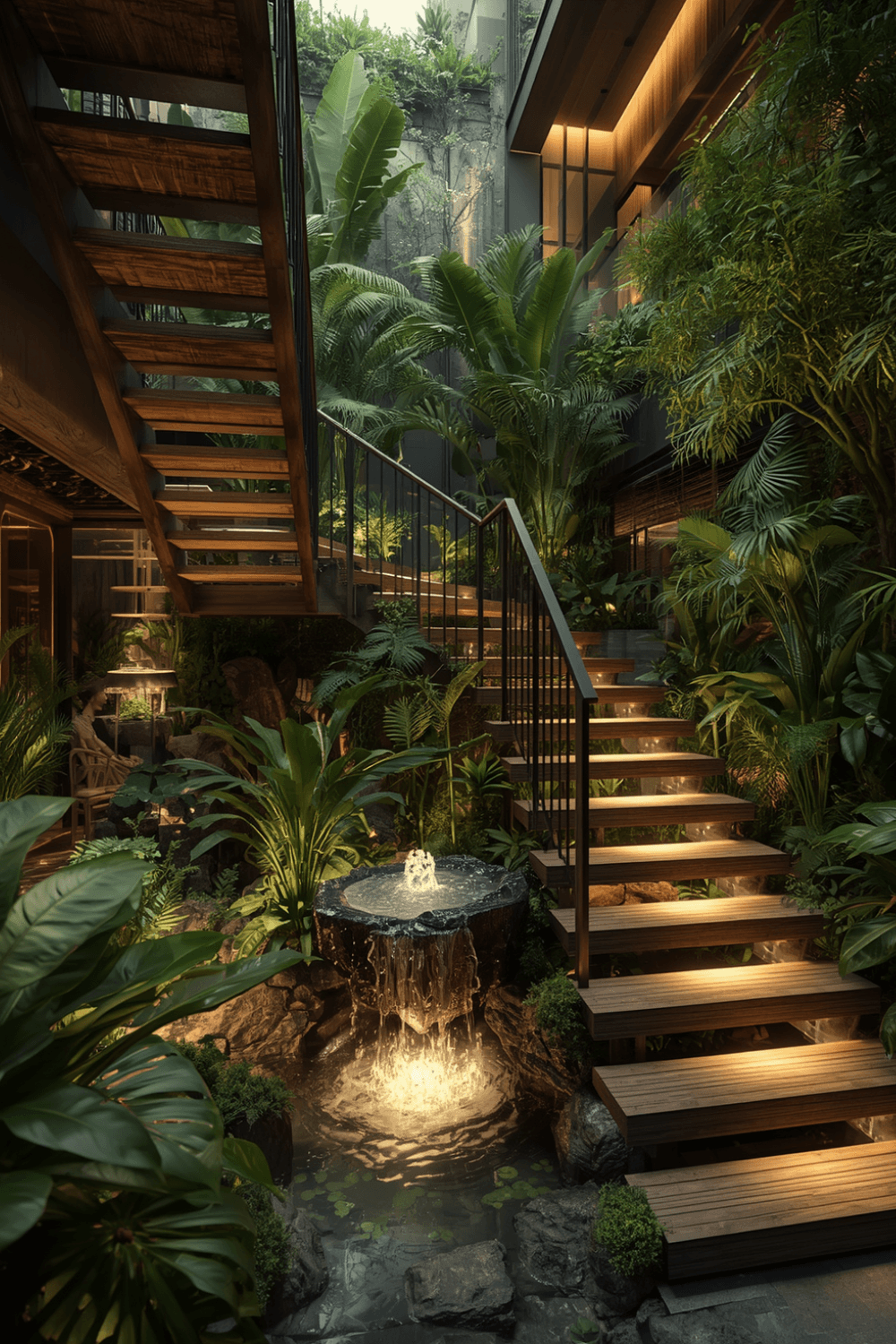
A water blade a flat, wide sheet of water falling from a wall-mounted spout into a long planting trough is a more architectural approach. The sound is white-noise rather than babbling, which some people strongly prefer. Plants in the trough soften the hard edges of the feature. This kind of setup sits well in modern home interior design with strong horizontal lines and material contrast.
10. Reflecting Pool With Floating Aquatic Plants
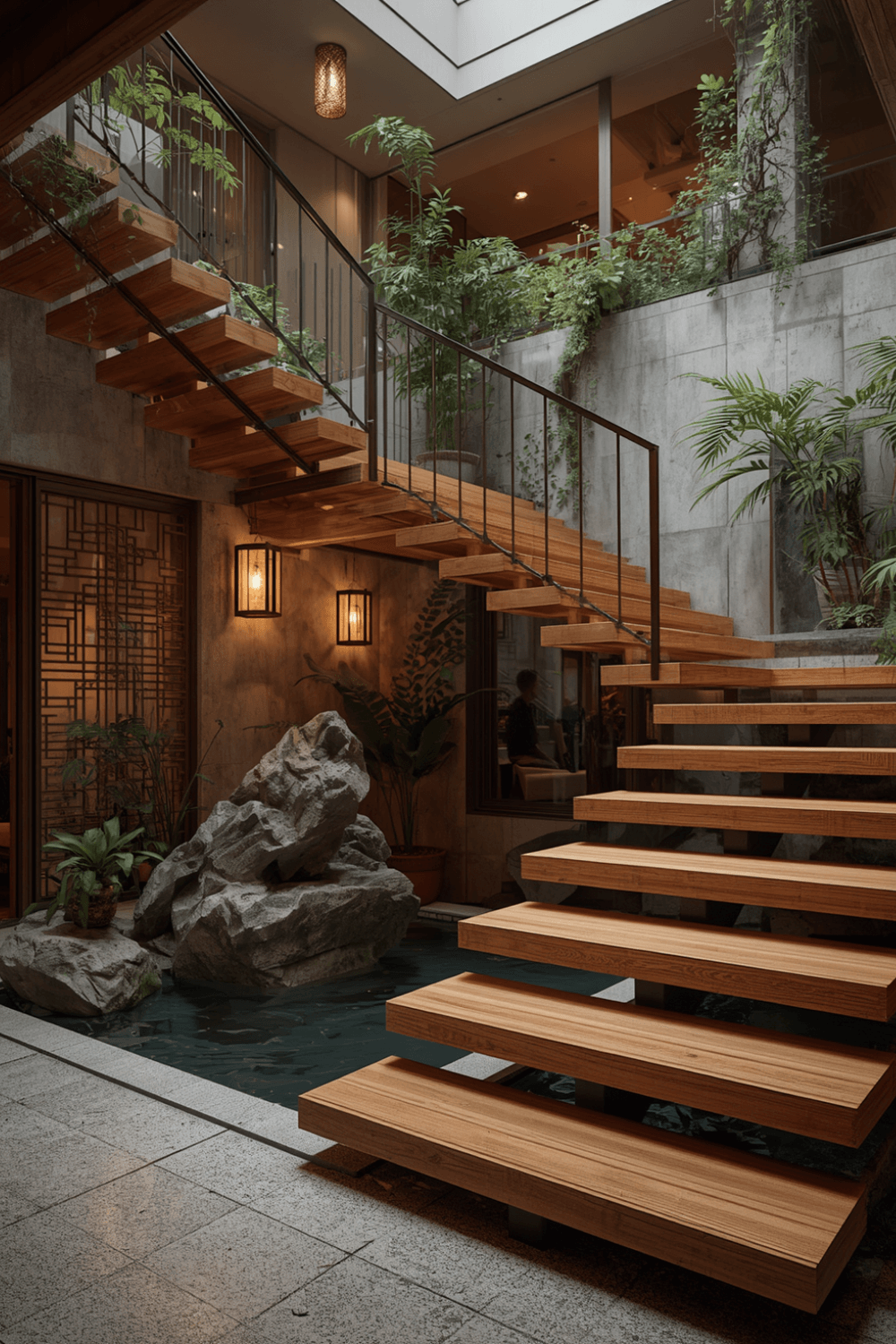
A very shallow in-floor reflecting pool perhaps 4 inches deep, sealed concrete or resin beneath a transparent glass staircase creates a remarkable effect. The staircase appears to float above water. Add a few floating aquatic plants (water hyacinth, miniature water lily) and the illusion is complete. This requires careful planning during a build or renovation, but the impact is permanent.
Ideas 11–15: Staircase Lighting Ideas That Work With Indoor Gardens
11. Warm Uplighting Through the Plant Canopy
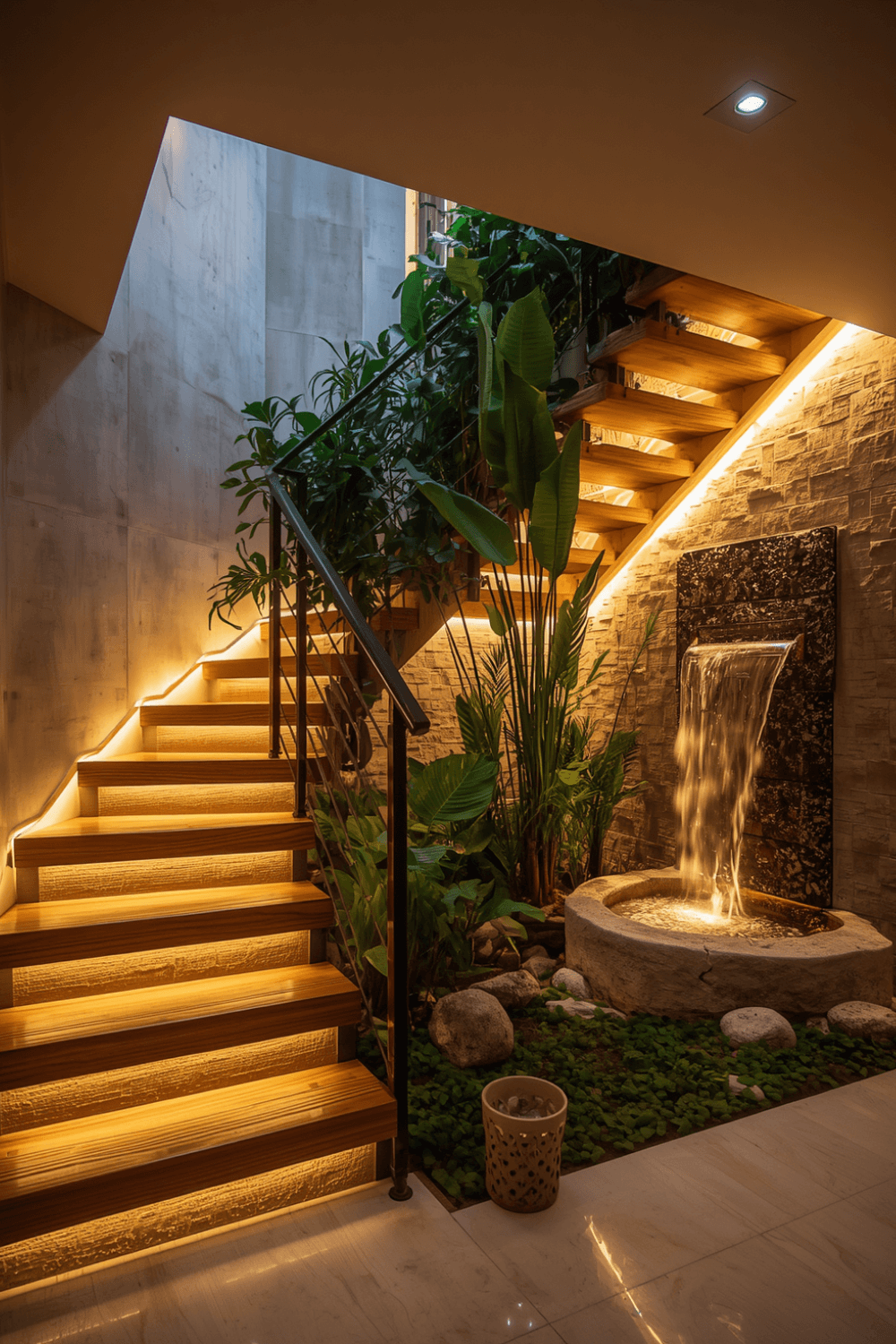
Placing small LED uplight spots at soil level within a planted arrangement creates a glow that rises through leaves and onto the underside of the stairs above. The effect is warm, dramatic, and surprisingly subtle during the day but at night it becomes the focal point of the space.
12. Recessed Stair Tread Lighting That Spills Onto Plants Below
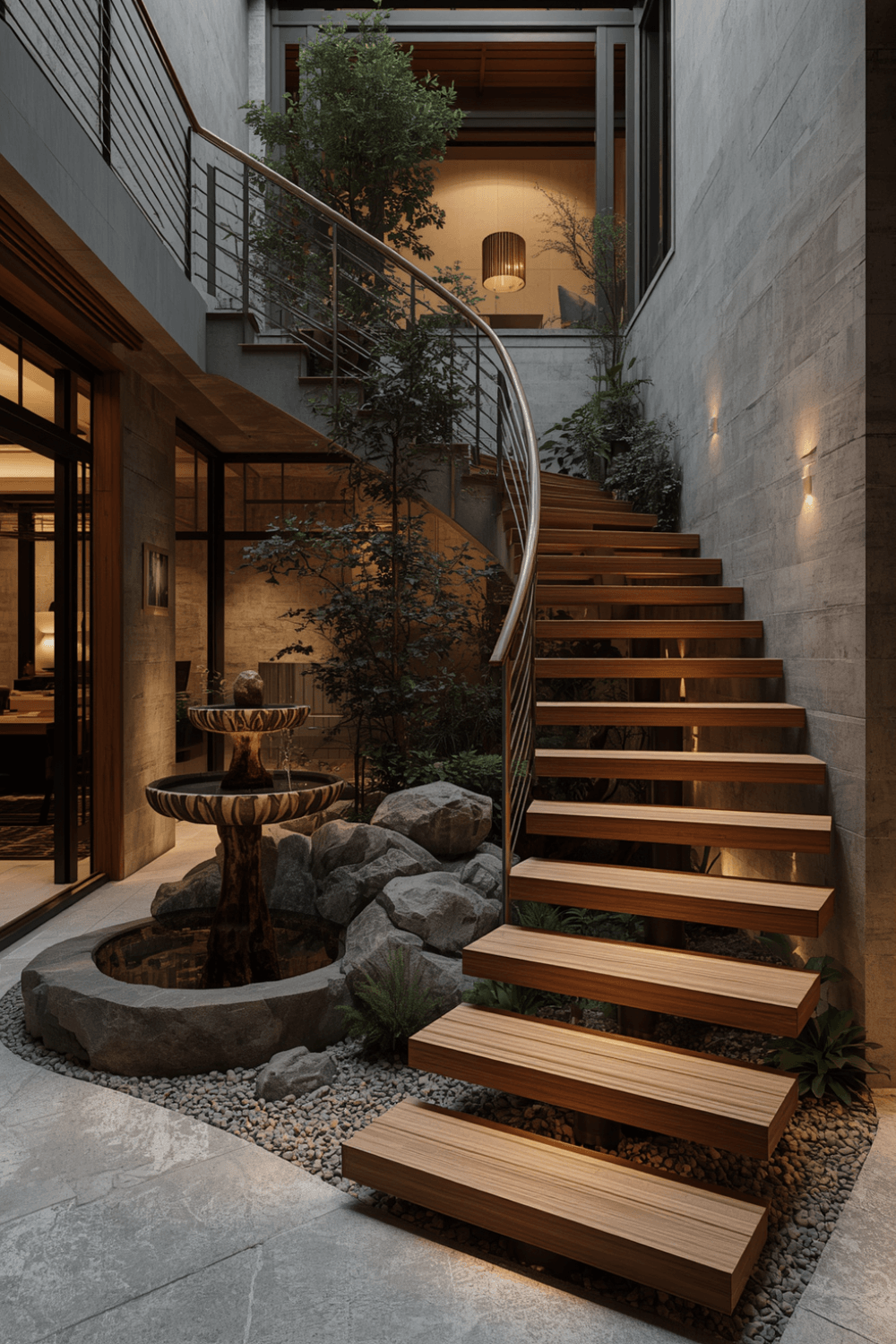
Many contemporary staircase designs now include recessed LED strips built into the tread or riser face. When positioned above a planted area, this light naturally spills downward onto the plants below at night. It serves two purposes staircase wayfinding and garden illumination from a single light source.
13. Pendant Lights at Varying Heights Through the Stair Void
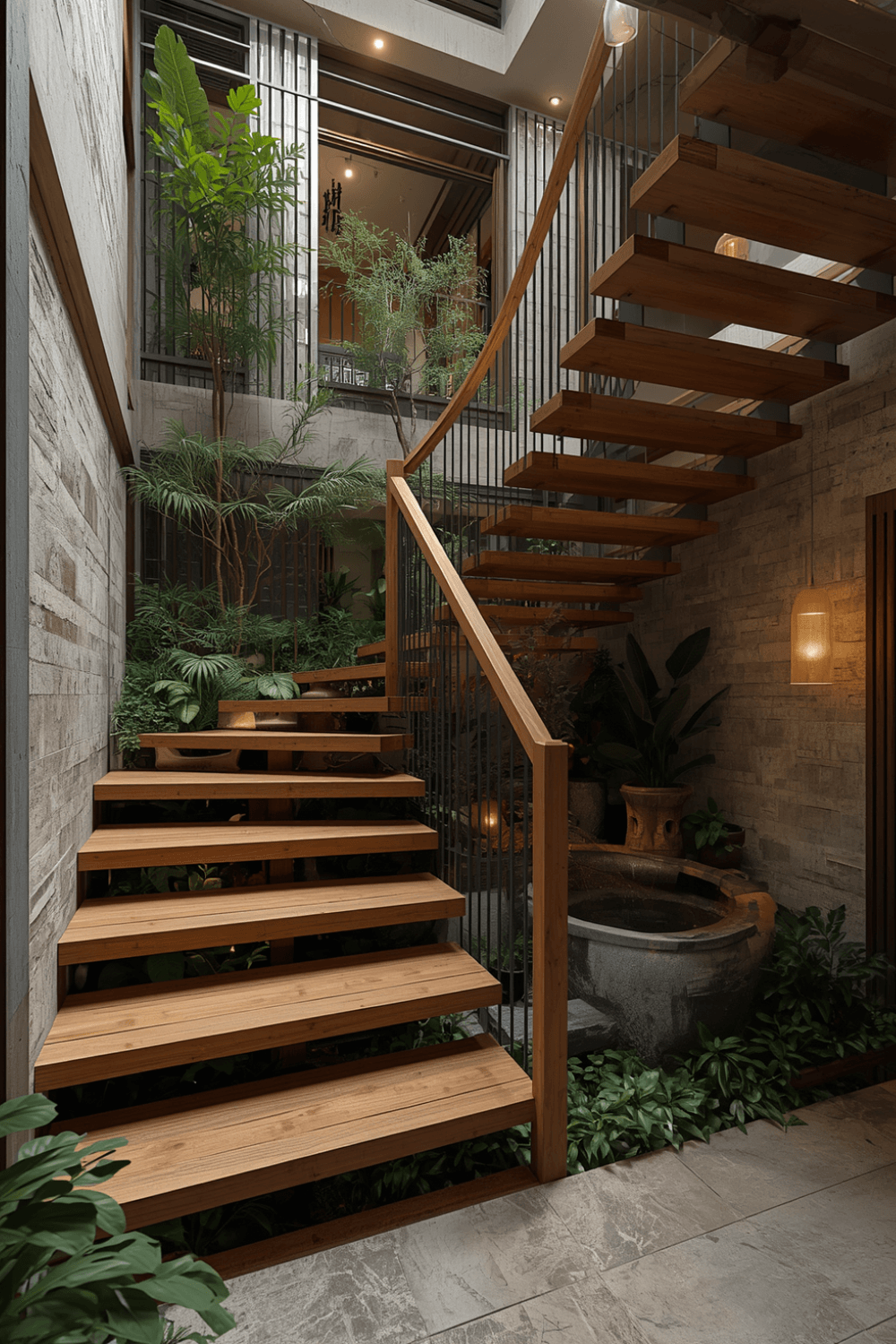
In open staircases with a void alongside them, hanging pendant lights at different heights through that space some low enough to sit within the plant canopy creates layered depth. The pendants themselves become part of the indoor landscaping idea, threading through the greenery rather than sitting above it.
14. Concealed Strip Lighting Along Shelving Edges
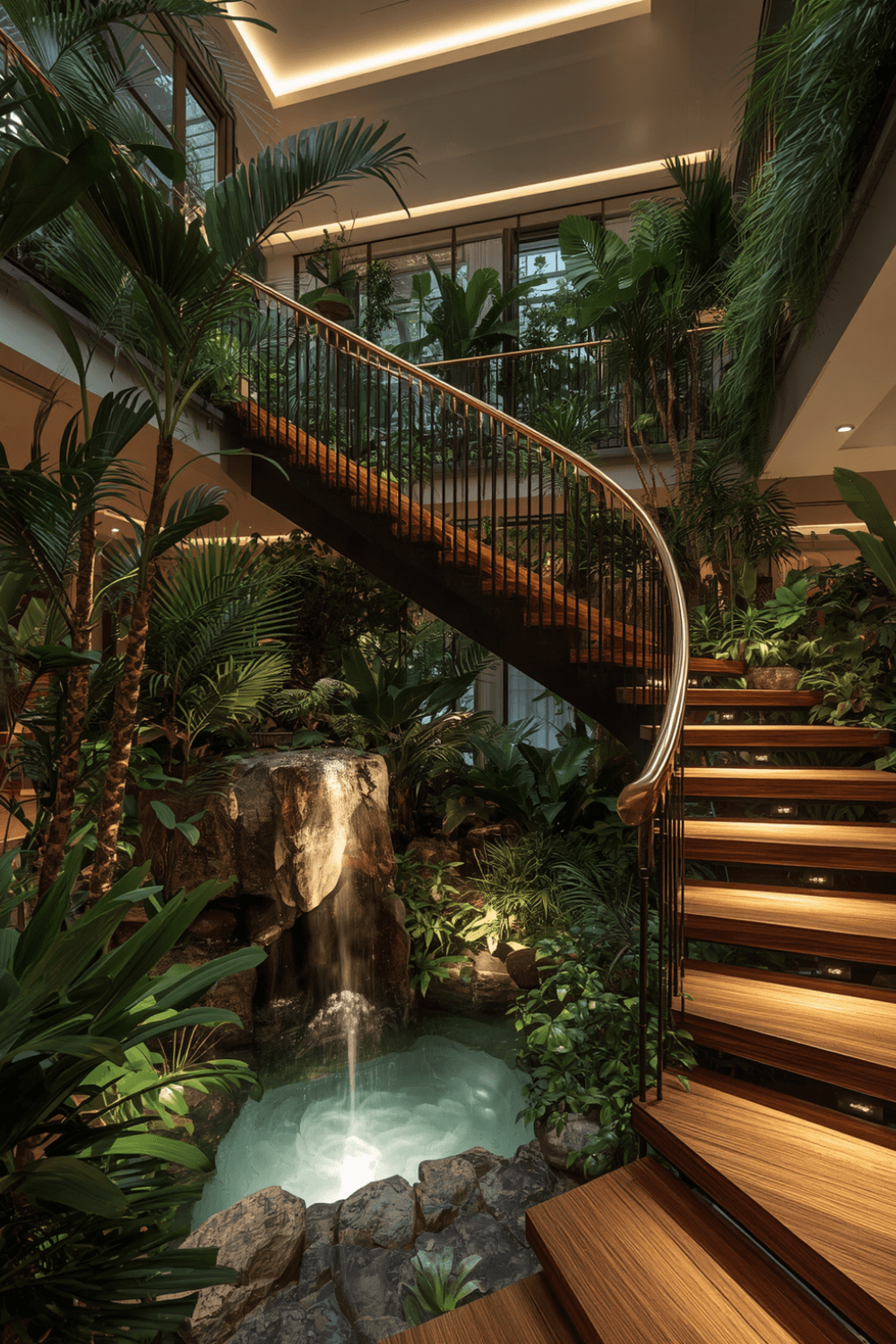
If built-in shelving is part of the under-stairs garden scheme, recessed or concealed LED strips along the front edge of each shelf provide gentle downward light for plants and define the shelving geometry at night. Simple and very effective in minimalist interior design contexts.
15. Backlit Frosted Panel Behind a Zen Garden
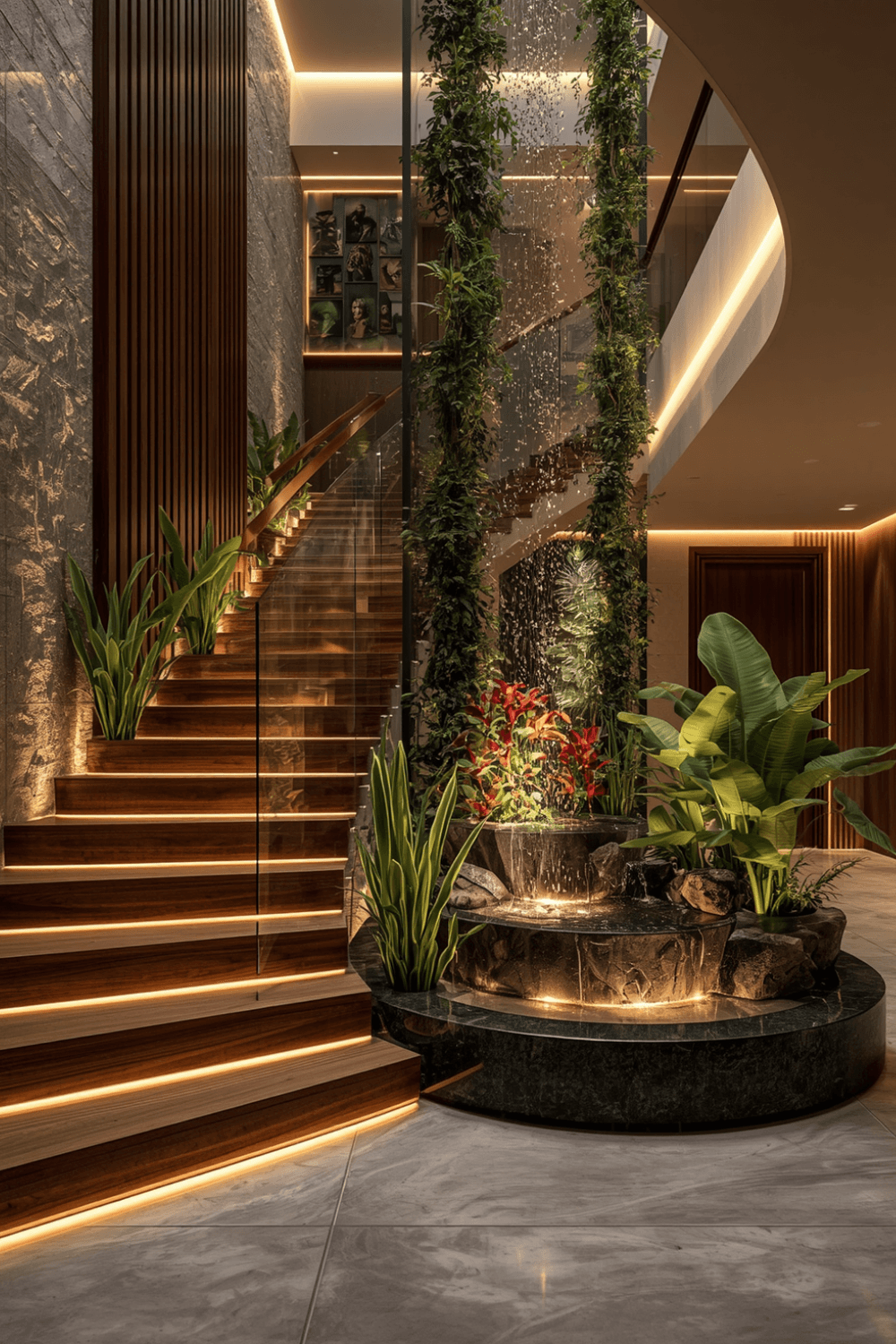
Place a frosted glass or polycarbonate panel behind a zen gravel-and-stone arrangement and backlight it with a cool-to-neutral LED panel. The silhouettes of plants or sculptural stones project onto the frosted surface. It’s a very specific aesthetic more art installation than garden but in the right home it’s remarkable.
Ideas 16–20: Full Transformations — Luxury Entryway and Indoor Courtyard Concepts
These are the bigger ideas. Some are renovation-scale; some are achievable with good contractors and a clear brief. All of them represent what under stairs garden ideas can become when given serious design attention.
16. The Indoor Courtyard Under a Glass Staircase
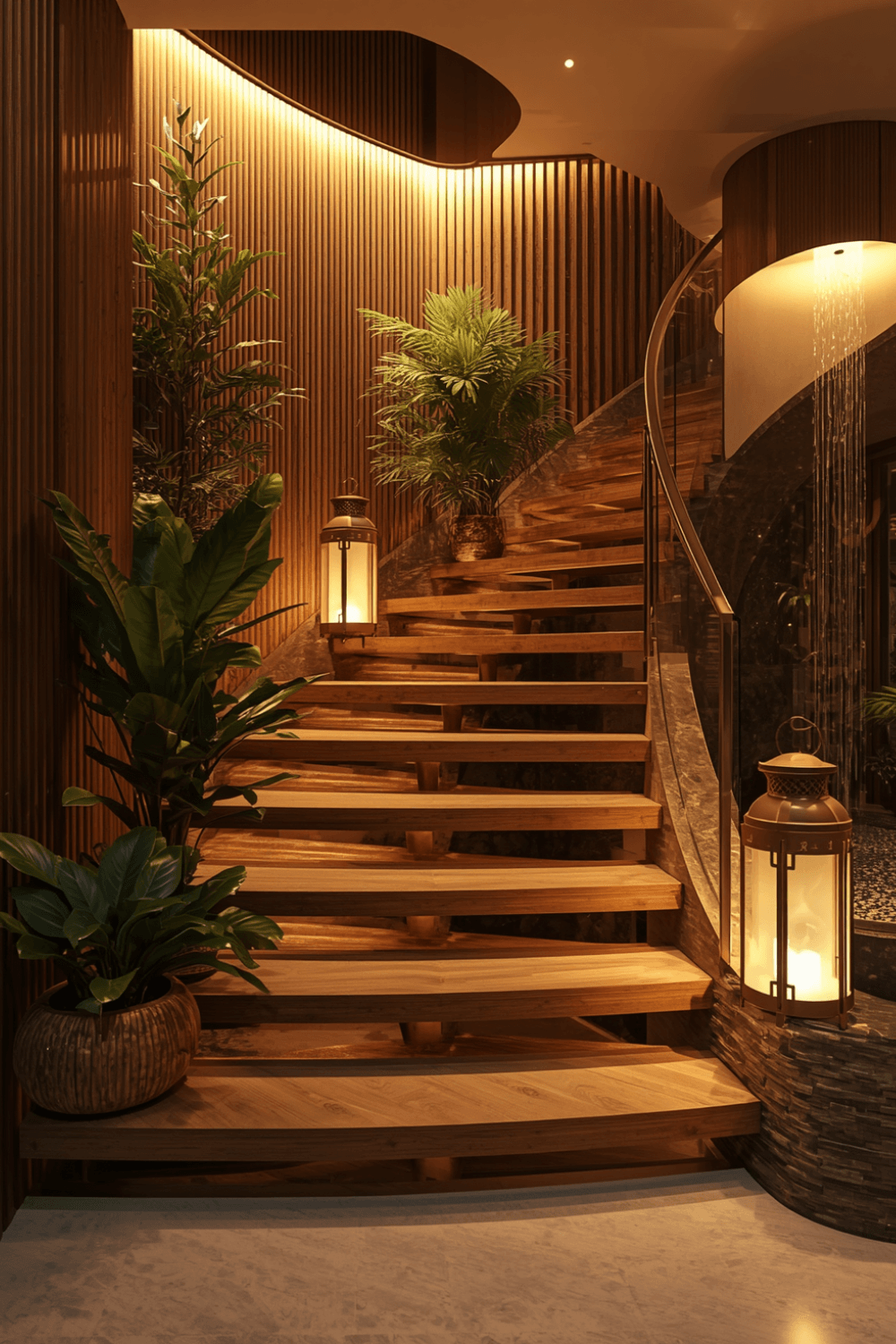
A glass-treaded, glass-balustrade staircase above a planted ground-level courtyard is the gold standard of this genre. The staircase is fully transparent; the garden below is fully visible from every angle. Typically seen in high-end residential architecture across the Middle East, Southeast Asia, and Europe, it’s now appearing in luxury home builds worldwide.
17. A Bamboo and Stone Japanese Garden Installation
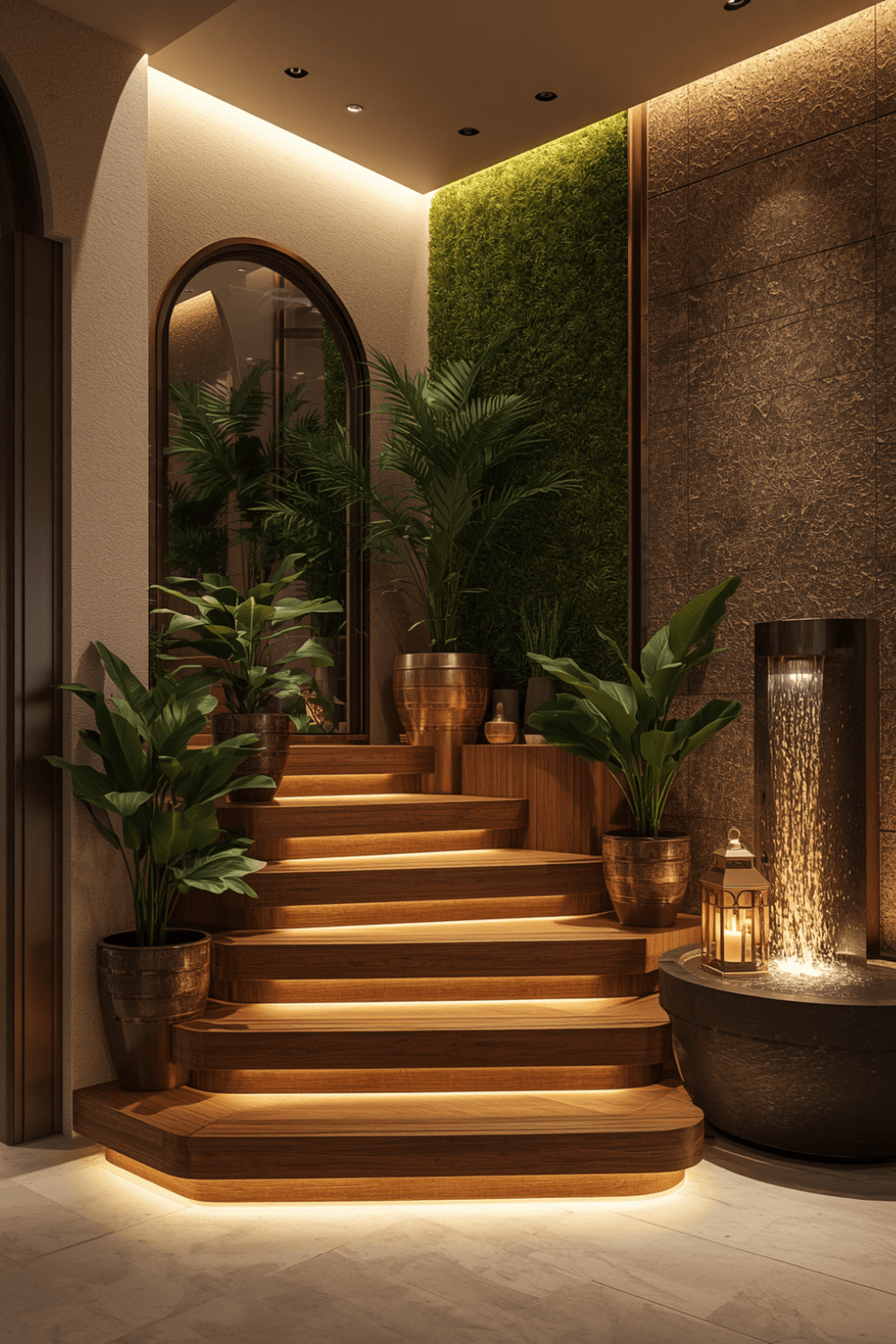
A more contained version of the indoor zen aesthetic: a bed of black pebbles, upright culms of lucky bamboo or compact black bamboo, flat stepping stones, and a single stone lantern. No water required. The geometry is clean enough to work beneath a modern floating wooden stairs design without competing with the staircase’s own lines.
18. A Living Wall That Climbs the Stair Side Wall
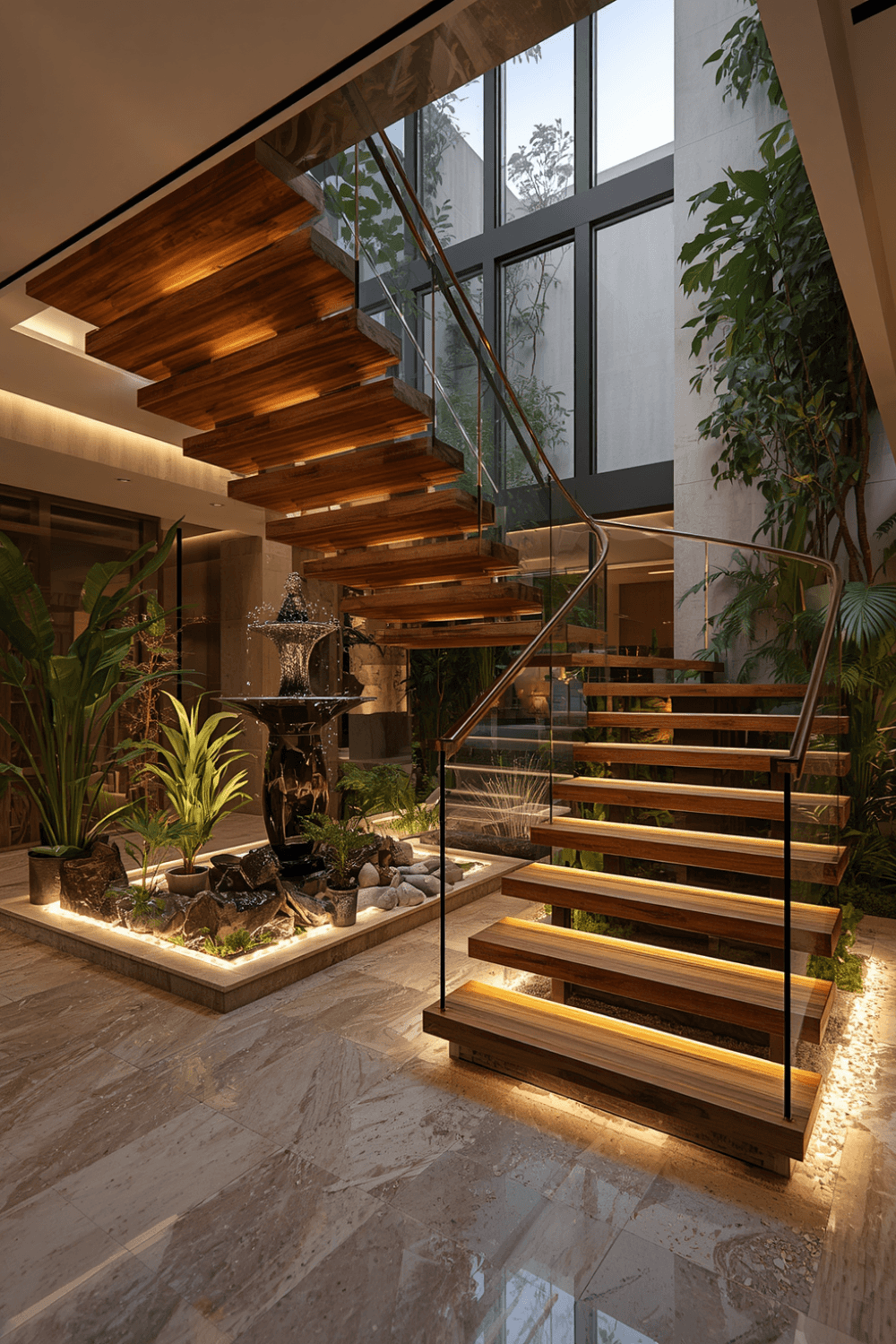
Rather than placing plants at the base, a vertical living wall panel fixed to the wall running alongside the staircase turns the whole journey up the stairs into a sensory experience. Ferns, bromeliads, air plants, and moss are common choices. The panel needs an irrigation system (usually a simple drip setup) and adequate light — supplemental grow lighting is often necessary.
19. A Full Indoor Garden With Stepping Stones and Ground Cover
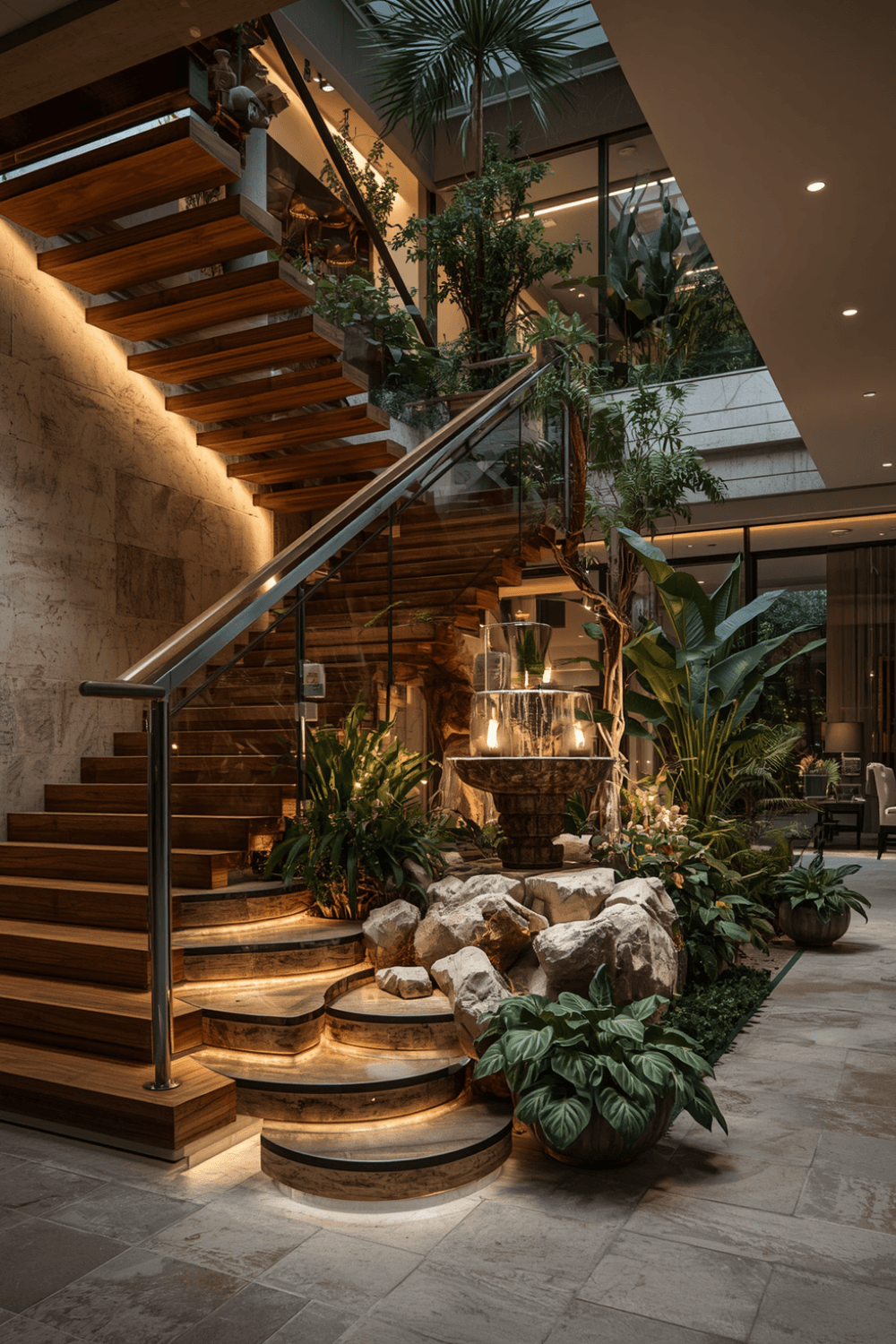
When the under-stair space is large enough — in entrance halls with generous footprints, or at the base of a statement staircase in an open-plan home — a complete miniature garden can be installed. Stepping stones, ground cover (baby’s tears, creeping ficus), taller accent plants, a simple water feature, and layered lighting. It reads as a garden room rather than a decorated corner.
20. The Warm, Minimal Zen Entry
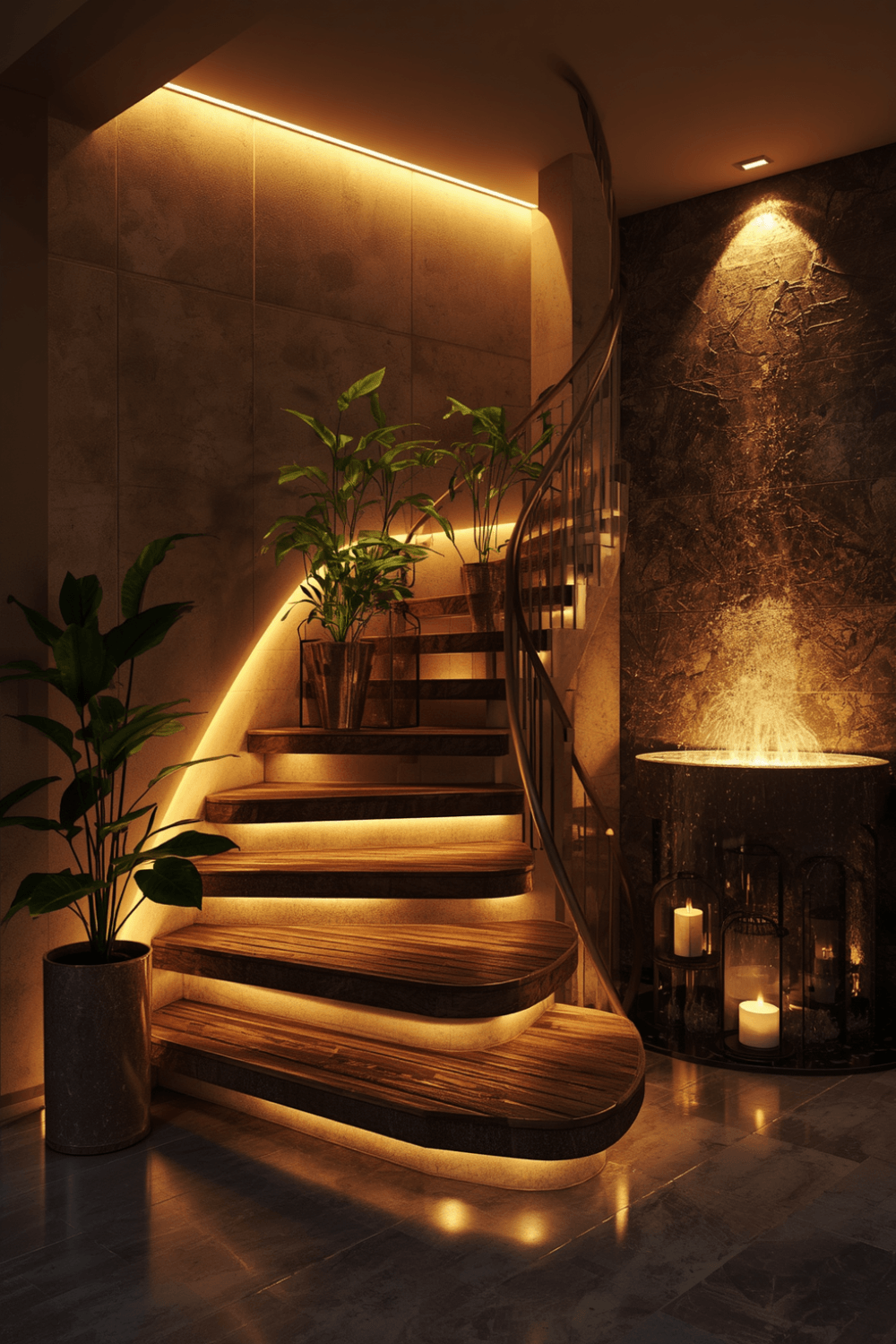
This last idea is less a single feature and more a design approach: dark stone floor, floating wooden stairs without risers, a single slab of natural timber as a console table, one large textural plant, a low indoor water fountain, and warm staircase lighting ideas integrated into the tread. It’s the kind of entry that luxury home decor magazines use as hero images — and it’s achievable in almost any home that has a staircase with a little open floor beneath it. The difference is restraint. Most under-stair gardens fail not from lack of ambition but from lack of editing.
Frequently Asked Questions
What plants work best for under stairs garden ideas with low light?
The most reliable choices for low-to-indirect light under a staircase are pothos (Epipremnum aureum), peace lilies (Spathiphyllum), If the space has no natural light at all, preserved moss panels or supplemental grow lighting are the practical solutions. Avoid succulents and cacti in low-light under-stair situations — they need direct sun and will decline without it.
How much does an under stairs indoor garden cost to install?
Cost varies enormously by scope. A simple tiered plant arrangement with good-quality pots . A built-in shelving setup with grow lights on materials. Most homeowners land somewhere in the middle, around , for a considered built-in arrangement with good lighting.
Can you add a water feature under stairs in an existing home?
Yes, in most cases. Self-contained water features — sealed basins with recirculating pumps — don’t require plumbing connections beyond a standard power outlet. They can be installed in any home without structural work. Always check with a professional before adding any water element to an interior space.
What staircase styles work best with indoor garden designs?
Open-riser floating staircases (no solid backs to the treads) work best because they allow light and visual connection between the stair and the garden below. Glass balustrades amplify this effect. Closed-riser traditional staircases can still work well — particularly with a garden placed in front of rather than beneath the structure — but the visual dialogue between staircase and garden is less immediate.
Do indoor plants under stairs affect air quality?
Modestly, yes. NASA’s Clean Air Study identified several common houseplants — peace lilies, pothos, spider plants, rubber trees — as able to filter certain volatile organic compounds from indoor air. The effect per individual plant is small, but a dense arrangement of varied species in a frequently-used space like an entrance contributes meaningfully to indoor air quality over time. This is one practical reason, beyond aesthetics, why indoor plant decor in entry areas is genuinely worth doing.
Conclusion: Your Staircase Deserves Better Than a Storage Cupboard
Under stairs garden ideas range from a single well-chosen plant in a good pot to full indoor courtyard installations with water, light, and layered planting. The budget range is similarly wide. But the starting point is the same in every case: decide that the space is worth doing properly.
Pick one idea from this list that matches your space, your budget, and your aesthetic. Start there. A lot of the most memorable interior garden installations started as a single plant and grew — literally — from there.