20 Luxury Living Room Ideas for an Elegant Dream Home
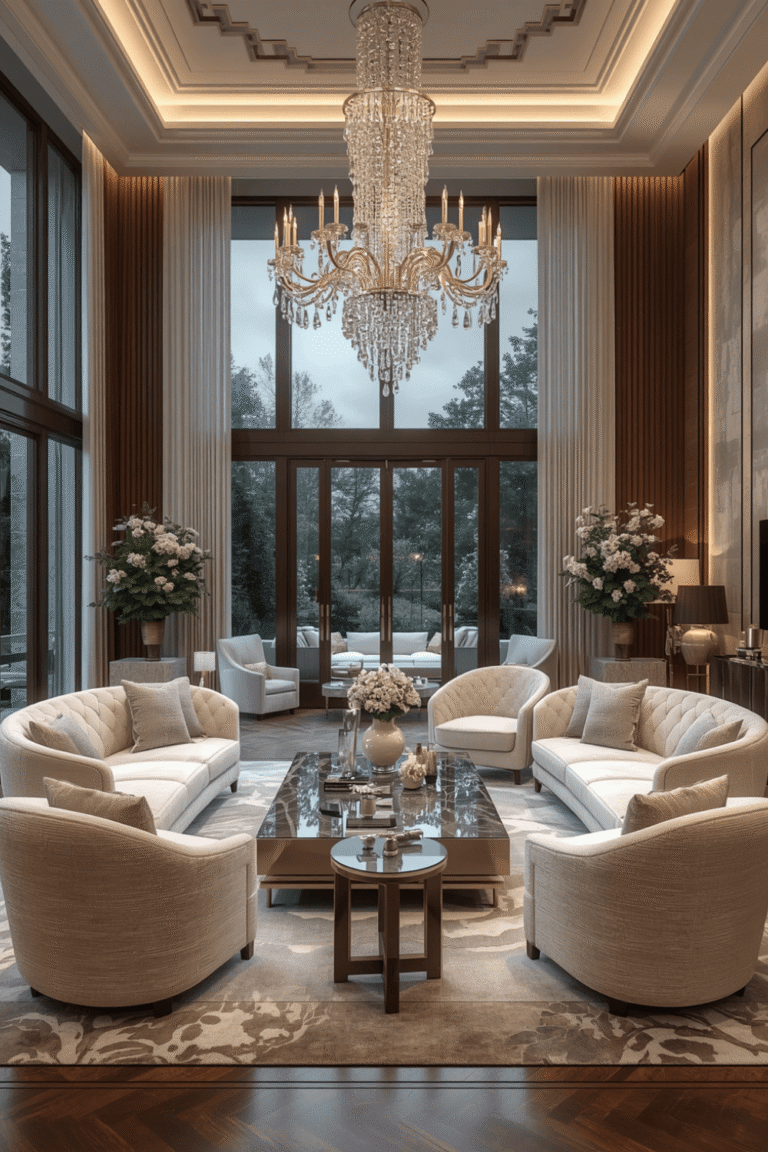
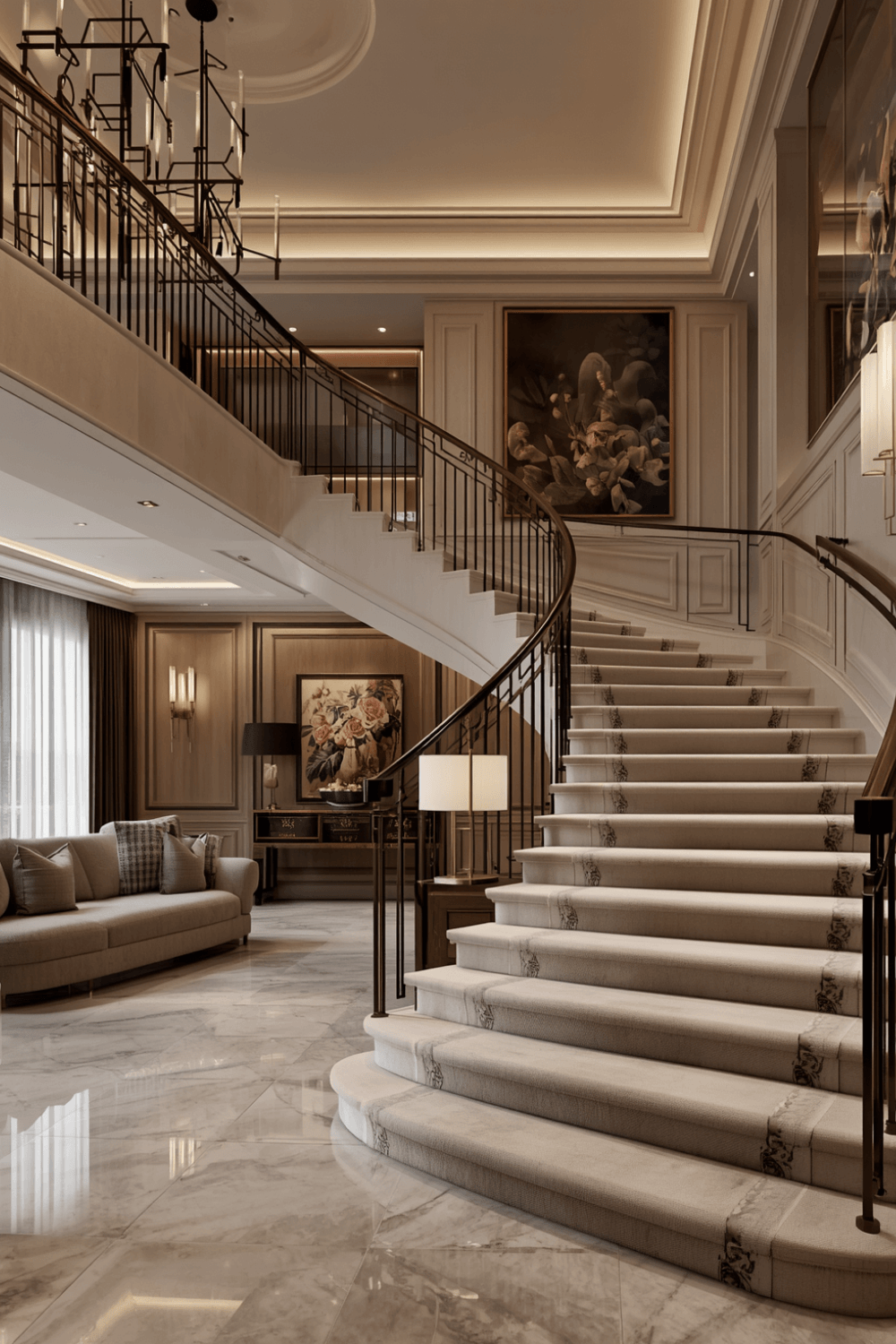
Step into a world of timeless elegance and sophisticated comfort with luxury living room ideas designed to transform your home into a breathtaking retreat. A well-designed luxury living room is more than just a place to gather—it’s a statement of style, refinement, and personal taste. From grand staircases and soaring ceilings to designer furniture and warm ambient lighting, every detail works together to create an atmosphere of effortless luxury. The image above perfectly captures this balance, featuring a stunning curved staircase, elegant architectural details, and a cozy seating arrangement that feels both inviting and impressive. Whether you’re decorating a large mansion or simply adding upscale touches to your existing space, luxury design is all about creating beauty, comfort, and functionality in perfect harmony.
One of the defining features of luxury interiors is their ability to feel grand while still remaining warm and welcoming. Soft neutral color palettes, layered lighting, premium materials, and carefully selected decor pieces help create a space that feels sophisticated without being overwhelming. Statement lighting, marble accents, plush seating, and architectural focal points can instantly elevate a living room and give it a high-end designer look. By blending classic elegance with modern comfort, you can create a living space that feels timeless, luxurious, and uniquely personal. These luxury living room ideas will inspire you to design a home that not only looks stunning but also provides a relaxing environment for everyday living and entertaining guests.
What Makes a Living Room Feel Luxurious
Before diving into specific ideas, it helps to understand what luxury actually means in interior design. It’s rarely about flashy or expensive-looking items. Instead, it comes down to a few core principles: quality materials, thoughtful proportions, a cohesive color story, and layered lighting.
A truly luxury living room balances comfort with sophistication. It should feel inviting enough to curl up in on a Sunday afternoon, yet polished enough to host guests without a second thought. That balance—often called “cozy luxury”—is one of the biggest trends in high-end interior design right now, and it’s achievable in homes of any size.
1-5: Foundational Elements for an Elegant Living Room
1. Start with a Neutral Luxury Decor Palette
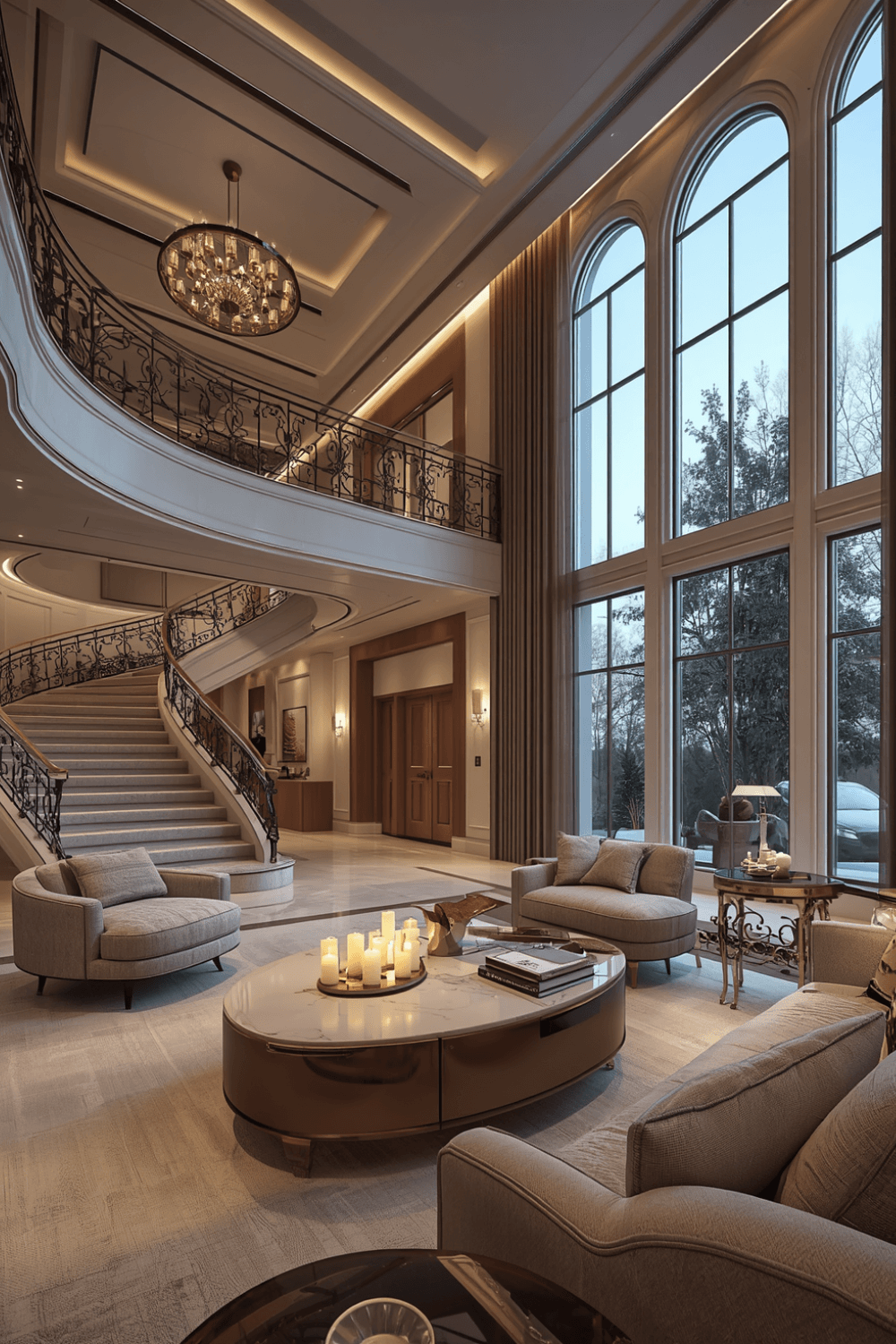
Soft whites, warm beiges, taupe, and greige tones form the backbone of most high-end interiors. These colors act as a canvas, allowing furniture, art, and architectural details to stand out without competing for attention. If you’re nervous about color, neutrals are the safest—and most timeless—starting point.
2. Invest in Statement Furniture Pieces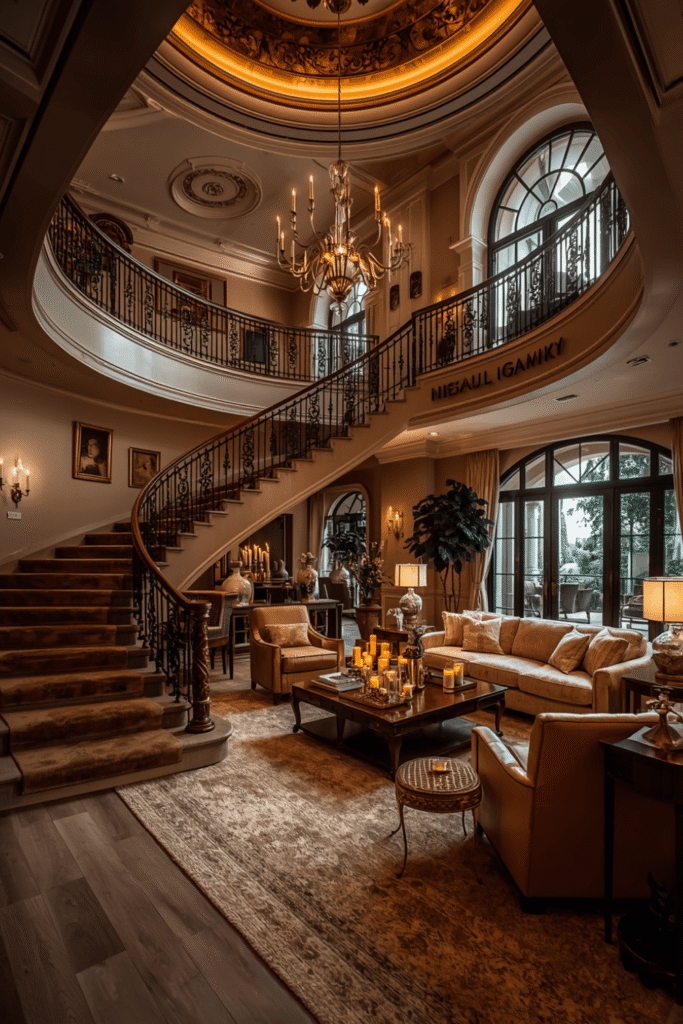
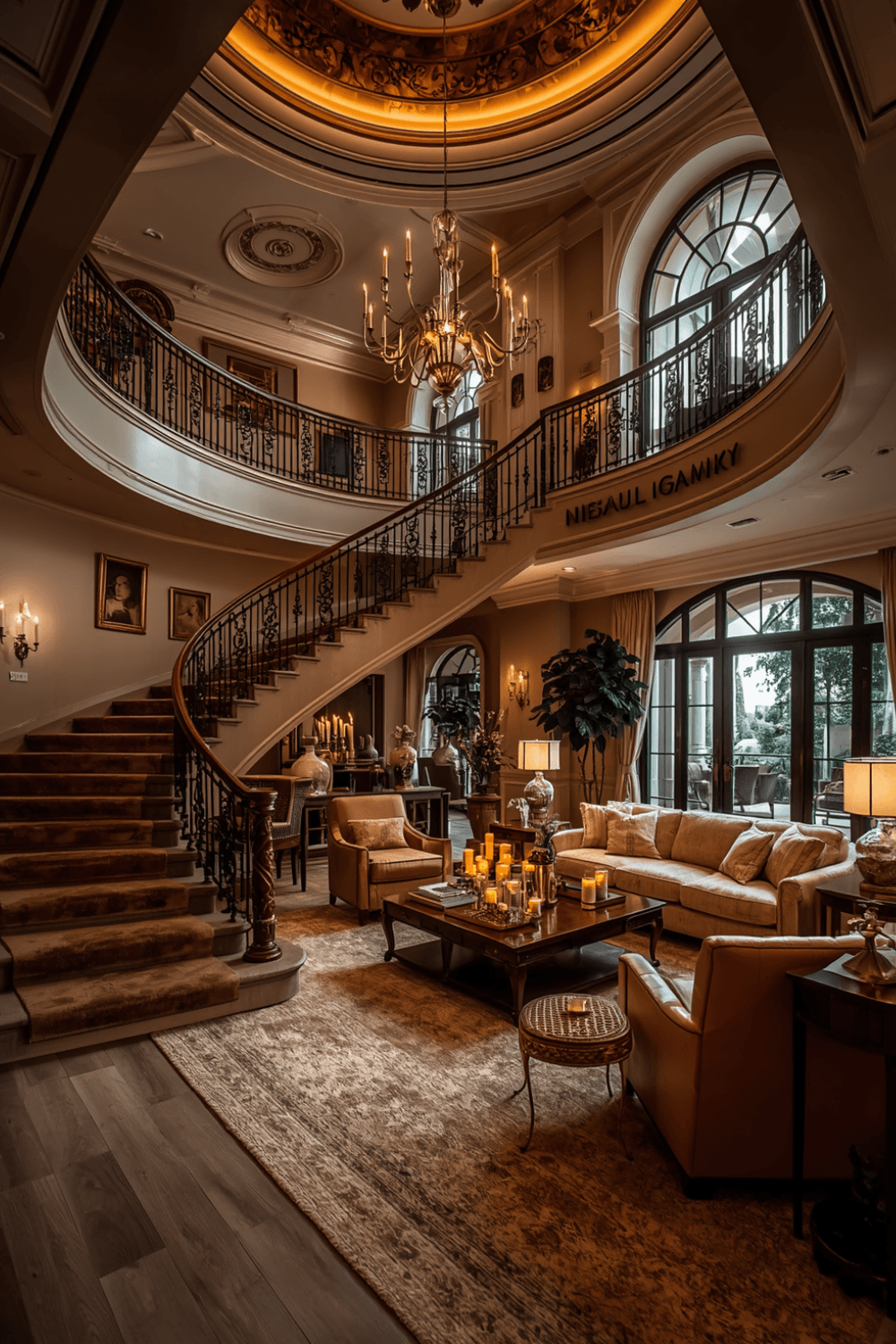
You don’t need to replace everything. Instead, choose one or two anchor pieces—a velvet sofa, a sculptural armchair, or a marble-top coffee table—that immediately signal quality. These become the focal points around which everything else is arranged.
3. Layer Your Lighting
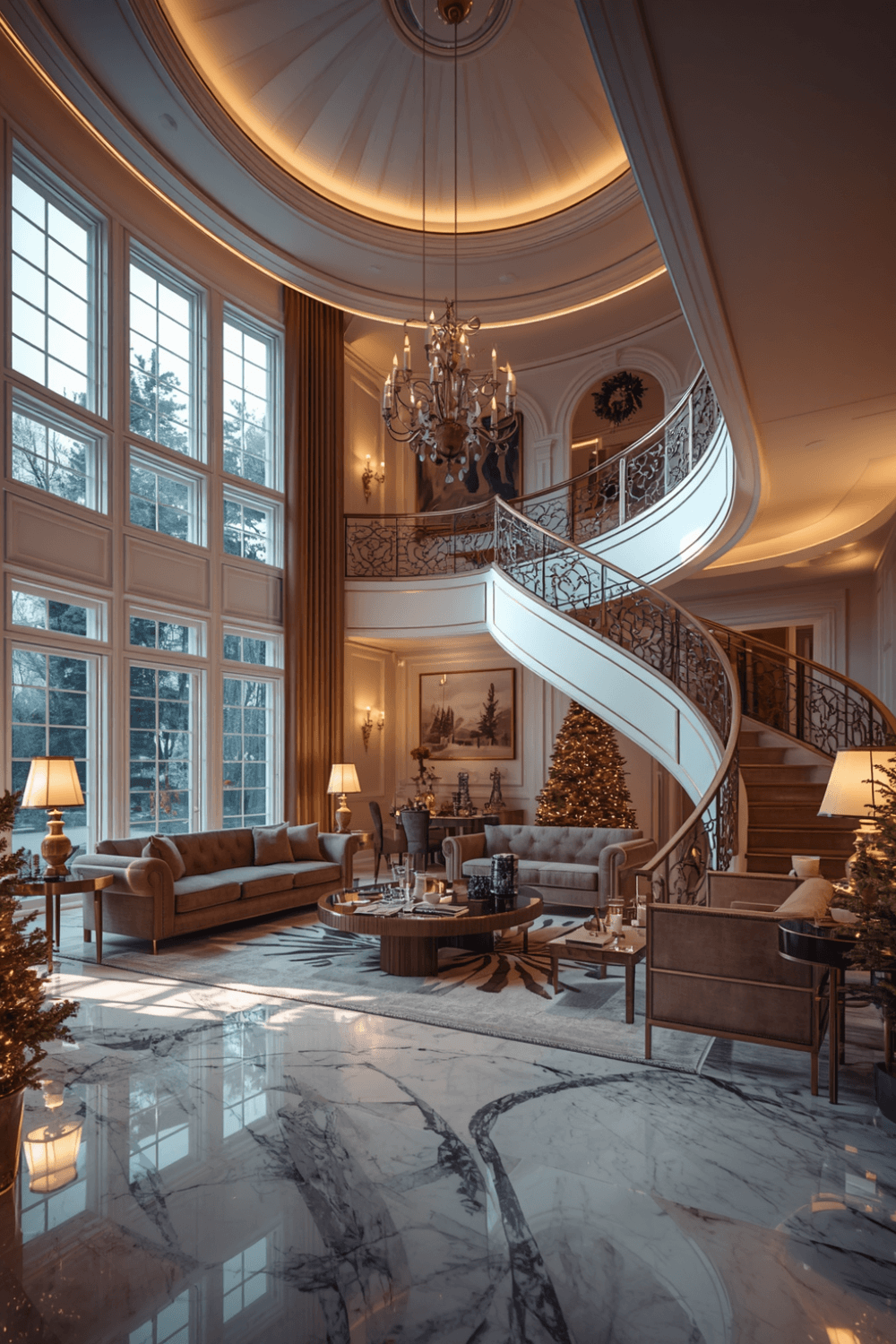
A single overhead light rarely does a luxury room justice. Combine ambient lighting (ceiling fixtures), task lighting (reading lamps), and accent lighting (wall sconces or picture lights) for depth and warmth. Dimmer switches are a small investment that make a huge difference in ambiance.
4. Add Architectural Interest with Molding or Paneling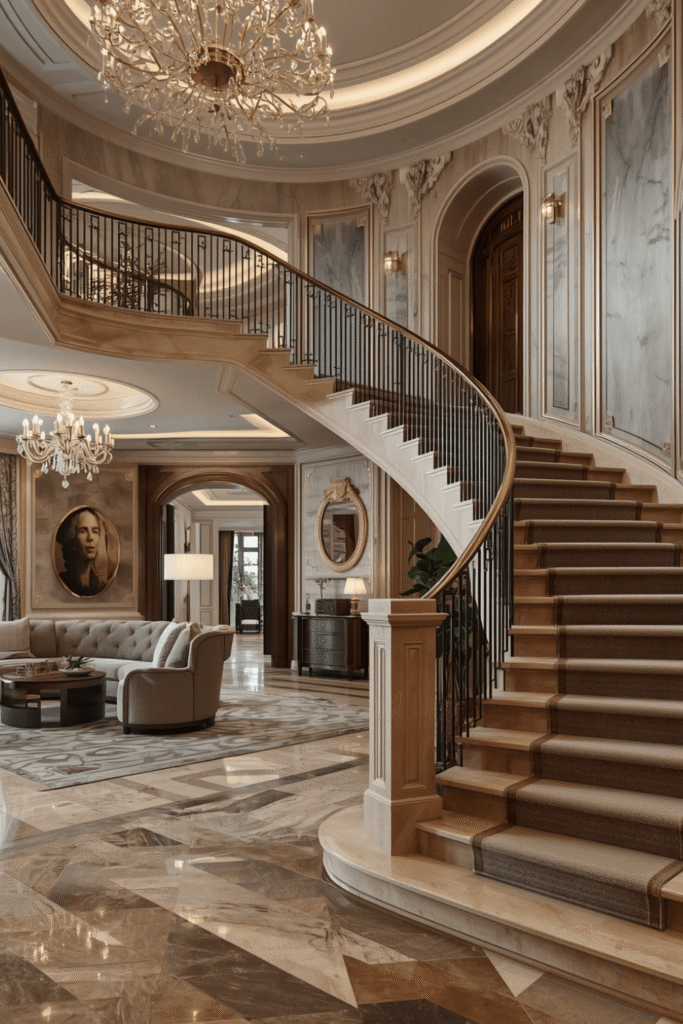
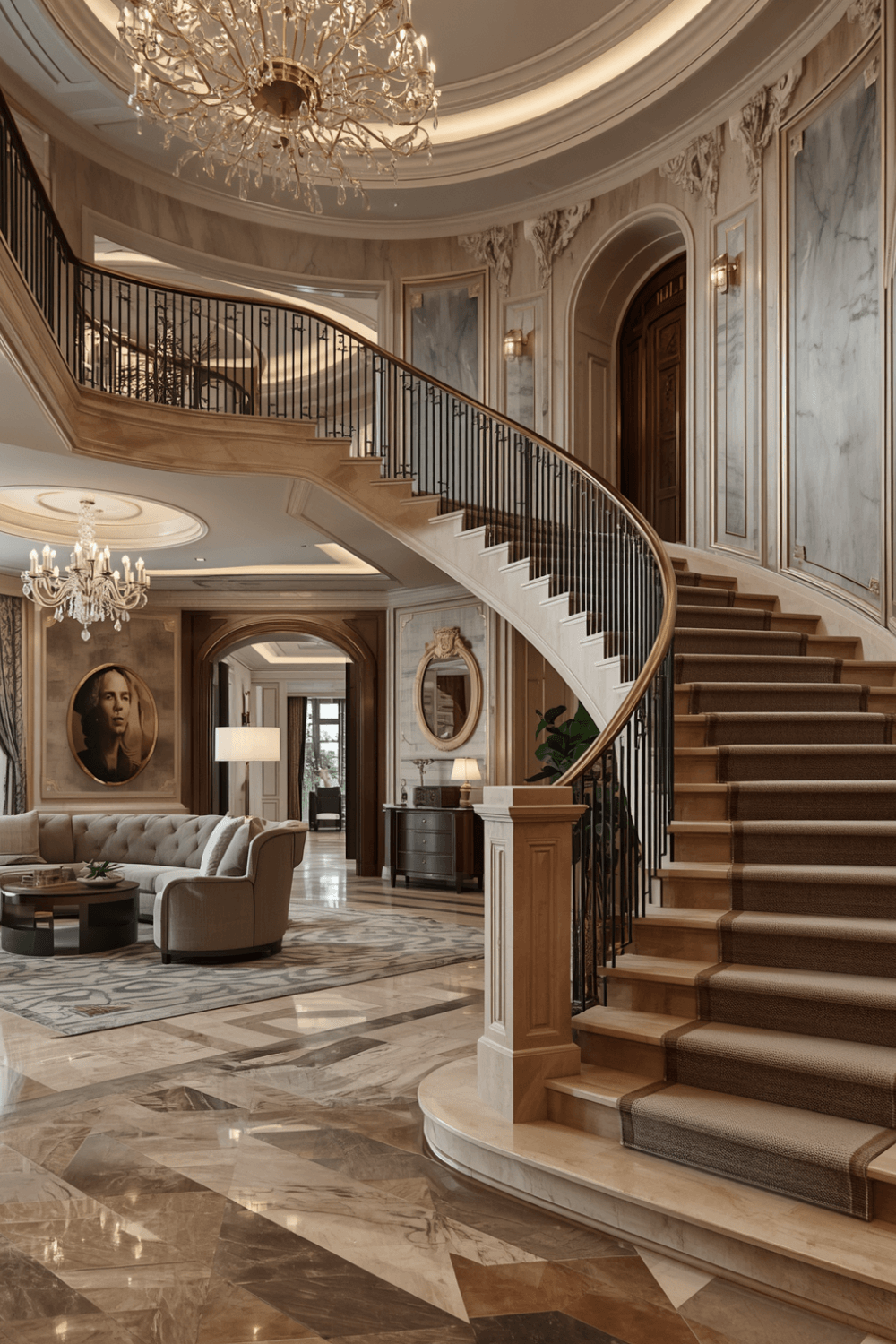
Crown molding, wainscoting, or wall paneling instantly elevate a room, giving it a custom, “built-in” feel reminiscent of classic European interiors. Even pre-made panel kits can achieve this effect on a modest budget.
5. Choose a Grand Staircase Design as a Focal Point
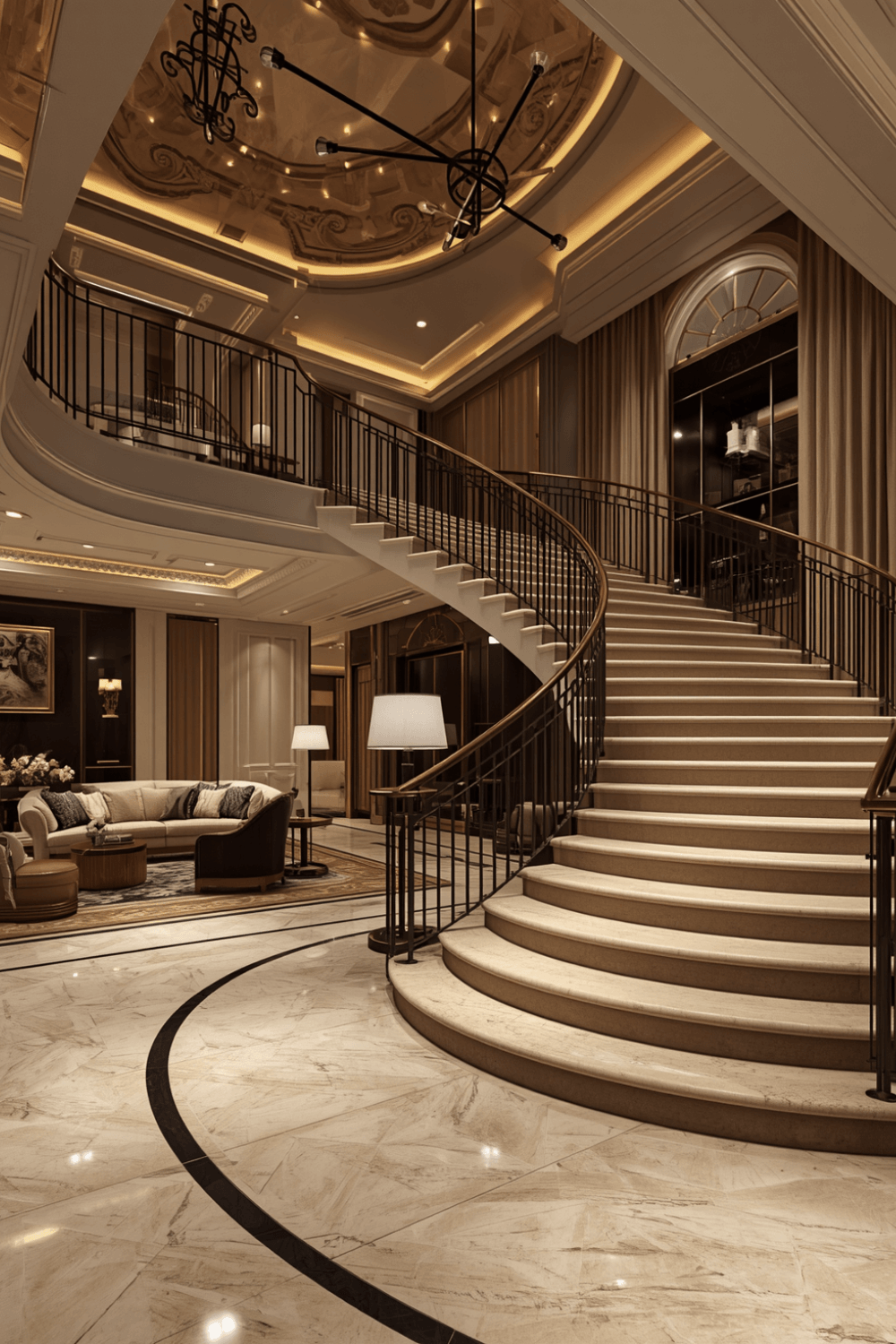
For homes with open-concept living rooms connected to an entryway, a grand staircase design can become the room’s signature feature. Curved railings, wrought iron balusters, or a floating staircase with glass panels all contribute to a sense of drama and scale.
6-10: Bringing in Modern Luxury Interior Touches
6. Mix Modern and Classic Elements
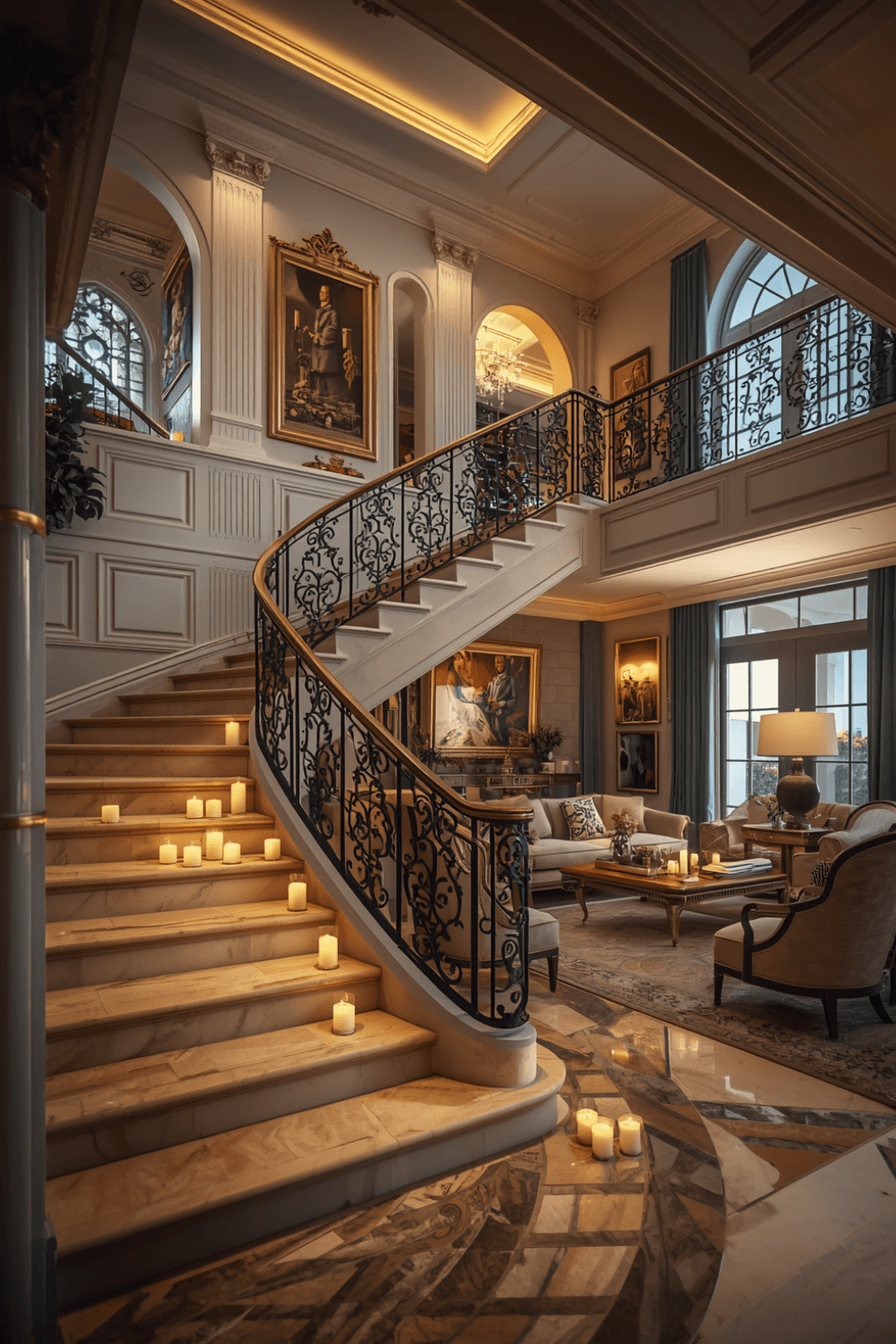
A modern classic interior doesn’t mean choosing one era over another—it means blending them. Pair a contemporary sectional with an antique mirror, or set a sleek glass table beside a traditional upholstered chair. This contrast creates visual interest and feels collected rather than showroom-staged.
7. Incorporate Warm Metallics
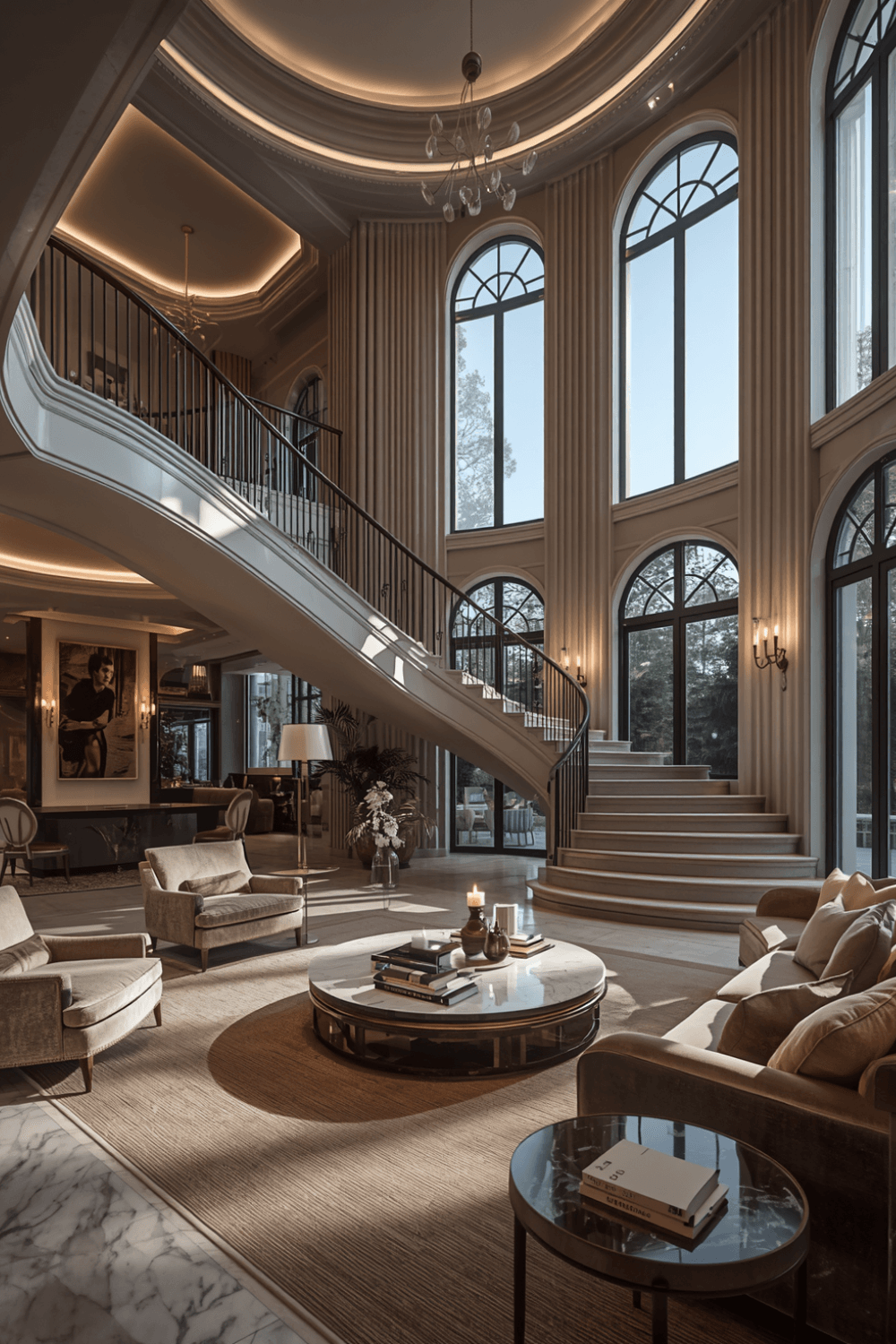
Brass, gold, and bronze accents—on lamp bases, picture frames, or hardware—add warmth and a sense of richness. These finishes have largely replaced cooler chrome and silver tones in most luxury interior decor schemes.
8. Use a Large-Scale Area Rug
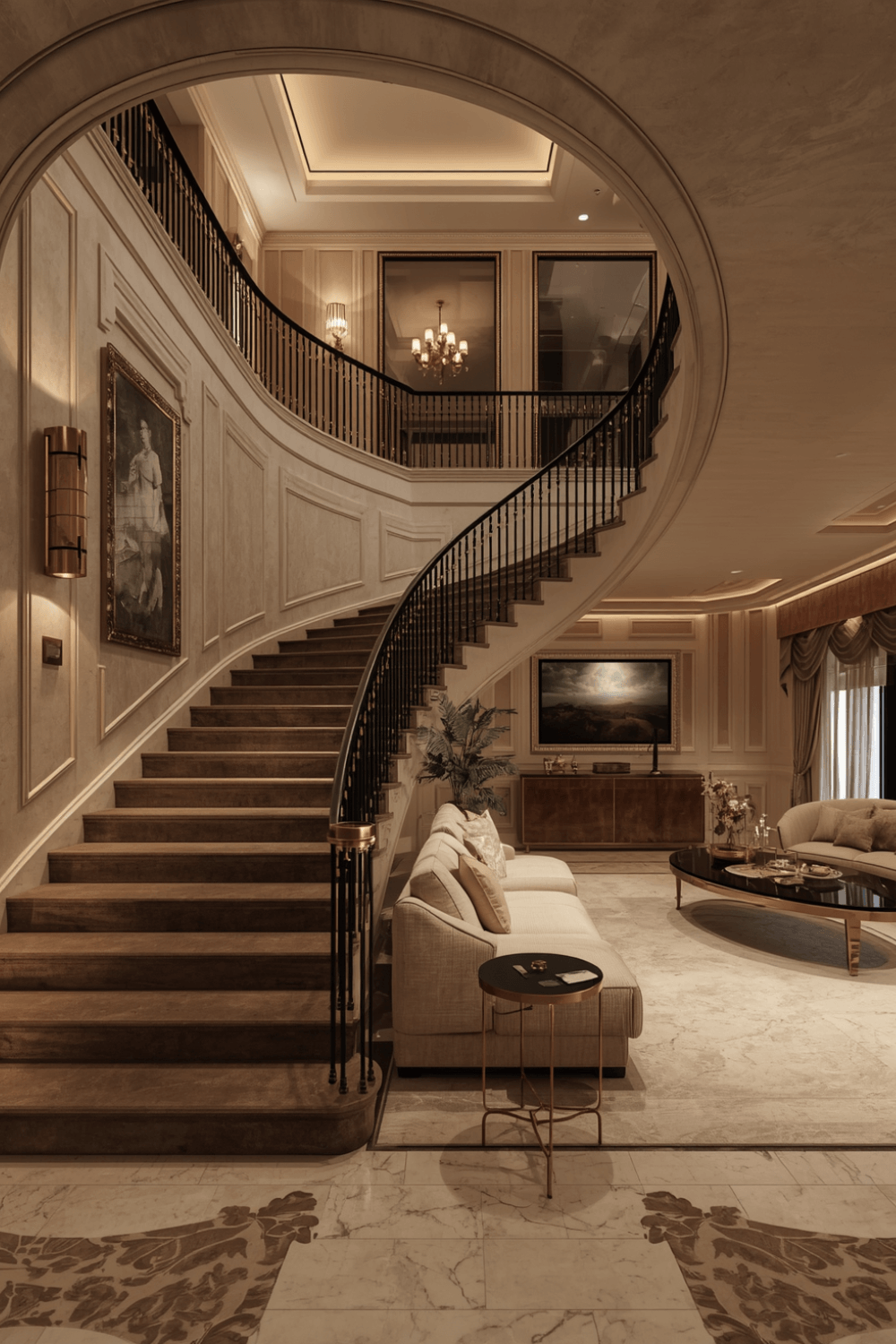
Rugs ground a room and define seating areas. In luxury spaces, rugs are typically sized so that at least the front legs of every piece of furniture sit on them, creating a unified, intentional look rather than a “floating furniture” feel.
9. Choose Furniture with Curved Lines
Soft, organic shapes—rounded sofas, curved coffee tables, arched mirrors—are a hallmark of contemporary luxury home design. They soften a space and feel more sculptural than purely functional.
10. A Statement Chandelier or Pendant Light
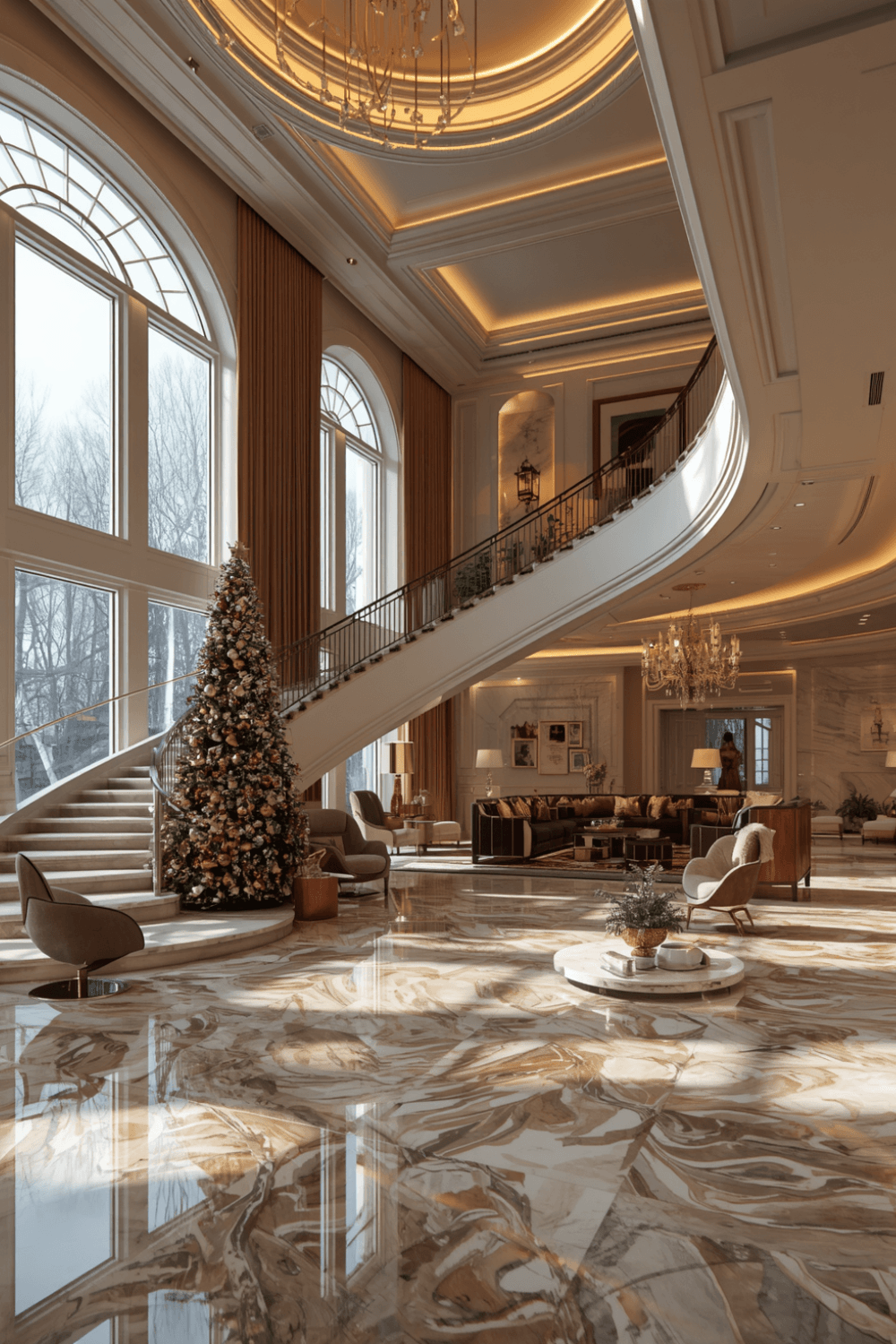
Lighting fixtures can function as art. A sculptural chandelier, even in a smaller room, draws the eye upward and adds an immediate sense of occasion.
11-14: Texture, Comfort, and Cozy Luxury
11. Layer Textures for a Cozy Luxury Living Room
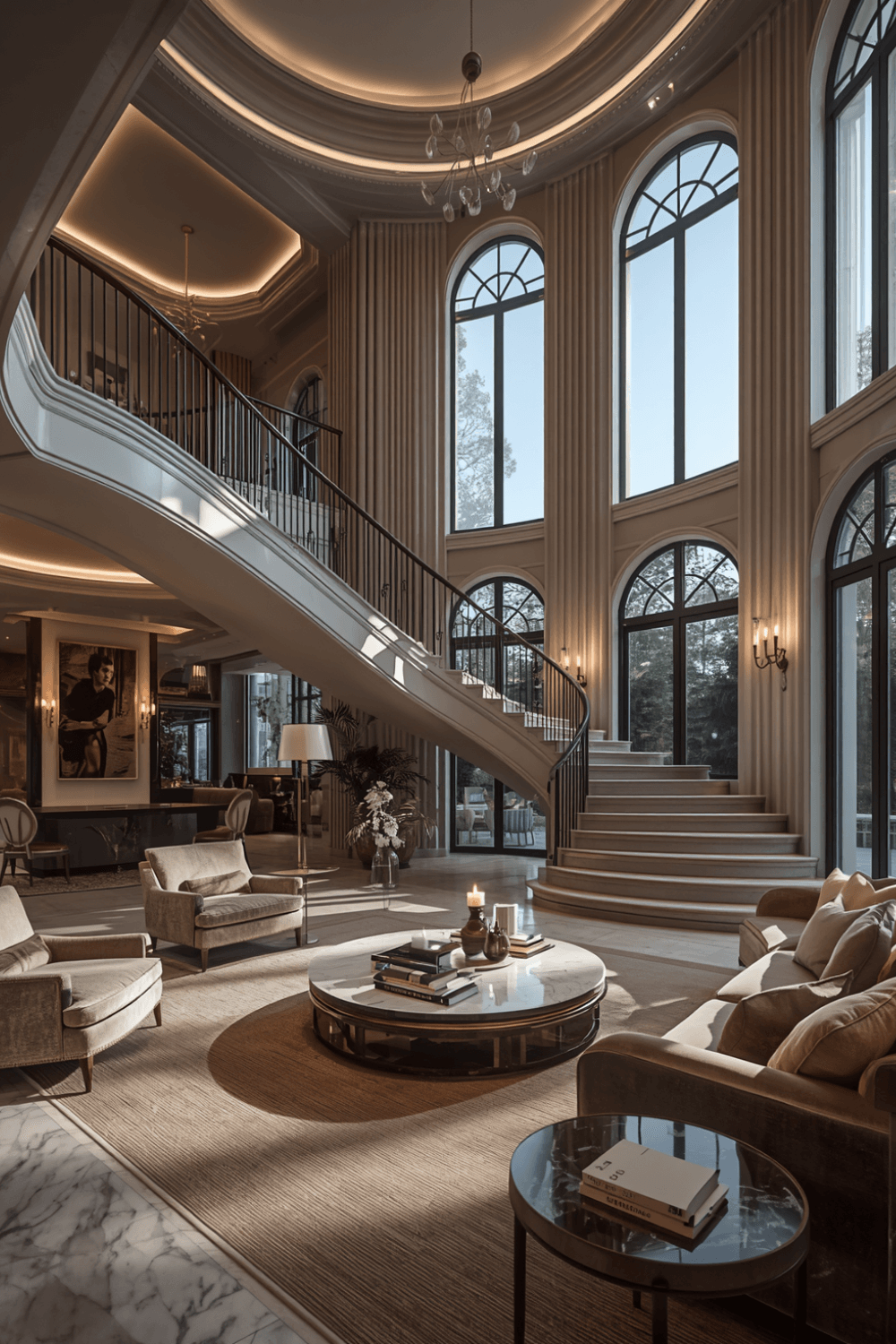
Velvet cushions, a chunky knit throw, a leather ottoman, and a silk-blend curtain can all coexist beautifully. Mixing textures prevents a neutral palette from feeling flat or sterile.
12. Incorporate Natural Materials
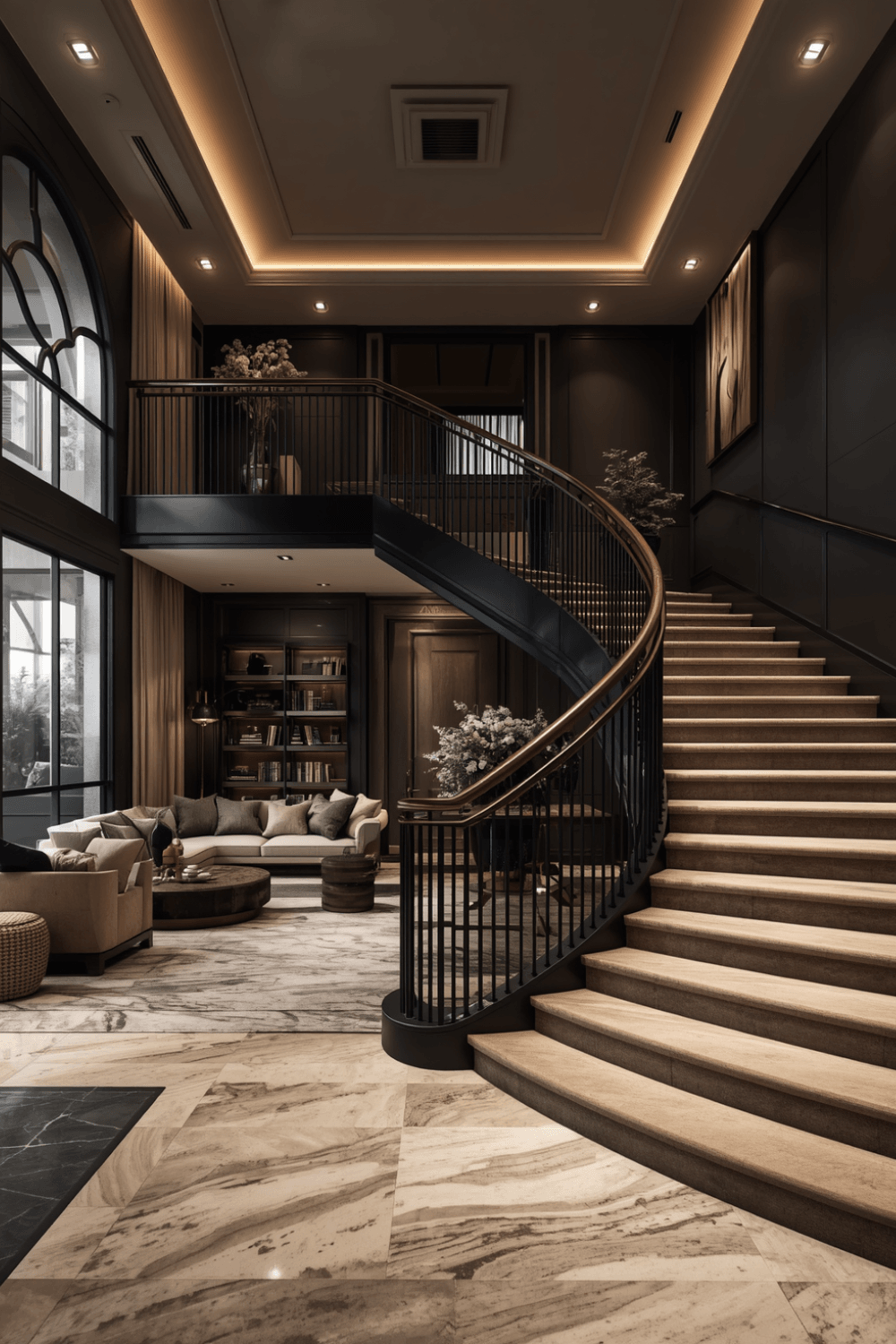
Wood, stone, linen, and rattan bring warmth and texture that pure metal or glass can’t replicate. These materials also age beautifully, which is part of what gives high-end interiors their lasting appeal.
13. Don’t Skip Window Treatments
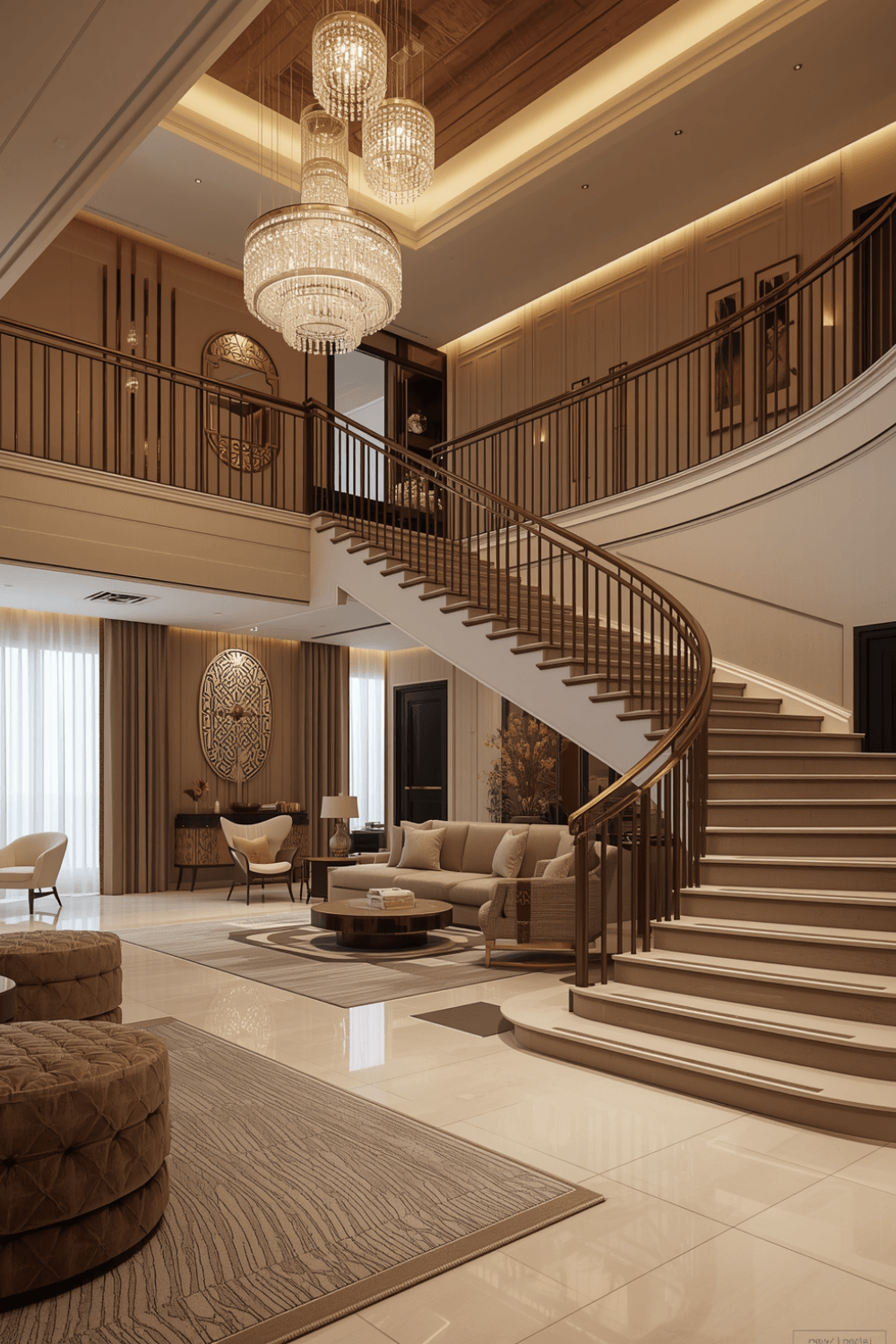
Floor-to-ceiling drapes, even in a relatively low-ceilinged room, create height and softness. Lighter fabrics like linen filter natural light beautifully, while heavier velvets add drama for evening hours.
14. Create Cozy Conversation Zones
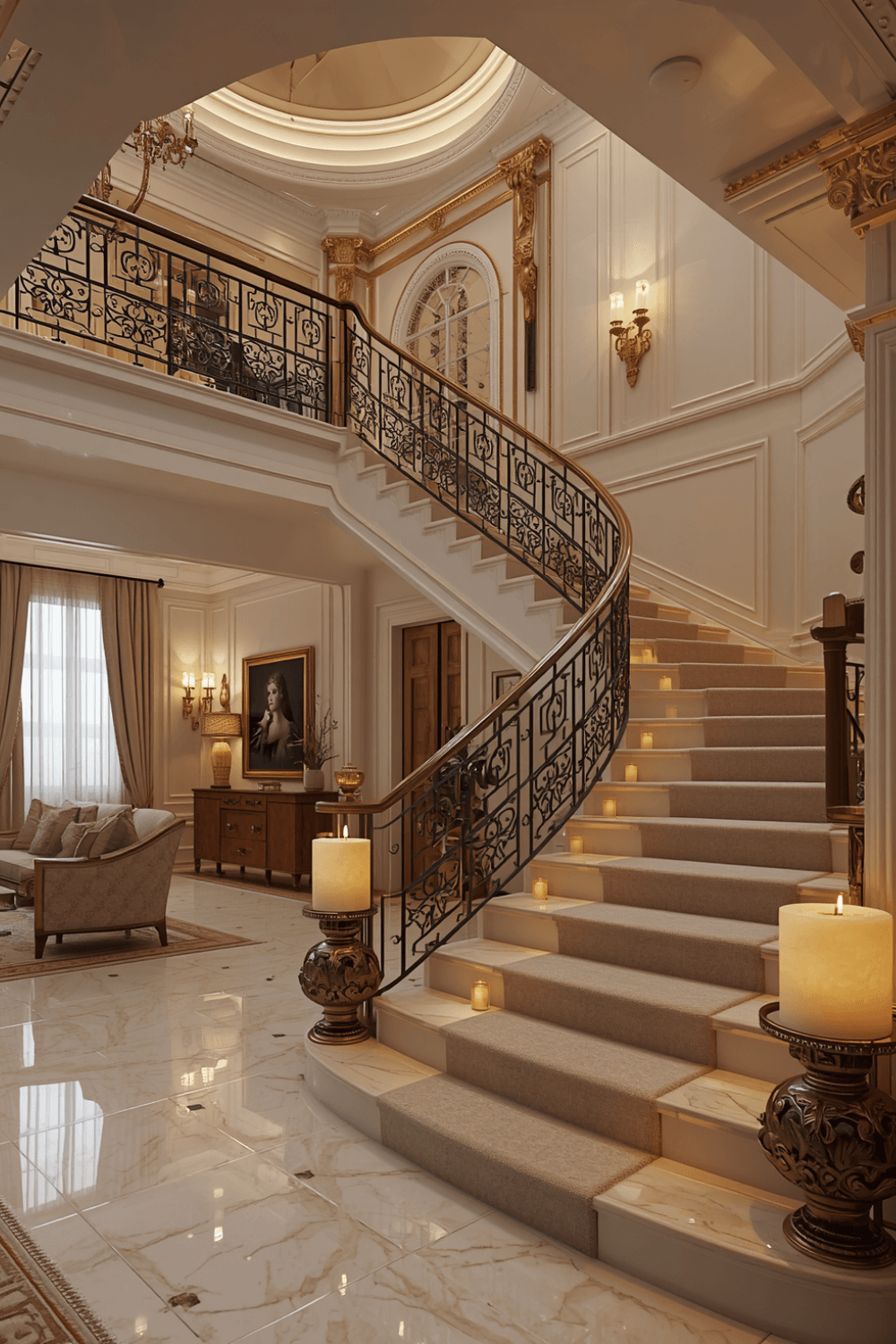
Rather than lining furniture against walls, arrange seating to face each other, encouraging conversation. This layout—common in sophisticated living room designs worldwide—makes a space feel more intimate, regardless of its overall size.
15-17: Art, Accessories, and Personal Touches
15. Curate Your Wall Art Thoughtfully
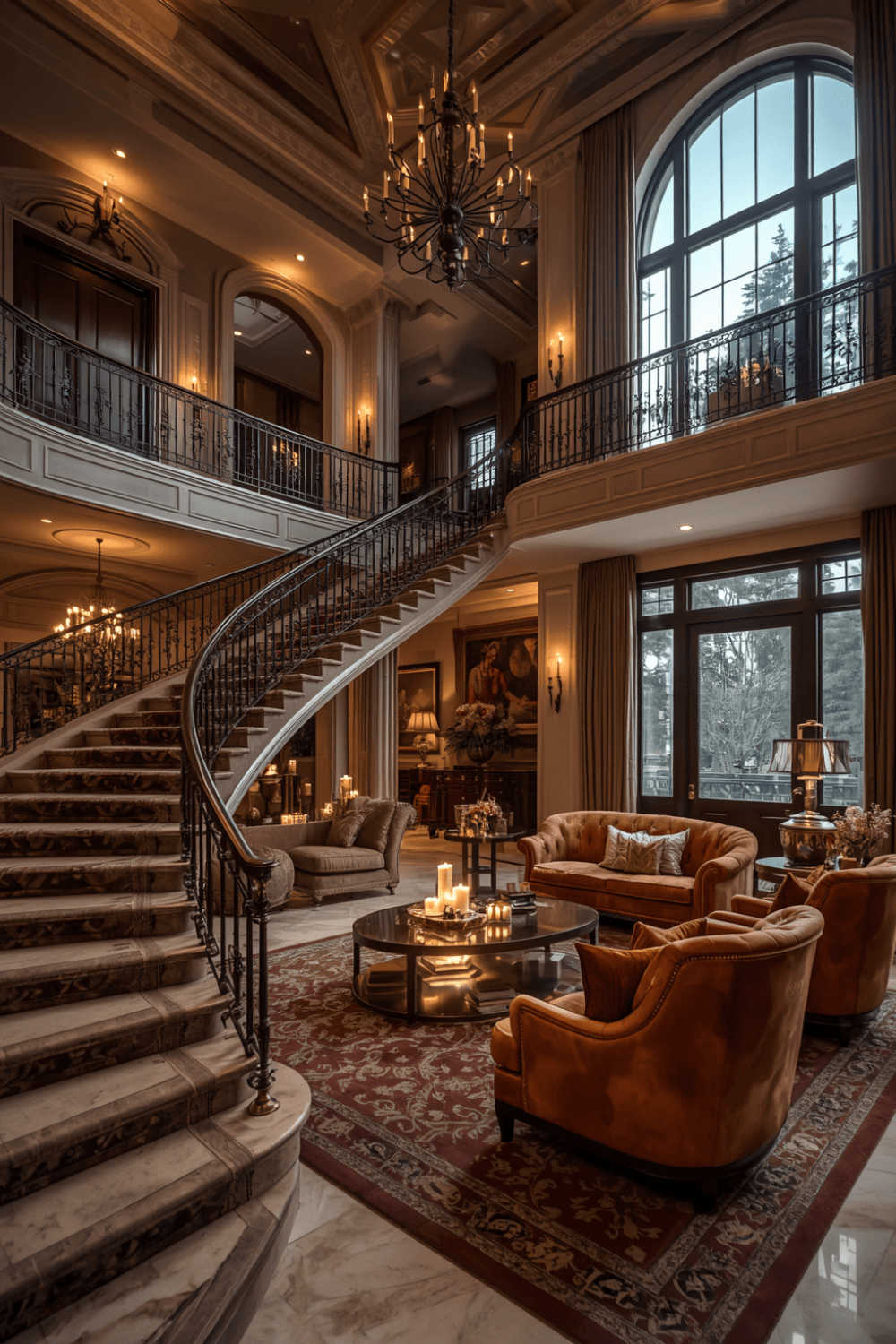
Large-scale art pieces, gallery walls, or even a single oversized mirror can transform a room. The key is scale—small art on a large wall tends to look out of place, while one substantial piece (or a well-organized cluster) makes a strong statement.
16. Style Your Coffee Table Like a Pro
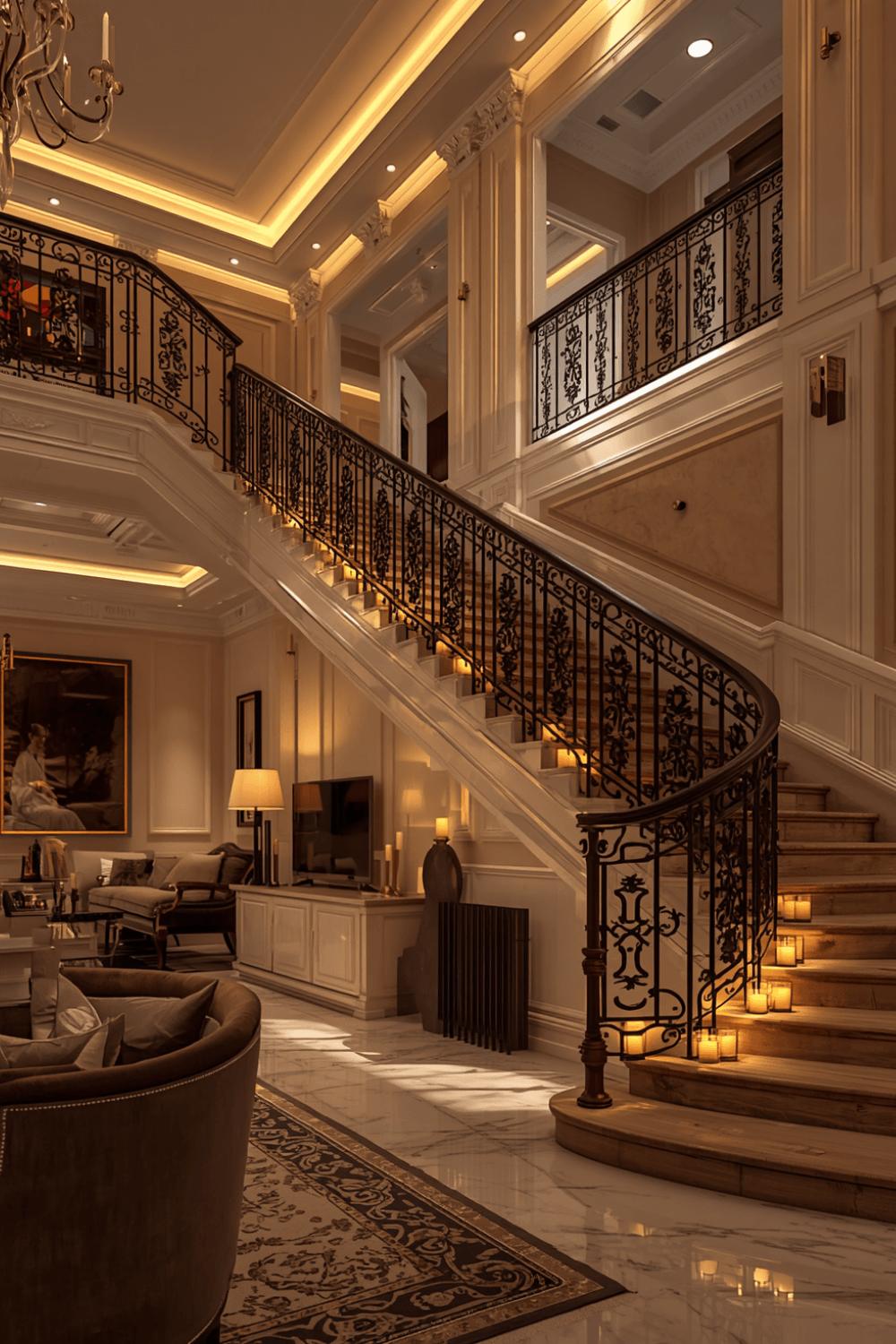
A few well-chosen items—a stack of art books, a small sculptural object, a tray with candles—can make a coffee table feel curated rather than cluttered. Resist the urge to fill every surface.
17. Bring in Greenery
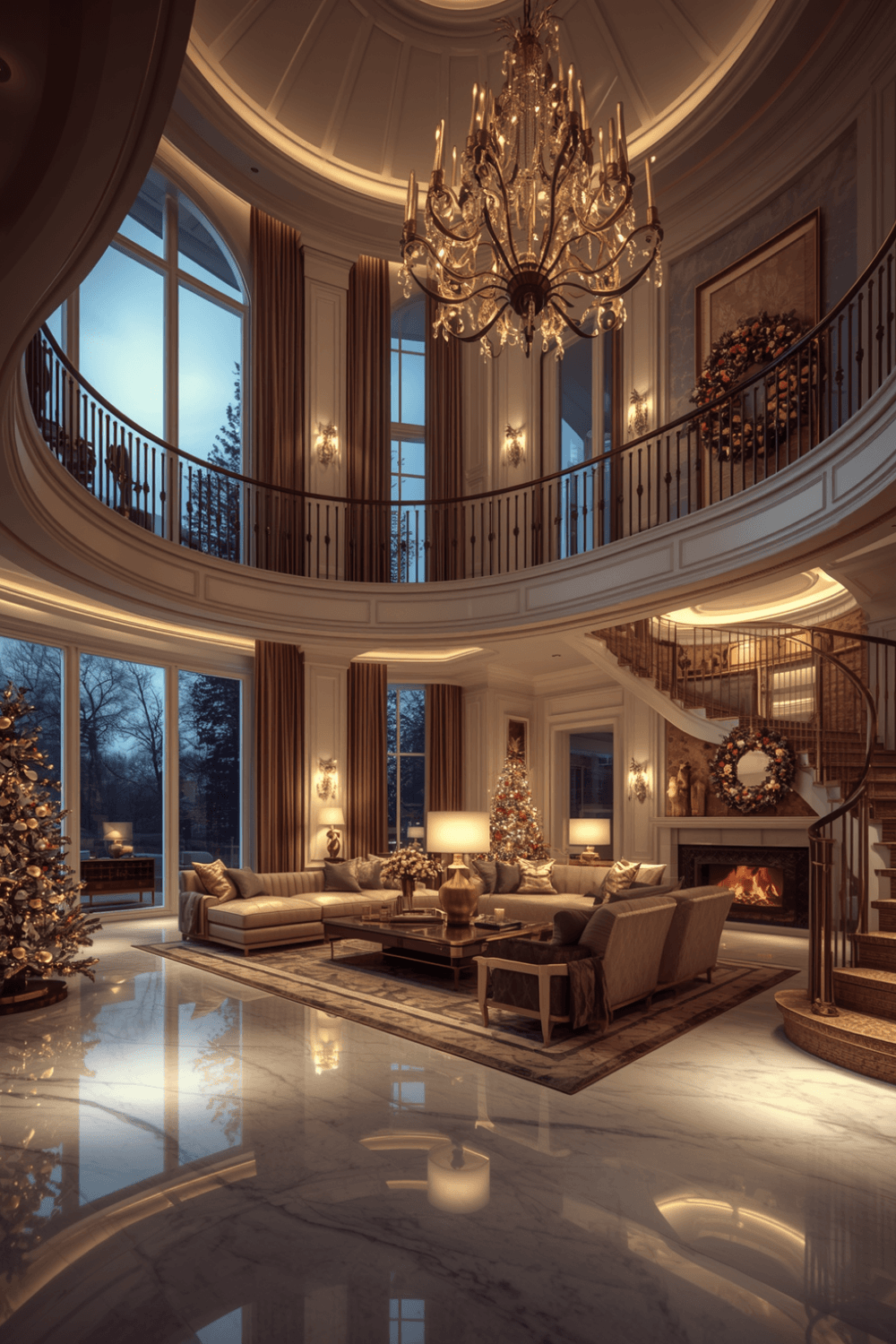
Large potted plants or fresh flowers add life and color to neutral luxury decor schemes. Even a single well-placed fiddle leaf fig or olive tree can soften an otherwise formal room.
18-20: Final Touches for a Luxury Mansion Interior Feel
18. Hide the Clutter
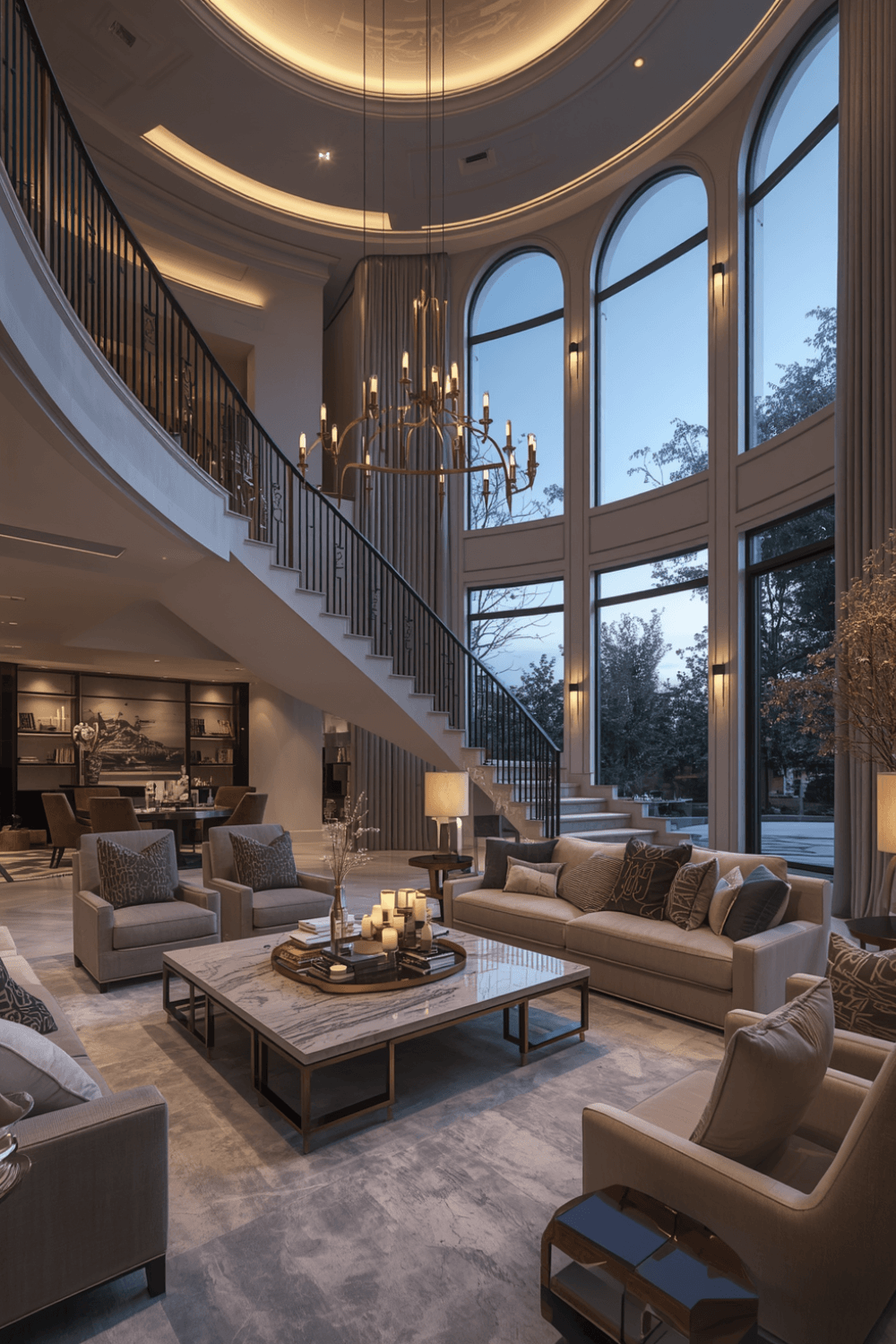
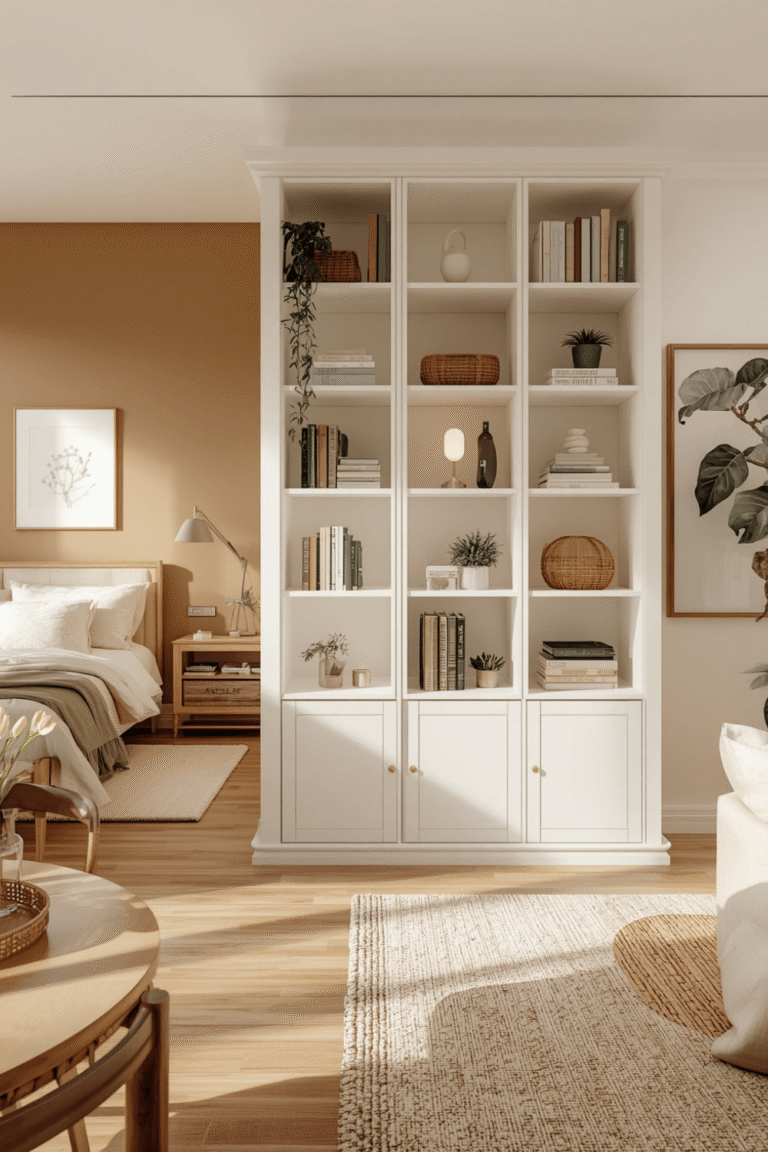
Built-in storage, closed cabinets, and furniture with hidden compartments keep everyday items out of sight. This is one of the simplest ways to maintain that polished, “always ready for guests” look.
19. Use a Cohesive Color Story Throughout
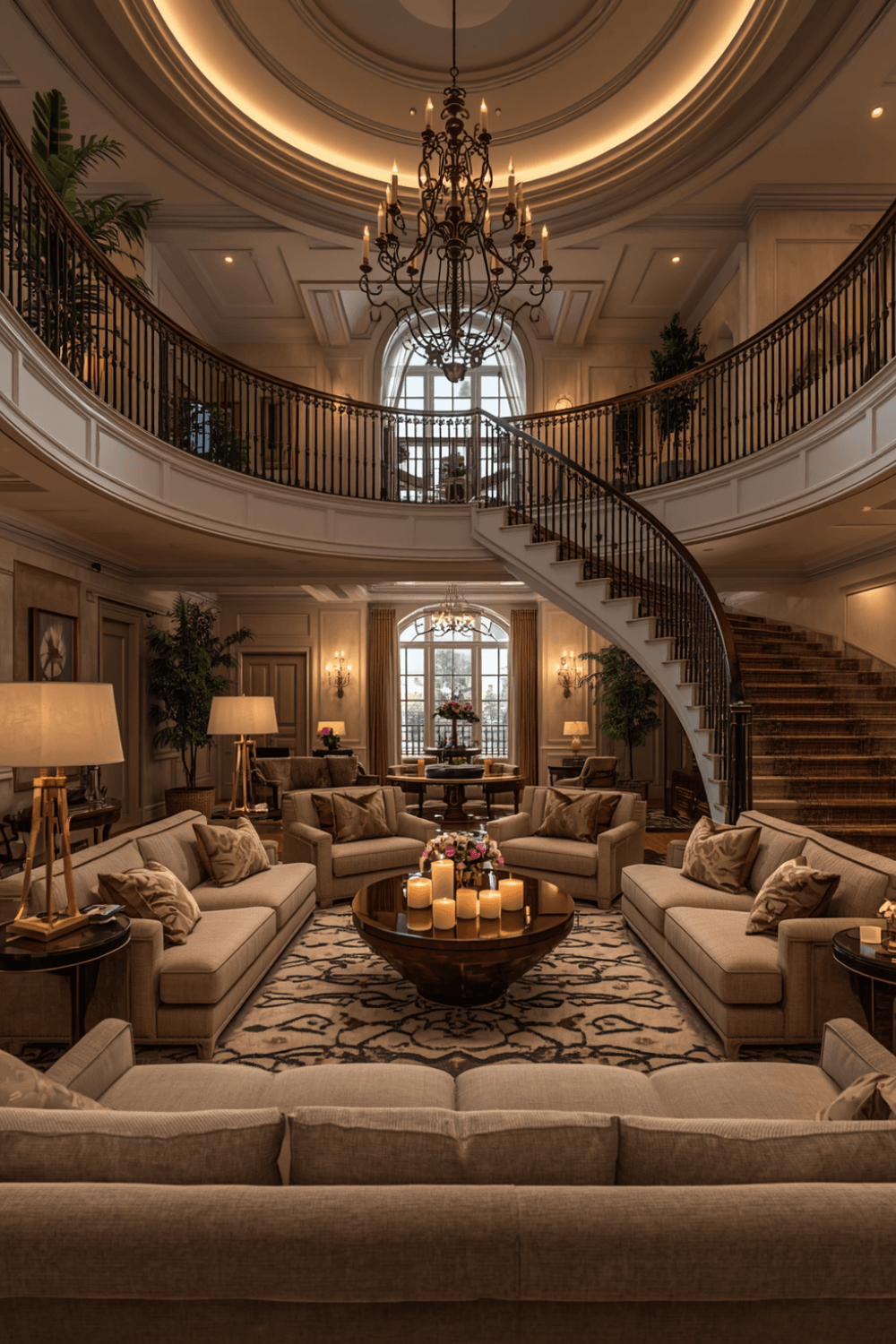
If your living room flows into a dining or kitchen area, carrying similar tones or materials between spaces creates a sense of continuity that’s common in larger luxury mansion interior layouts—and works just as well in open-plan apartments.
20. Forget the Details
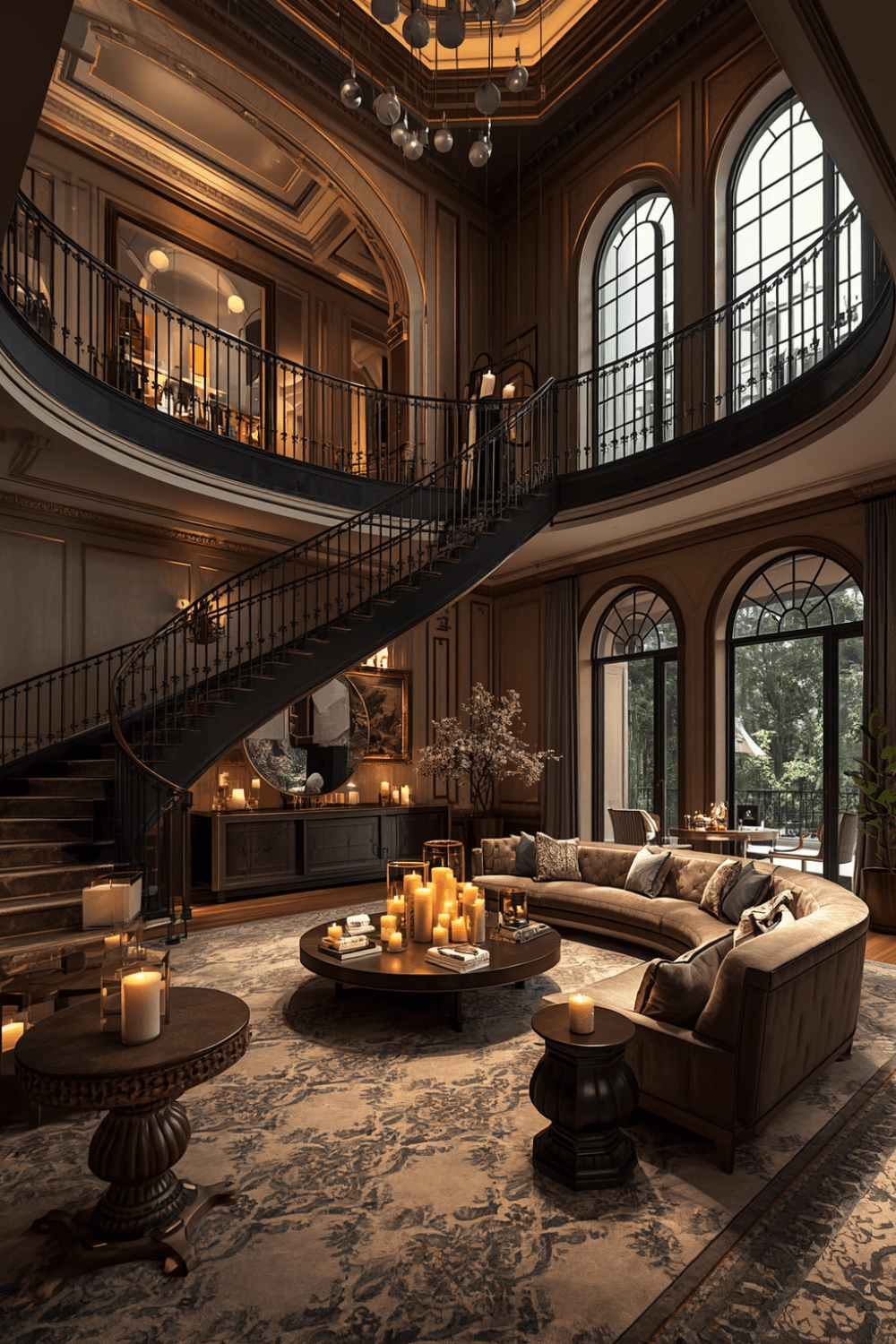
Door handles, light switch covers, picture frames—these small details are often overlooked but contribute to the overall sense of quality. Swapping basic builder-grade hardware for something more refined is a relatively low-cost upgrade with a noticeable impact.
Frequently Asked Questions
What is the best color for a luxury living room? Neutral tones—warm whites, beige, taupe, and soft greys—are the most popular choices for luxury living rooms because they create a timeless, versatile backdrop. Deep colors like navy, emerald, or charcoal also work well as accent tones for a more dramatic, sophisticated feel.
How can I make my living room look expensive on a budget? Focus on a few key changes: declutter, add layered lighting, invest in one or two quality furniture pieces, and use a large area rug. These changes have a bigger visual impact than buying many small, inexpensive items.
What furniture is considered luxury for a living room? Pieces made from solid wood, genuine leather, velvet upholstery, and natural stone (like marble) are typically associated with luxury furniture ideas. Quality construction and timeless silhouettes matter more than brand names.
Is cozy luxury a real design style? Yes—cozy luxury, sometimes called “warm minimalism,” combines the polish of high-end design with comfortable, livable elements like soft textiles and warm lighting. It’s one of the most popular approaches in modern luxury interior design today.
Do I need a big living room to achieve a luxury look? Not at all. Many of these ideas—neutral palettes, layered lighting, curated accessories, quality textiles—work in smaller spaces too. In fact, smaller rooms often benefit from a more curated, less-is-more approach.
Final Thoughts
Creating a luxury living room isn’t about following every trend or spending beyond your means—it’s about making thoughtful choices that work together. Start small: maybe it’s a new rug, better lighting, or finally framing that art that’s been leaning against the wall for months. Over time, these small upgrades add up to a space that feels genuinely elevated.