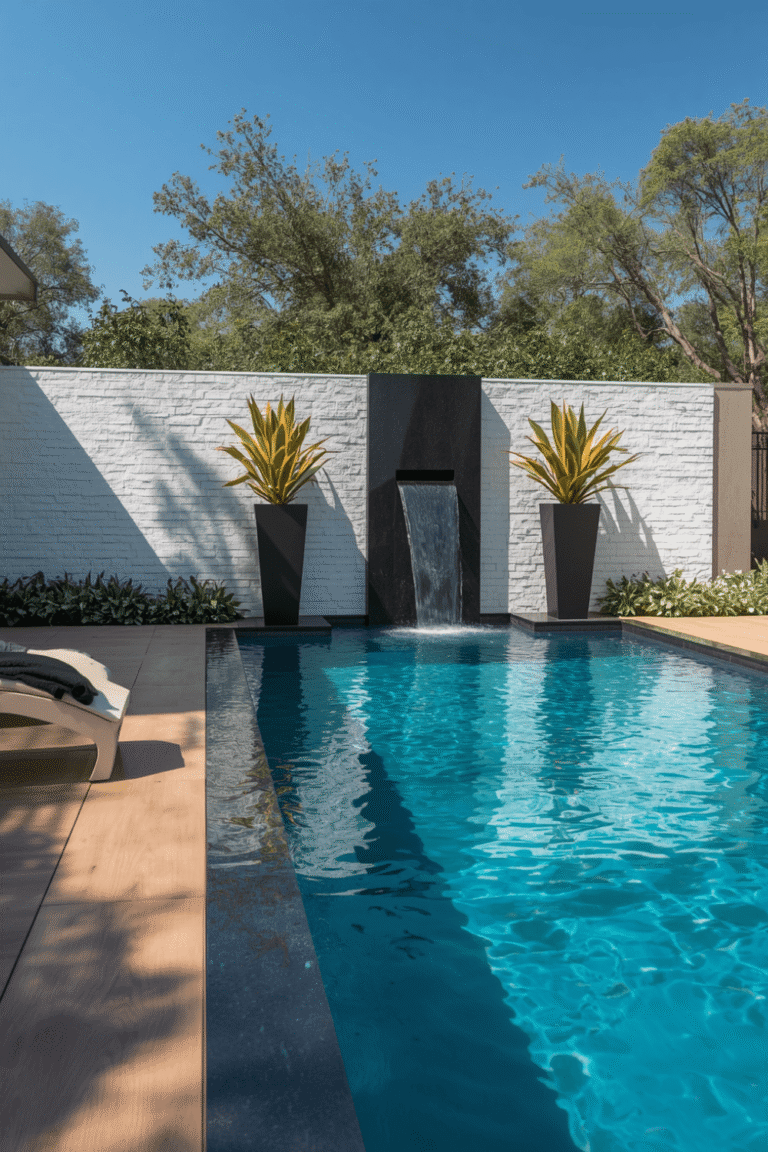
20 Luxury Backyard Pool Ideas That Will Turn Your Home Into a Private Resort
There’s a specific kind of quiet that happens when you’re floating in a well-designed pool on a warm evening. No road noise registers. Whatever you were stressed about before you got in starts to feel like someone else’s problem. That’s what a genuinely good pool does it changes the atmosphere of a home, not just the square footage.
Most people know what a luxury pool looks like from hotel stays or magazine photos. What this guide covers is how to actually get there what features matter, what’s worth the budget, what you can scale back without losing the feel, and how homeowners around the world are turning ordinary backyards into the kind of outdoor retreat they used to have to book a flight to reach.
What Actually Makes a Pool Feel Luxurious
The pools that feel genuinely resort-like share a few consistent qualities: they’re intentionally integrated into the landscape rather than dropped into it, the materials are consistent and high-quality throughout, the lighting works at night as well as during the day, and there’s usually at least one feature — a waterfall, a spa, a fire element — that gives the pool a focal point.
Budget matters, obviously. But the most common mistake isn’t spending too little — it’s spending without a coherent vision. A pool with a dozen mismatched add-ons tends to feel less luxurious than a simpler design executed cleanly.
1. Infinity Edge Pool
The vanishing edge is the defining feature of high-end resort pools worldwide. Water flows over one edge into a catch basin below, creating the illusion that the pool extends to the horizon. It works best on elevated sites with a view — a hillside lot, a raised patio with a city or mountain backdrop — but can be adapted for flatter sites with careful grading.
2. Natural Waterfall Pool Design
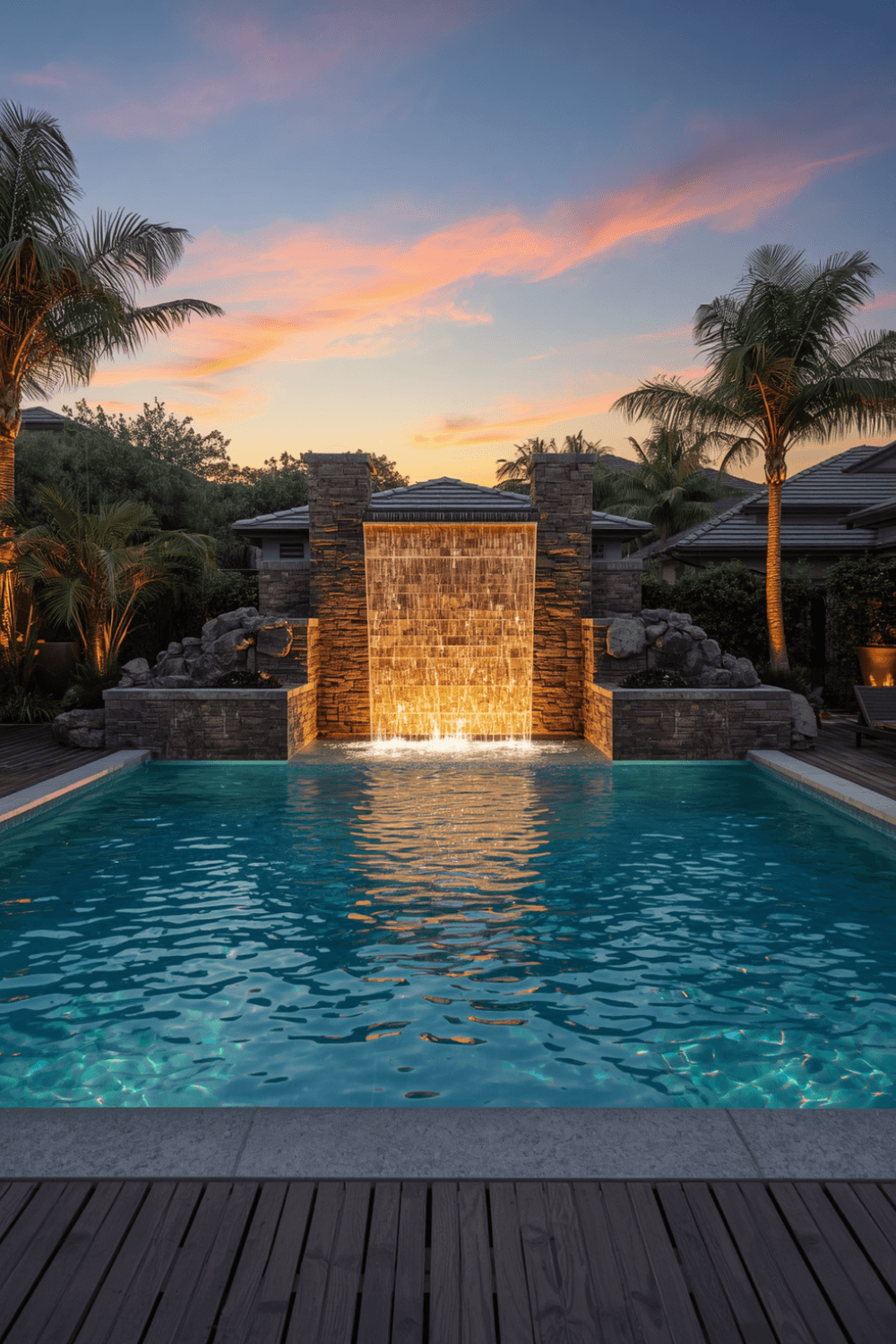
A well-built waterfall feature does several things at once. It adds sound — running water reduces ambient noise and creates a calming acoustic effect. It adds visual movement, which makes a pool feel alive even when nobody’s swimming. And it provides an opportunity for rockwork and planting that softens the hard edges of a pool surround. The difference between a natural-looking waterfall and a cheap-looking one comes down to the stone selection and how the rocks are placed. Real stone (boulders, ledgestone, or travertine) set by someone who understands how water moves looks believable.
3. Swim-Up Bar or Sunken Lounge
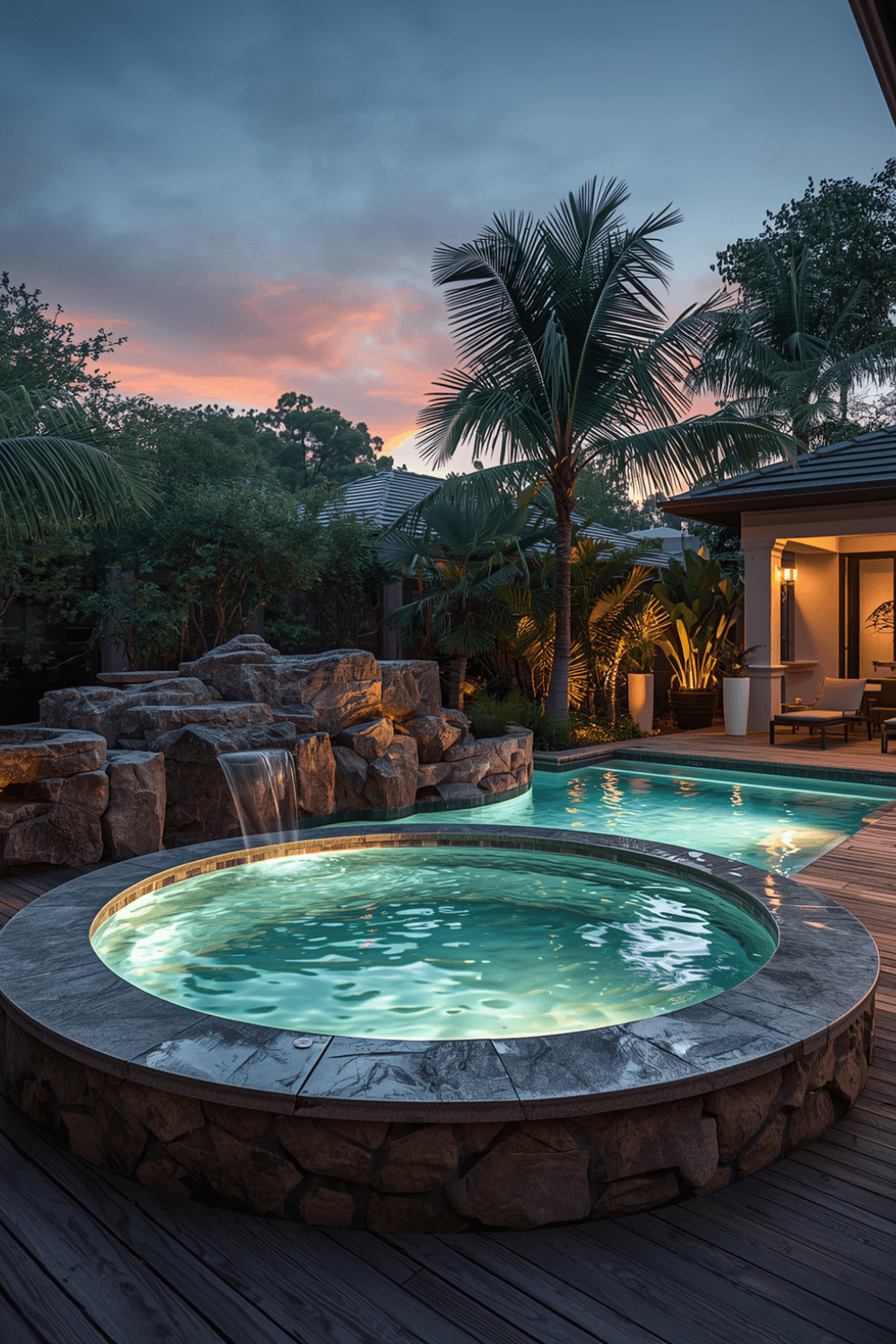
A submerged seating ledge or built-in bar shelf is one of the most-used features in resort-style pools. Water depths of 12–18 inches allow seating with water at waist height — comfortable for hours, and a natural gathering spot. Adding barstools or a bar ledge along one wall with underwater lighting below creates a swim-up bar effect without requiring a separate structure. Pair it with a nearby outdoor kitchen or wet bar and the pool becomes the entertainment center of the property.
4. Integrated Outdoor Spa
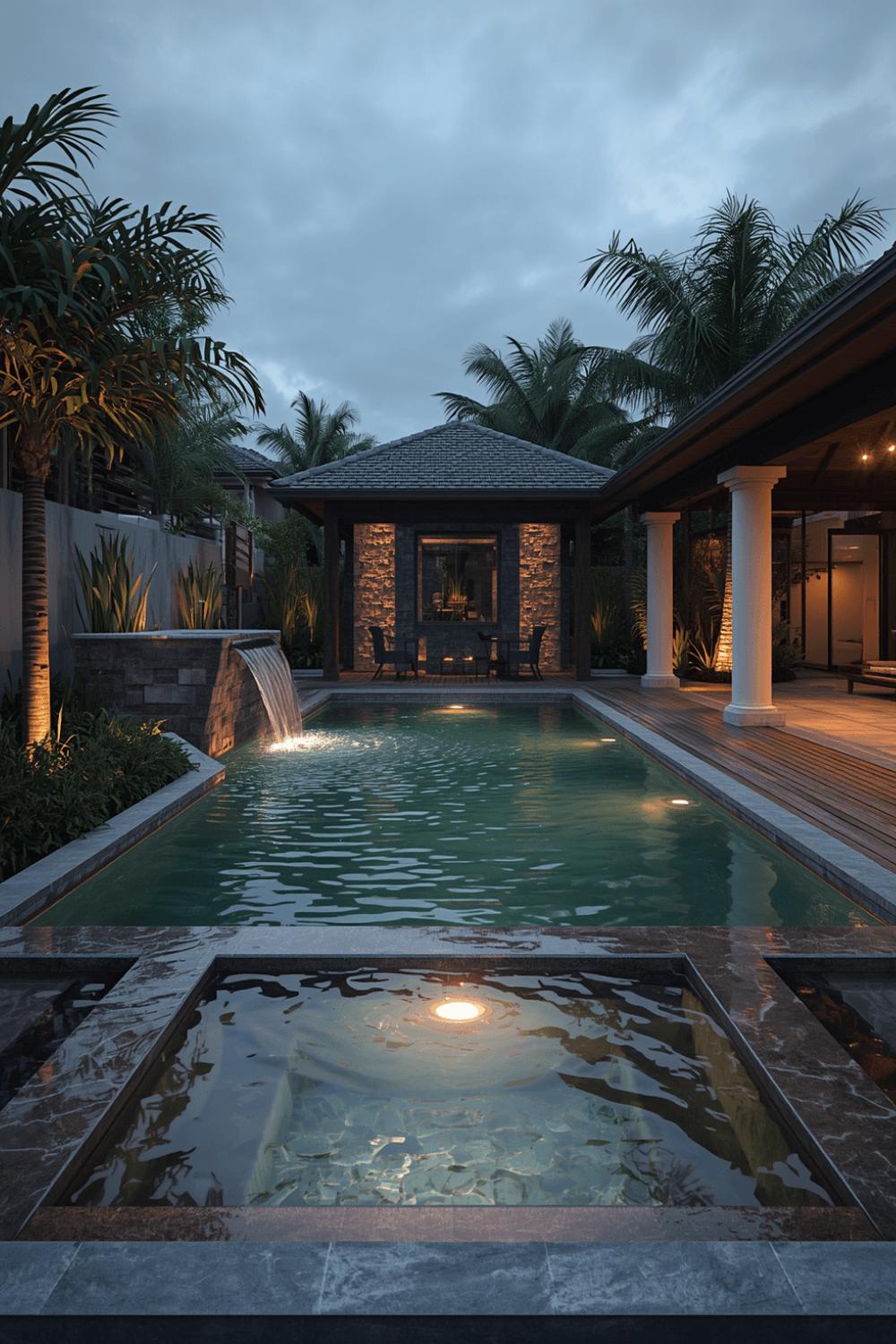
A connected spa (hot tub integrated into the pool design, sharing filtration systems) adds year-round functionality to a pool that might otherwise go unused for months in cooler climates. Water spills from the spa into the pool, adding another water feature element at no extra structural cost.
5. Fire and Water Combination
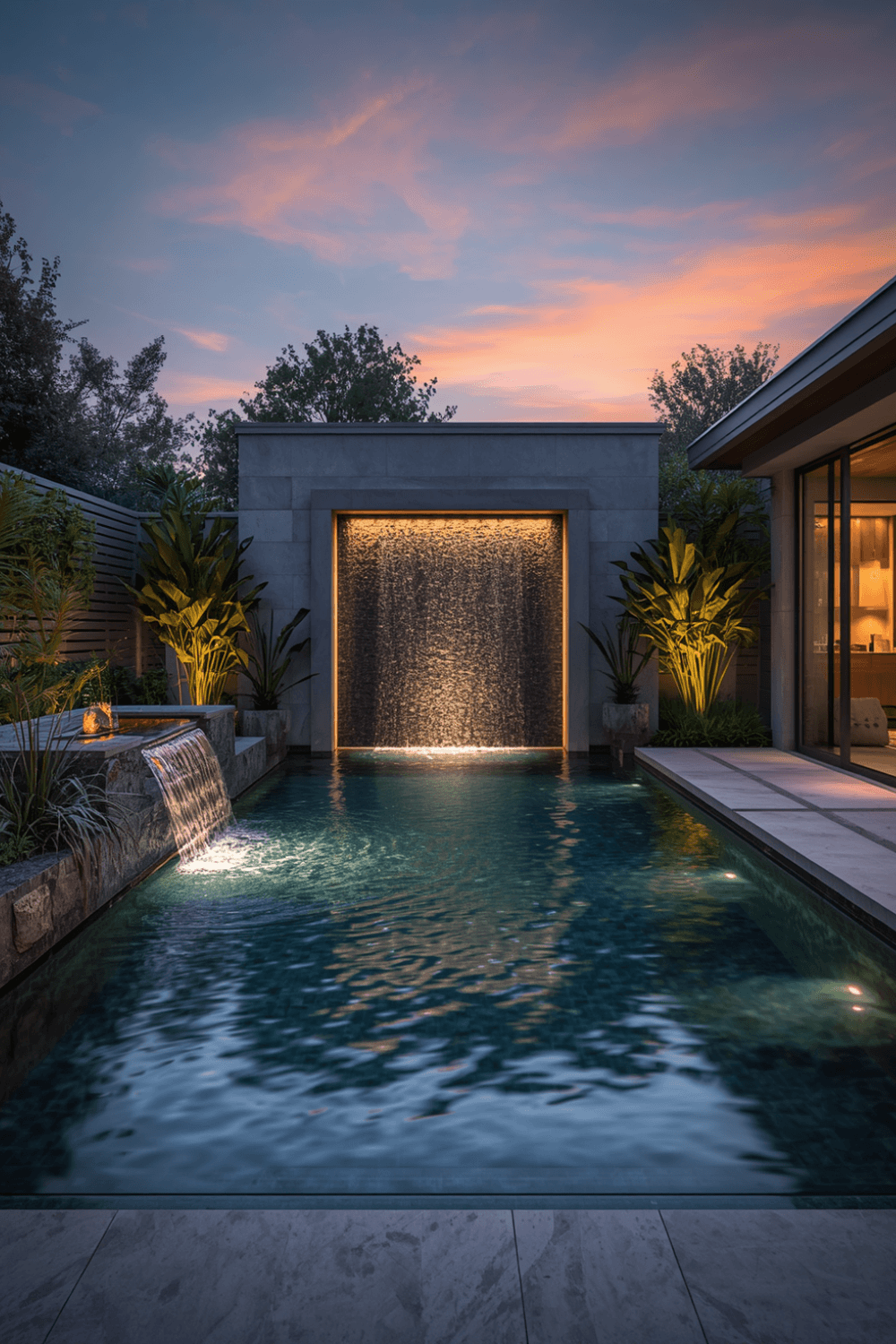
Fire bowls, fire pits, or linear fire features positioned at the pool edge create a visual contrast — the play of flame against water — that’s reliably dramatic, particularly at night. It’s a design move that reads as genuinely expensive because it requires planning and proper gas line installation, but the ongoing effect is worth it.
6. Glass Tile or Pebble Tec Finish
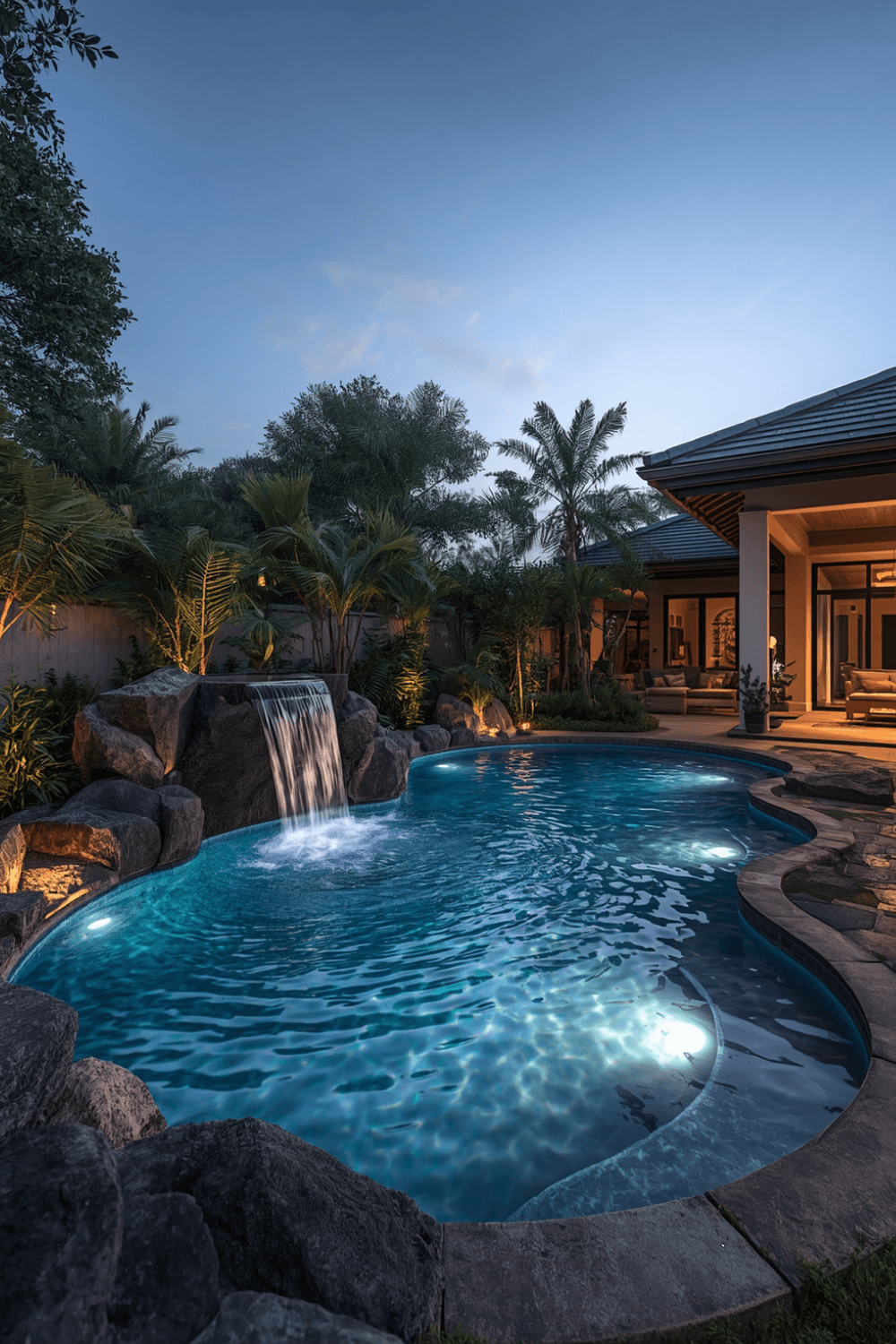
The pool interior finish has more visual impact than most people expect. Standard plaster looks fine in photos but shows age quickly. Glass tile — used for the entire pool or just as an accent band — catches light in a way that plain plaster or aggregate never does. Pebble Tec and similar pebble aggregate finishes give pools a depth of color and texture that’s distinctly higher-end.
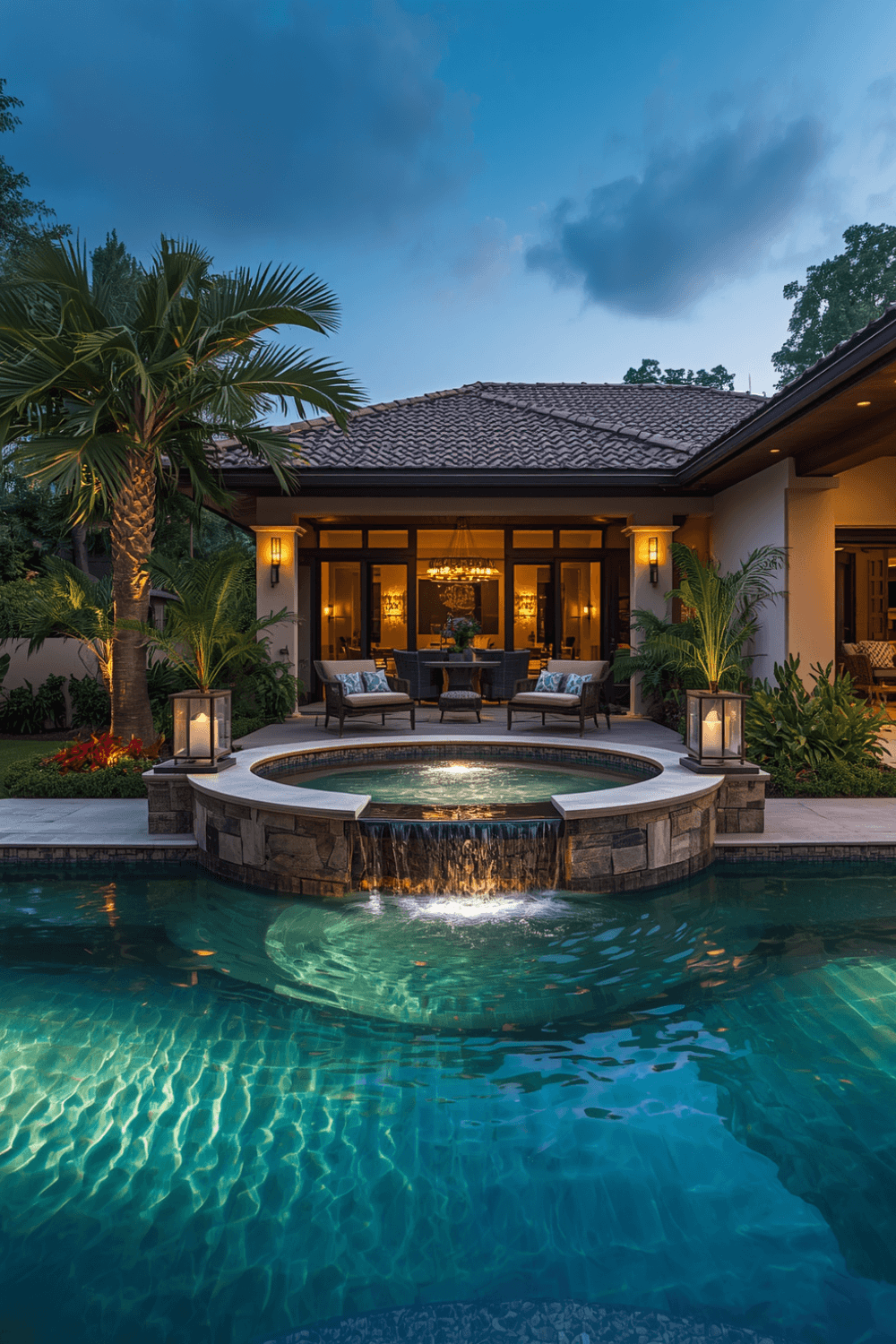
7. Negative-Edge Spa With Spillway
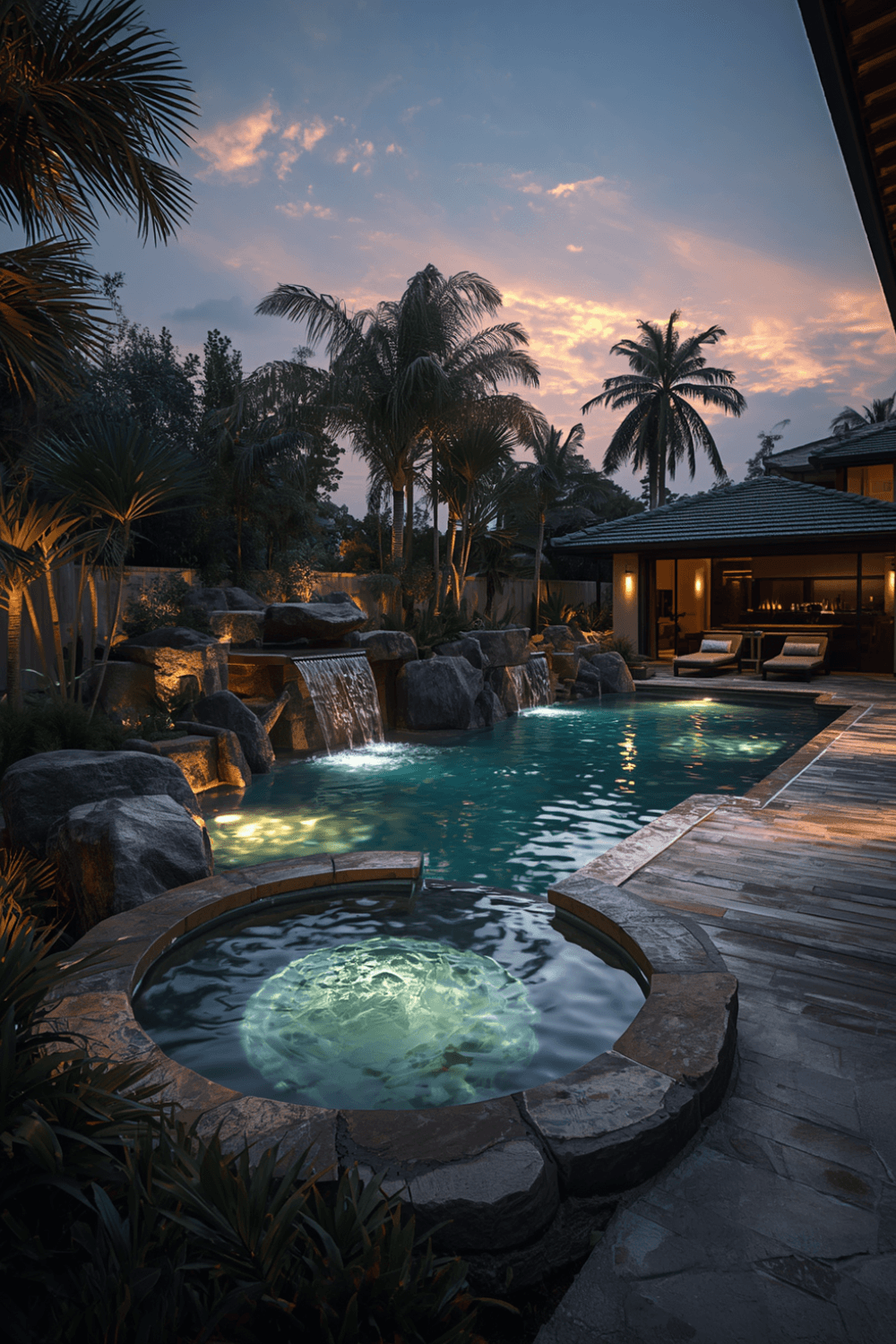
A slightly different take on the infinity concept: a raised spa with water flowing over its edge into the pool below. This creates a focal point feature, a secondary water sound, and a visual height element that makes a flat backyard more interesting. It’s a cleaner look than a waterfall feature and tends to work better with contemporary pool design.
8. Tropical Backyard Design With Lush Planting
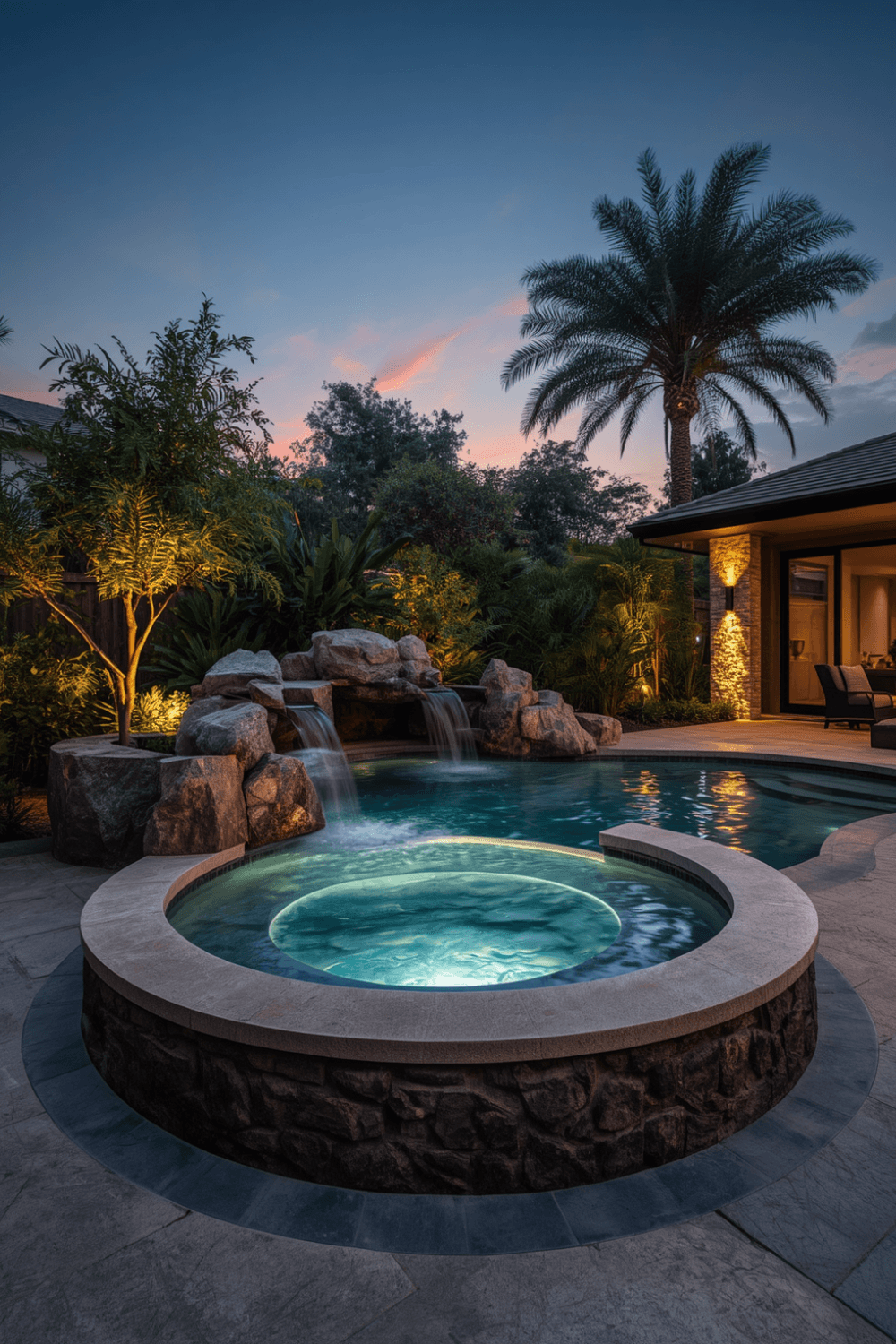
The landscaping around a pool does as much for the luxury feel as the pool itself. Dense, layered tropical-style planting — palms, banana trees, bird of paradise, ornamental grasses, flowering perennials — creates the enclosure that makes a pool feel like a private retreat rather than a hole in the yard. Homeowners in cooler climates use container-grown tropical plants that move indoors for winter. It requires more maintenance than evergreen planting, but the effect in summer is genuinely transformative.
9. Pergola or Cabana Poolside Structure
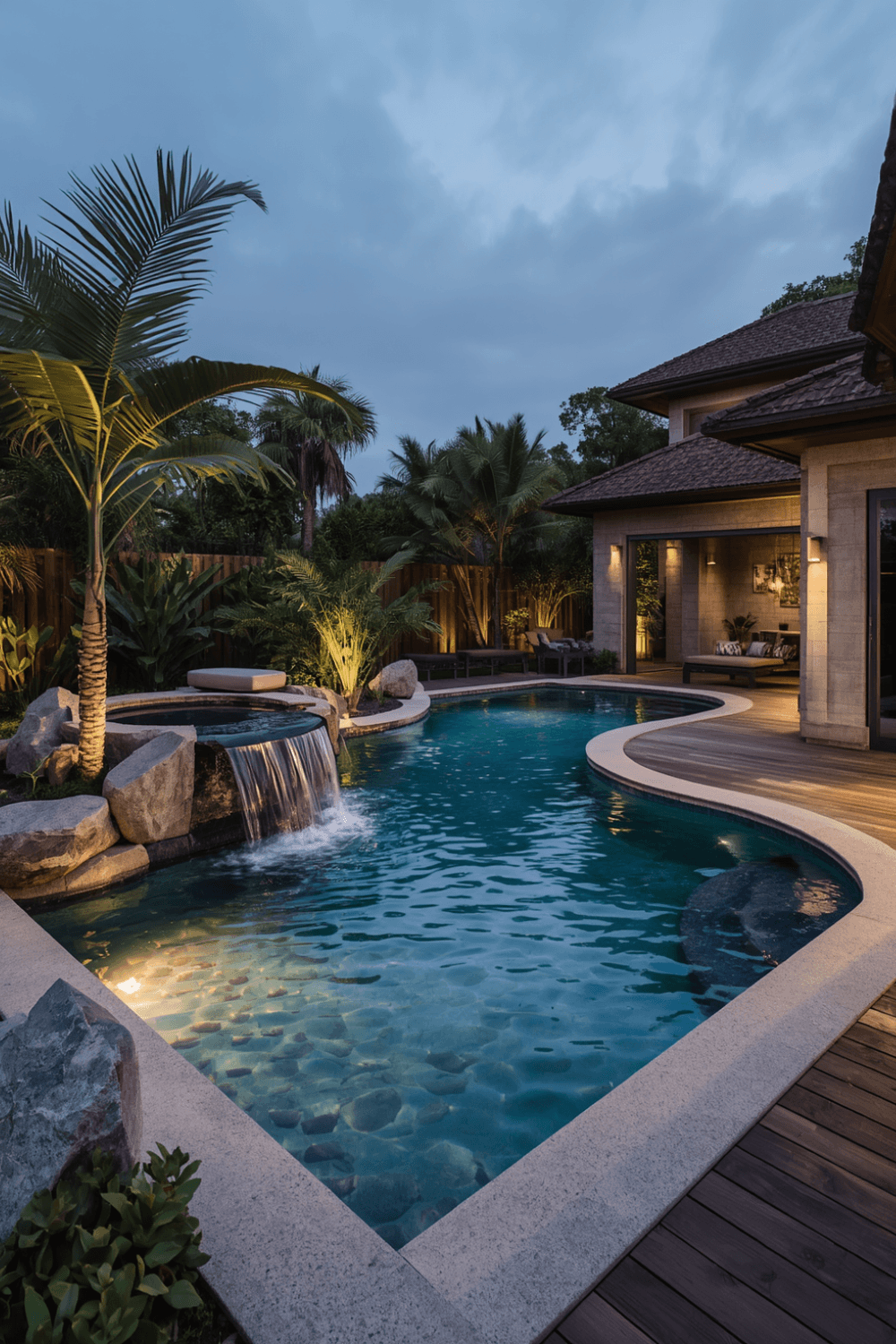
A structure beside the pool — whether a simple pergola with drapes, a thatched cabana in a tropical design scheme, or a modern aluminum-and-glass pavilion — does two practical things: it provides shade for the hours when direct sun makes the pool deck uncomfortable, and it creates a room-like destination outside. a daybed, ceiling fan, outdoor curtains, and ambient lighting inside the pergola and you have a space that works from morning coffee to late evening with no real modification.
10. Mosaic Tile Accents and Medallions
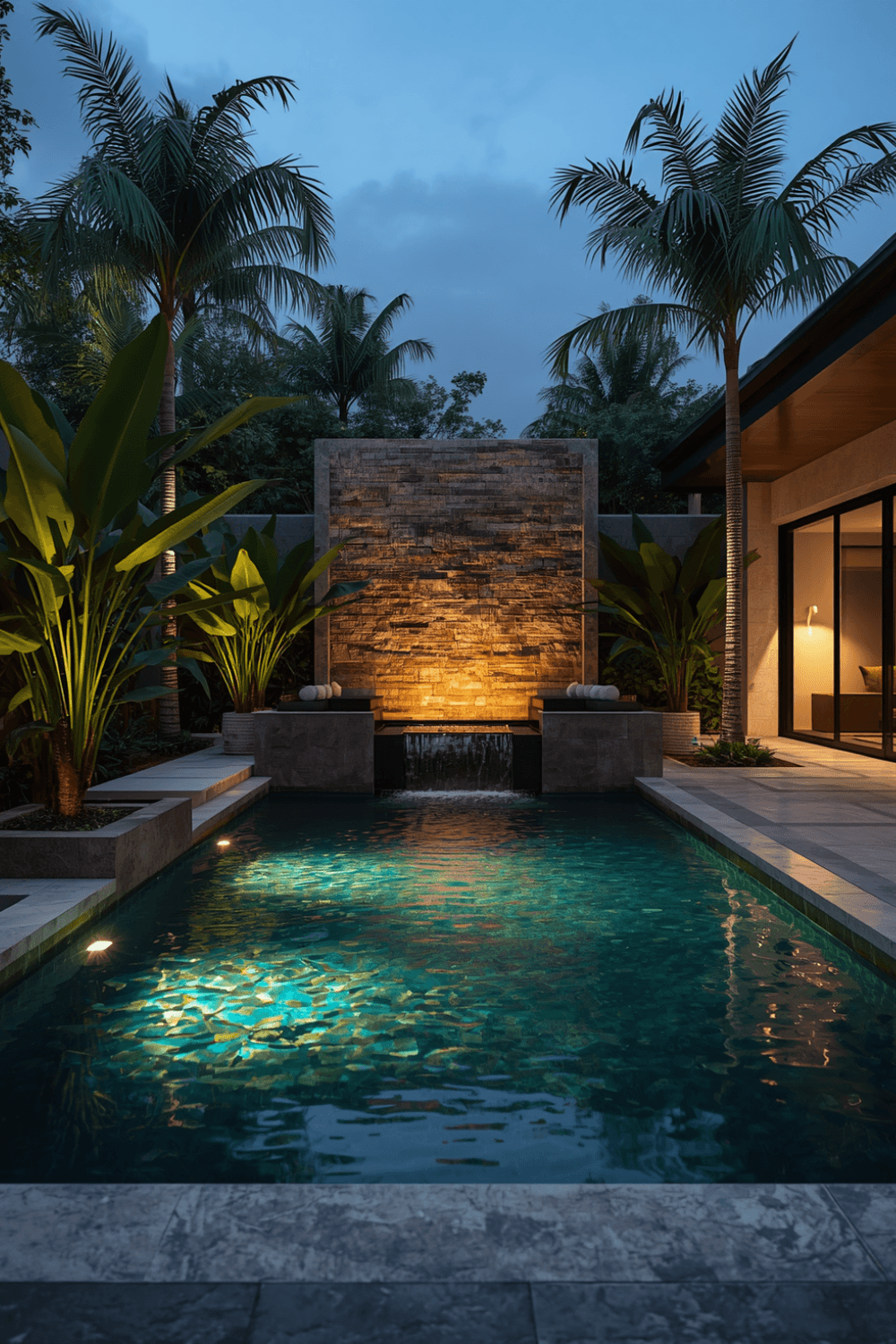
Custom mosaic work — a tile medallion on the pool floor, an accent band around the waterline, or a detailed design on the spa wall — is a handcraft element that signals quality in a way that manufactured materials can’t replicate. It’s not necessary for a great pool, but it does add a layer of uniqueness that sets a pool apart from the standard contractor design.
Modern Backyard Oasis: Design Principles That Hold Up
11. The Clean-Line Contemporary Pool
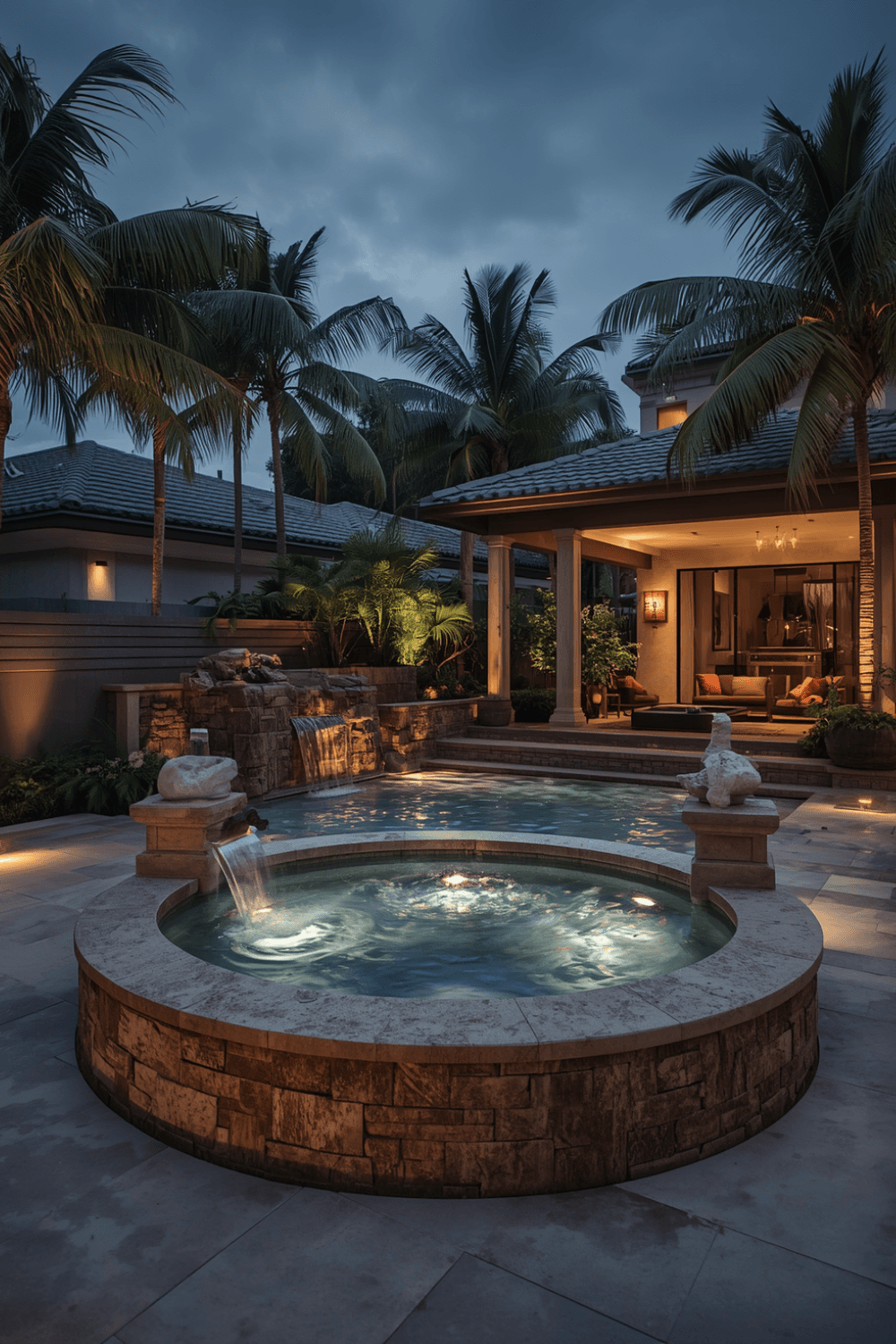
A pool that reflects the lines of the house rather than contrasting them creates cohesion. Dark plaster or charcoal pebble finish gives a contemporary pool almost a mirror-like quality at certain times of day. Contemporary outdoor living space design tends to favor restraint: a single strong feature rather than many competing ones, consistent materials throughout the pool and deck, and planting that’s architectural rather than lush.
12. Multi-Level Pool Deck
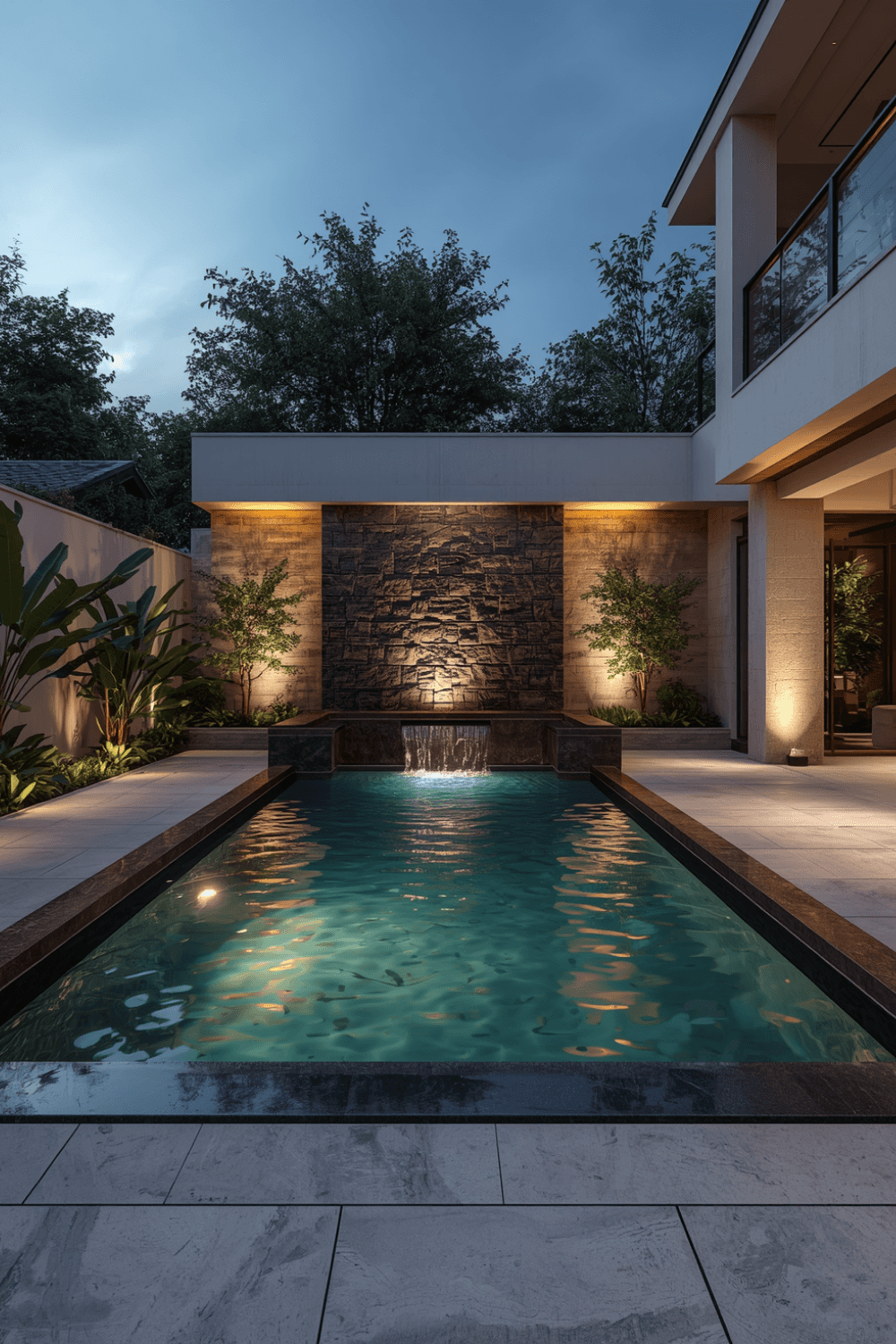
Rather than a flat deck around a pool, a tiered design creates zones — upper dining area, mid-level lounging, pool level — with each step down feeling like moving into a more relaxed space. It also handles graded sites naturally and creates opportunities for retaining walls, built-in seating, and planting terraces. Multi-level pool decks photograph well and function better than flat designs for groups, since different people can be at different levels without crowding each other.
13. Saltwater Pool System
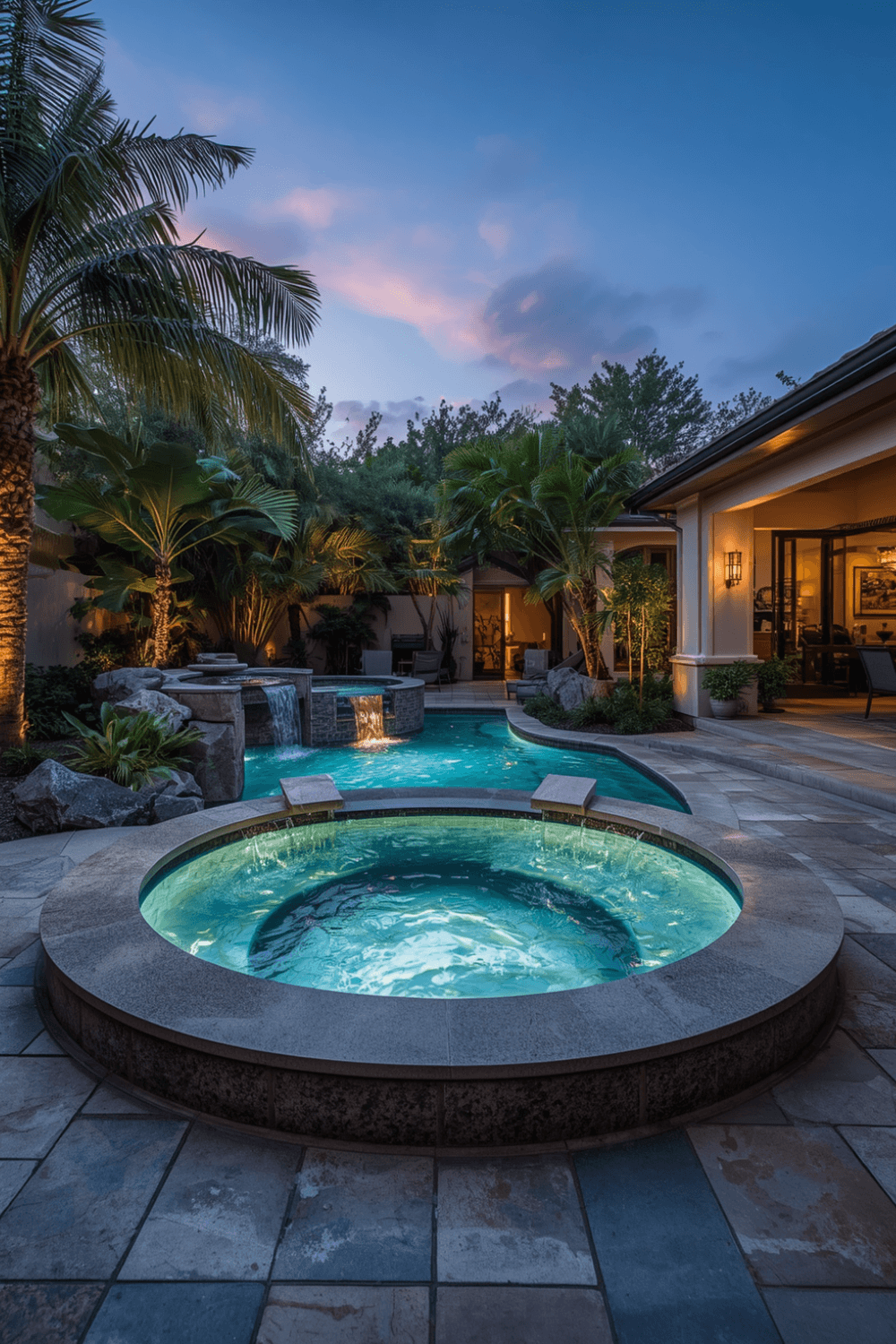
Less a visual feature than a lifestyle one: saltwater pools use a chlorine generator that produces chlorine from salt, maintaining water chemistry with significantly less chemical handling. The water feels softer, eyes and skin fare better after swimming, and the chemical-smell problem largely disappears. Conversion from a traditional chlorine system is relatively affordable. For a new luxury pool, specifying saltwater from the start is the near-universal choice among pool designers at the higher end.
14. Smart Pool Controls
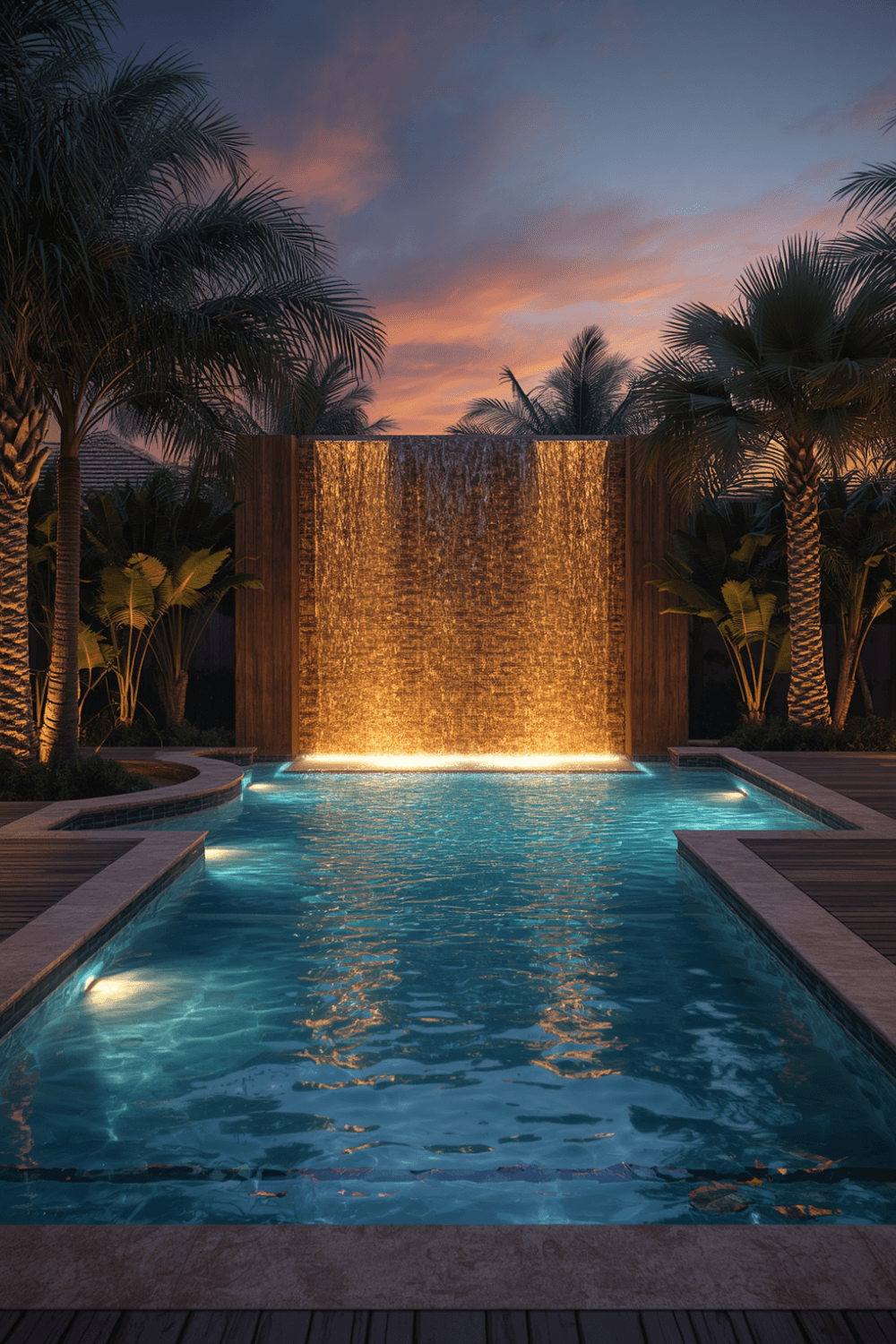
Modern pool automation lets you control everything — lighting, water temperature, jets, water features, even robotic cleaners — from a smartphone. Arrive home and heat the spa from your car. Set lighting scenes for evening entertaining. Schedule cleaning cycles. It’s a convenience upgrade that’s largely invisible but genuinely appreciated once you have it.
15. Glass Pool Wall or Window
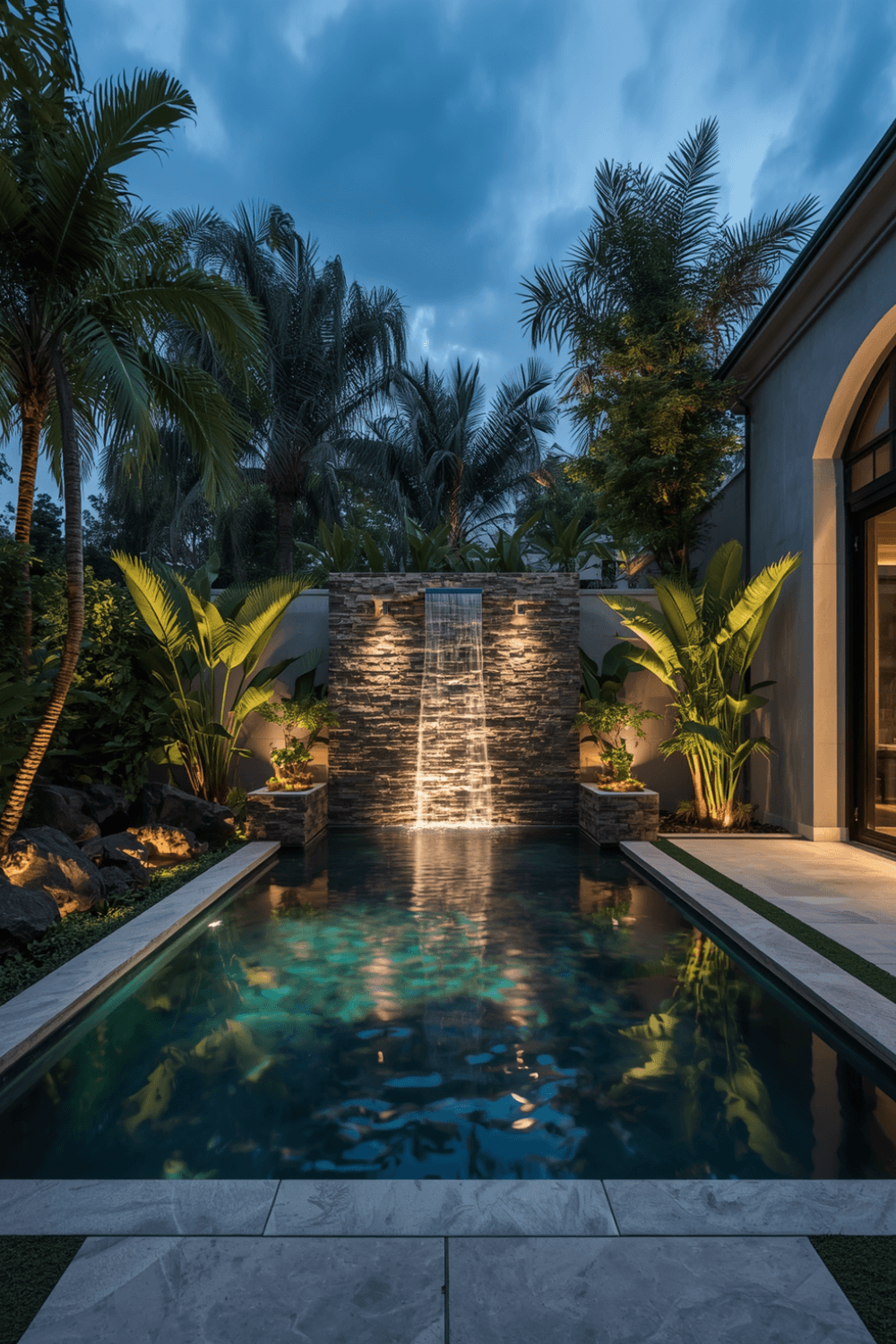
Where site conditions and budget allow, a glass wall on one side of a pool — visible from a lower floor of the house or a basement-level view — creates a genuinely arresting architectural detail. Watching underwater movement from inside the house has the same hypnotic quality as a fish tank but at residential scale.
Ambient Outdoor Lighting
Lighting is where luxury pool design most often falls short. A pool with good daytime appeal and mediocre nighttime lighting is a pool that stops being used at sunset.
16. Underwater LED Lighting
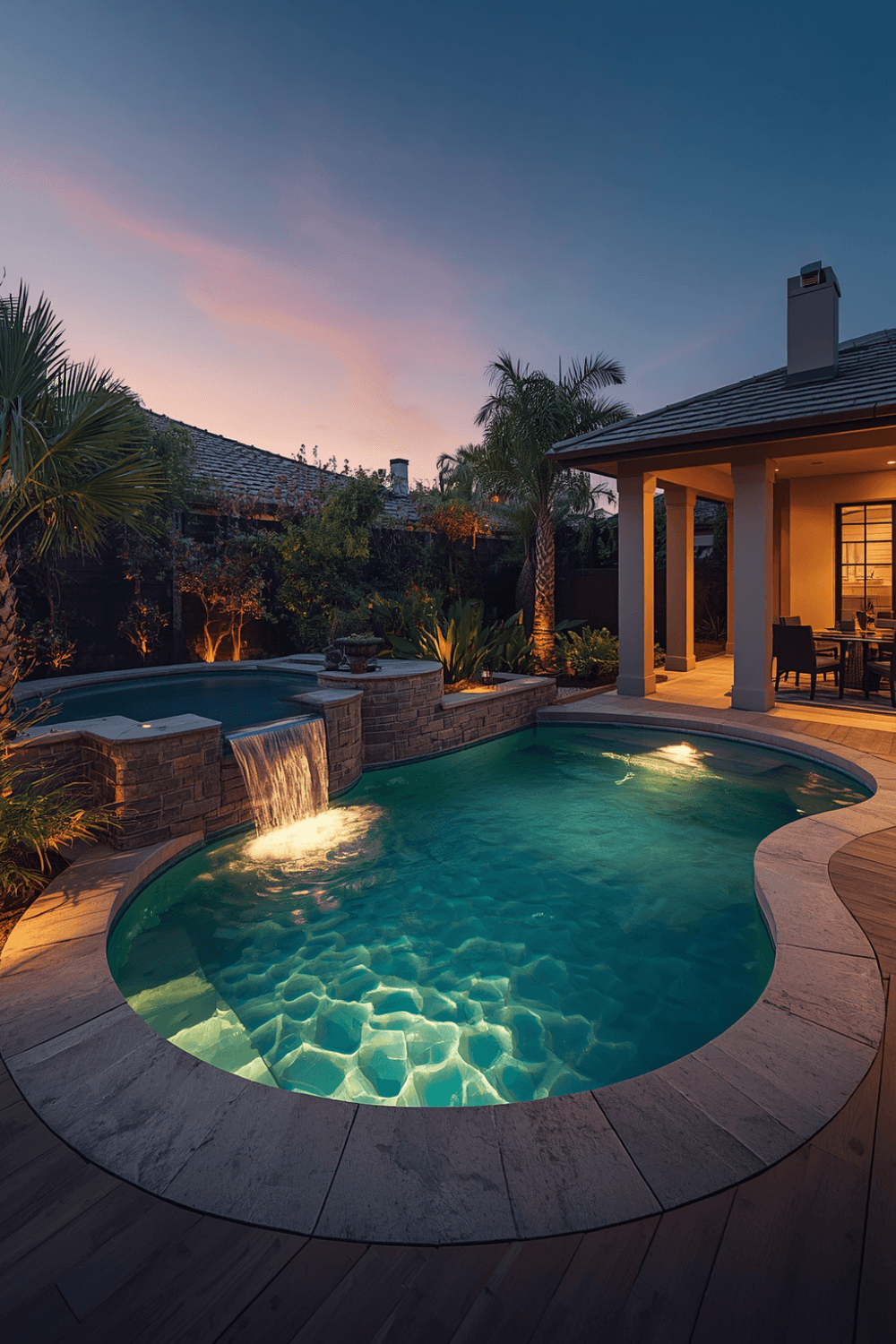
Modern color-changing LED pool lights have replaced older incandescent fixtures in virtually every quality pool build. They use a fraction of the energy, last years longer, and allow you to shift from white to warm to any color. White or warm-white tends to look the most elegant. Color-changing modes are fun but often overused. Adding lights at multiple points in a larger pool rather than relying on one or two fixtures eliminates dark corners and gives the water a more even glow.
17. Deck and Step Lighting
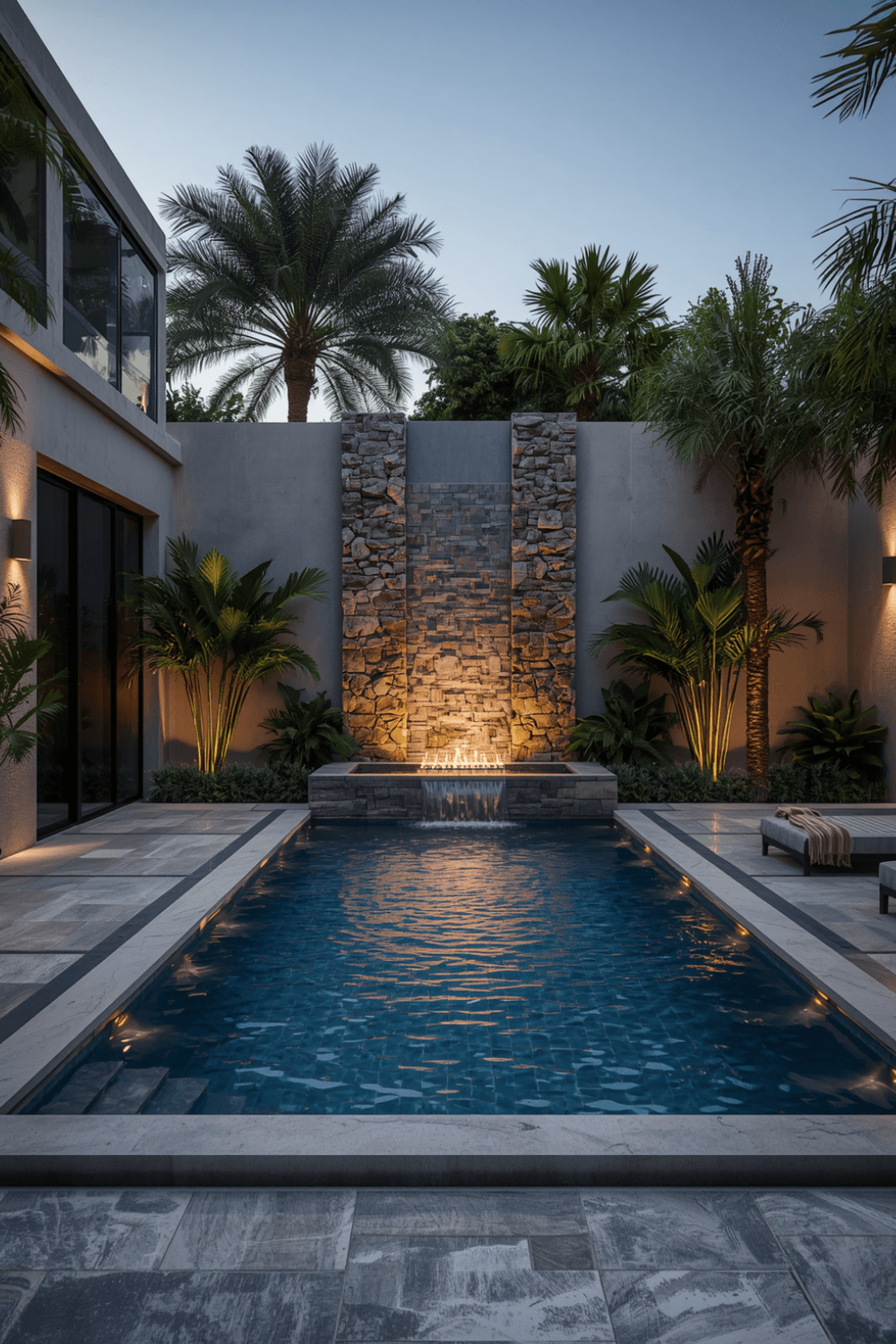
Low-voltage lighting recessed into pool coping, steps, and the surrounding deck does two things: it provides safe footing after dark, and it adds a ground-level lighting layer that makes the space feel dimensional rather than flatly lit from above. LED strip lighting under coping overhangs or in deck recesses is a detail that shows up in virtually every high-end pool design.
18. Landscape and Feature Uplighting
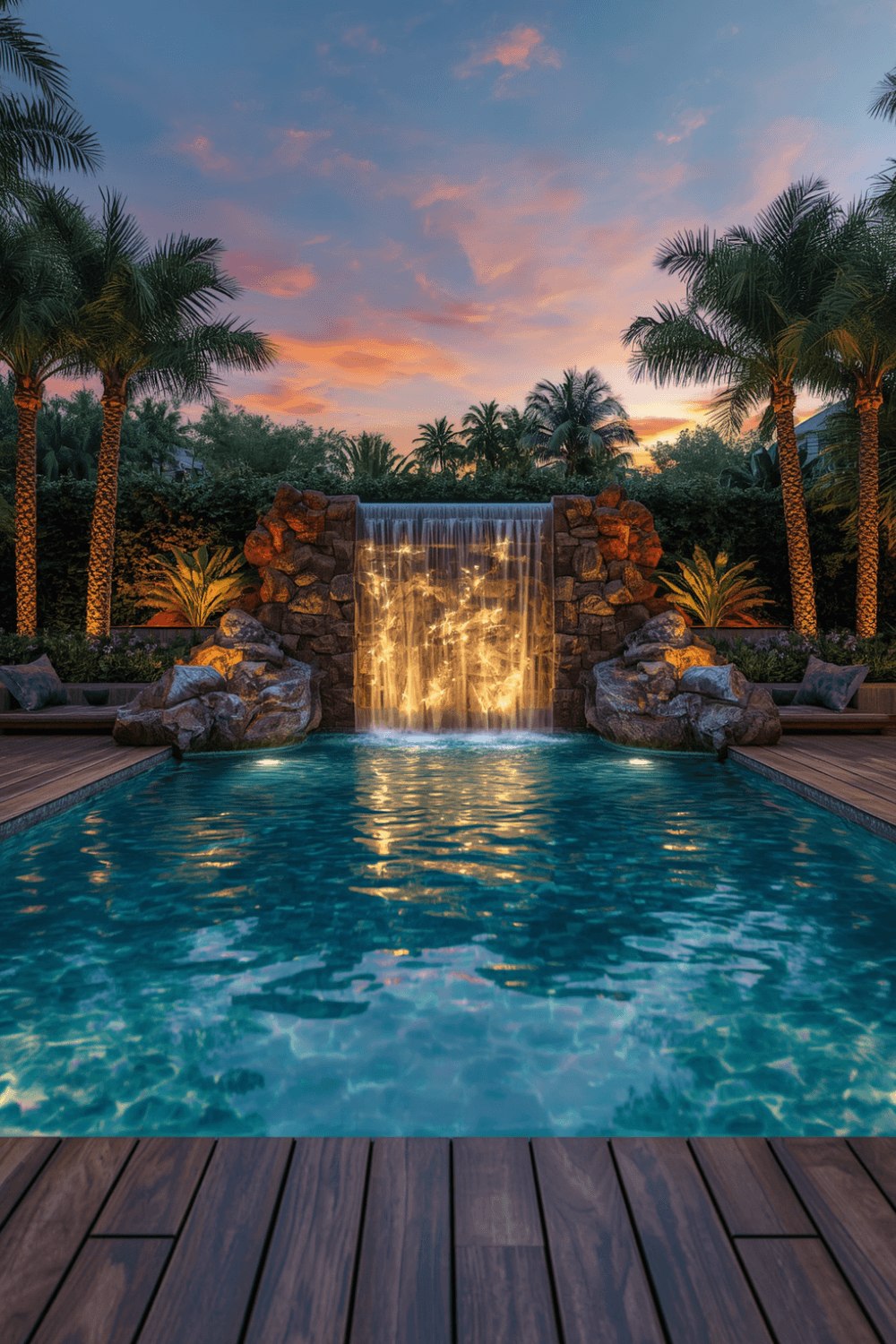
Uplighting trees and plantings around the pool at night creates a completely different atmosphere from daytime. Well-placed spike lights in the garden make the whole space feel enclosed and lush, even if the actual planting is fairly simple. Add underwater lighting inside a waterfall feature and the water becomes luminous rather than just heard.
Small Courtyard Pool and Space-Constrained Ideas
Not everyone has a sprawling backyard. Some of the most beautiful luxury pools in the world are small — courtyard pools in European townhouses, plunge pools on urban terraces, narrow lap pools along a property boundary. Small doesn’t mean lesser.
19. The Plunge Pool or Cocktail Pool
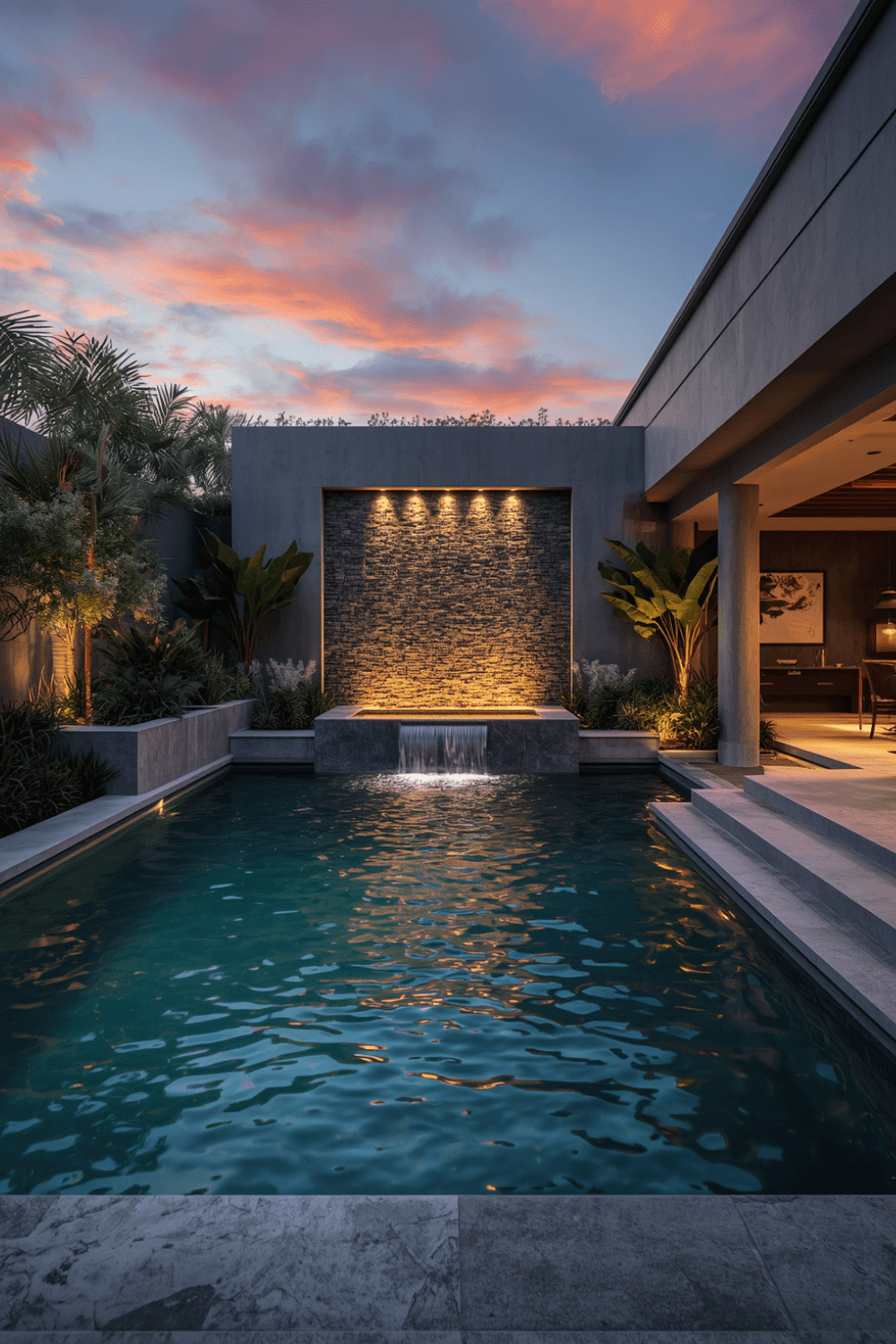
A plunge pool — typically 10–15 feet long and 6–8 feet wide — is the right solution for tight urban lots, courtyard gardens, or any situation where a full-sized pool isn’t practical. Built with the same quality of finish, lighting, and landscaping, a small courtyard pool can feel as luxurious as a large one. It’s also cheaper to heat, easier to maintain, and faster to build. Pair a plunge pool with a water wall feature on the fence or rear wall, quality tile, and surrounding planters and it reads as a deliberate design choice, not a compromise.
20. The Lap Pool
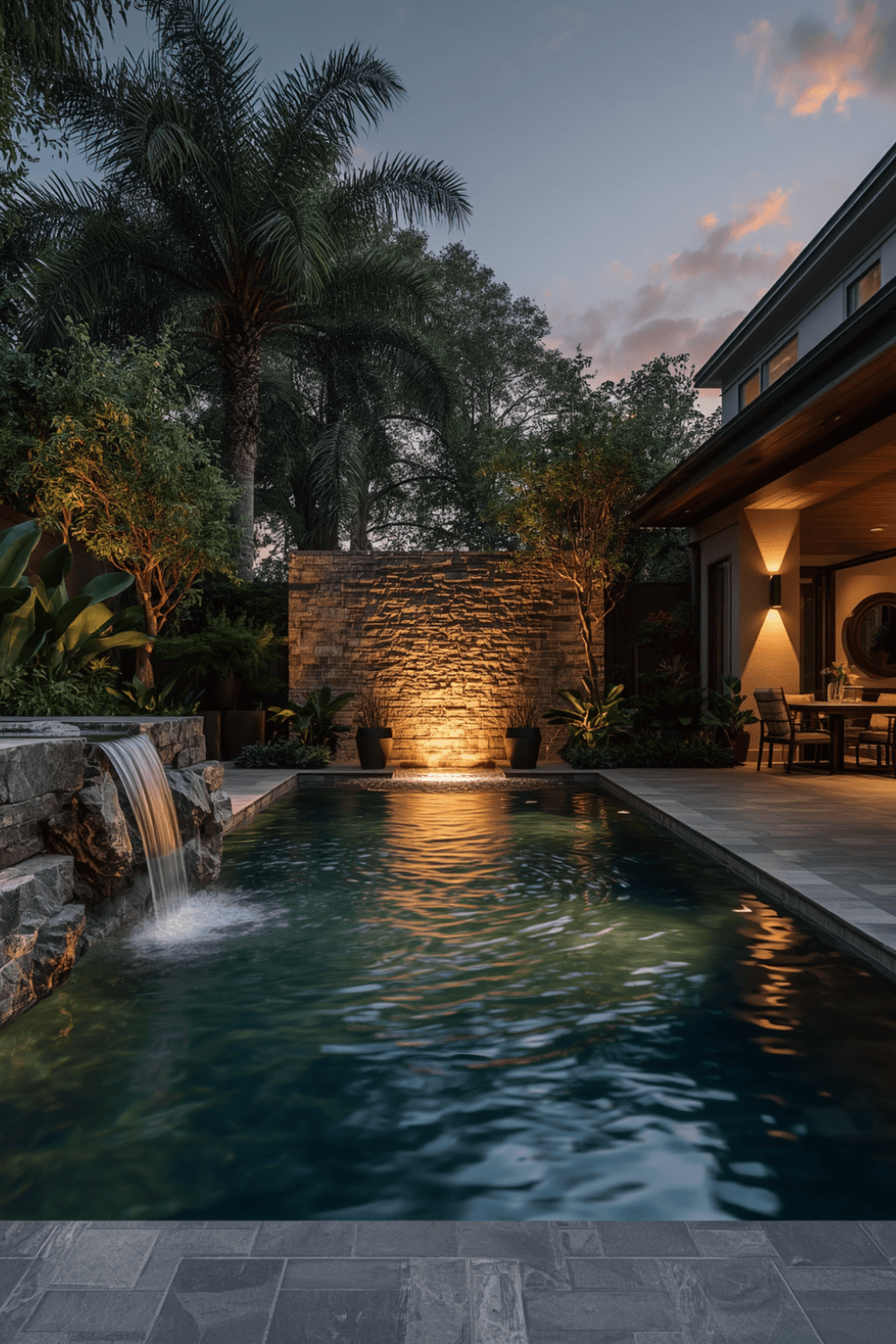
A lap pool — long, narrow, and typically 4–6 feet wide — works on properties that aren’t wide enough for a conventional pool but have length to spare. They photograph beautifully alongside a garden or between two structures, they serve a fitness function that a conventional pool rarely does, and the long clean rectangle is one of the more elegant shapes in modern pool design.
FAQ: Luxury Backyard Pool Questions Answered
How much does a luxury backyard pool cost?
In other parts of the world, labor costs significantly affect the total. Getting multiple contractor quotes and a detailed scope before signing anything is essential.
What pool features actually add resale value?
A well-built inground pool typically adds some resale value in warm climates where pools are expected, though rarely dollar-for-dollar. Features that tend to resonate with buyers include quality finishes (pebble or glass tile rather than plain plaster), integrated spa, and a clean pool deck. Elaborate water features and automation add to enjoyment but don’t always translate directly to sale price. The bigger driver of value is overall landscaping quality — buyers assess the whole outdoor space.
How do I make a small backyard pool look luxurious?
Material quality and consistency matter more in a small pool than a large one. Use the same stone or tile on the pool coping, surrounding deck, and any raised walls. Keep the planting lush but controlled. Invest in good lighting. A small pool with premium finishes, good lighting, and thoughtful planting reads as luxury; a large pool with budget materials and sparse surroundings doesn’t.
What’s the most low-maintenance luxury pool finish?
Quartz aggregate (brands like QuartzScapes) offers a good balance of durability, appearance, and low maintenance. Pebble Tec-style finishes are even more durable and look great long-term but have a slightly rougher texture underfoot. Glass tile is stunning but costs more to maintain and repair if tiles crack or come loose. Plain white plaster is the cheapest but the highest maintenance — it stains, etches, and ages faster than any of the aggregate options.
How long does a luxury pool project take?
From signed contract to swimming, most inground pool projects take 3–6 months in areas where pools are built year-round. Permitting adds 4–8 weeks in most jurisdictions. Complex projects with significant excavation, custom features, or imported materials can take longer. Plan to have your pool designed and permitted in the off-season if you want to swim the following summer — the best pool builders in most markets book 6–12 months ahead.
Start Planning Your Dream Backyard Pool
The pools that people are happiest with ten years later tend to share a common story: they spent time getting the design right before anything was built. They worked with a designer who understood how the pool would integrate with the house and garden. They chose quality materials they could maintain. And they didn’t add every possible feature — just the ones that matched how they actually live.
If you’re early in the process, start by collecting references: photos of pools that genuinely appeal to you, from this article and elsewhere. Identify what they share. Then find a pool designer or landscape architect who has built things in a similar style and have a real conversation about what’s achievable on your site and budget.