20 Indoor Plant Decor Ideas Arched Floor Mirror Ideas for a Cozy Living Room
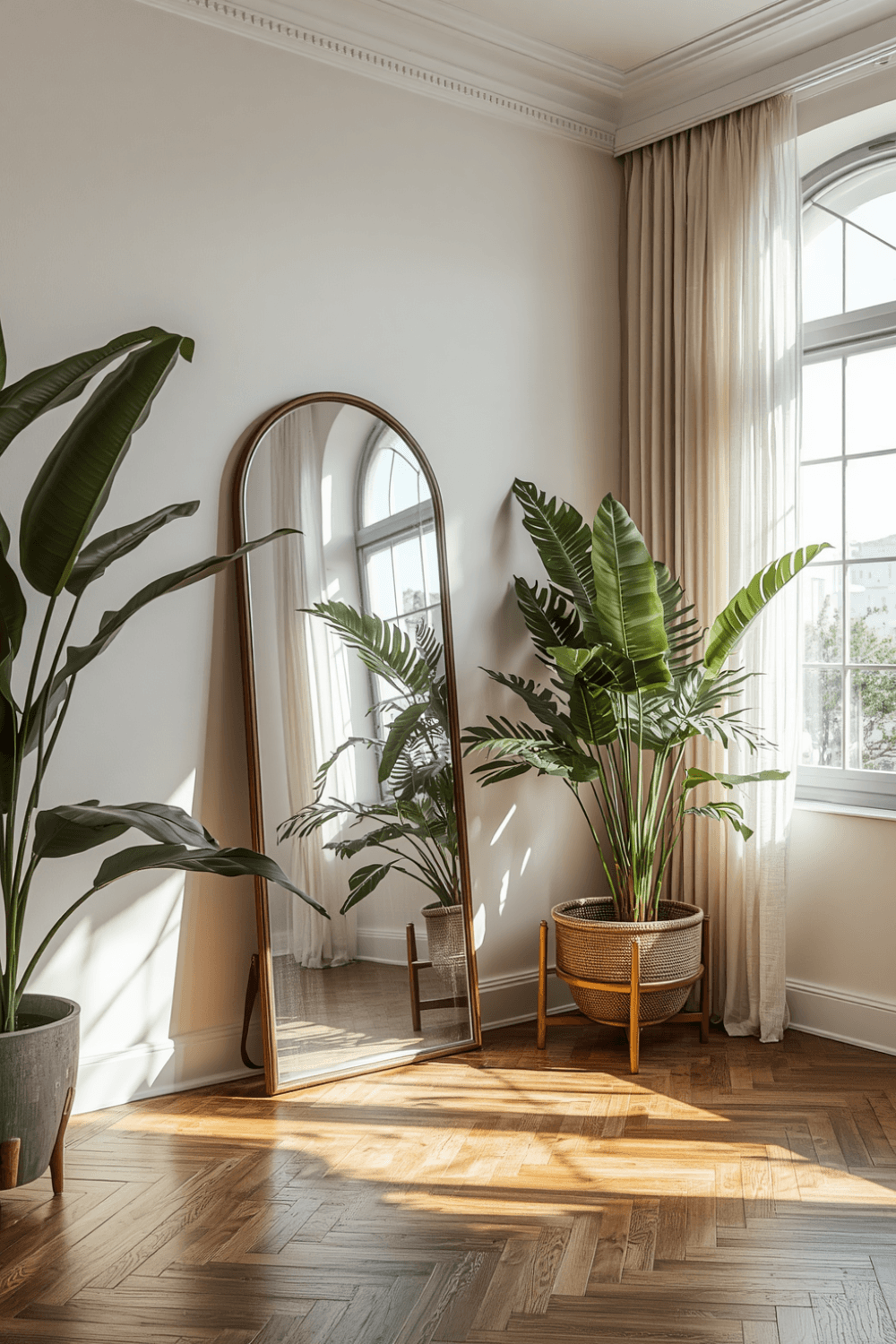
Most people underestimate what a plant can do for a room. Not in a vague “adds life” way, but in a very specific, measurable way: it gives the eye somewhere to land that isn’t a piece of furniture or a blank wall. I noticed this properly for the first time in a friend’s flat, a small living room that had no business looking as good as it did. One large monstera in the corner, an arched mirror leaning beside it, afternoon light coming in from the left. The mirror was reflecting the plant back into the room and the room suddenly felt twice the size and three times as considered. She’d spent about on the whole setup. The twenty indoor plant decor ideas in this guide are built around that same logic: a few specific choices, placed with some thought, that do more for a living room than most furniture purchases will.
There’s a version of indoor plant styling that looks like someone bought ten plants on impulse and spread them around the room hoping for the best. And there’s another version, usually the one in the photos that stop you mid-scroll, where one or two plants are doing something very deliberate: sitting beside a mirror that reflects them back, placed in a corner that needed exactly that shape, potted in something that ties into the rest of the room’s materials. The difference between those two outcomes isn’t the plants themselves. It’s knowing where to put them and what to put near them. That’s really what this guide is about. Twenty indoor plant decor ideas that come with the reasoning behind them, because a plant in the wrong corner with the wrong pot in front of the wrong mirror is just a plant that needs watering.
What Every Cozy Plant and Mirror Setup Gets Right
- Scale. A large plant beside a large mirror reads as intentional. A small plant beside a large mirror reads as an afterthought. A large plant beside a small mirror looks mismatched. The sizes need to have a relationship.
- Placement relative to light. Mirrors bounce whatever light is in the room. If the light source is a window, placing the mirror where it reflects that window makes the room feel dramatically brighter. Plants near windows get the light they need while the mirror amplifies it further.
- Restraint on the surrounding styling. A good plant-and-mirror corner doesn’t need a third and fourth element added to it. A small woven basket beside the pot, maybe, or a simple floor lamp nearby. Not a gallery wall, not a bookcase, not three more plants all crowding the same corner.
Arched Floor Mirror Ideas for a Living Room
The arched floor mirror is probably the single biggest living room trend of the last few years, and it’s earned that status. The arch softens the architectural feeling of a large rectangular mirror, adds an elegant shape to a corner or wall section, and photographs beautifully in natural light.
1. A tall arched floor mirror leaning against a wall beside a fiddle leaf fig
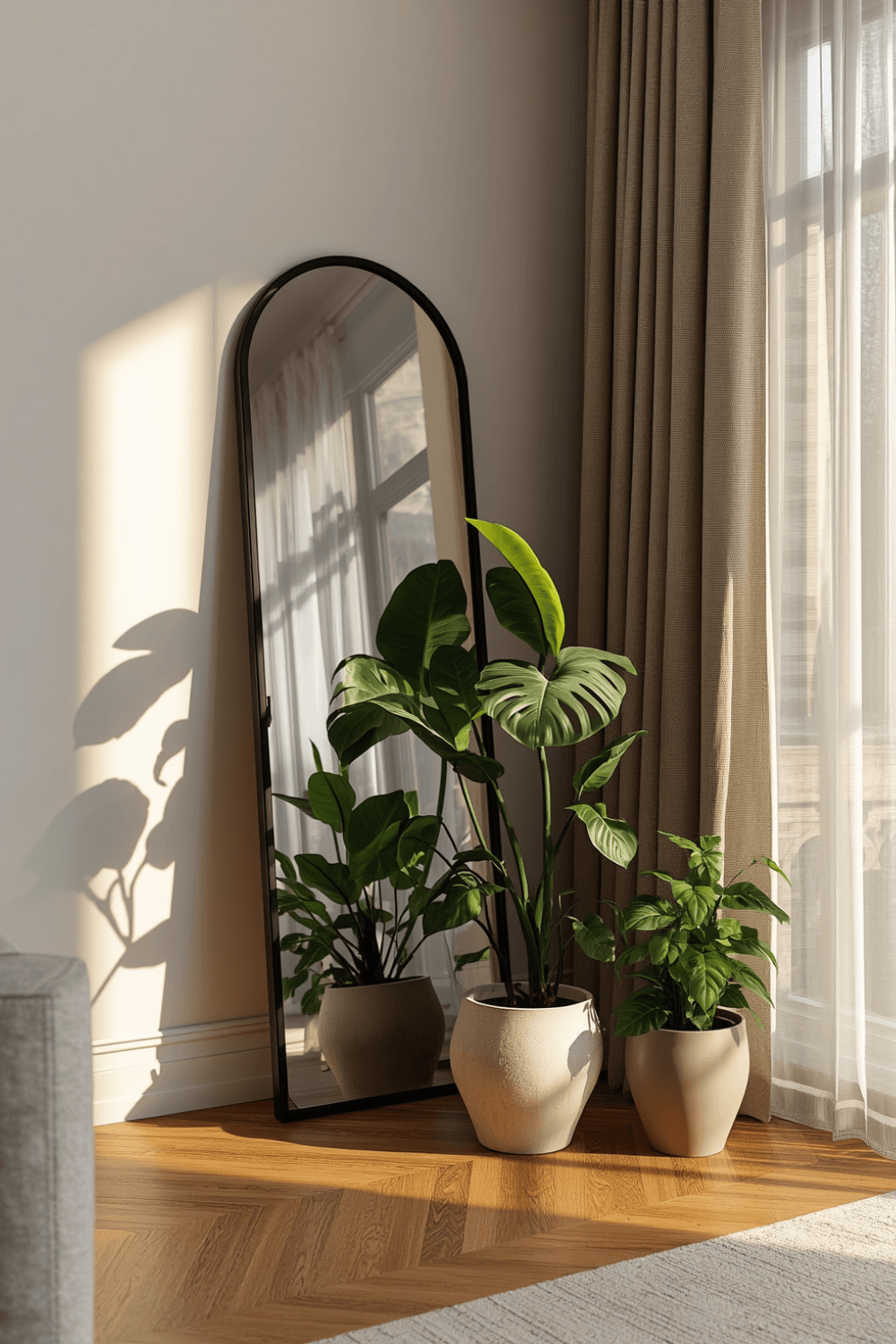
This is the combination that started the whole trend, and it’s started it for good reason. A arched mirror leaning at a slight angle against a neutral wall, with a large fiddle leaf fig in a terracotta or ceramic pot beside it, creates a corner that reads as effortlessly considered. The tree’s branching form contrasts with the arch’s smooth curve in a way that makes both pieces look more interesting.
2. An arched mirror reflecting a window and the plants in front of it
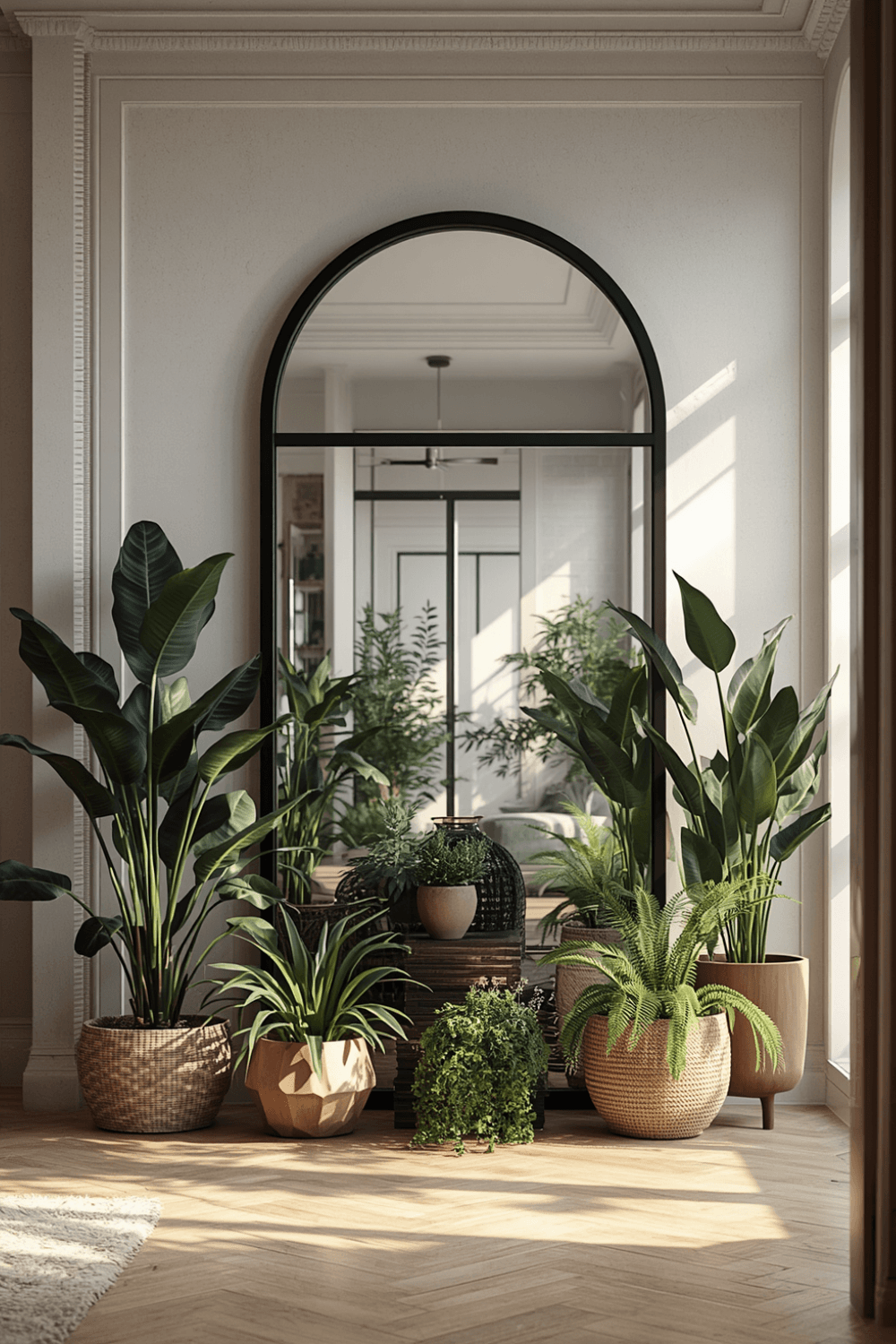
Positioned on the wall opposite a window, an arched floor mirror reflects natural light back into the room and doubles the visual presence of any plants sitting near the window. In a darker room or an apartment with limited windows, this is the highest-impact move on this list for changing how the room feels.
3. A gold-framed arched mirror beside a cluster of mixed-height plants
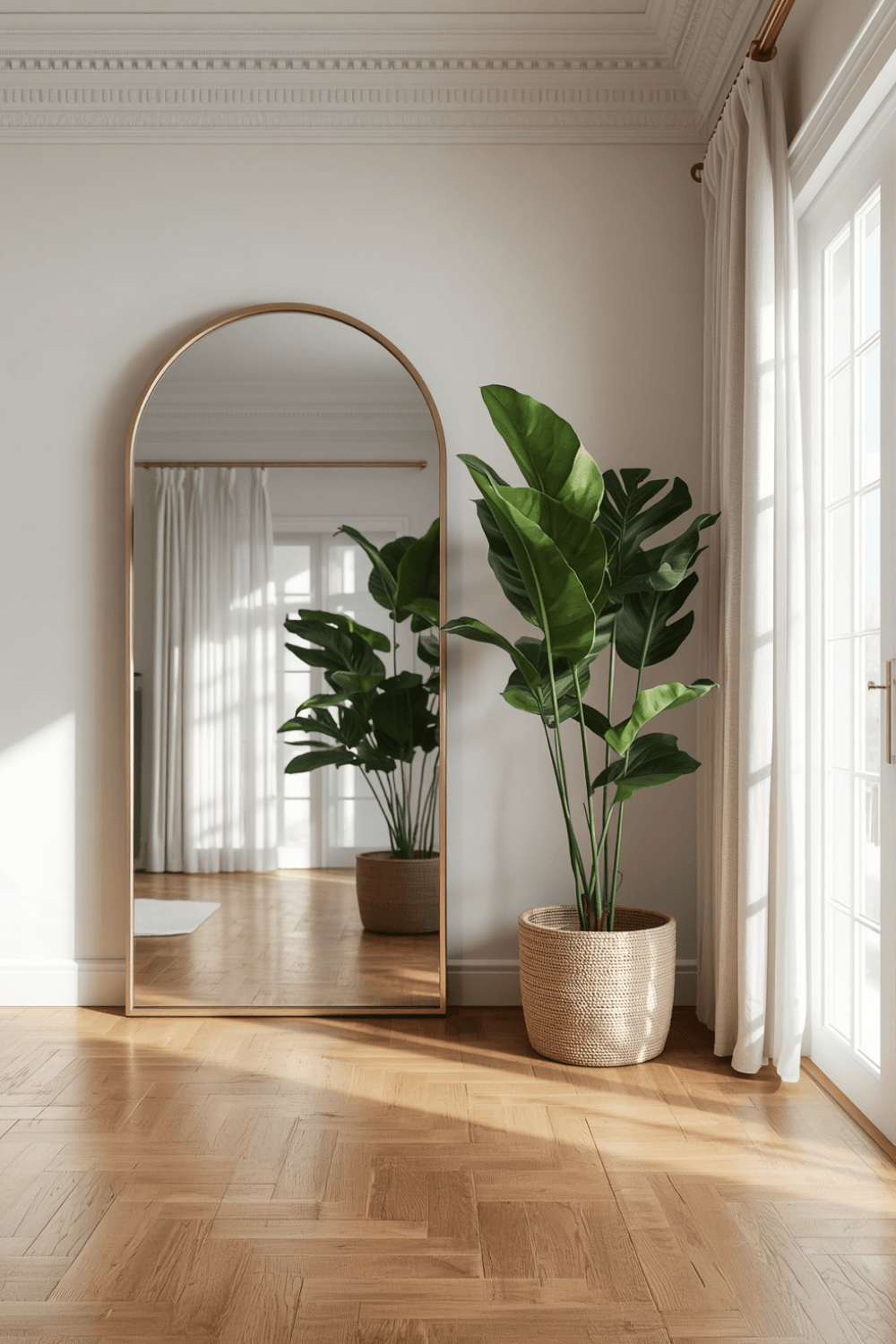
A warm gold or brass frame on an arched mirror adds warmth and elegance to a corner that might otherwise feel plain. Beside a cluster of plants at different heights, the gold picks up on any warm terracotta or amber pot tones and ties the whole corner together without anything extra needing to be added.
4. A frameless arched mirror for a clean, Scandinavian feel
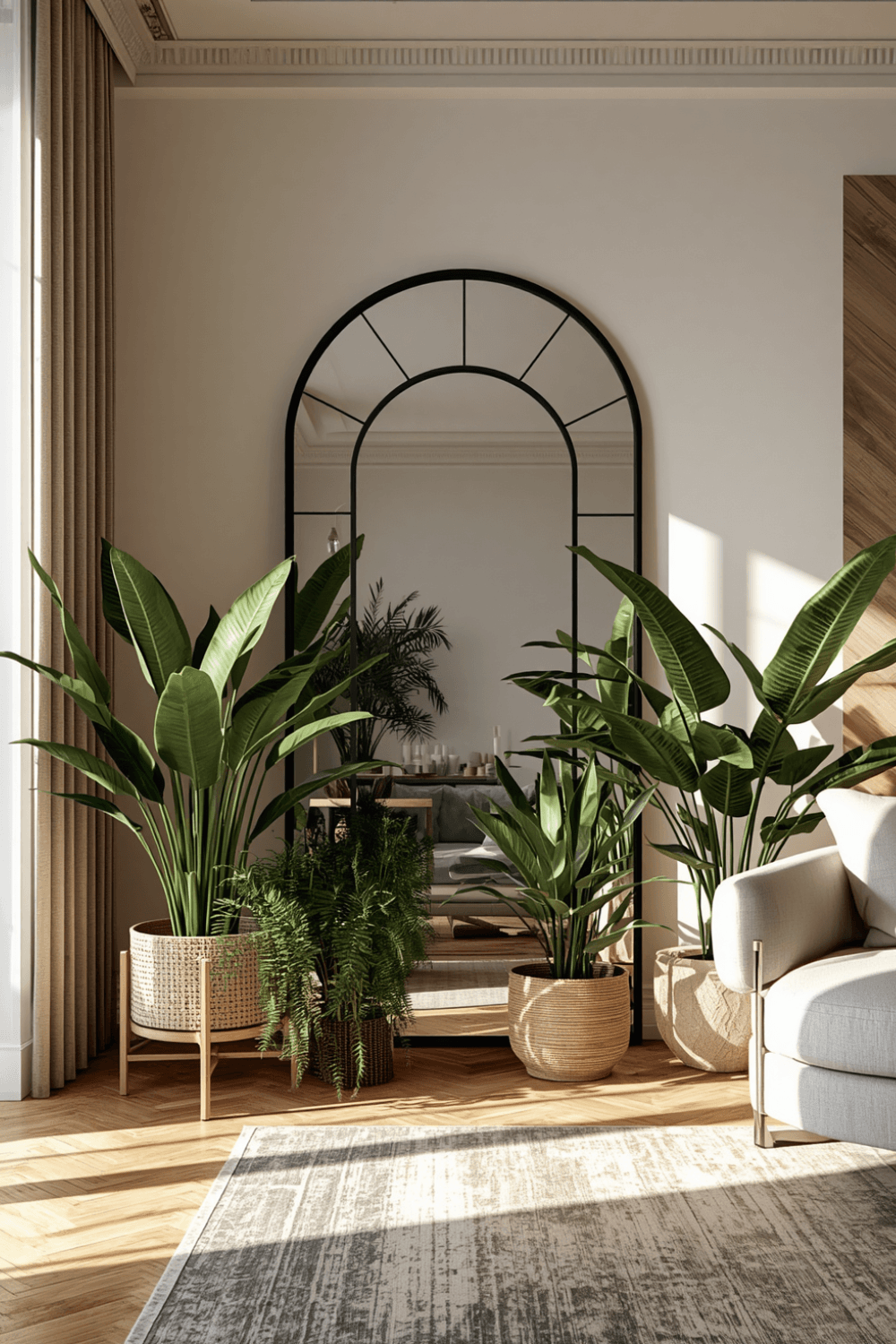
In a Scandinavian home decor living room with neutral walls and minimal furniture, a completely frameless arched mirror reads as cleaner and more architectural than a framed one. The shape does all the work without the frame adding another material or color to the palette.
5. A black-framed arched mirror for a more contemporary
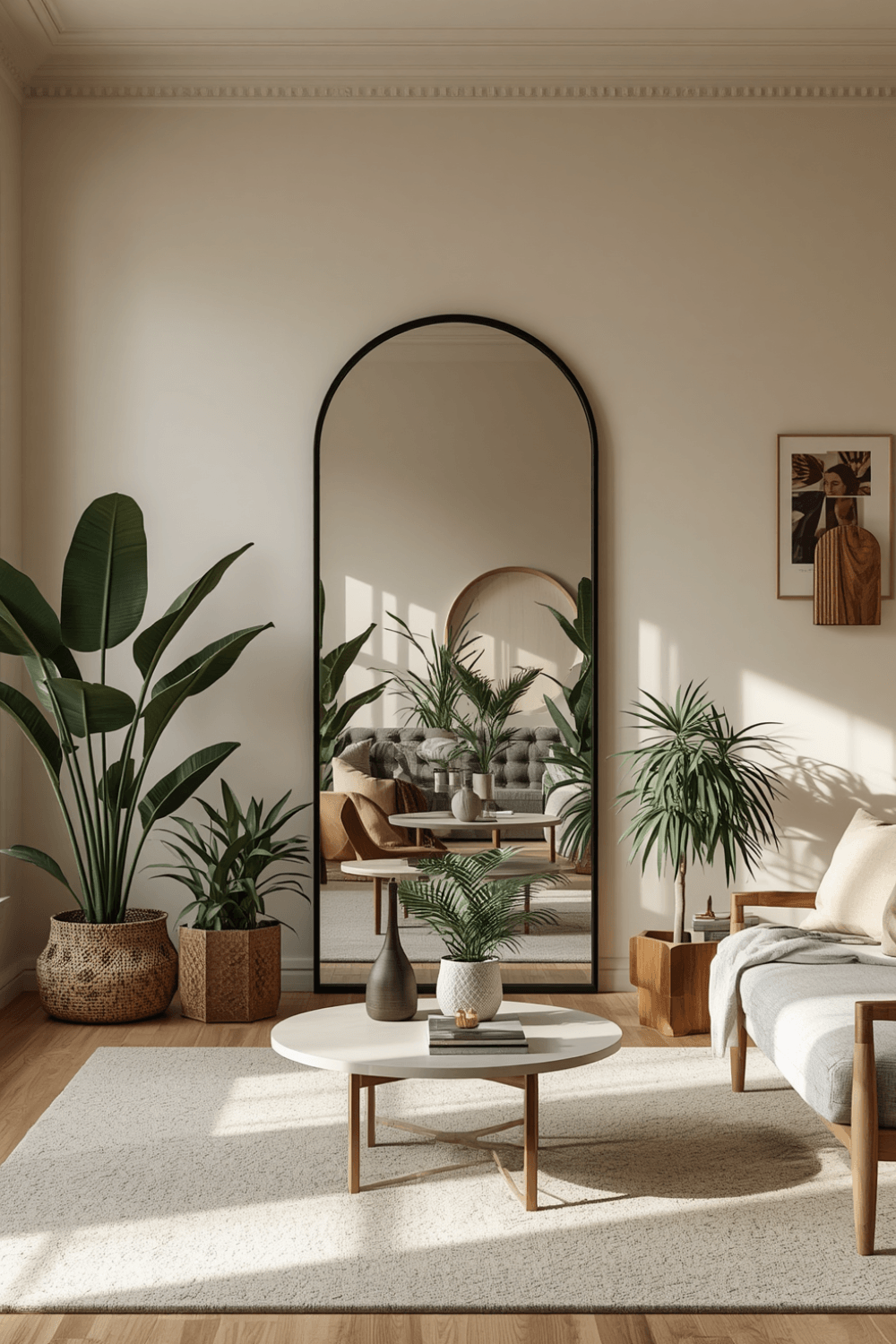
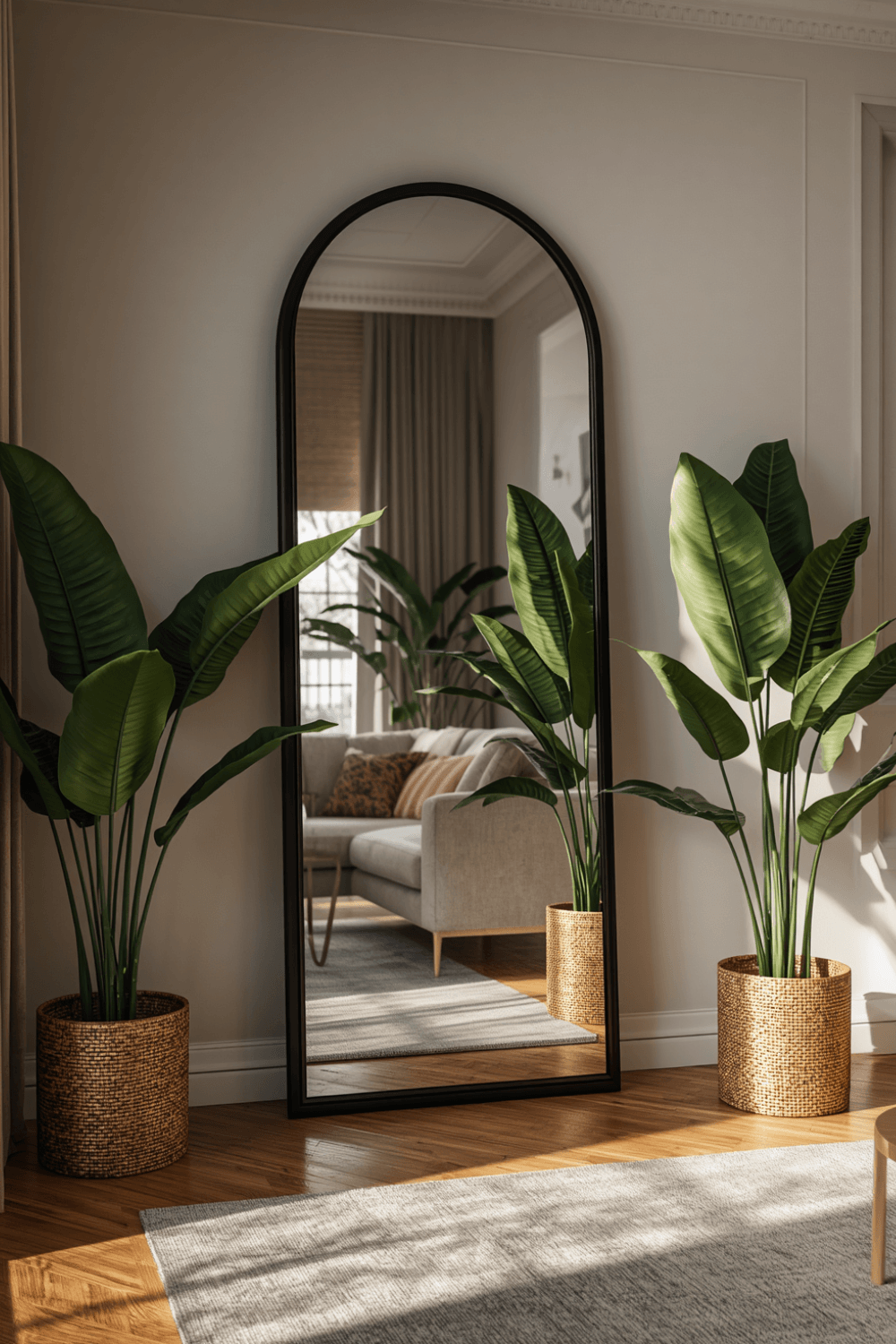
Black frames on arched mirrors suit a more graphic, contemporary interior where the mirror is meant to stand out rather than blend in. Against a white or neutral wall with a single large dark-leaved plant beside it (a monstera or a snake plant with strong vertical leaves), the combination is bold without being noisy.
How Big Should an Arched Floor Mirror Be
For a living room, a mirror that’s at least 60 inches tall is almost always better than something shorter. Floor mirrors that don’t reach close to ceiling height tend to look like they’re floating awkwardly between the floor and the wall. The width should be proportional to the height: for an arch, roughly 24 to 30 inches wide is the most common range for a standing floor mirror that’s tall enough to read as a design element rather than just a functional piece.
Indoor Plant Styling Ideas for a Living Room
The way plants are placed in a living room matters almost as much as which plants you choose. A single well-placed large plant does more for a room than six smaller ones scattered around with no relationship to each other.
6. A large statement plant in a corner, pot on the floor
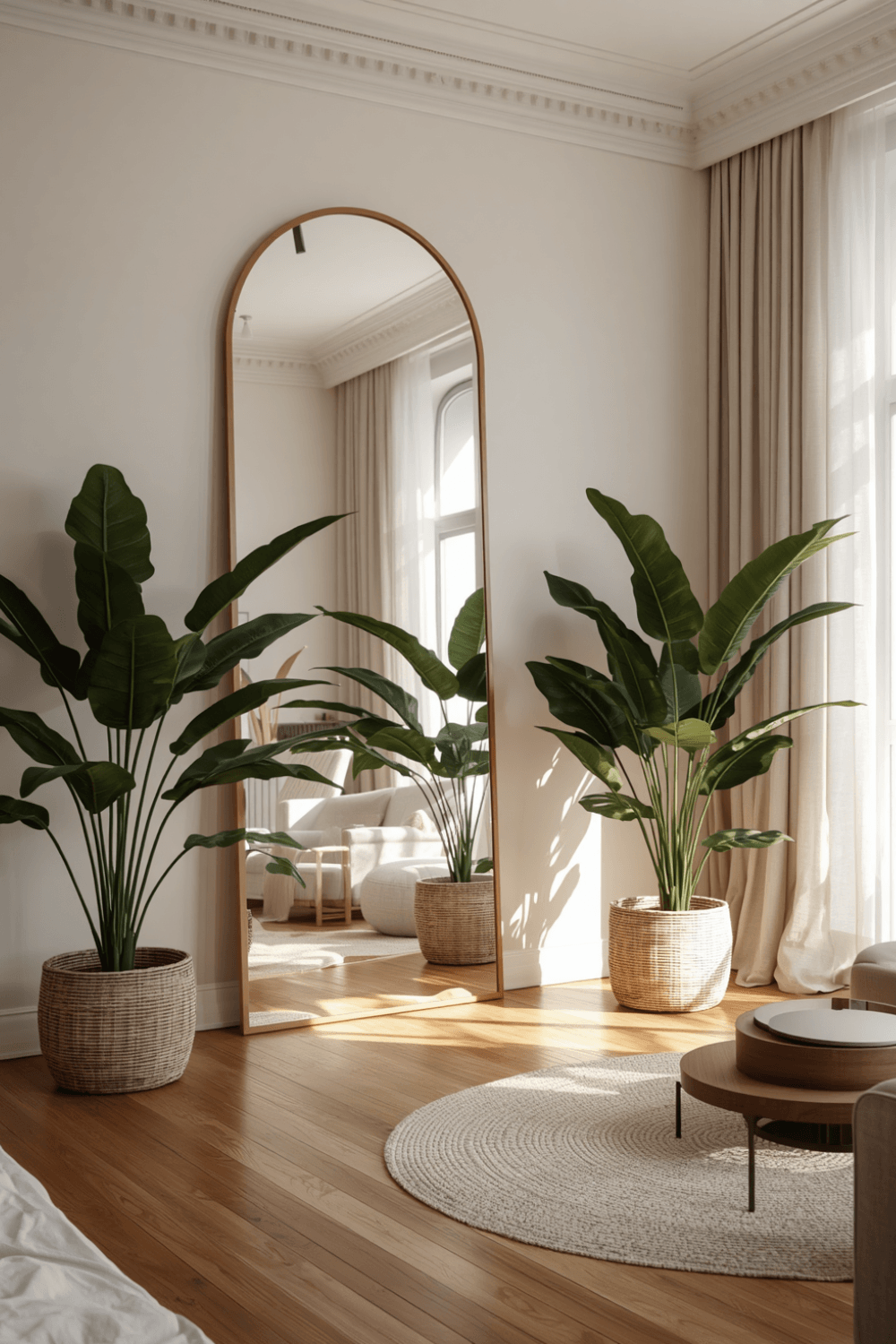
A monstera, a bird of paradise, a rubber plant, or a large fiddle leaf fig in a corner of the living room is the most reliable plant placement on this list because it fills vertical space that would otherwise be empty, adds a strong organic shape to the room’s geometry, and requires exactly one decision: where it goes.
7. A trio of plants at different heights on a plant stand or shelf cluster
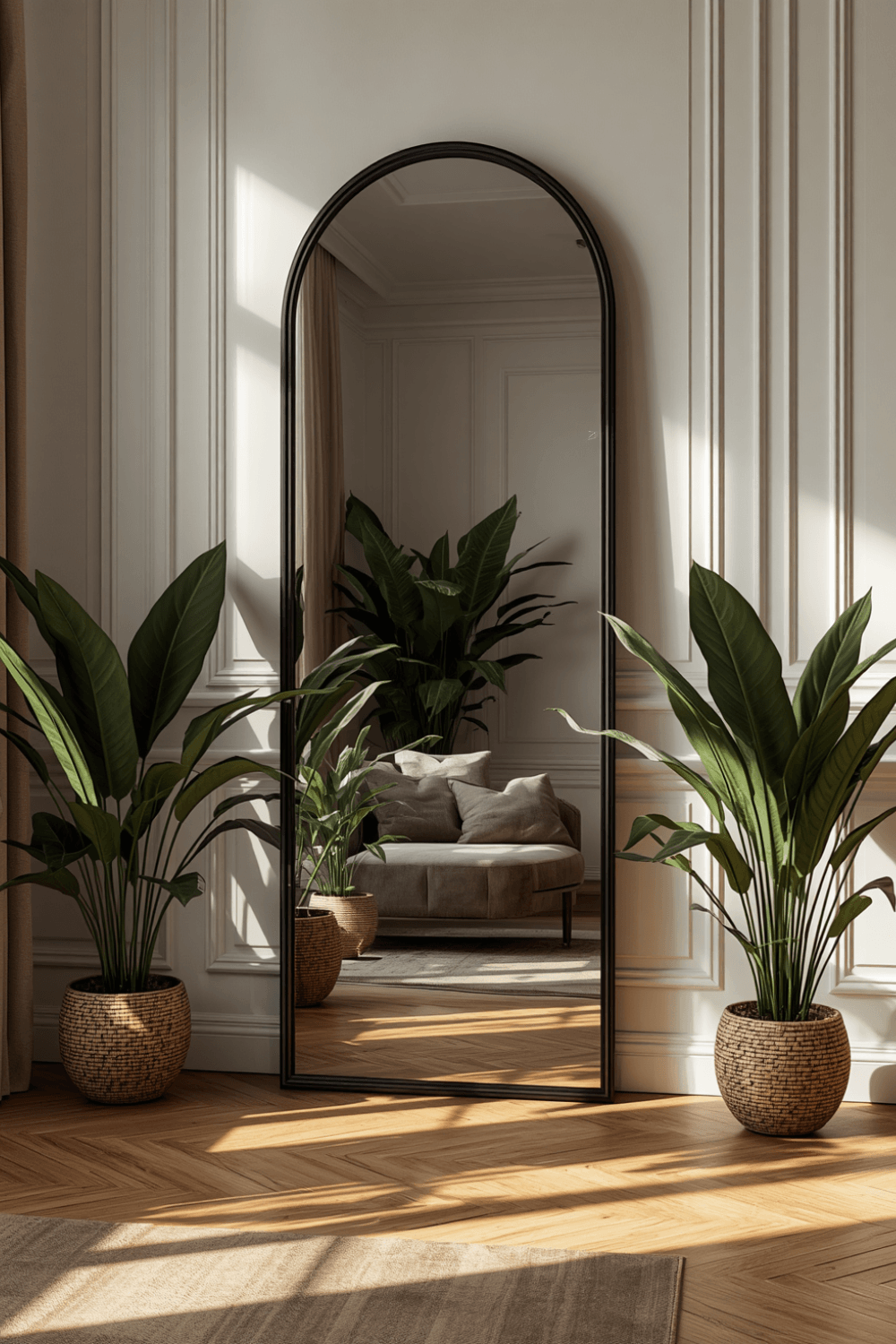
Grouping three plants at visibly different heights, tall floor plant, medium tabletop plant, small trailing plant, creates the layered look that makes a plant arrangement feel like a considered composition rather than a random collection. Odd numbers almost always look more natural than even ones.
8. A trailing plant on a high shelf, vines falling toward the floor
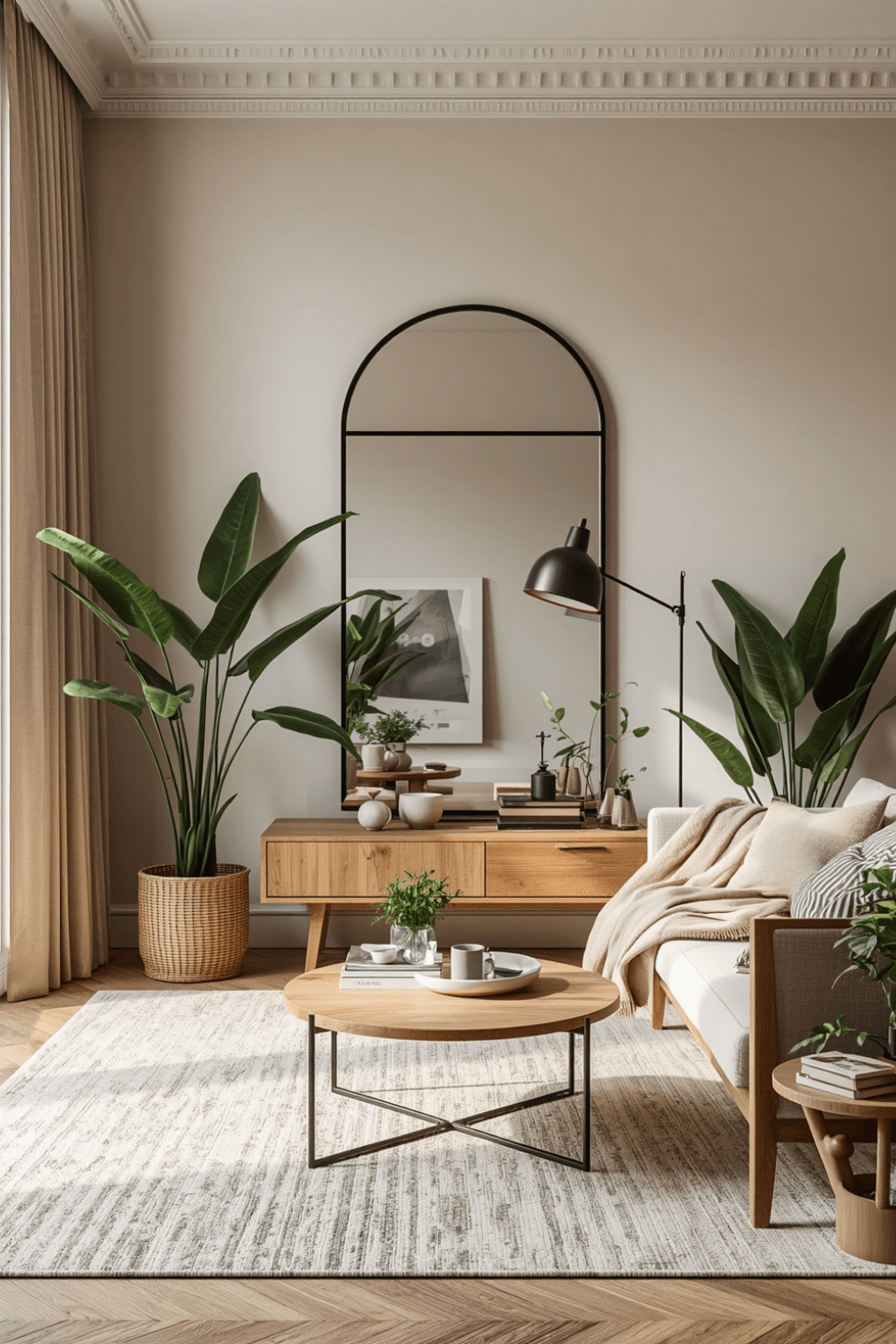
A pothos, a string of pearls, or a heartleaf philodendron on a shelf high enough that the trailing vines have somewhere to go creates a curtain of greenery that no floor plant quite replicates. It adds dimension at eye height and above, which changes how a room feels differently from floor-level planting.
9. A plant placed directly beside the arched mirror, pot touching the mirror base
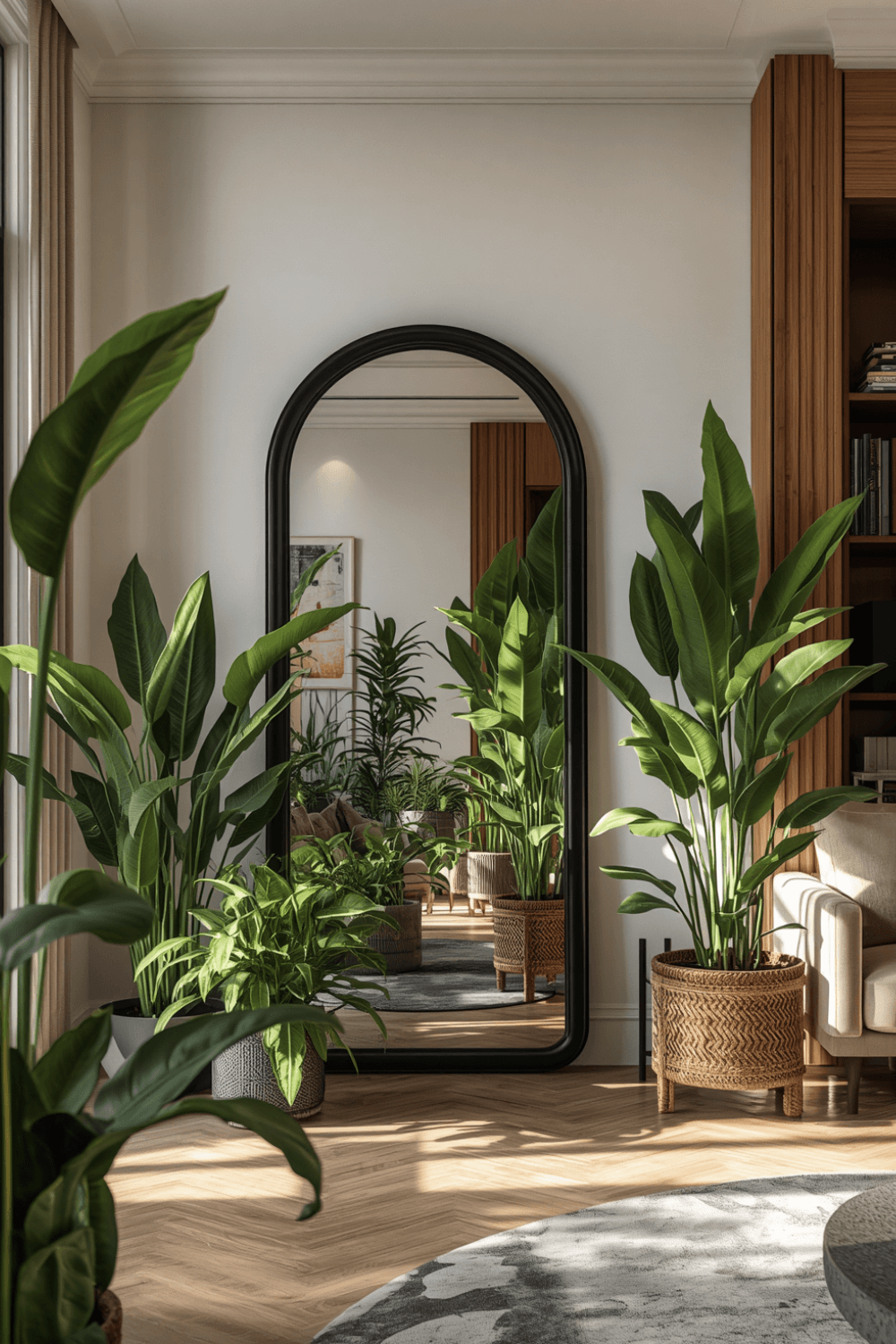
This is the specific placement detail that makes the mirror-and-plant combination look more intentional than placing them near each other with a gap between. The plant leaning slightly toward the mirror, with the reflection showing a version of the other side of the plant, creates a depth and fullness that the plant alone doesn’t have.
10. A large leaf plant used to soften an awkward corner or architectural feature
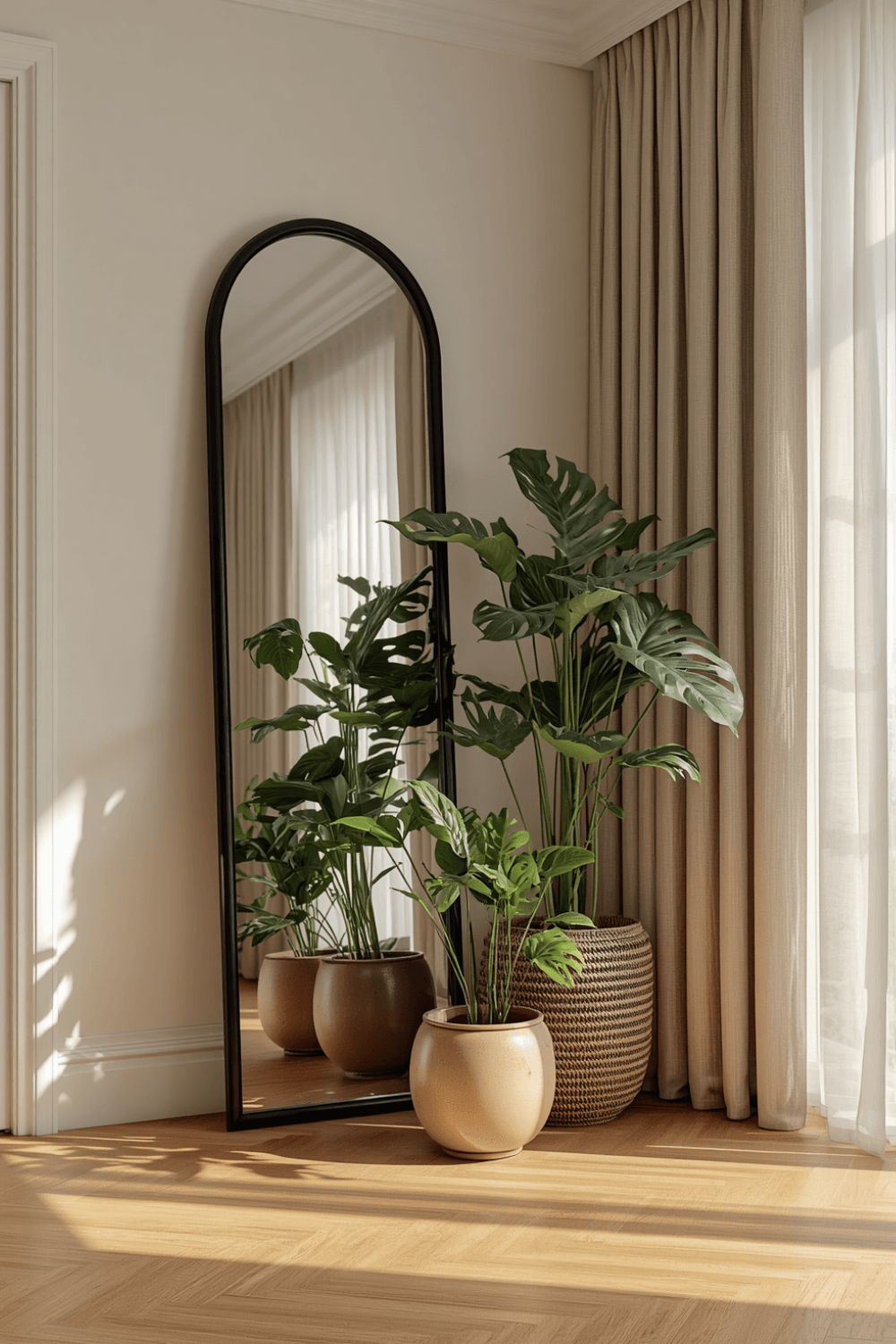
Corners where walls meet at unusual angles, columns, or the sides of fireplaces and built-in shelving are often the hardest spaces to style. A large plant placed directly in front of or beside these features softens and humanizes them in a way that furniture or art rarely does.
Plant Corner Ideas and Scandinavian Home Decor Styling
11. A plant corner built around a reading chair with a floor lamp
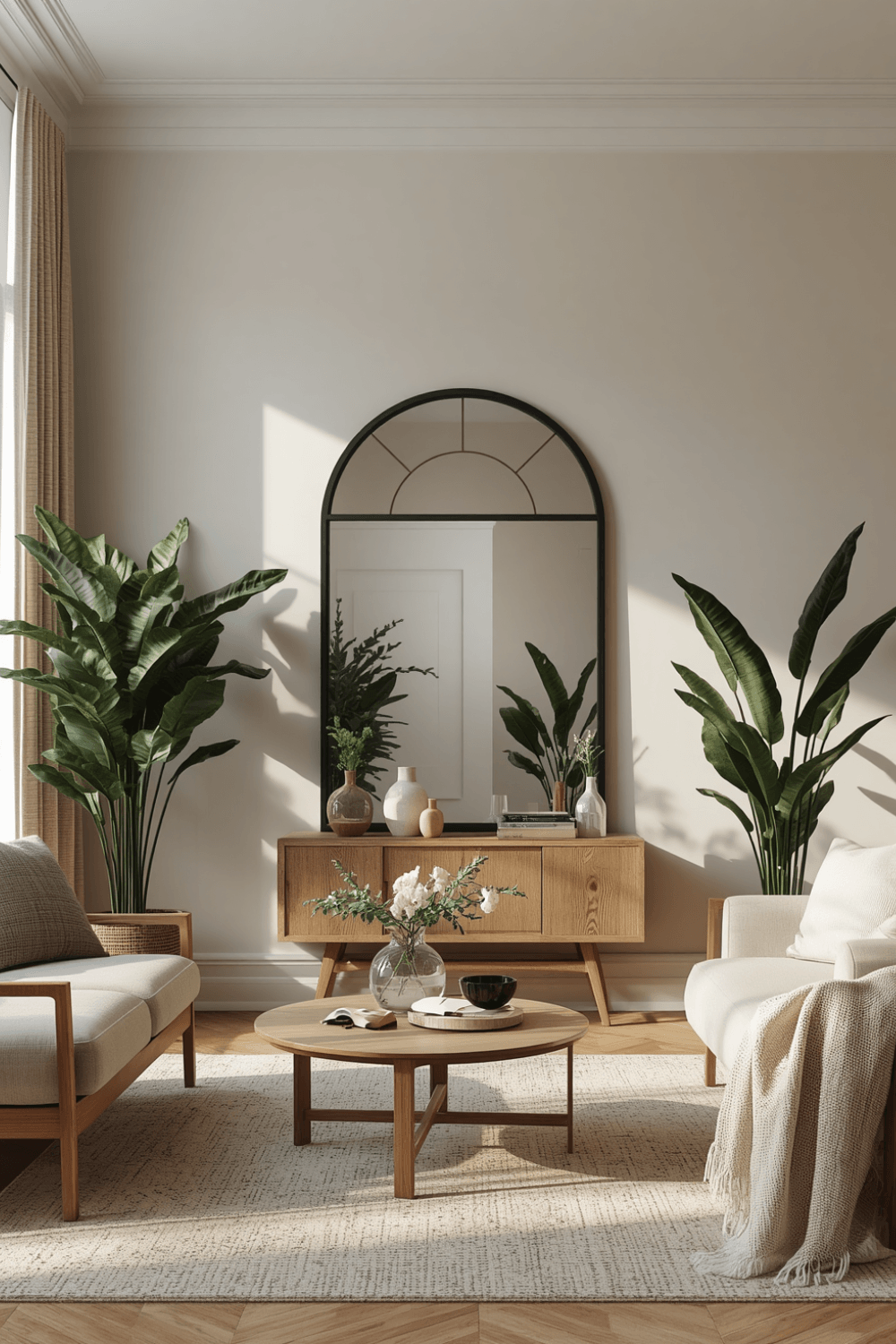
An armchair with a large plant on one side, a floor lamp on the other, and a small side table within reach is a complete corner composition that works in almost any living room. The plant adds organic softness to what would otherwise be a purely functional furniture arrangement, and it photographs well from multiple angles.
12. A woven basket or rattan pot cover as part of the plant styling
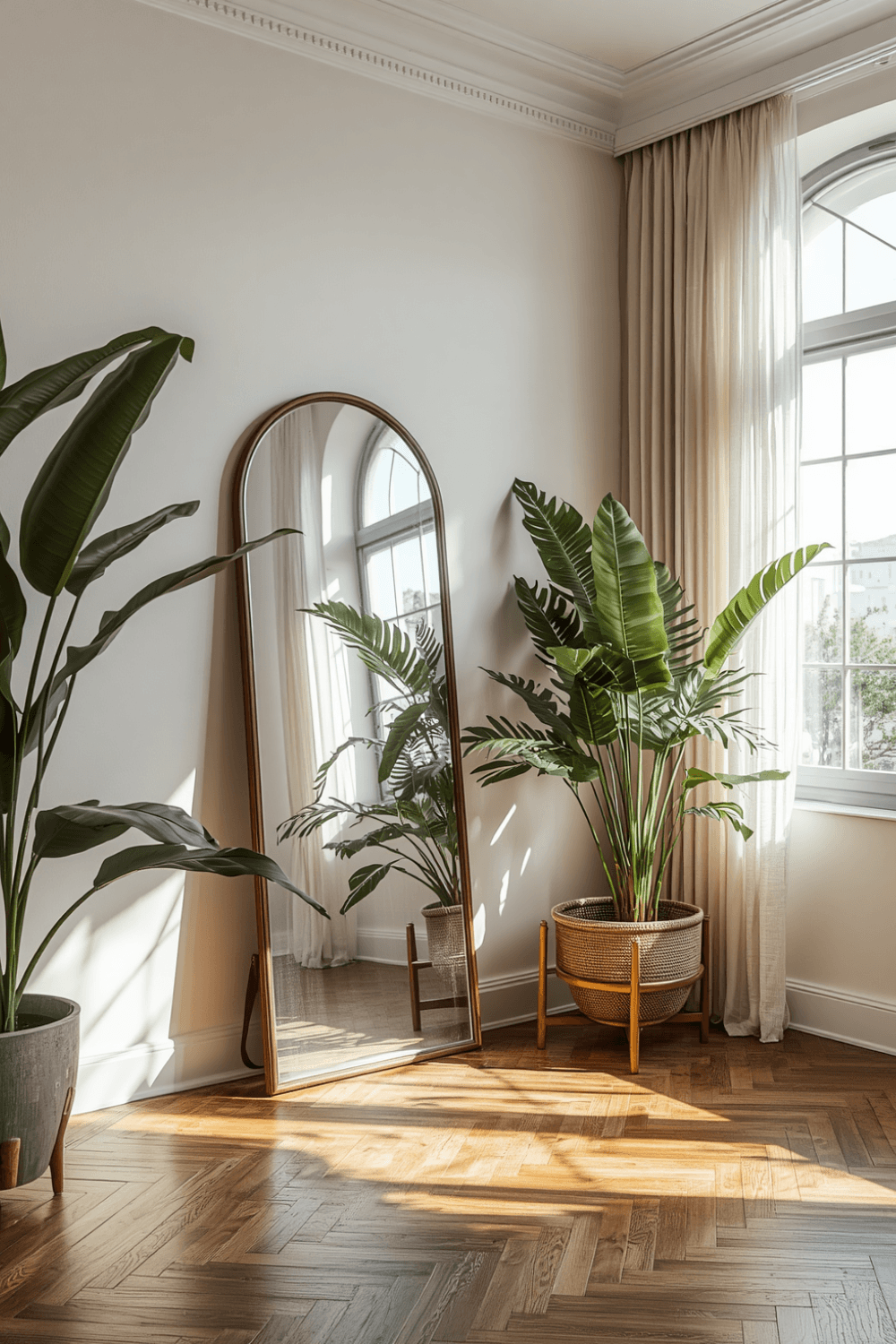
The pot or basket a plant sits in is as much a design decision as the plant itself. In a neutral home decor living room, a woven jute basket or a natural rattan pot cover adds texture at floor level that a plain terracotta or white ceramic doesn’t. It also ties the plant into a warm, natural material palette that suits most cozy living room ideas.
13. A plant shelf styled with books, ceramics, and a trailing plant
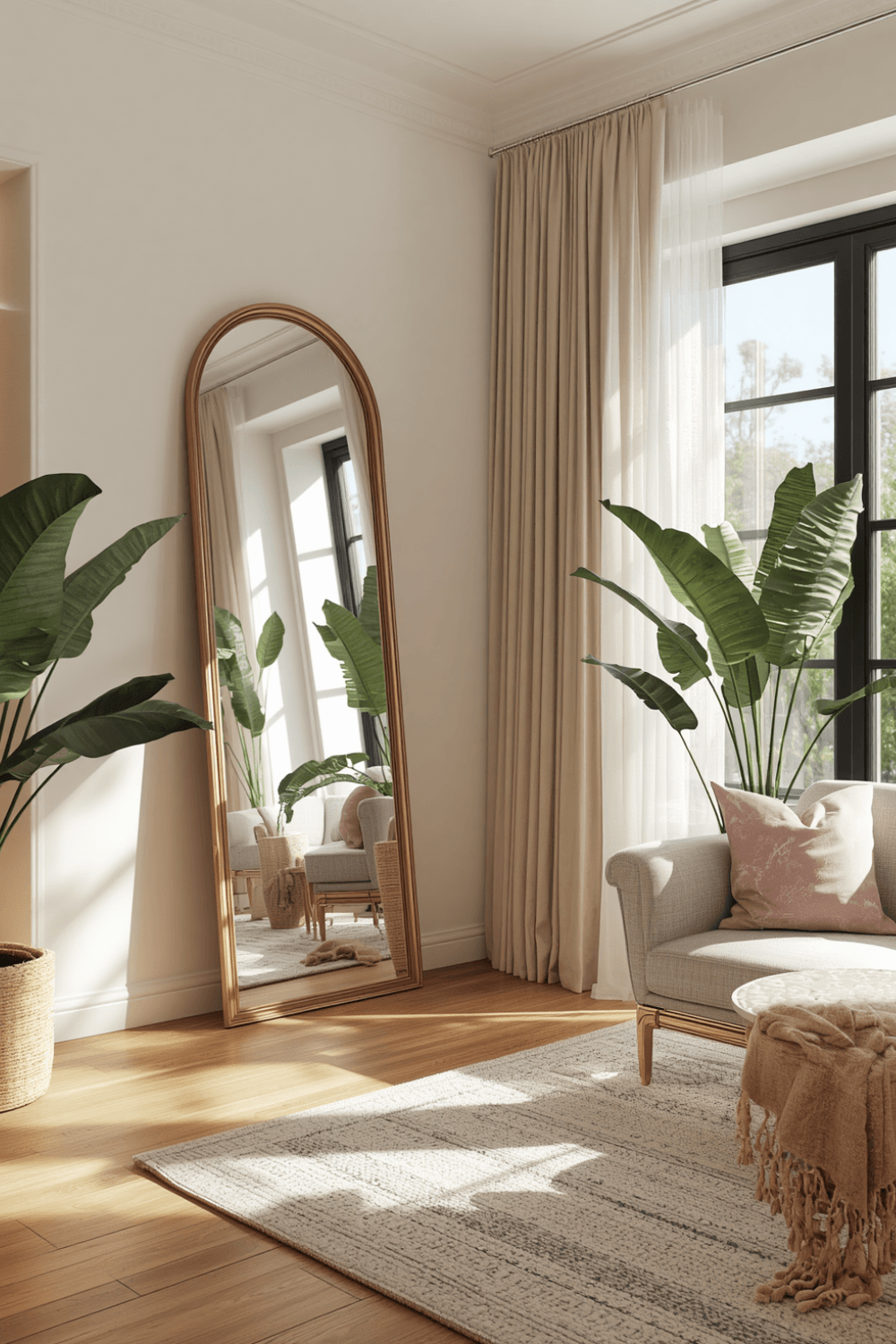
A single floating shelf with a small plant at one end, trailing slightly over the edge, a stack of books in the middle, and a ceramic object on the other end is a classic shelf composition that works because each element is doing something different: the plant adds life, the books add color and height variation, the ceramic adds a finishing material detail.
14. A Scandinavian-style plant setup with a single large species and minimal surrounding decor
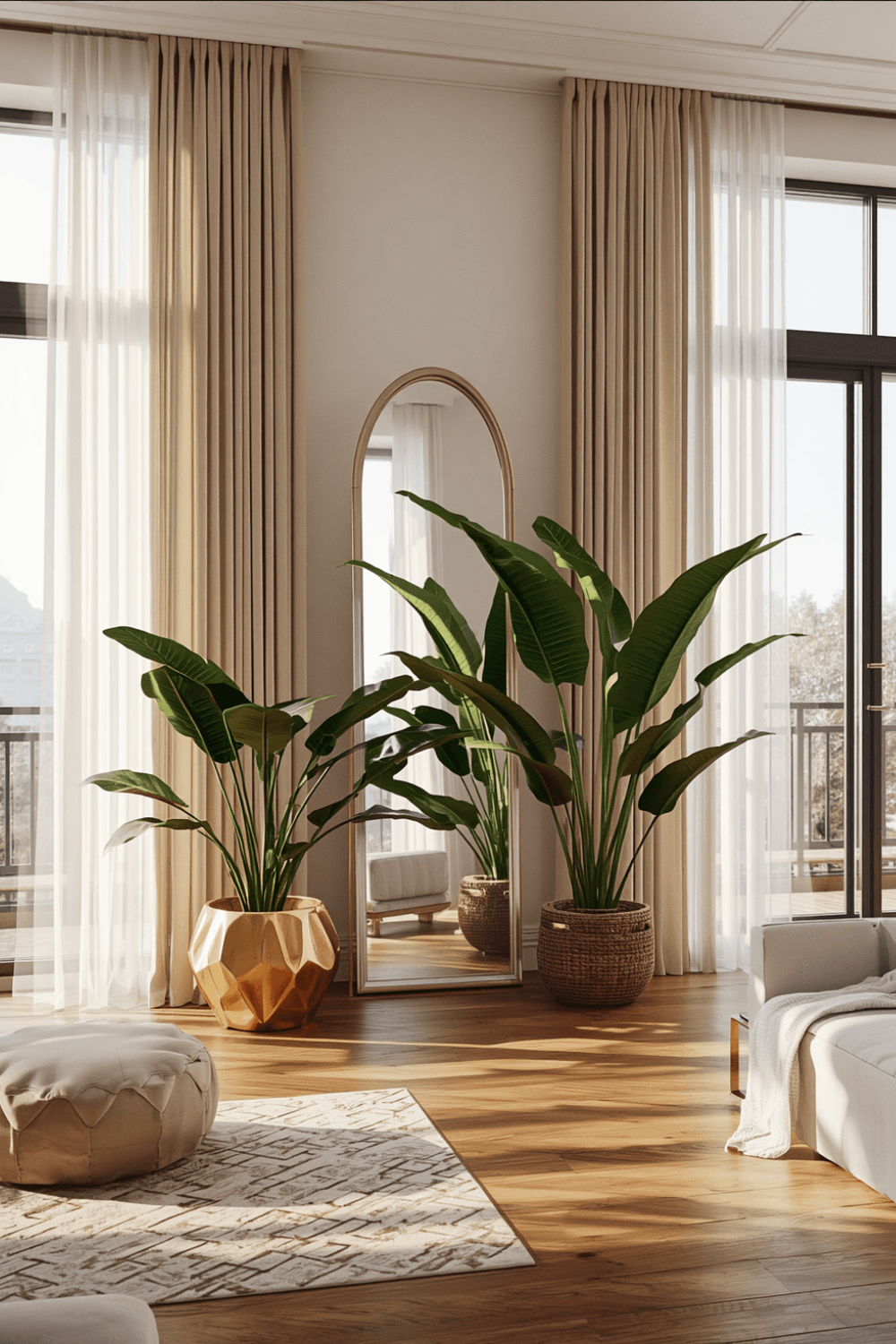
The Scandinavian home decor approach to plant styling almost always uses one large, well-chosen plant per area rather than clustering several together. One large monstera in a simple white or grey planter, in an otherwise uncluttered corner, reads as more considered than five plants arranged in a group that compete with each other.
15. A bedroom-adjacent plant corner visible from the living area
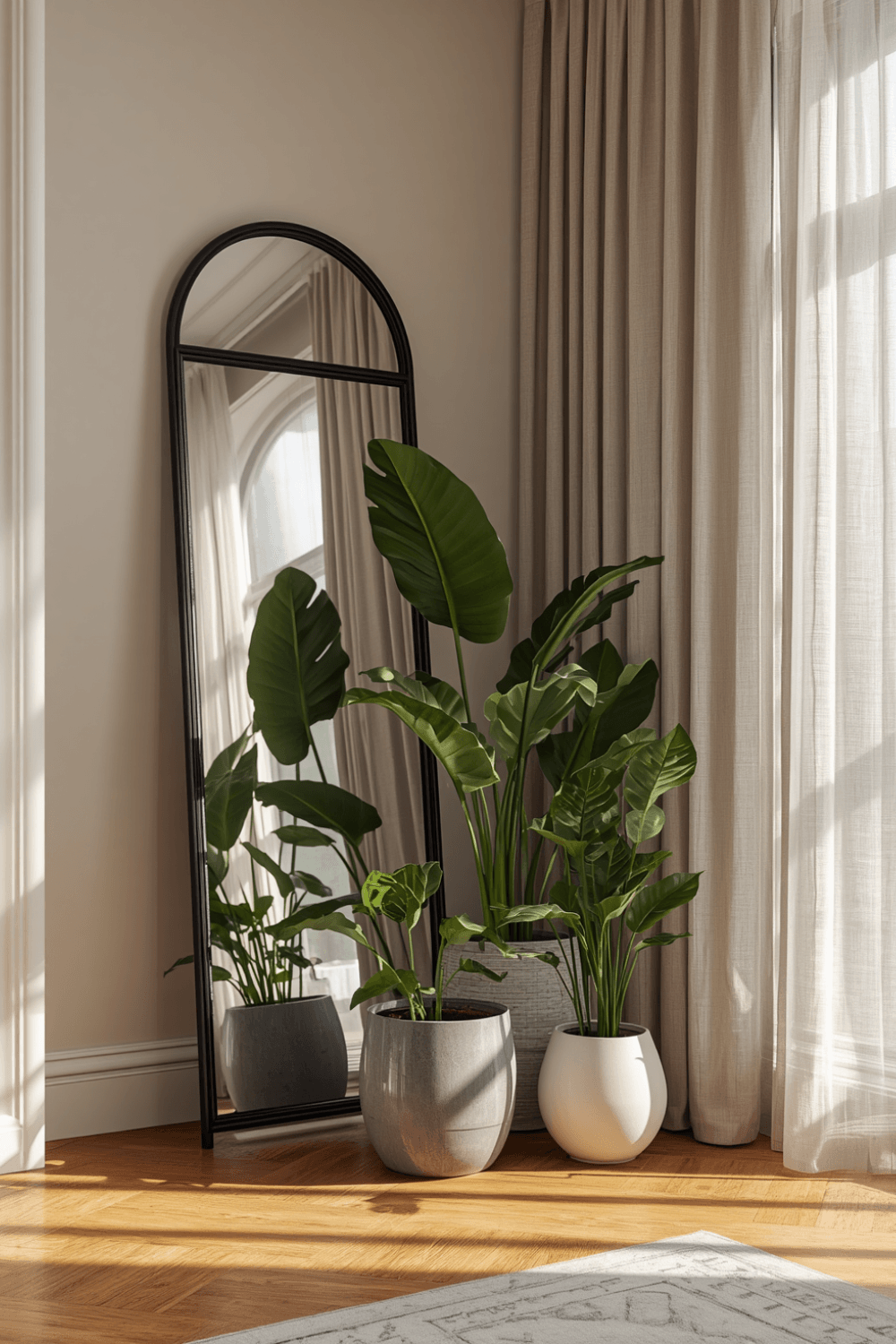
In open-plan or semi-open homes, a plant corner at the boundary between the living room and an adjacent space creates a natural visual divider that feels more organic and welcoming than a wall or a curtain. Large plants used as room dividers is a long-standing technique in indoor garden ideas for apartments and open-plan living spaces worldwide.
Natural Home Decor Combining Plants, Mirrors, and Warm Materials
16. A jute or seagrass rug underneath the plant-and-mirror corner. A natural fiber rug defines the corner as a deliberate zone rather than a random grouping of objects. It also adds another natural material to what is hopefully already a warm, organic material palette, and it protects the floor underneath the pot, which is a practical consideration that most styling guides don’t mention.
17. Warm ambient lighting near the plant corner, not overhead
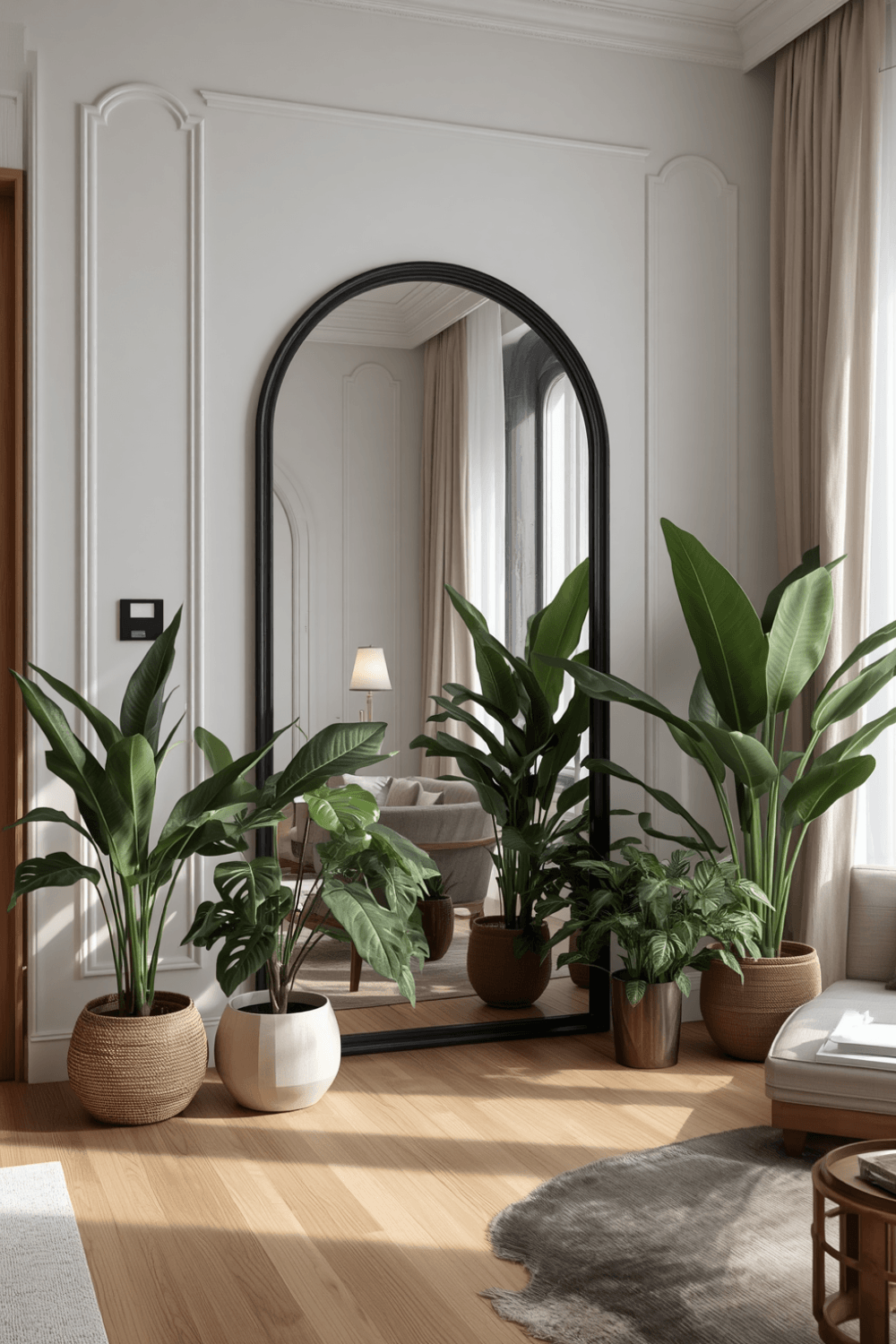
A floor lamp beside the plant corner, or a wall sconce above it, creates warm directional light that makes both the plant and the mirror more atmospheric at night. Overhead lighting casts shadows downward onto plants that make them look flat; side lighting at roughly the same height as the plant creates depth and brings out the leaf texture.
18. Dried pampas grass or dried branches mixed into the plant arrangement
That’s really what this guide is about. Twenty indoor plant decor ideas that come with the reasoning behind them, because a plant in the wrong corner with the wrong pot in front of the wrong mirror is just a plant that needs watering.
19. A plant-and-mirror setup that references the outdoor view
In rooms with a garden or outdoor view, placing the arched mirror where it reflects or frames that view from a different angle creates a connection between inside and outside that’s one of the core ideas in biophilic interior design. Even a glimpse of sky or a tree reflected in the mirror adds something to a room that no piece of art fully replicates.
20. A corner that evolves rotating seasonal plants while keeping the mirror fixed
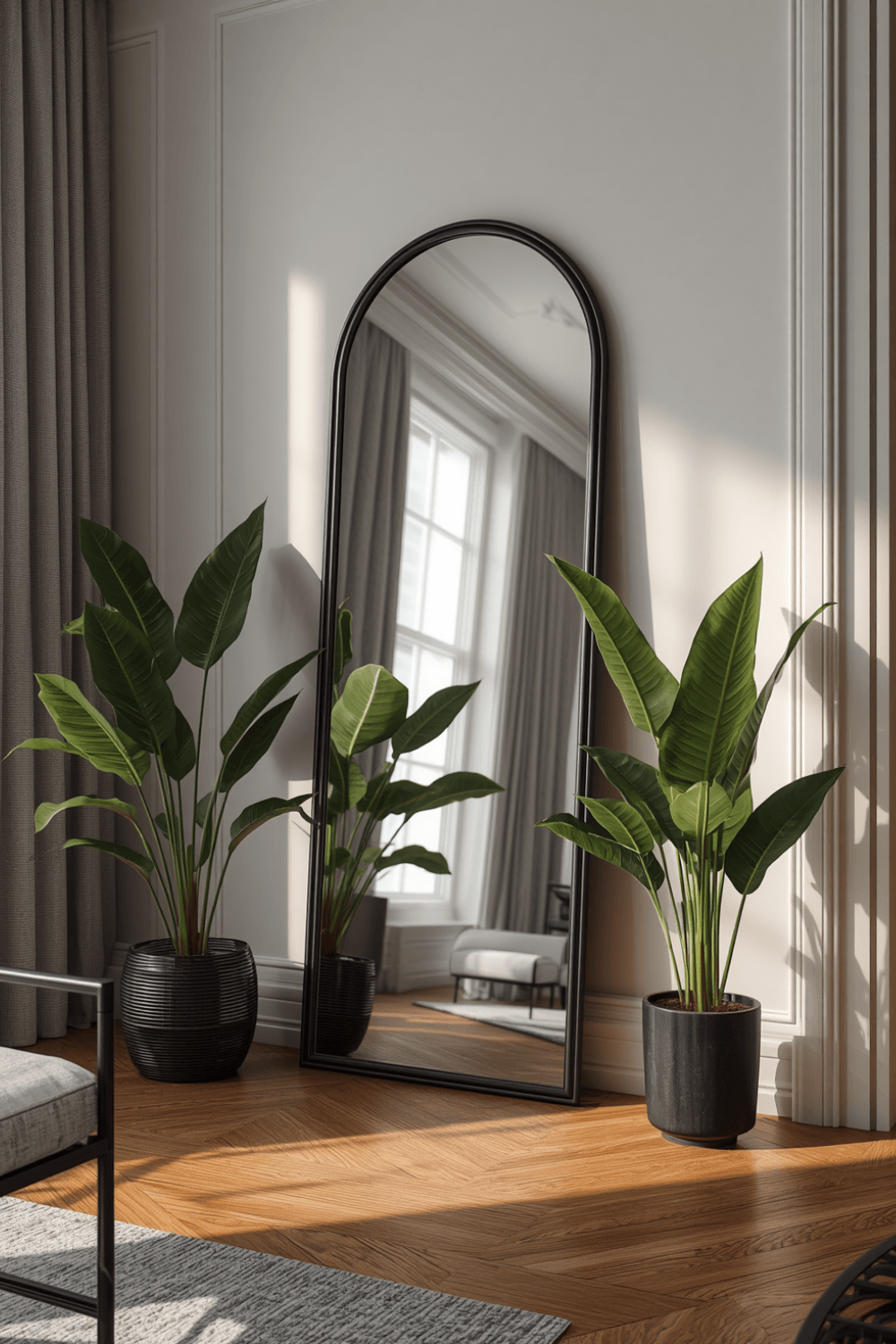
The arched mirror is a permanent anchor. The plants around it can change with the seasons, different species for different light levels as the year progresses, new pot colors, a different arrangement height. Treating the mirror as fixed and the plants as rotating means the corner always looks fresh without requiring any structural change.
Frequently Asked Questions
What plants work best for indoor plant decor in a living room?
For statement floor plants: fiddle leaf figs, monsteras, birds of paradise, rubber plants, and snake plants all work well because they have strong silhouettes and manageable light requirements. For shelf or trailing arrangements: pothos, heartleaf philodendron, and string of pearls are reliable and low-maintenance. For darker rooms with less natural light: snake plants, ZZ plants, and peace lilies handle lower light better than most. These are also among the most widely available houseplant species at garden centers globally, which makes sourcing them straightforward wherever you are.
Where should you place an arched floor mirror in a living room?
The two most effective placements are against a wall where the mirror reflects a window (for maximum light amplification) and beside a large floor plant in a corner (for a styled vignette that reads as designed rather than accidental). Avoid placing an arched mirror where it reflects directly into the eyes of someone sitting on the sofa, since the glare is distracting at eye level.
How many plants is too many for a living room?
There’s no fixed answer, but the principle is that plants should feel like part of the room rather than a collection competing with it. Three to five plants, varied in size and grouped thoughtfully, usually reads as considered. More than that starts to read as a greenhouse unless the room is very large and the plants are very deliberately arranged. The quality and placement of a few good plants almost always outperforms the quantity of many small ones.
What size arched floor mirror works best in a small living room?
Even in a small room, a taller mirror, at least 60 inches, reads better than a shorter one because it uses vertical space rather than floor space. A narrower width (20 to 24 inches) keeps the footprint small while the height still creates the light-amplifying, space-expanding effect that’s the whole point of a large floor mirror.
Do plants and mirrors work in every interior style?
Yes, though the specific plant species and mirror frame style shift significantly between aesthetics. Scandinavian interiors favor simple, structural plants in minimal planters with frameless mirrors. Bohemian interiors lean toward trailing, layered plants in mixed materials with rattan or macramé nearby. Contemporary spaces suit single large statement plants and frameless or black-framed arched mirrors. The combination works across all of them because the underlying principle (organic texture plus reflected light) applies regardless of style.
Bringing It All Together
A living room that genuinely feels good to be in is rarely the result of one expensive piece of furniture or one dramatic design decision. It’s usually the result of a few quieter, more considered choices layered together: a plant with a strong silhouette in a corner that needed something, a mirror placed where it could actually amplify the room’s light rather than just decorate a wall, and a material or two that grounds everything in warmth. The twenty indoor plant decor ideas in this guide are built around exactly that kind of layering, and most of them are achievable without a large budget or a professional decorator.