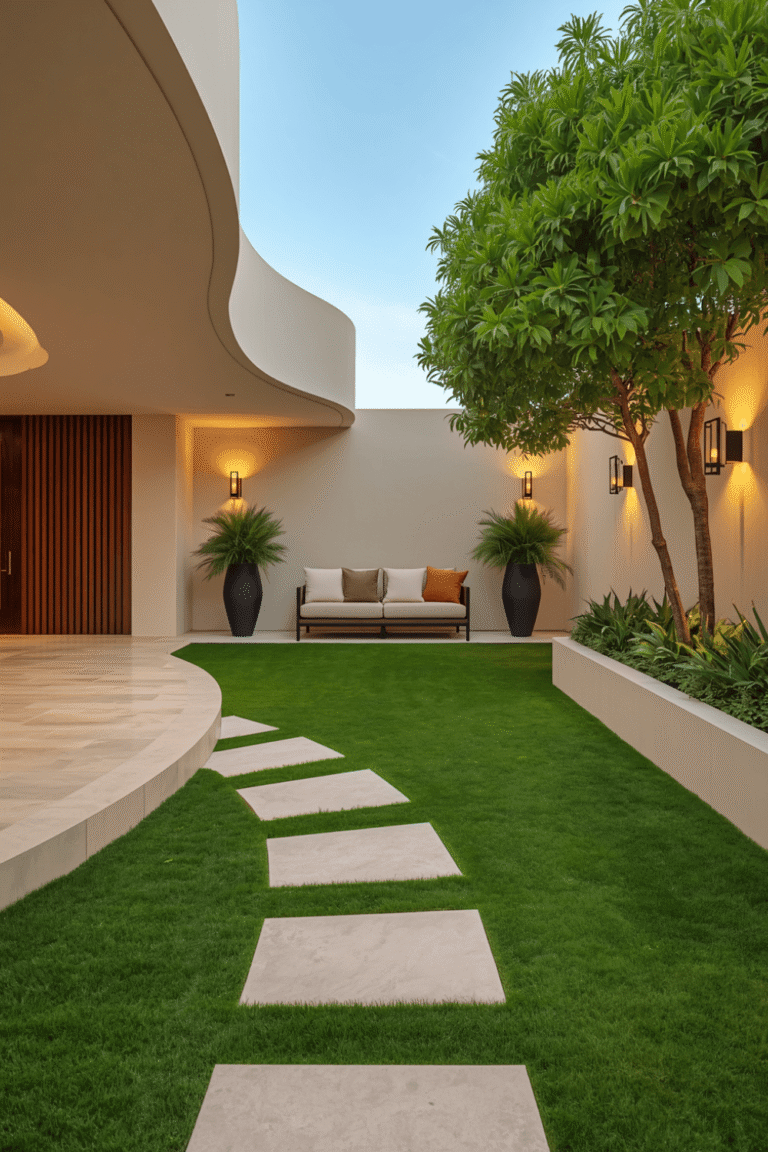
Backyard Landscaping Ideas for a Stunning Sloped Yard
Got a backyard that slopes like it’s trying to become a ski hill? Yeah, I’ve been there — and it turns out that “problem” is actually one of the best excuses to build something genuinely stunning.
Flat yards are easy, sure, but they’re also kind of boring. A sloped or awkward backyard practically begs for tiered gardens, curved paths, and retaining walls — the kind of layered, dimensional landscaping that flat lots just can’t pull off naturally.
If you’ve been staring at your yard wondering where to even start, these backyard landscaping ideas will walk you through it, slope and all.
Why Sloped Yards Are Secretly a Design Advantage
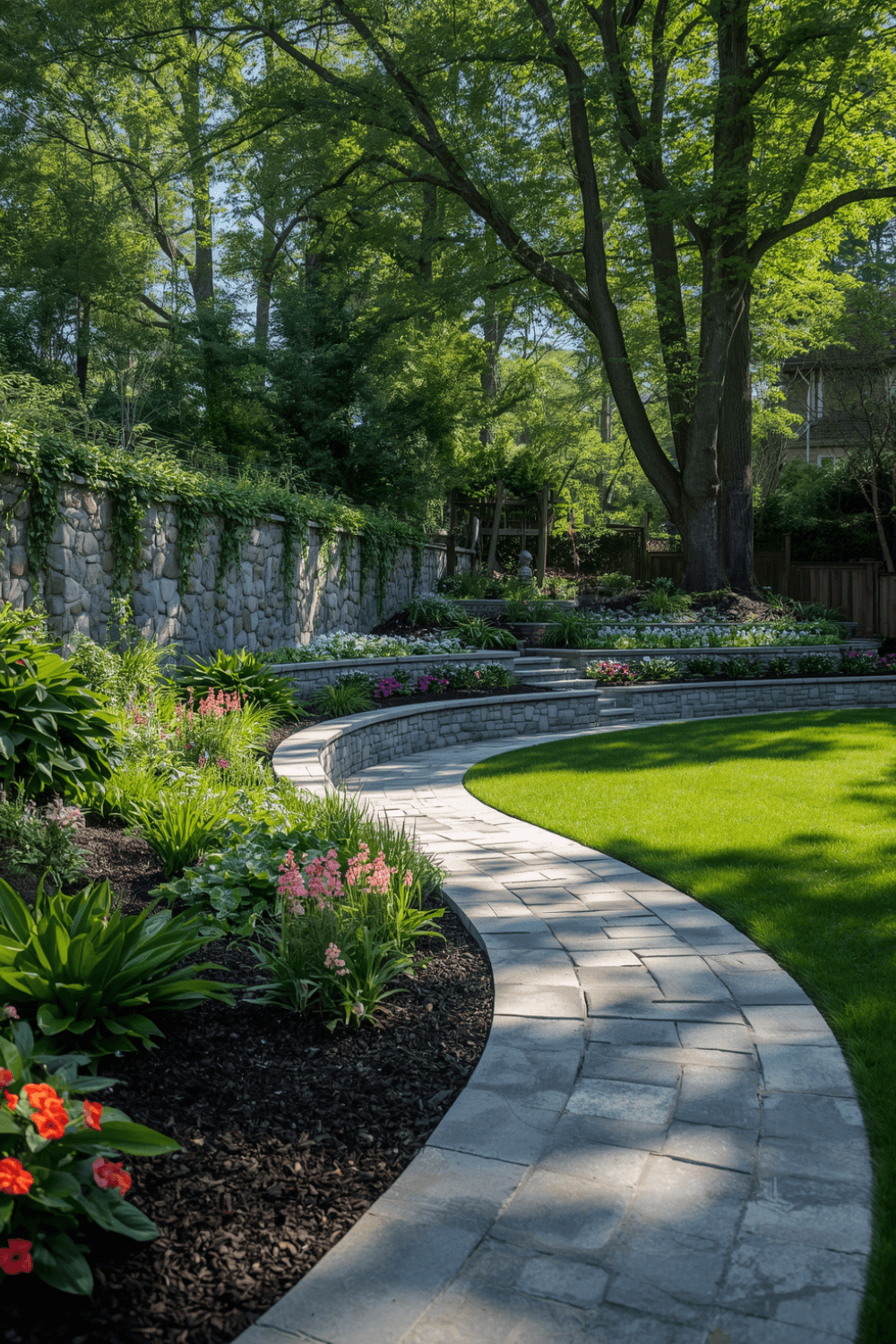
Here’s something most people don’t realize until they’ve actually worked with one — a slope gives you natural depth that a flat yard has to fake.
Good backyard landscaping ideas for sloped or uneven lots typically lean into the terrain rather than fighting it. Think tiered levels, curved paths that follow the natural contour, and retaining walls that turn elevation changes into a feature instead of a hazard.
The basic approach usually includes:
- Breaking the slope into tiers or levels instead of one steep incline
- Using stone or retaining walls to hold soil in place and create planting beds
- Adding a path that winds naturally with the terrain rather than cutting straight through it
Once you see it done well, you start to understand why designers actually get a little excited about sloped lots.
Sloped Garden Landscaping: Working With the Terrain
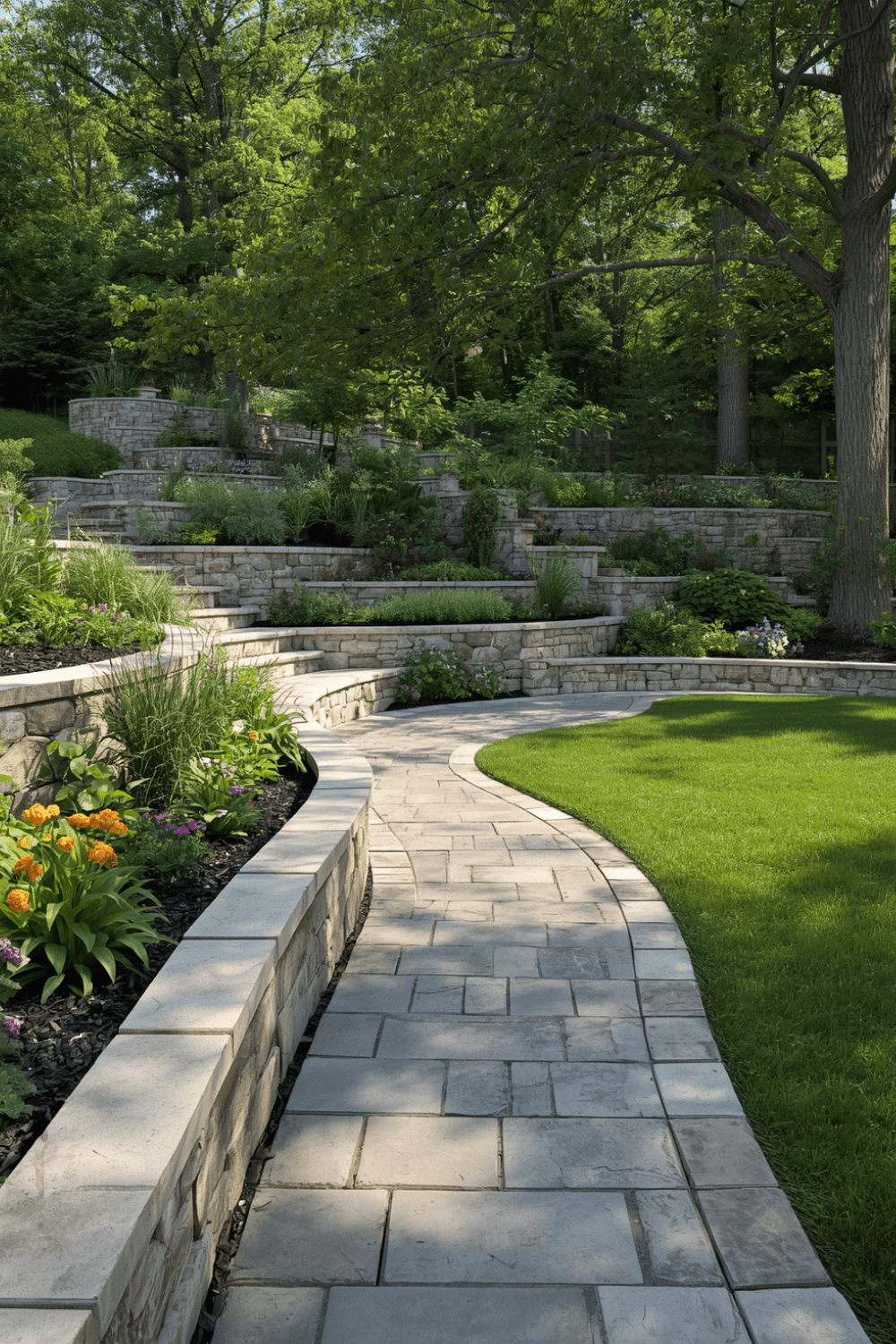
Let’s get into specifics. Sloped garden landscaping is all about managing elevation change in a way that looks intentional rather than like erosion got the better of you.
A few tried-and-true approaches:
- Terracing — breaking the slope into flat, stepped levels
- Retaining walls — holding soil in place while creating defined planting zones
- Winding paths — guiding foot traffic gently across the slope instead of straight up it
Practical tip: If your slope is fairly steep, don’t try to tackle the whole thing in one project. Start with the section closest to your house or patio, get that looking good, and work your way up (or down) from there.
Tiered Garden Ideas That Turn Elevation Into a Feature
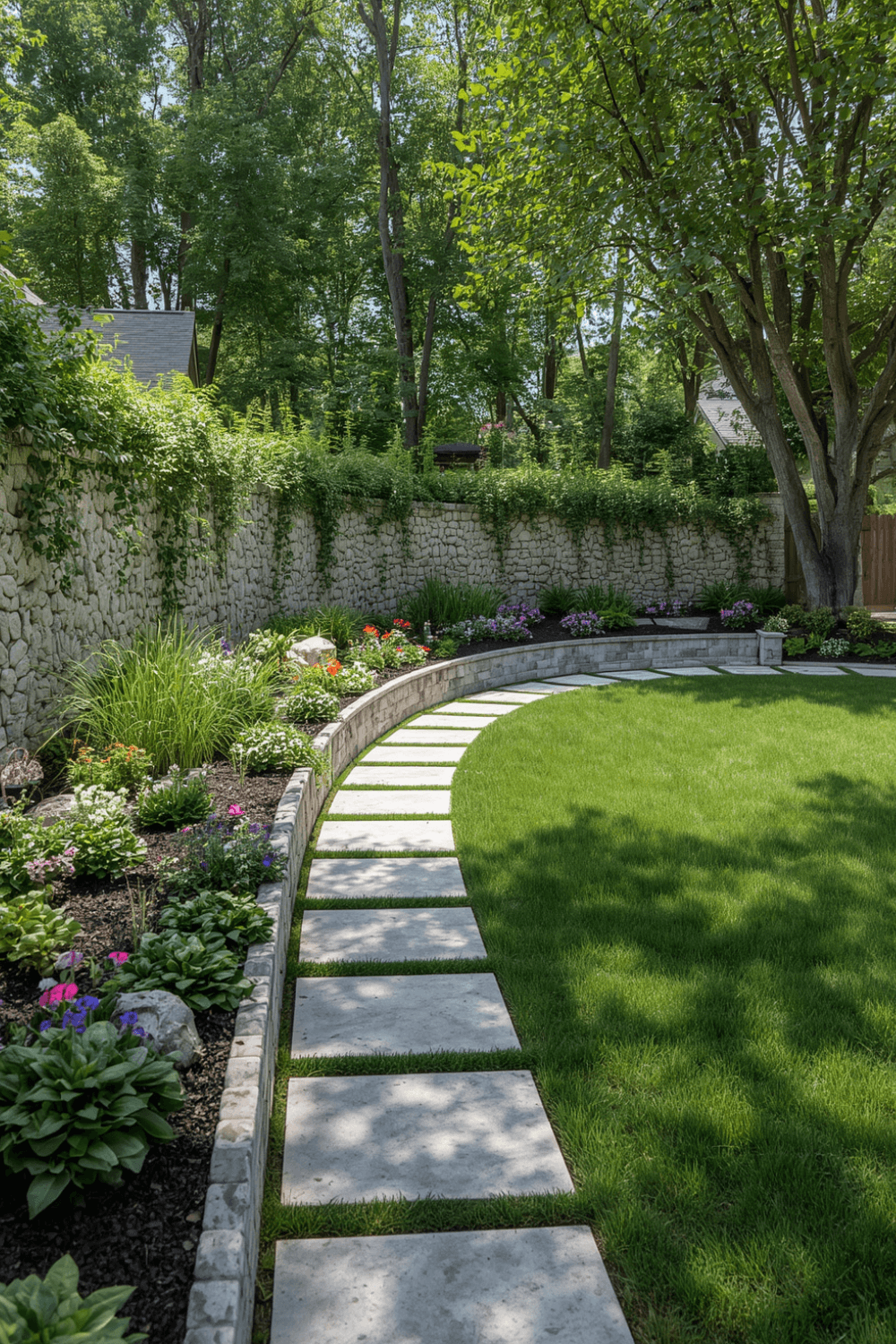
This is honestly one of my favorite approaches for a sloped yard, because it transforms what could be an awkward, hard-to-mow hillside into a series of usable, beautiful spaces.
Tiered garden ideas worth considering:
- A lower tier for seating or a small patio, a middle tier for flower beds, and a top tier for taller shrubs or trees
- Repeating the same stone or wall material across each tier level so it reads as one cohesive design, not a random collection of walls
- Staggering plant heights across tiers — shorter plants lower down, taller ones higher up — for a layered, lush look from any angle
Layered landscape design like this genuinely does double duty. It solves the practical problem of a slope while also giving you way more visual interest than a flat lawn ever would.
Stone Retaining Wall Ideas for Both Function and Style
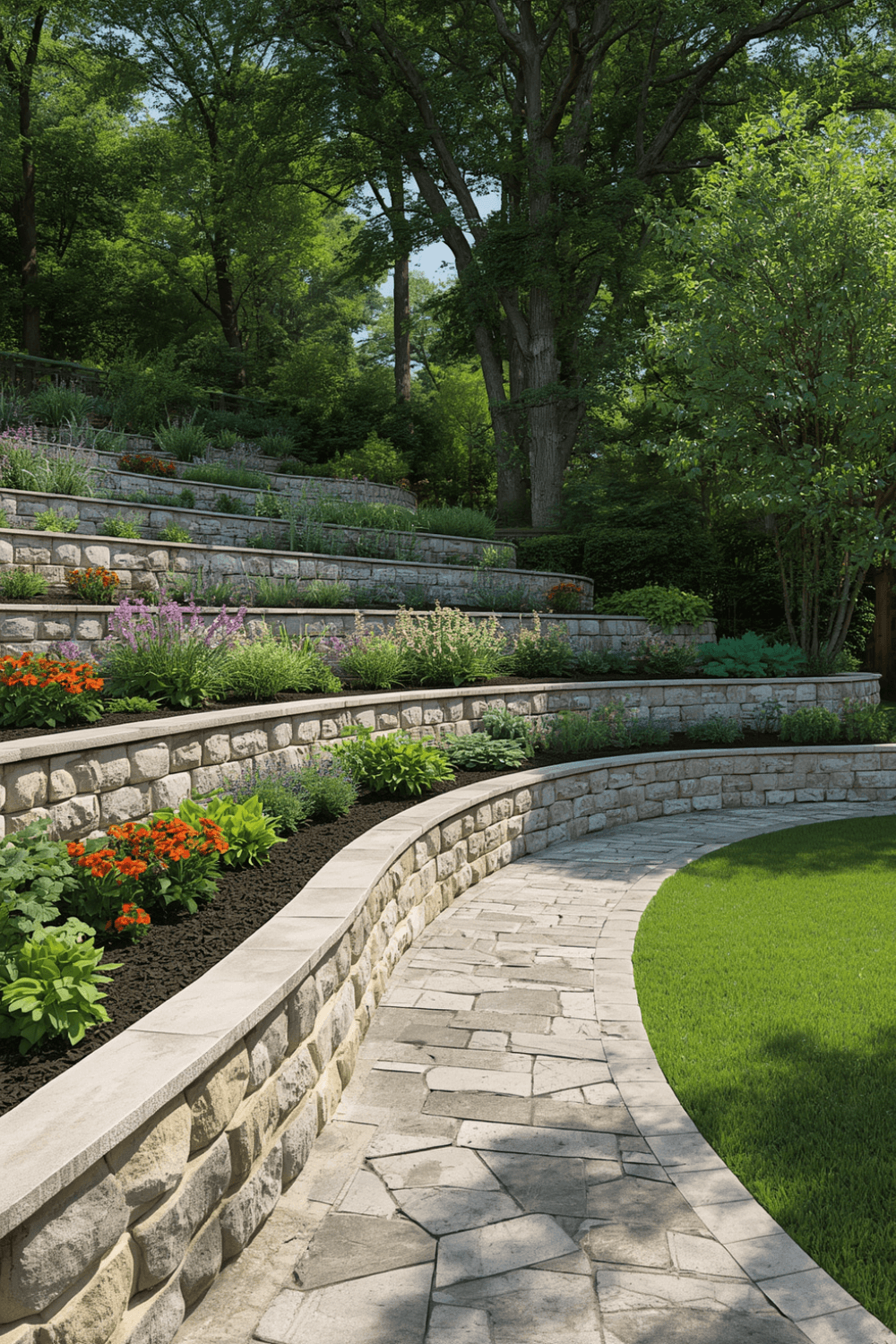
If you’re dealing with any real elevation change, a retaining wall isn’t optional — it’s holding your soil (and your plants) in place. But that doesn’t mean it can’t also look great.
Stone retaining wall ideas that balance practicality and beauty:
- Dry-stacked natural stone for a rustic, cottage-garden feel
- Cut stone blocks for a cleaner, more modern edge
- Curved rather than straight walls, which follow natural contours and feel less rigid
Garden Retaining Wall Placement Tips
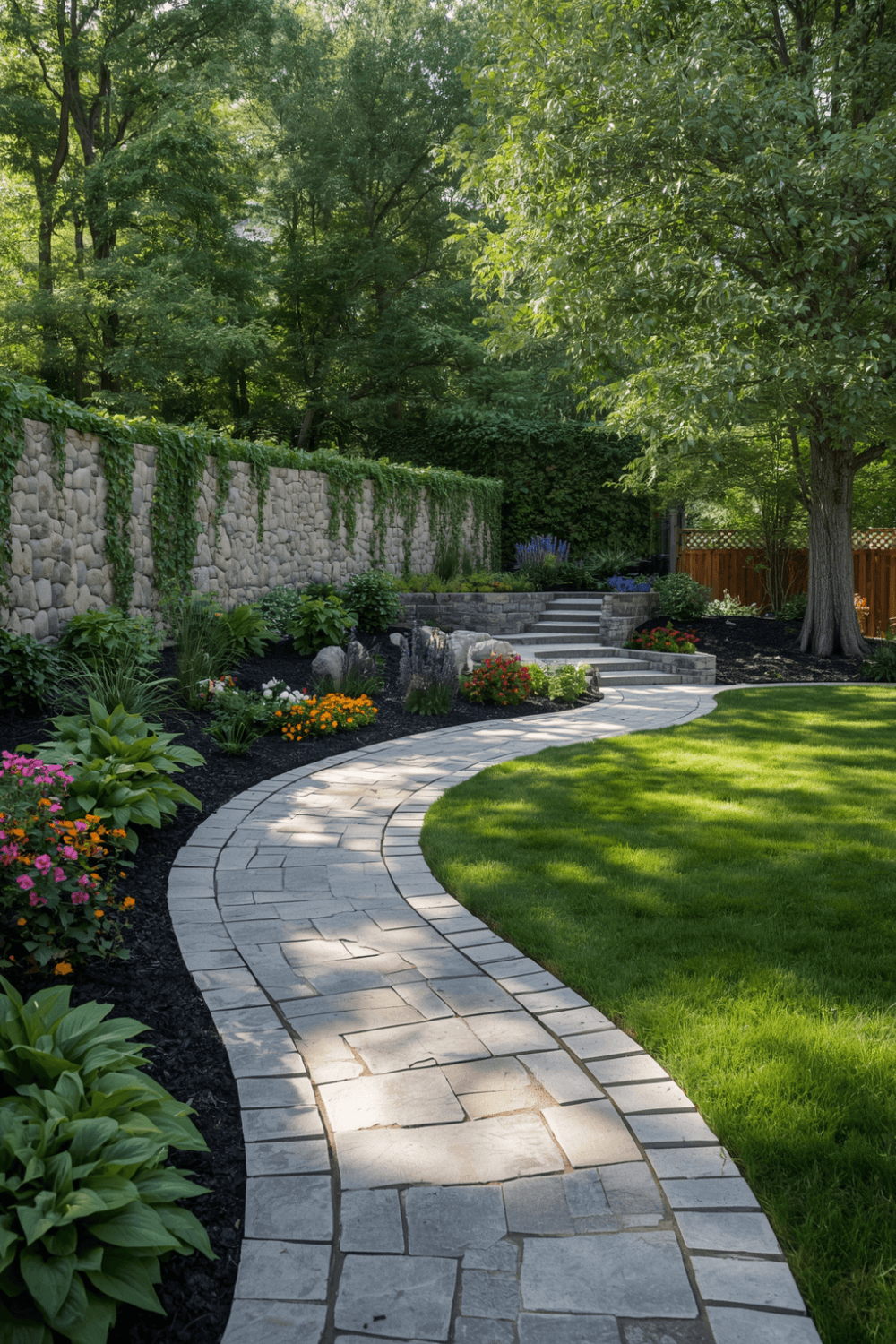
A garden retaining wall works best when it’s planned around your yard’s actual drainage and slope angle, not just dropped in wherever looks nice on paper. If water tends to pool in a certain area, that’s usually exactly where a retaining wall (with proper drainage behind it) needs to go.
Quick tip: Leave small weep holes or gaps in your retaining wall design to let water drain through. Skip this, and you risk pressure building up behind the wall over time — not a fun repair to deal with later.
Natural Stone Landscaping Throughout the Yard
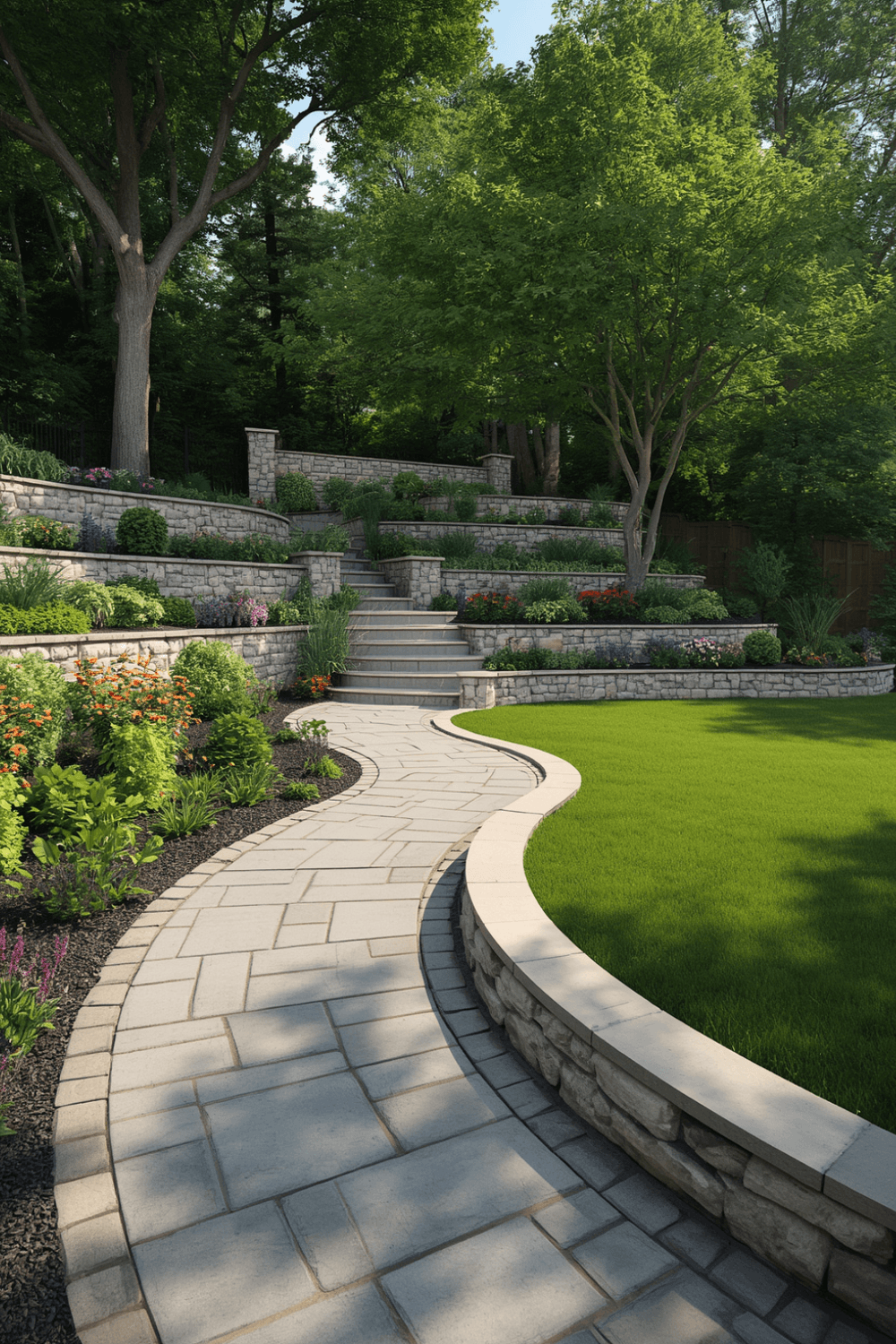
Once you’ve got a retaining wall in, it makes sense to carry that same material language through the rest of the space.
Natural stone landscaping ideas beyond just walls:
- Flagstone stepping stones leading between garden tiers
- Stone borders around flower beds to define edges cleanly
- A stone accent border along a pathway for extra texture and structure
Repetition here really matters. Using the same or complementary stone types throughout the yard is what makes a multi-tier, multi-feature landscape feel like one connected design instead of several unrelated projects.
Garden Pathway Ideas That Guide the Eye (and Your Feet)
A path isn’t just functional — it’s basically a design tool that tells visitors where to look and where to walk, all at once.
Garden pathway ideas for a sloped or textured yard:
- A curved garden path that follows the natural contour of the land rather than cutting a straight, harsh line through it
- Stepping stones spaced for a natural walking rhythm, not perfectly uniform robotic spacing
- Gravel or mulch infill between stones for texture and better drainage
Flagstone Walkway Ideas for a Timeless Look
Flagstone walkway ideas are hard to beat if you want something that looks established from day one. Irregular, natural-edged flagstone pieces set with small gaps for groundcover or gravel create a path that feels like it’s always been there, even if you just installed it last weekend.
Practical tip: Leave slight gaps between flagstones and fill with fine gravel or creeping groundcover like thyme. It softens the hard edges and lets a little greenery peek through, which honestly looks a lot more natural than tightly fitted, grout-lined stone.
Flower Garden Ideas to Fill In the Layers
Once your structure — tiers, walls, paths — is in place, it’s time for the part everyone actually gets excited about: the plants.
Flower garden ideas for a layered, sloped landscape:
- Taller perennials (foxglove, delphinium) toward the back or top of a tier
- Mid-height flowering shrubs (hydrangea, roses) in the middle layers
- Low, spreading groundcover or trailing flowers along path edges and retaining wall tops
Colorful Flower Garden Combinations
For a genuinely colorful flower garden, think in terms of bloom timing, not just color. Mixing early spring bulbs, summer perennials, and fall-blooming varieties means something is actually flowering across multiple seasons, not just for three weeks in June.
Backyard Flower Beds Along Retaining Walls
Backyard flower beds built right into the top of a retaining wall or along its base make excellent use of space that would otherwise just be bare stone. Trailing plants cascading over the wall edge soften the hard lines beautifully.
Garden Border Ideas to Keep Everything Defined
Without clear borders, even a well-planned garden can start to look a little messy once plants fill in and start spreading.
Garden border ideas that keep things tidy:
- Low stone or brick edging along flower beds
- A mulched buffer zone between lawn and planting areas
- Metal or composite edging for a cleaner, more modern line
Borders do more work than people give them credit for — they’re honestly the difference between “intentionally lush” and “we forgot to weed this month.”
Cottage Garden Ideas for a Softer, Romantic Feel
If manicured and formal isn’t really your style, cottage garden ideas bring a looser, more romantic feel to a backyard, sloped or otherwise.
Key elements:
- Dense, slightly overflowing plantings rather than neat, spaced-out rows
- A mix of flower heights and colors growing somewhat informally together
- Curved paths and stone edging rather than sharp, geometric lines
This style is genuinely forgiving too — cottage gardens are supposed to look a little wild and layered, so minor imperfections just add to the charm instead of standing out as mistakes.
Lush Garden Design Through Smart Layering
Whatever specific style you’re drawn to, a genuinely lush garden design usually comes down to layering plant heights and textures rather than any single “secret” plant or product.
A basic layering formula:
- Tall structural plants or small trees at the back or top of a tier
- Medium shrubs and perennials filling the middle
- Low groundcover, trailing plants, or annuals along the front edge
Follow this consistently across each tier or bed, and even a relatively young garden reads as full and established much faster than a flat, single-height planting would.
Low Maintenance Landscaping for the Realistic Among Us
Let’s be honest — not everyone wants (or has time for) a garden that demands constant attention. Low maintenance landscaping can still look gorgeous; it just leans on smarter plant choices.
Low-maintenance friendly picks:
- Native perennials suited to your specific climate (they generally need less water and fuss)
- Groundcover instead of grass on steep or awkward slope sections that are hard to mow
- Mulched beds instead of large areas of lawn, which cuts down on both watering and weeding
Sloped yards actually benefit from this approach specifically, since mowing a steep hill is genuinely no one’s favorite weekend activity.
Front Yard Landscaping Ideas Using the Same Principles
Everything covered here for backyards applies just as well out front. Front yard landscaping ideas using tiered beds, stone borders, and layered plantings create curb appeal using the exact same design logic — it just needs to work with your specific street-facing layout and any existing walkways.
Beautiful Backyard Landscaping: Bringing It All Together
At the end of the day, beautiful backyard landscaping — sloped or flat — comes down to a few consistent principles:
- Work with your yard’s natural terrain instead of fighting it
- Repeat materials (stone, wood, edging) throughout for cohesion
- Layer plant heights for a lush, full look
- Define your spaces clearly with borders and pathways
Nail these, and pretty much any style — cottage, modern, rustic — can look genuinely stunning.
Backyard Garden Ideas for Getting Started This Weekend
If a full redesign feels overwhelming, backyard garden ideas you can tackle in smaller phases:
- Start with one flower bed or border along an existing path
- Add a small retaining wall section if you have a minor slope issue
- Plant in layers (tall, medium, low) even in that one small area first
Internal Linking Suggestions
If you’re publishing this on a home and garden blog, these related topics would connect naturally:
- How to Choose the Right Retaining Wall Material for Your Yard
- Low Maintenance Perennials for Every Climate Zone
- Front Yard Curb Appeal Ideas That Don’t Require a Full Renovation
Final Thoughts: Your Slope Isn’t a Problem, It’s an Opportunity
At the end of the day, backyard landscaping ideas for tricky or sloped yards aren’t about fighting the terrain — they’re about using it to create something with way more depth and character than a flat lawn ever could.
Key takeaway: Start with structure (tiers, walls, paths), then layer in plants by height and bloom time. Do that consistently, and even a challenging slope becomes the best feature in your yard.
Frequently Asked Questions
1. What’s the best way to landscape a steep backyard slope?
Breaking the slope into tiers using retaining walls is usually the most effective approach, since it creates flat, usable spaces while managing erosion. Curved paths and layered plantings then help tie the different levels together visually.
2. Do retaining walls need drainage?
Yes, almost always — without proper drainage, water pressure can build up behind the wall over time and cause it to fail. Small weep holes or gravel backfill behind the wall help water drain through safely.
3. What stone works best for a natural-looking retaining wall?
Dry-stacked natural stone tends to give the most rustic, established look, while cut stone blocks create a cleaner, more modern edge. The right choice really depends on whether your overall style leans cottage-garden or more contemporary.
4. How do I make a garden path look natural instead of too perfect?
Use irregular flagstone or stepping stones with varied spacing rather than perfectly uniform blocks, and let the path curve gently with the land’s natural contour. Small gaps filled with gravel or groundcover also help soften the overall look.
5. What are good low maintenance plants for a sloped garden?
Native perennials and spreading groundcover tend to work best, since they typically need less water and are easier to manage on an incline than a traditional lawn. Groundcover is especially useful on steep sections that are difficult to mow.
6. Can I landscape a sloped backyard on a budget?
Yes, definitely — start with one small section, like a single retaining wall or flower bed, rather than tackling the entire slope at once. Building it out gradually over a season or two is often more budget-friendly and less overwhelming than a full redesign.