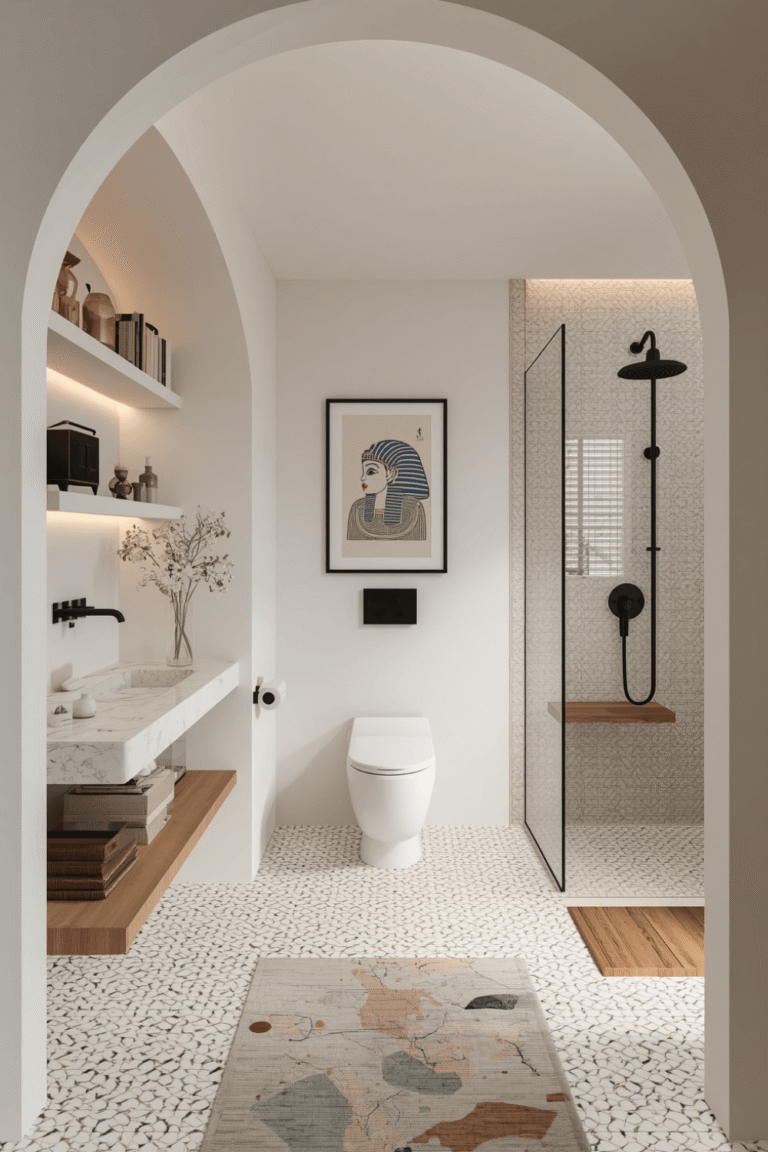
Luxury Concrete Bathroom Ideas That Feel Warm
Ever picture a concrete bathroom and immediately think cold, industrial, maybe a little unfinished, like something you’d find in a converted warehouse rather than an actual home? A genuinely good luxury concrete bathroom proves that assumption wrong entirely, mostly by pairing raw concrete with warm wood tones that soften the material’s natural coolness before it ever gets the chance to feel harsh.
Concrete has quietly become one of the most requested bathroom materials for exactly this reason, and once you’ve actually seen it done well in person, it’s easy to understand why. It’s honest, textural, and modern in a way tile simply can’t replicate, since tile always has that slightly manufactured sheen no matter how good the pattern is. But concrete needs the right partner material to avoid reading as cold or unfinished, and that partner is almost always wood. Let’s go through how to actually strike that balance, since getting it wrong is exactly how you end up with something that feels more like a garage than a bathroom.
Why Concrete and Wood Are Such a Natural Pairing
Concrete brings a raw, architectural honesty to a bathroom, visible texture, a matte, slightly imperfect surface, that reads as genuinely current rather than trend-driven, the kind of material choice that doesn’t look dated five years from now the way a lot of glossy, of-the-moment tile eventually does. But concrete alone, without any warmth to balance it, can tip toward feeling more like a parking garage than a spa, no matter how well it’s poured or finished.
Wood solves that problem almost entirely, and it does it without fighting concrete’s inherent character. Its natural grain and warm tone soften concrete’s coolness, creating a pairing that feels both modern and genuinely inviting rather than stark or unfinished. The contrast between the two materials, one hard and cool, one warm and organic, is really what makes the whole look work as well as it does.
The Concrete Foundation
1. Modern Concrete Bathroom
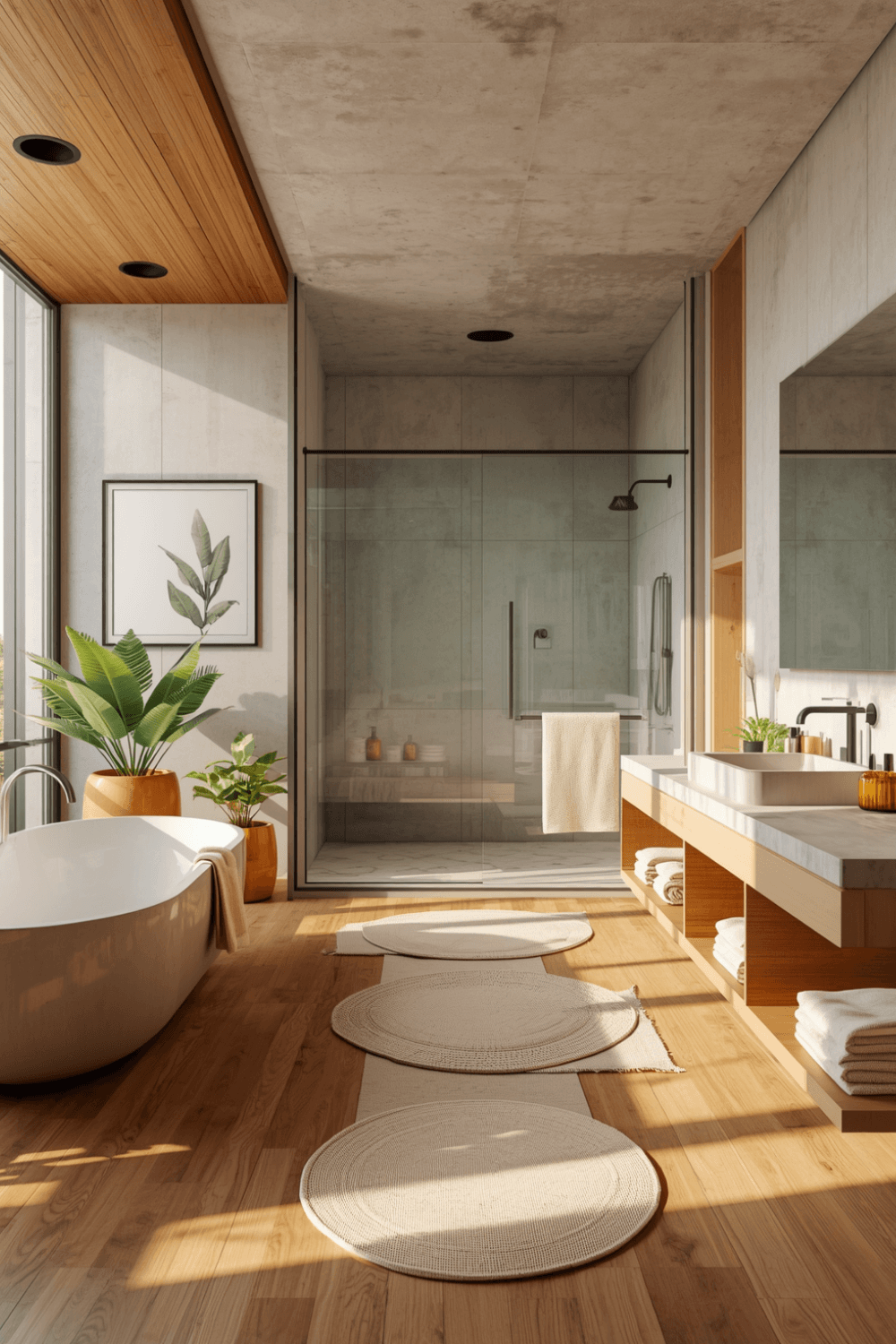
A modern concrete bathroom typically uses the material for flooring, a shower surround, or even a poured concrete vanity top, letting its natural texture and subtle variation do most of the visual work rather than competing with busy pattern elsewhere in the room. The material genuinely doesn’t need help standing out. It just needs the right supporting cast around it.
2. Concrete Bathroom Design
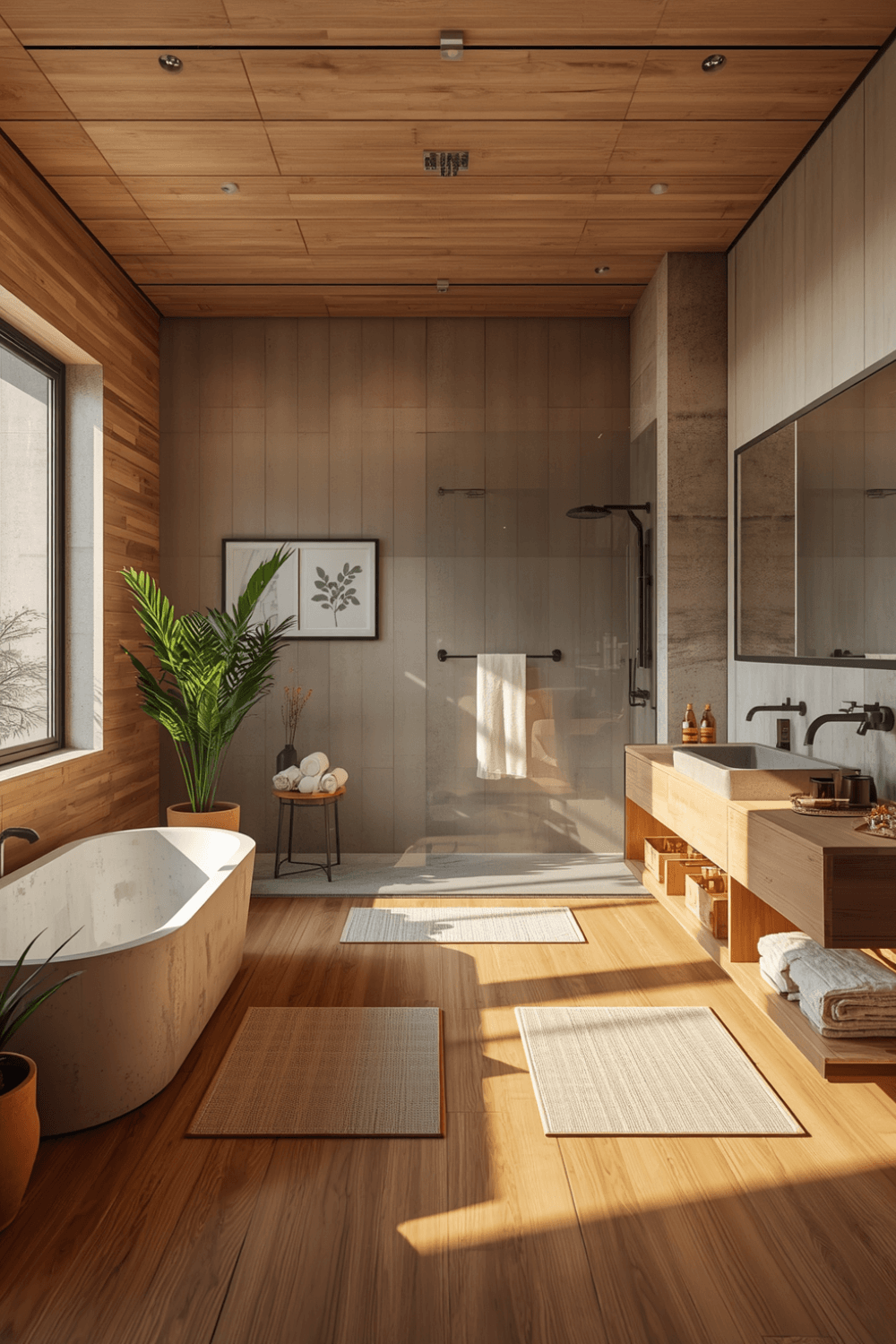
Concrete bathroom design benefits from embracing the material’s natural imperfections, slight variations in tone, small surface texture, tiny air pockets here and there, rather than trying to achieve a perfectly uniform, flawless finish that would actually undercut concrete’s authentic appeal in the first place. Those small irregularities are part of what makes it feel real rather than manufactured.
3. Concrete Shower Ideas
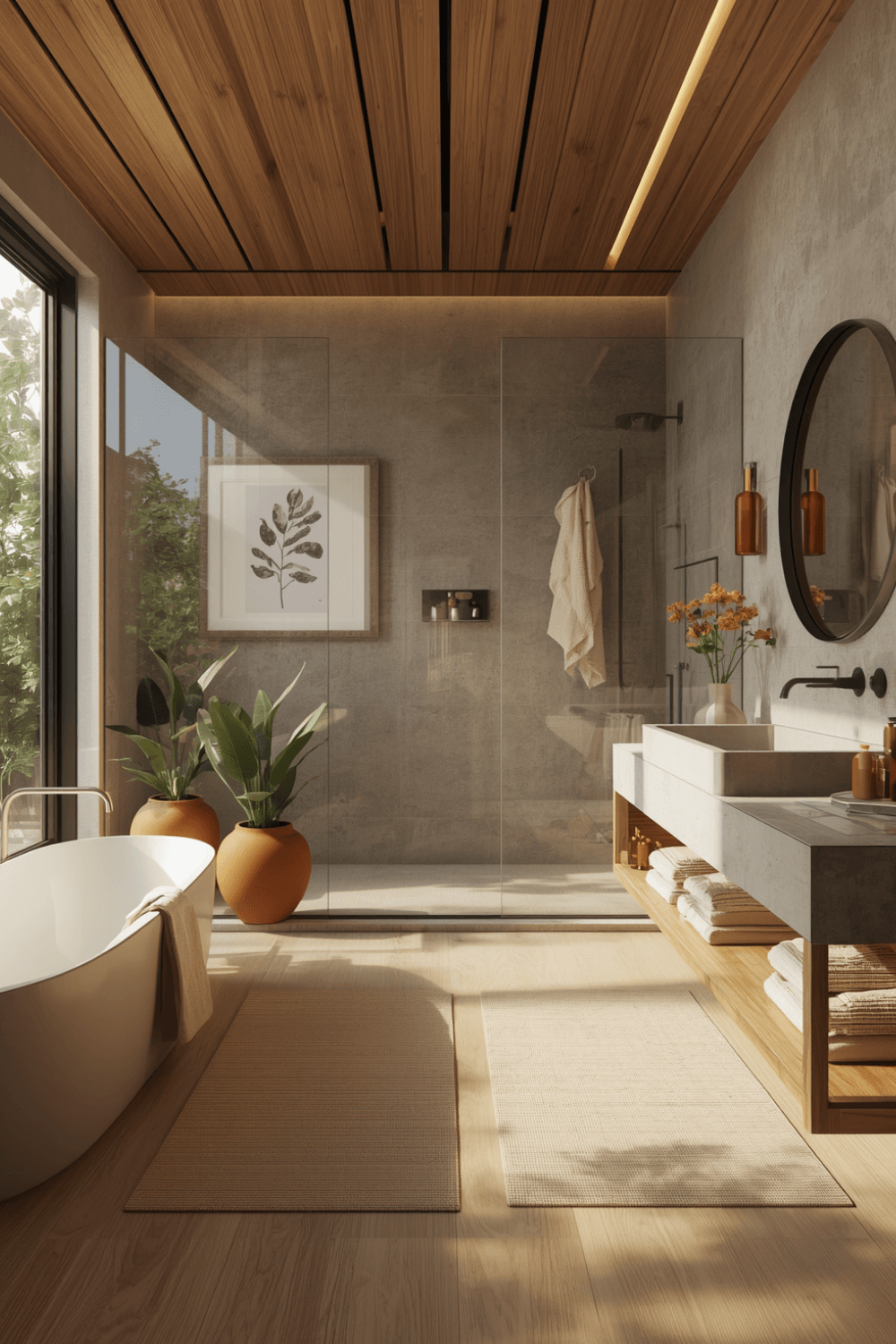
Concrete shower ideas often extend the material seamlessly from floor to wall, creating a genuinely monolithic, uninterrupted look that reads as intentional architecture rather than a standard tiled enclosure with visible seams and grout lines breaking up the surface every few inches.
Wood as the Warming Partner
4. Natural Wood Bathroom
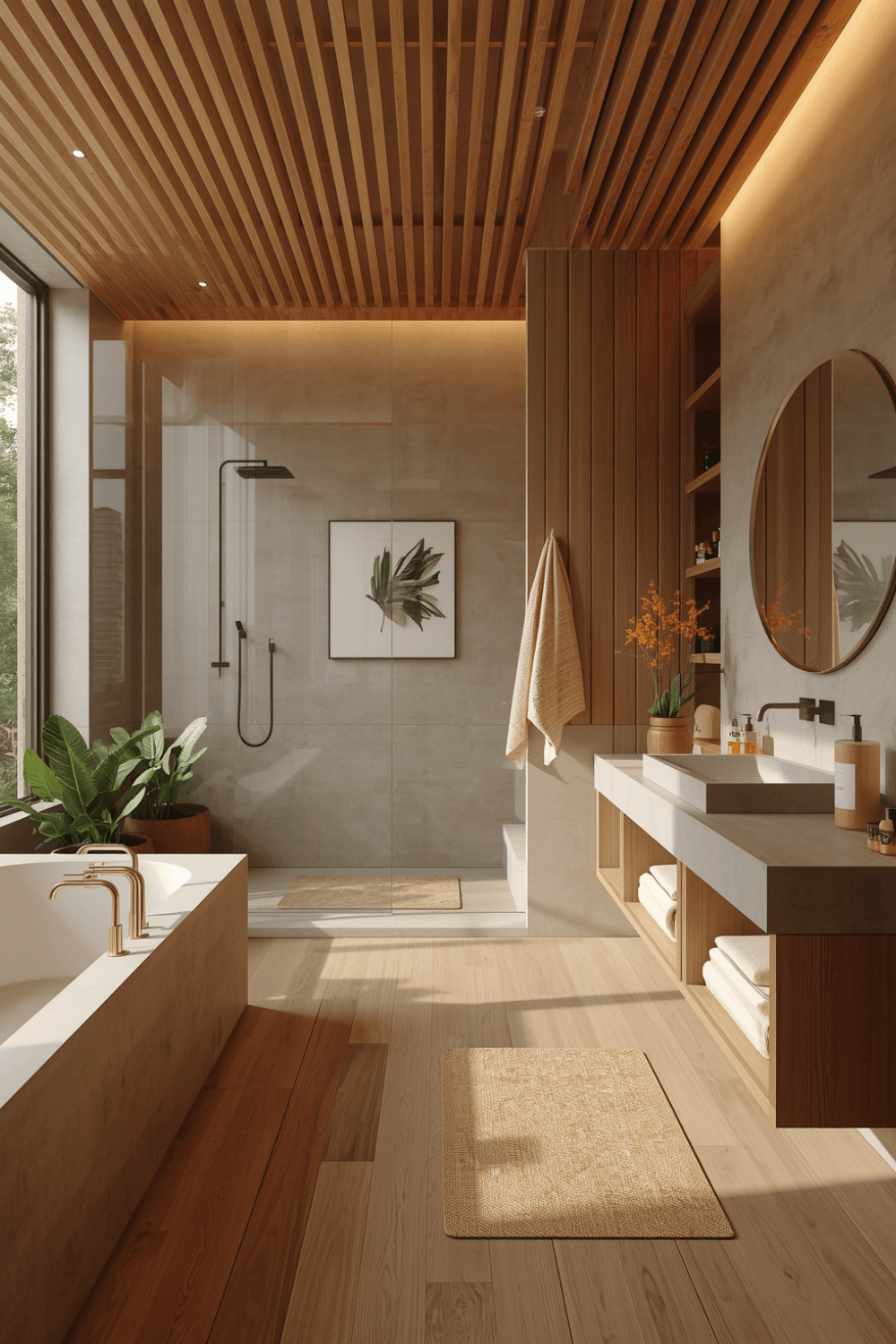
A natural wood bathroom vanity or shelving unit brings genuine warmth into a concrete-heavy space, and choosing wood with visible, honest grain, rather than a painted or heavily lacquered finish that hides the material underneath, keeps the overall material story consistent throughout the room.
5. Wood And Concrete Bathroom
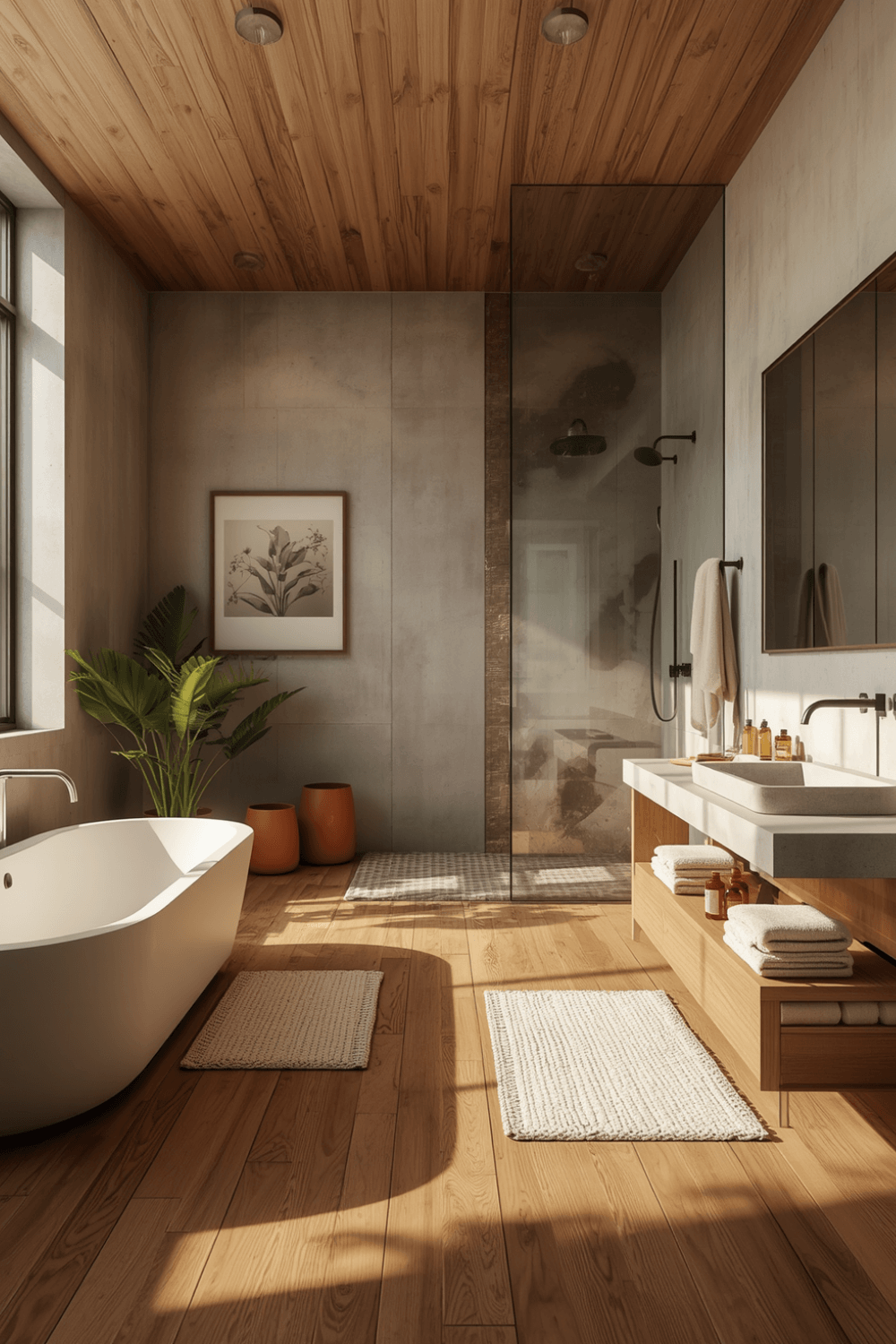
A wood and concrete bathroom balance usually leans slightly more toward one material than the other, mostly concrete with wood accents woven in deliberately, or mostly wood with concrete used more sparingly as a striking counterpoint, rather than splitting the space exactly in half, which tends to read as indecisive rather than intentional.
Style Directions
6. Japandi Bathroom Ideas
Japandi bathroom ideas pair beautifully with concrete, since the style already leans on natural materials and genuine restraint as core principles. Concrete’s matte, honest texture fits the Japandi aesthetic just as naturally as wood does, which is part of why this combination has become so consistently popular together.
7. Japandi Industrial Bathroom
A Japandi industrial bathroom specifically blends the raw, architectural honesty of industrial design with Japandi’s warmth and simplicity, concrete surfaces paired with warm wood and minimal, genuinely quality fixtures rather than heavy metal detailing that would tip the whole room too far toward cold and clinical.
8. Industrial Bathroom Design
Industrial bathroom design leans on concrete’s raw quality more heavily than some of the other directions here, sometimes leaving surfaces genuinely unfinished or only lightly sealed rather than polished, paired with black metal fixtures for a slightly edgier, more architectural feel that still needs wood somewhere to keep it from feeling unfriendly.
9. Modern Organic Bathroom
A modern organic bathroom softens concrete’s hard edges with curved fixtures, a rounded vessel sink, an oval mirror, creating a gentler overall feel even while the material palette itself stays quite raw and honest underneath all that softened geometry.
10. Minimalist Bathroom Design
Minimalist bathroom design within a concrete and wood scheme keeps visible clutter to almost nothing, letting the two materials’ natural textures remain the space’s clear visual focus rather than competing with decorative objects that would just distract from what’s already interesting about the room.
Earthy Bathroom Ideas
Earthy bathroom ideas extend the concrete and wood pairing with additional natural elements, stone accents, woven textiles, a few genuinely thriving plants, reinforcing the grounded, organic feeling the material combination already creates on its own.
Shower and Wet Areas
Walk In Shower Ideas
Walk in shower ideas within a concrete bathroom typically favor a curbless entry, letting the concrete floor flow seamlessly from the main bathroom into the shower area without an interrupting threshold that would break up the material’s continuous, architectural quality.
Luxury Walk In Shower
A luxury walk in shower in this material scheme often includes a built-in concrete bench or niche, poured as part of the same continuous surface for a genuinely seamless, architectural look rather than an added tiled feature that would read as an afterthought bolted onto an otherwise cohesive design.
Vanity
Modern Bathroom Vanity Ideas
Modern bathroom vanity ideas for a concrete and wood bathroom often use a poured concrete countertop atop a warm wood cabinet base, directly pairing both materials right at the room’s most-used, most-touched fixture, which is really the perfect place for this contrast to actually be felt every single day.
Going Bigger
Luxury Bathroom Ideas
Luxury bathroom ideas within a concrete and wood scheme come down to craftsmanship above almost everything else, a properly poured and sealed concrete surface, solid wood rather than a thin veneer that will eventually peel, and fixtures finished to match consistently throughout the entire room rather than mixed and mismatched.
Modern Bathroom Ideas
Modern bathroom ideas built on this material pairing lean on clean lines and genuine restraint, letting concrete and wood’s natural textures carry the design rather than adding unnecessary pattern or ornamentation on top of two materials that are already doing plenty of visual work on their own.
Comfort
Spa Bathroom Ideas
Spa bathroom ideas within a concrete bathroom bring warmth through soft lighting, plush towels, and a few well-chosen plants, turning what could easily read as a stark, cold material palette into something genuinely restorative to actually spend time in rather than just admire from the doorway.
Cozy Luxury Bathroom
A cozy luxury bathroom proves concrete doesn’t have to feel cold, whatever the material’s reputation might suggest at first glance. Warm lighting, wood accents, and soft textiles balance the material’s natural coolness, creating a space that’s genuinely comfortable rather than just visually striking in a way that photographs well but feels unwelcoming in person.
Quick Recap: Luxury Concrete Bathroom Priorities
If you’re short on time, here’s the shortlist:
- Pair concrete with warm wood to balance its natural coolness, rather than using concrete alone throughout the entire space.
- Embrace concrete’s natural texture and slight variation rather than chasing a flawless, perfectly uniform finish that would undercut its honest appeal.
- Choose a curbless shower entry to let concrete flow seamlessly from the floor into the wet area without an interrupting threshold.
- Add warmth through lighting, textiles, and plants to keep the space from feeling stark or cold despite the raw material at its core.
- Prioritize proper sealing and genuine craftsmanship, concrete requires correct installation to perform well long-term in a consistently wet environment.
Internal Linking Suggestions
If you’re building out related content on the site, these topics would connect naturally with this post:
- Modern bathroom shower ideas for walk-in design
- How to choose wood tones that pair with concrete
- Bathroom lighting ideas for a warm, spa-like feel
Final Thoughts
A luxury concrete bathroom proves that raw, industrial materials and genuine warmth aren’t actually in conflict with each other, they complement one another beautifully once they’re balanced correctly. Pair concrete with real wood, embrace the material’s natural texture instead of fighting it, and add softness through lighting and textiles so the whole room feels as good to be in as it looks in a photo.
Look at your current bathroom’s material palette with fresh eyes this week. If it’s feeling flat or overly polished, introducing concrete’s honest texture paired with warm wood might be exactly the change that finally gives the space some real character.
Frequently Asked Questions
Is concrete a good material for a bathroom? Yes, as long as it’s properly sealed to resist moisture and staining. Concrete floors, countertops, and shower surrounds all work well in a bathroom when installed and maintained correctly by someone who knows what they’re doing.
Does concrete need to be resealed regularly in a bathroom? Yes, periodic resealing, typically every one to three years depending on the sealant used and how much moisture exposure the surface actually gets, helps maintain concrete’s water resistance and appearance over time.
What wood tone pairs best with concrete in a bathroom? Warm mid-tones like oak, walnut, or teak tend to balance concrete’s coolness particularly well, though lighter woods can work too for a brighter, more Scandinavian-leaning take on the same underlying pairing.
Is a concrete bathroom cold to the touch? Concrete floors can feel cool underfoot, especially in colder climates, though radiant floor heating is a popular solution that pairs well with concrete’s thermal properties for a genuinely comfortable result year-round.
Can I install a concrete countertop myself? It’s possible with the right materials and guidance, but poured concrete countertops require careful curing and sealing to avoid cracking or staining, so many homeowners choose to hire a professional for this specific application rather than risk it.
Does a concrete bathroom work with a small space? Yes, especially when paired with wood accents and good lighting. Concrete’s matte, textured surface doesn’t reflect light the way glossy tile does, but a well-lit small concrete bathroom can still feel open and bright rather than closed in.