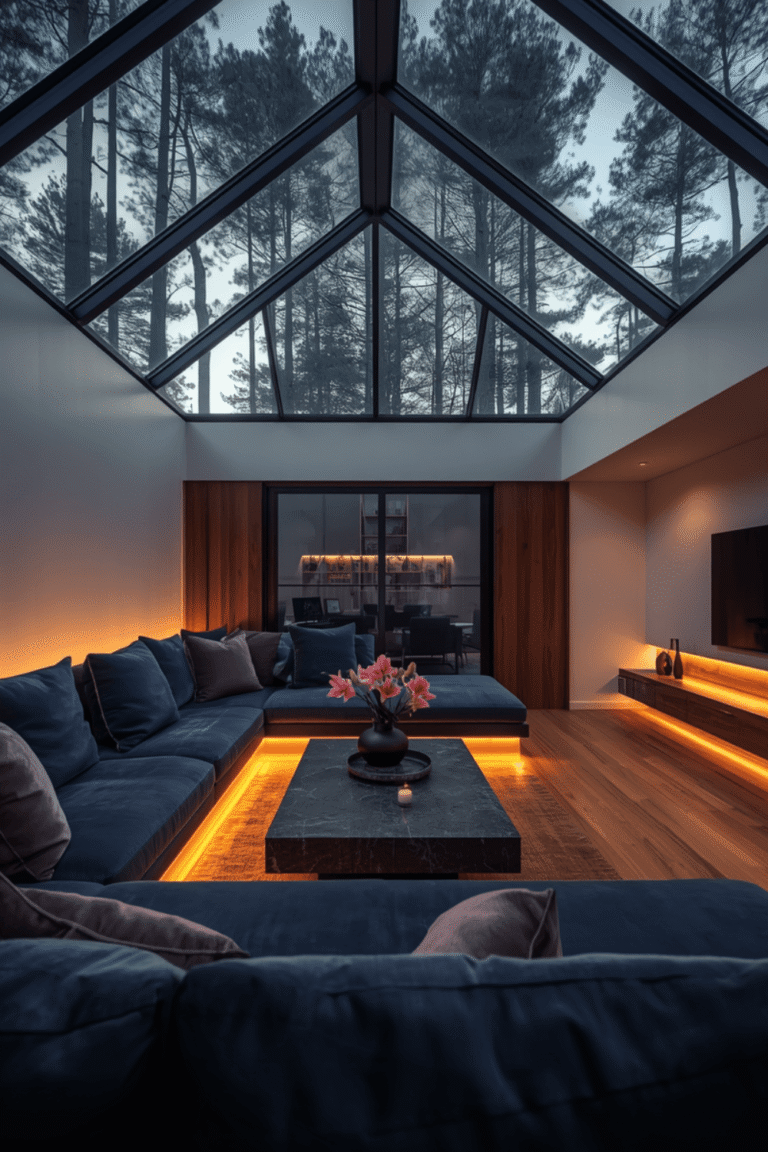
Living Room TV Wall Ideas | Floating TV Console with LED Display Shelves
I Wasted I Figured Out My Living Room TV Wall
That was three years ago. Since then I’ve torn that wall apart twice, hired an electrician once, returned a mount that almost pulled my drywall off, and finally landed on a setup I actually like walking into. So this isn’t a “10 dreamy TV wall ideas” roundup pulled from a stock photo site. This is what happened when I actually did it.
Why the TV Wall Matters More Than You’d Think
Here’s the thing nobody tells you: the TV wall is usually the first thing your eye hits when you walk into a living room. It’s not the couch, it’s not the rug — it’s that big black rectangle and everything around it. Get it wrong, and the whole room feels unfinished no matter how nice your furniture is.
I learned this the hard way. I spent months picking out a sofa, agonizing over throw pillow colors, and then just… plopped the TV on a cheap stand against a bare wall. The room never felt “done” until I fixed that wall specifically.
Mounting the TV Too High
My first attempt, I mounted the TV above a console table, and I set it way too high because I was worried about cable box glare and wanted it to look “like a hotel room.” Big mistake.
Within a week, my neck was sore from craning upward during movie nights. The general rule I wish someone had told me: the center of the screen should hit roughly eye level when you’re sitting down, which for most couches is about 42-48 inches from the floor to the center of the TV, not the bottom of it.
I ended up remounting it about 8 inches lower. Small change, huge difference in comfort.
Wood Slat TV Wall Panel Ideas
The wood slat panel has become one of the most widely used TV wall treatments in contemporary interior design, and for good reason. It adds warmth, texture, and a strong vertical rhythm to a wall that would otherwise be flat paint, and it photographs well in any lighting condition.
1. Floor-to-ceiling vertical wood slats behind the TV
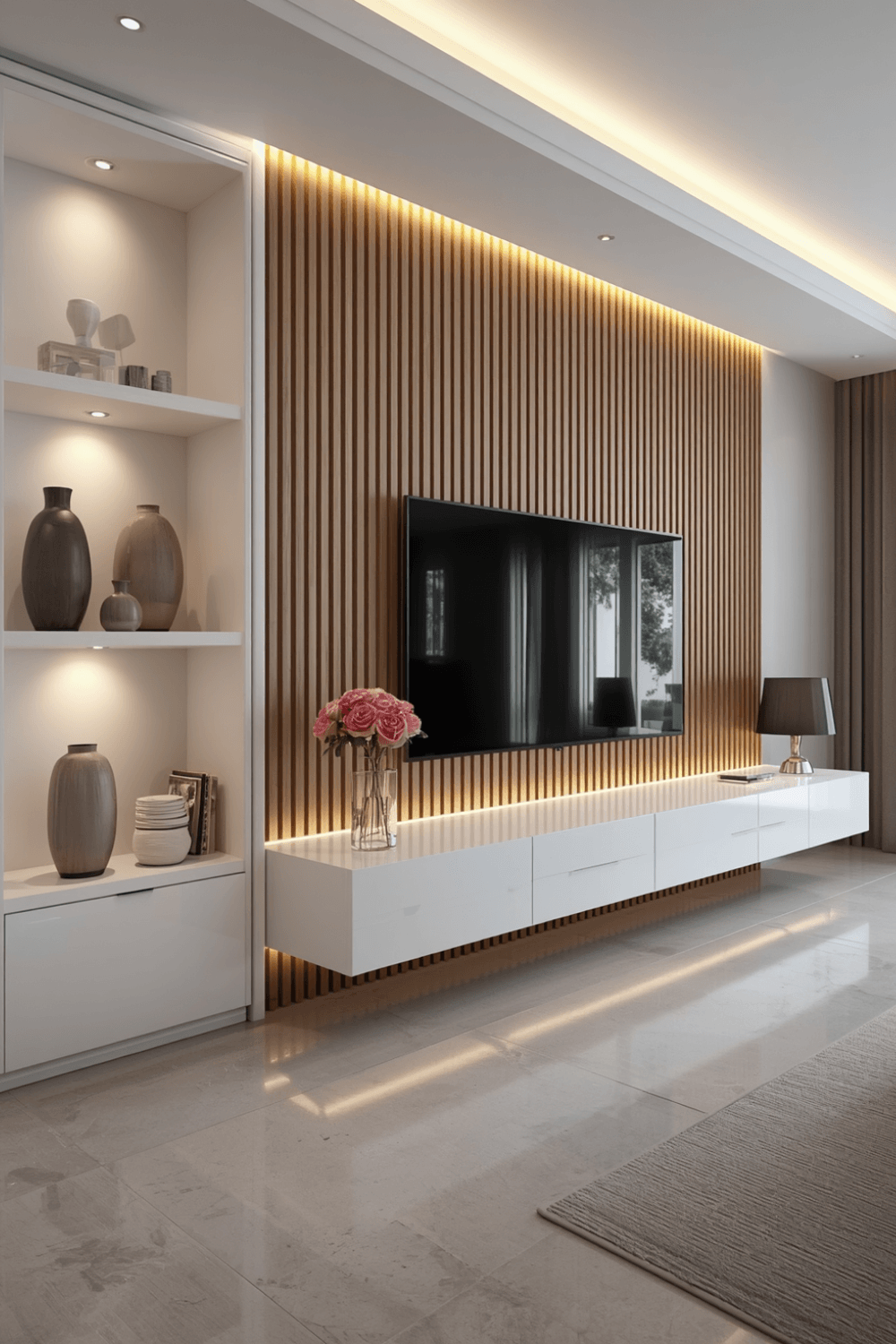 Running the slats from the floor to the ceiling rather than just behind the screen area is the decision that makes the biggest difference between a wood slat treatment that looks like a DIY project and one that looks like an architectural feature. The full height gives the room a sense of proportion and makes the TV appear to sit within a wall feature rather than in front of one.
2. A warm oak or walnut stain on the slats for a luxury feel
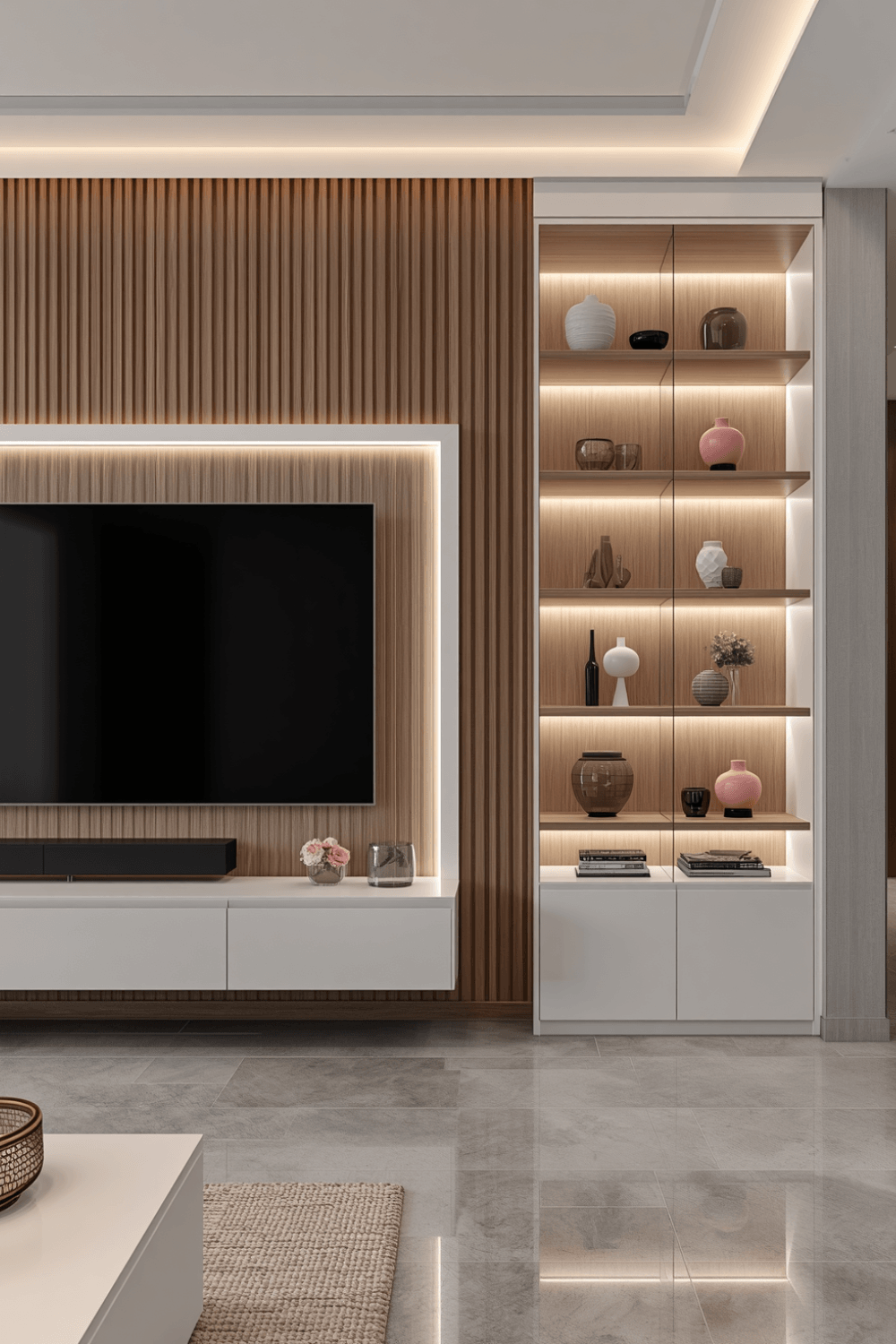 The species and finish of the wood matters considerably. Light pine slats in a natural finish read as Scandinavian and casual. Oak or walnut slats in a warm, medium-to-dark stain read as considerably more premium and suit a luxury wood slat TV unit context. The grain of the wood becomes more visible at a darker tone and adds depth that light, natural finishes don’t have.
3. Fluted wood panels for a more textural, contemporary version
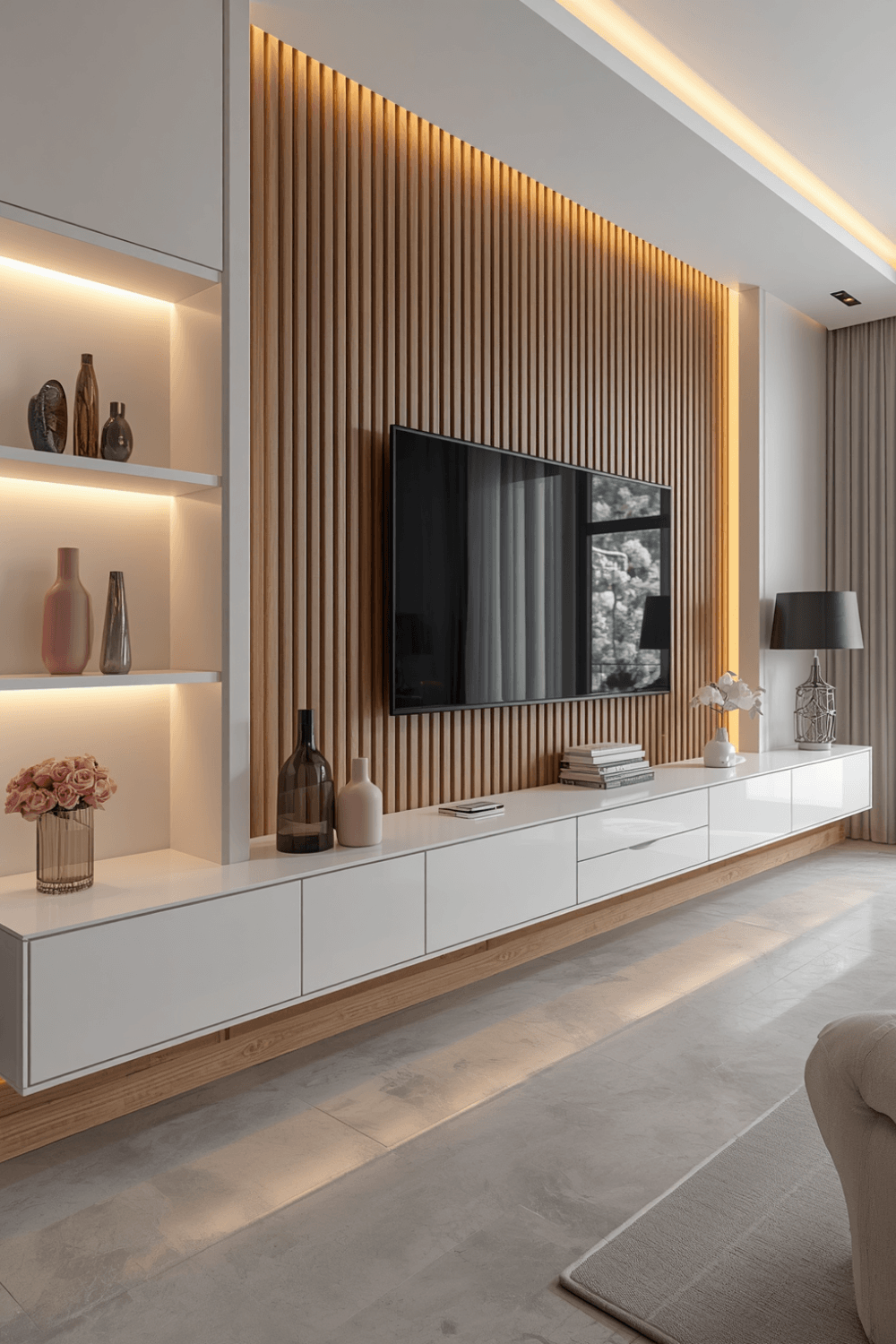 Fluted panels, slightly rounded parallel channels rather than flat slats with visible gaps, create a more unified surface that reads differently again from standard slat work. They work better in rooms where the goal is a more formal, architectural quality rather than the warm, slightly rustic feel of spaced slats.
4. A recessed niche in the slat wall for the TV to sit within
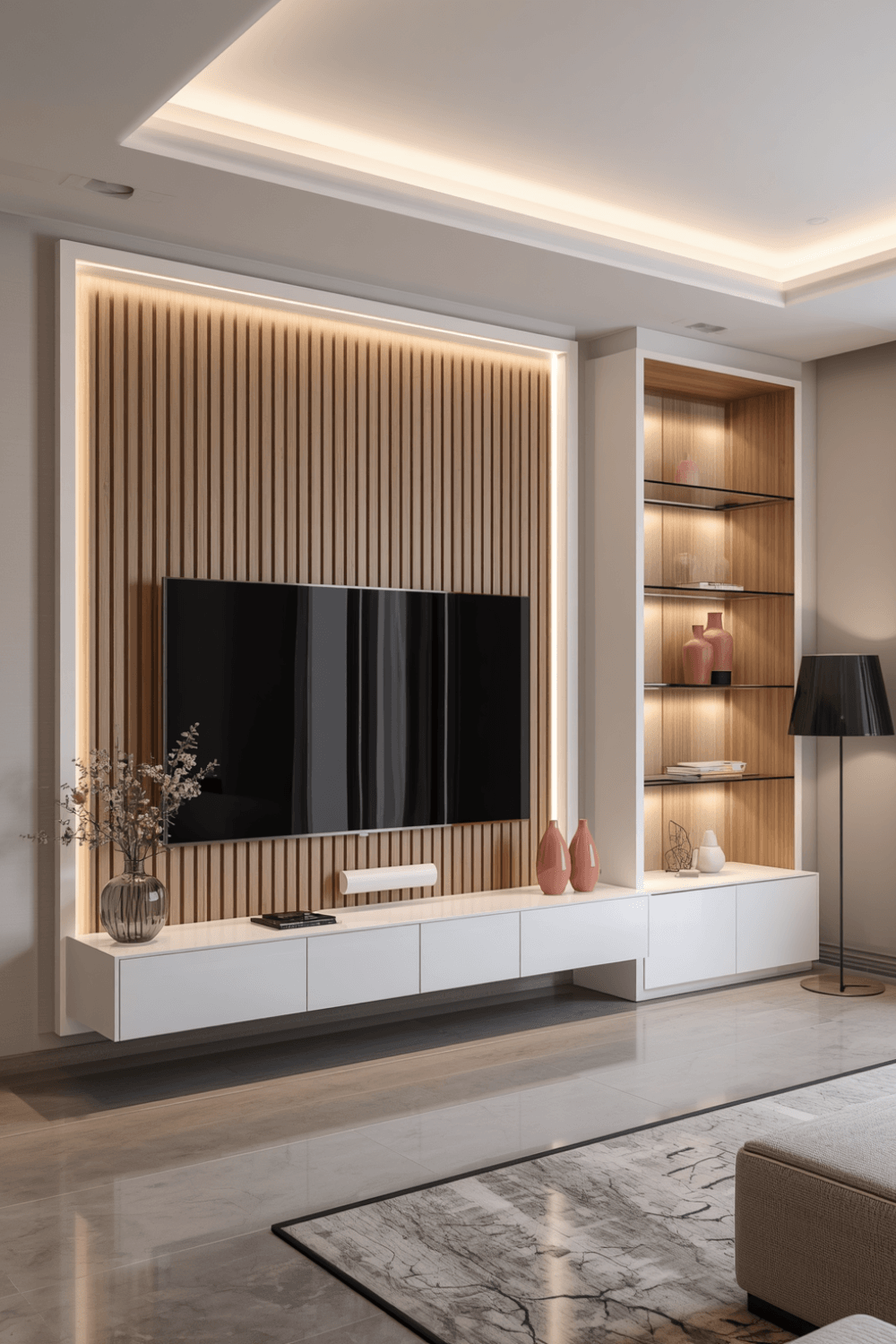 Rather than mounting the television directly on the slat panel, creating a shallow recessed opening in the slat wall for the screen to sit within gives the TV its own architectural home. The depth of the recess hides the screen’s thickness and the edges of the slat panel frame the screen on all four sides, which is a significantly more considered look than a surface-mounted television.
5. Dark-stained slats against a contrasting wall colour
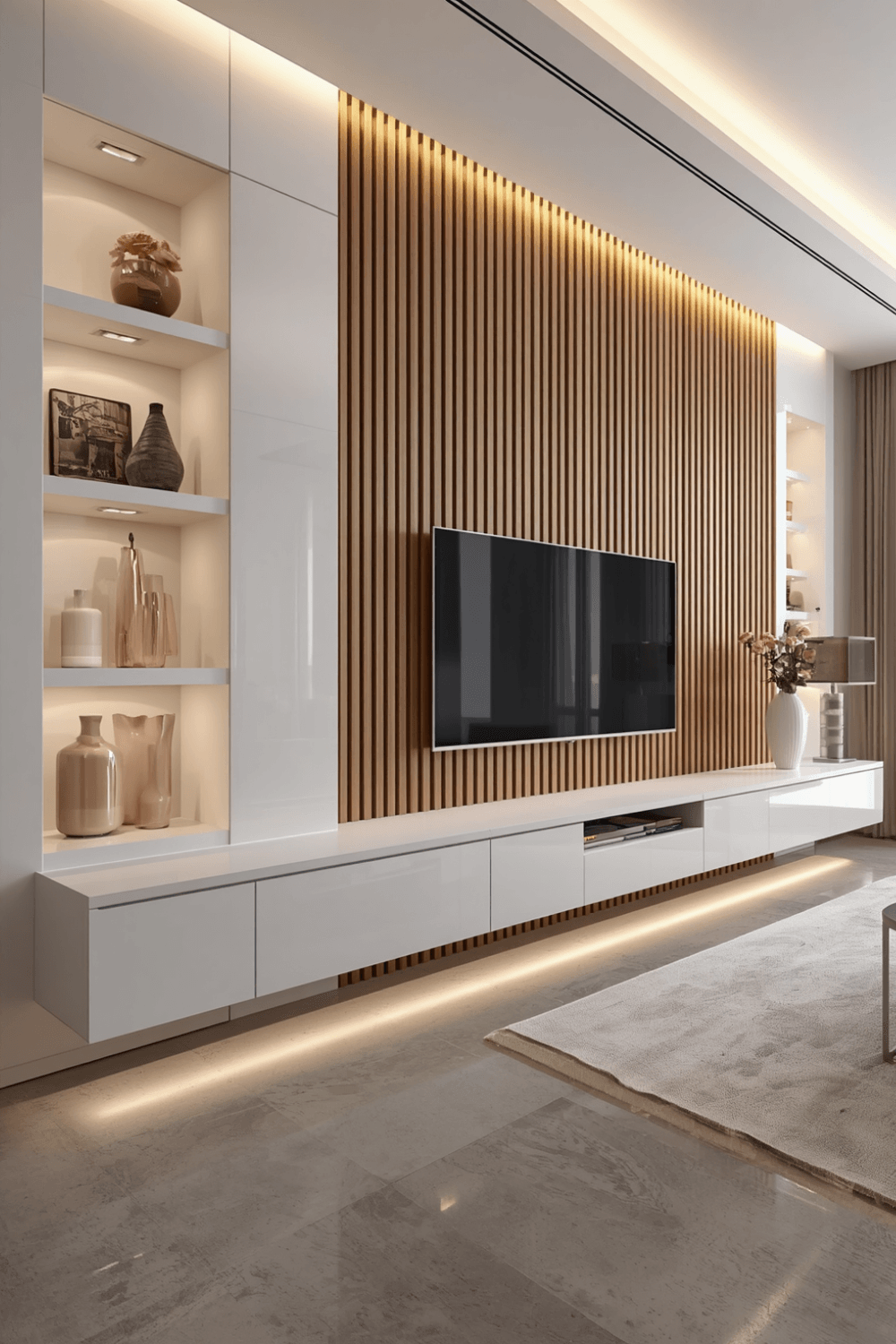 In most TV wall applications, the slats and the wall behind or beside them are in the same general tonal family. Dark stained oak slats against a deep charcoal, navy, or forest green wall creates a higher-contrast, more dramatic effect that suits a contemporary living room aesthetic aiming for a slightly editorial quality.
6. Wood slats extended to include open shelving sections
Slat panels that incorporate open shelf sections, a shelf at the same depth as the panel between groups of slats, give the wall a mix of texture and function. Books, plants, and decorative objects sit within the slat wall rather than beside it, which keeps the whole composition cohesive.
What Wood Species Works Best for a TV Wall Panel
Oak is the most widely used for good reason: it’s durable, takes stain well, has an attractive grain that reads nicely at scale, and is available in most markets worldwide. Walnut is richer in color and grain but costs more. MDF wrapped in a wood veneer achieves a very similar visual result to solid wood at lower cost and with better dimensional stability in a heated room, which matters more than most people think for vertical slats that are fixed at both ends.
7. A full-width floating console spanning the wall
Rather than a console sized to the TV above it, a floating console that runs the full width of the feature wall, or close to it, makes the horizontal element as important as the vertical. It becomes a shelf that the TV appears to sit above rather than a unit that the TV appears to sit on top of, which is a meaningfully different relationship between the two elements.
Floating Console and TV Unit Design Ideas
The console under the television is doing two jobs at once: storage and visual grounding. A console that’s too small for the wall makes the whole composition look unresolved. One that’s proportioned correctly anchors the TV in the space.
What I Actually Put Around the TV
A bare TV mounted on a bare wall still looks like a hotel room, honestly. What made the room feel finished was everything around it.
- Floating shelves. I added two floating shelves on either side, staggered at different heights, and styled them with a mix of books, a plant, and a couple of frames. Uneven, asymmetrical styling looks way more natural than matching everything perfectly.
- An accent wall. I painted just the TV wall in a warm charcoal (Behr’s “Cracked Pepper” if you’re curious) while keeping the rest of the room a soft off-white. This made the TV blend in more instead of standing out as this glaring black rectangle, especially when it’s off.
- A media console with real storage. I went with something simple and low, around 60 inches wide, so it didn’t crowd the wall. Closed cabinet doors hide the actual boring stuff — router, extra remotes, game controllers.
- Wall art or a gallery arrangement above and around, not directly above the TV. I made the mistake of centering a big piece directly above mine and it competed with the screen visually. Off to the side worked much better.
An Idea I Didn’t Expect to Love: The Frame TV
For my second attempt, I actually swapped my regular TV for a Samsung Frame TV in my home office setup, and I’ll be honest, I was skeptical it was just a gimmick. It’s not. When it’s off, it displays artwork and just looks like a framed picture, matte finish and all. It changed how the wall felt on days when I wasn’t even watching anything. It’s pricier than a standard TV of the same size, so it’s not for everyone, but if the “black rectangle on the wall” thing bothers you even when it’s off, it’s worth a look.
Common Mistakes to Avoid
- Don’t center the TV on the wall without accounting for where your seating actually is — mine was slightly off-center from the couch for months before I noticed and fixed it.
- Don’t skip stud-finding before mounting. I got lucky the first time; the second time I didn’t check properly and had to patch a hole.
- Don’t overcrowd the shelves around the TV. I went overboard with decor once and it looked cluttered and distracting during movies.
- Don’t forget sound. A great-looking wall with tinny built-in TV speakers is still a letdown. I added a basic soundbar (a Vizio one, nothing fancy) sitting just below the screen, and it made a bigger difference to how “finished” the setup felt than any decor piece did.
Final Thoughts
If I’m honest, my TV wall isn’t some Pinterest-perfect showpiece. There’s still a slightly visible seam where I patched drywall from my first attempt. But it’s comfortable, the cords are gone, and it actually looks like someone lives there and thought about it, instead of just shoving a TV against a wall and calling it done.
If you’re starting from scratch, my honest advice: get the mount height and cable situation right first. Everything else — the shelves, the paint, the styling — is the fun part you can keep tweaking for years.