Modern Entryway Flooring & Wall Ideas That Actually Last
Modern Entryway Design: What I Learned About Flooring and Walls After Mine Fell Apart Fast
I put the same hardwood flooring throughout my entire main level, including the entryway, because I wanted a seamless, cohesive look. Within about a year, that specific entryway section showed visible wear, scuffs, and even some water damage near the door from wet shoes and umbrellas that the rest of my hardwood never had to deal with.
That mistake taught me that an entryway isn’t just a small design decision about matching the rest of your home, it’s genuinely a different use case that needs its own material considerations. Here’s what I’ve learned since about choosing flooring and wall treatments that actually hold up to what an entryway deals with daily.
Your Entryway Takes More Abuse Than Any Other Floor in the House
I hadn’t really thought about this until my hardwood started showing damage. The entryway deals with dirt, water, salt in winter, and the direct impact of shoes coming in from outside, all concentrated in a genuinely small area compared to how spread out that same wear is across a living room or hallway.
Once I understood that an entryway needed material choices suited to its actual use, rather than just whatever matched the rest of my home, my replacement choices held up dramatically better.
My Mistake: Matching Flooring Purely for Visual Continuity
My original hardwood choice looked beautiful and created a seamless flow from my entryway into the rest of the main level. It just wasn’t suited to the actual abuse that specific few square feet needed to withstand daily, and no amount of visual cohesion made up for the wear it showed within the first year.
I replaced that section with a durable porcelain tile that closely mimics the look of my hardwood, keeping the visual continuity I wanted while actually holding up to moisture and daily wear far better than the real wood had.
Step-by-Step: Choosing Modern Entryway Flooring and Wall Treatments That Last
1. Choose flooring rated for moisture and heavy wear
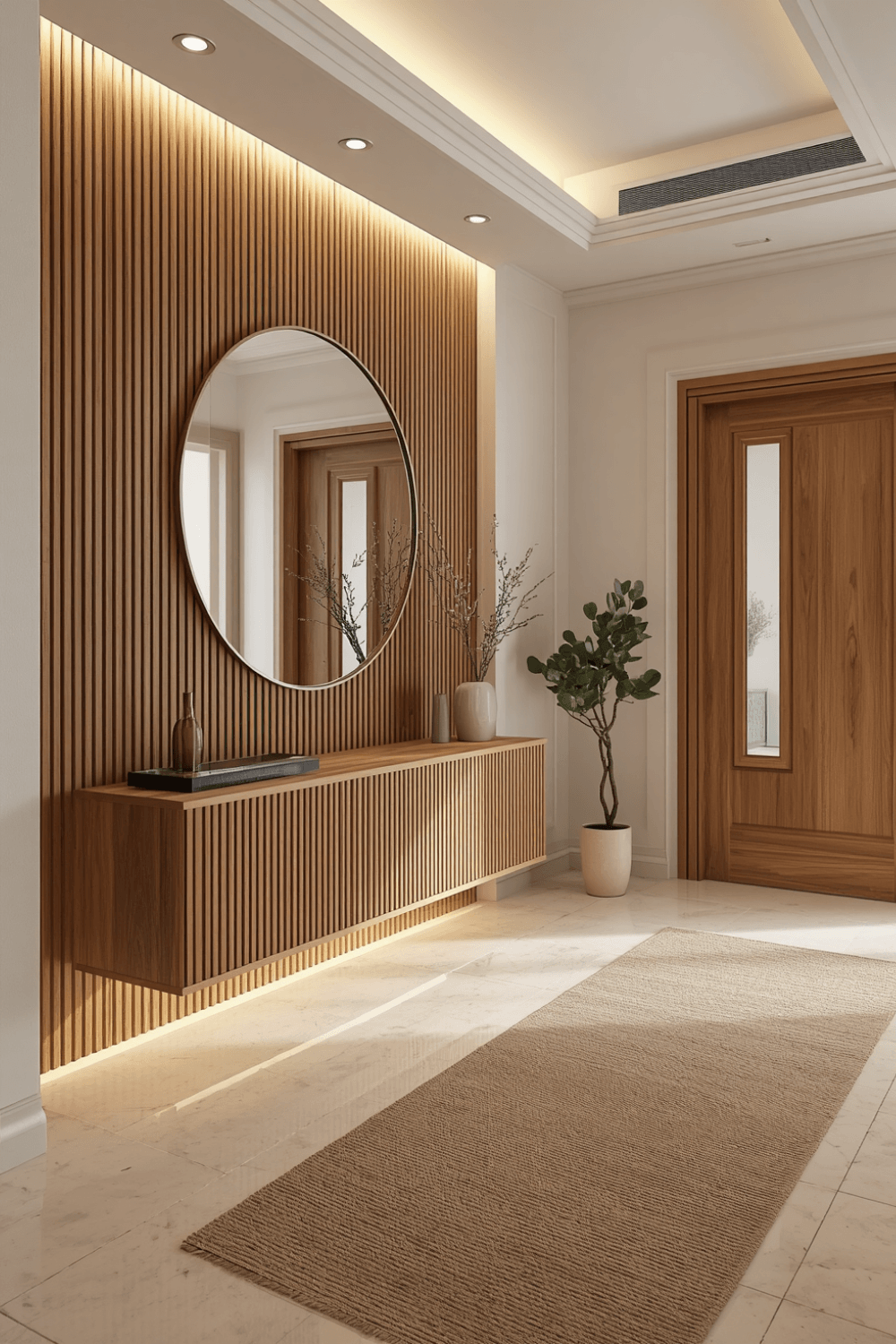 I now specifically look for porcelain tile, luxury vinyl plank, or other genuinely durable options for entryway flooring, rather than extending delicate materials from adjoining rooms. These materials handle water, dirt, and daily impact significantly better than hardwood or carpet in this specific high-abuse zone.
2. Consider a transitional strip between materials
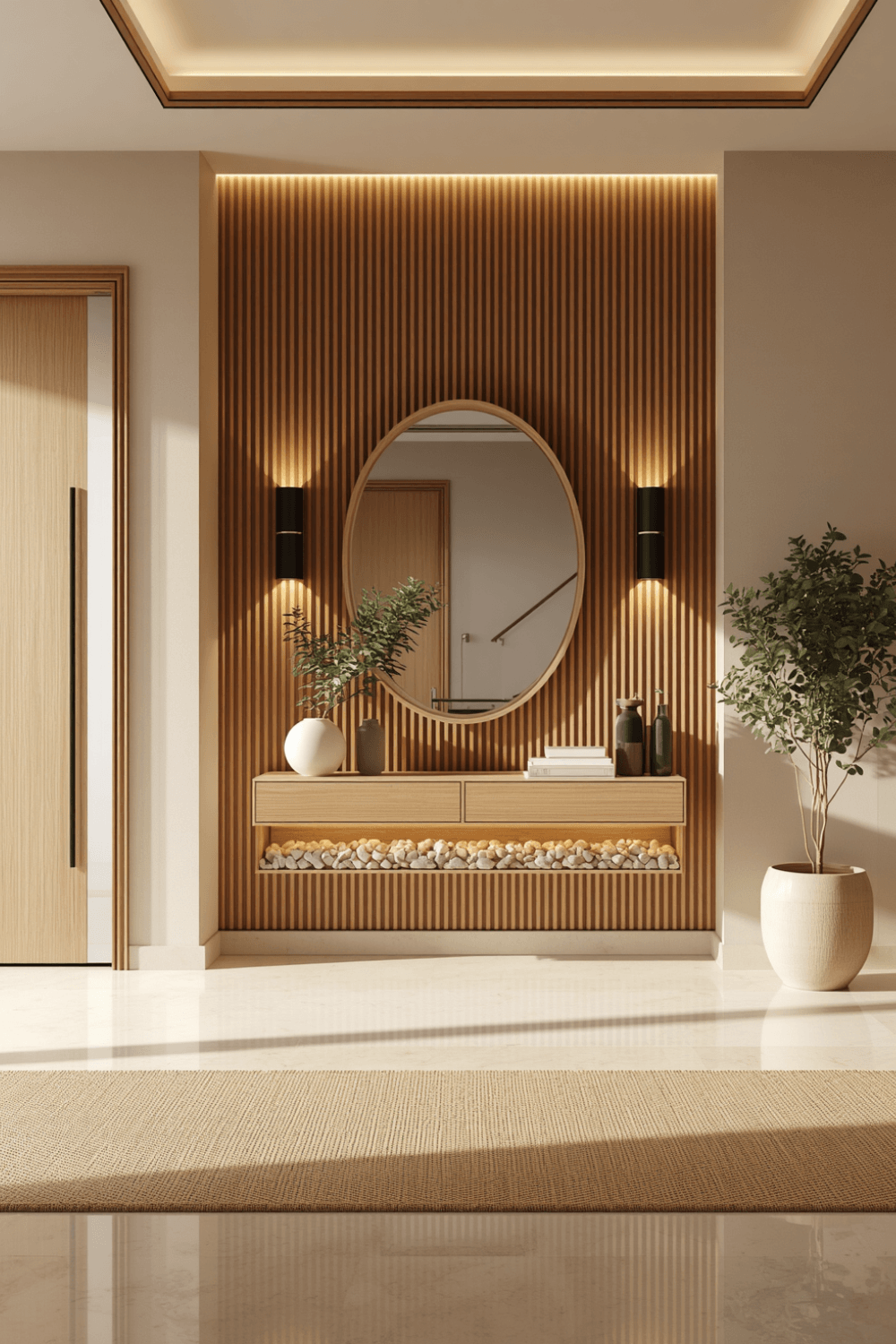 I added a simple metal transition strip where my new tile meets my original hardwood, which gives a clean, intentional boundary between the two materials instead of an awkward abrupt change. It’s a small detail, but it makes mixing materials look planned rather than like a patch job.
3. Add a washable rug or mat as a first line of defense
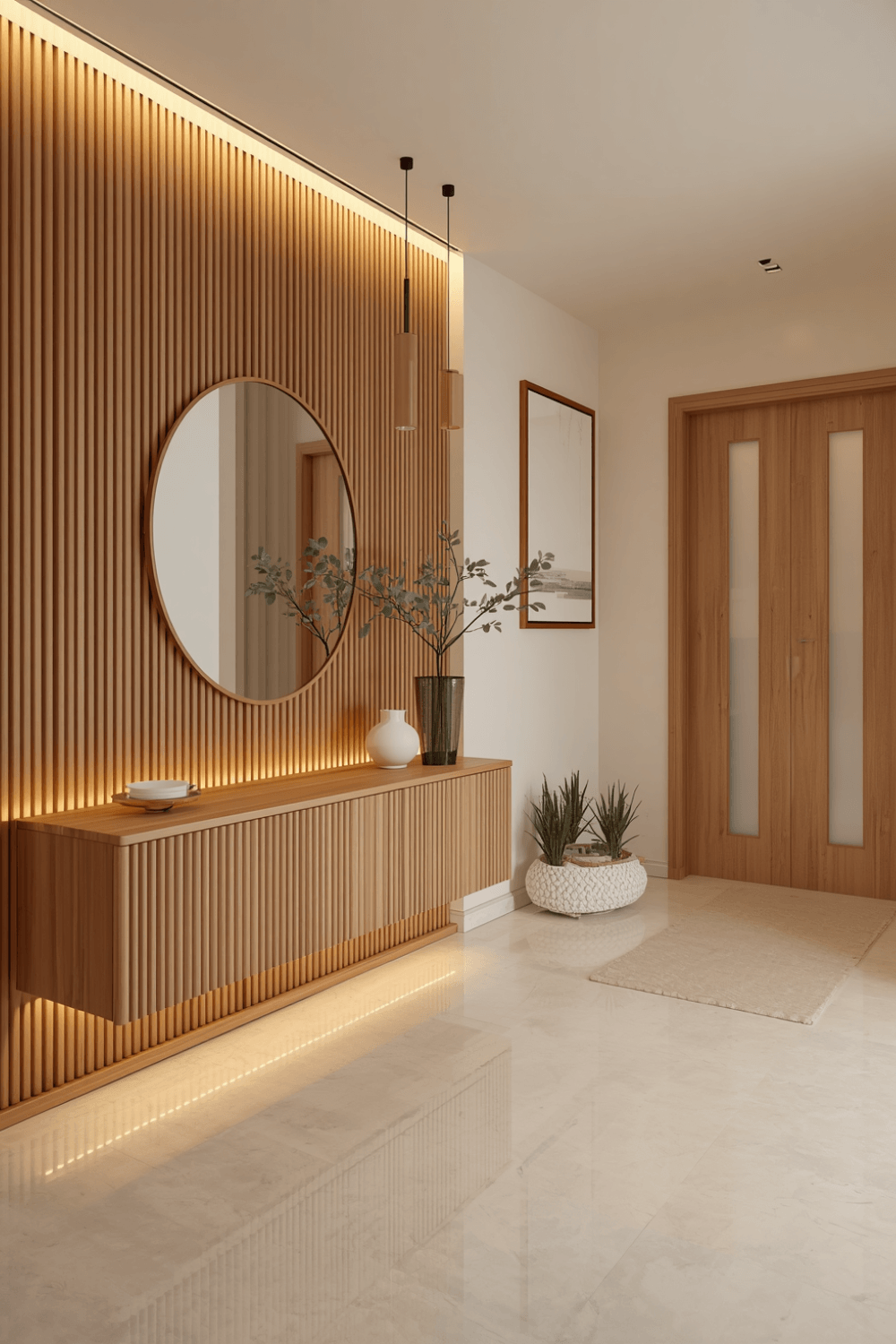 I placed a durable, washable indoor-outdoor rug just inside the door, on top of my new tile, specifically to catch the worst of the dirt and moisture before it ever reaches the rest of the space. It’s a simple, affordable habit that genuinely extends the life of whatever flooring you choose underneath it.
4. Choose a wall treatment that can handle bumps and scuffs
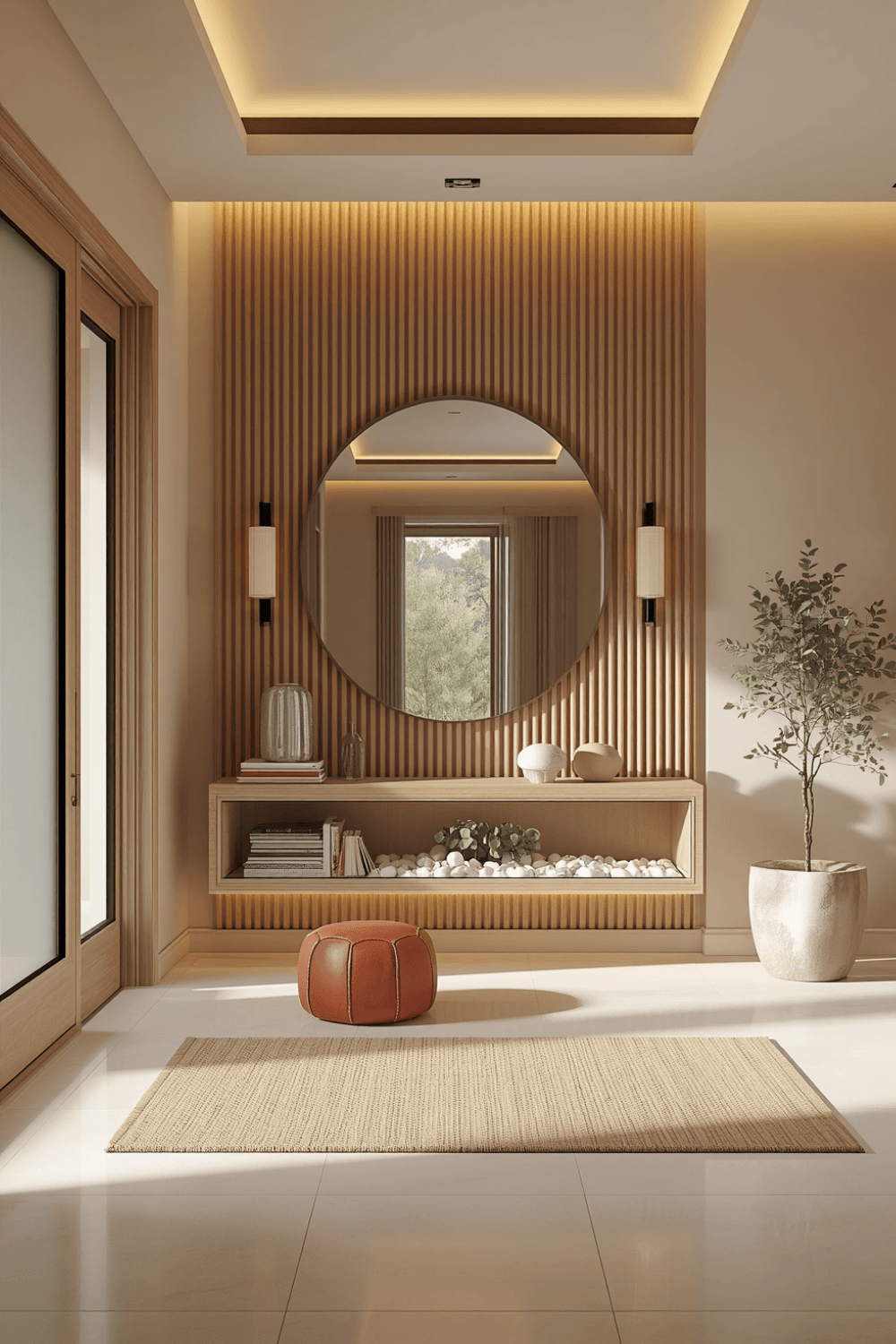 My entryway walls used to be painted in a delicate matte finish that showed every scuff from bags, coats, and general daily traffic almost immediately. I switched to a washable satin finish specifically in that zone, which wipes clean far more easily without needing constant touch-up painting.
5. Add a durable wainscoting or beadboard treatment for extra protection
I installed simple wainscoting along the lower half of my entryway walls, which adds both visual interest and a layer of physical protection against scuffs and bumps in the area that takes the most contact from bags, shoes, and general daily traffic. The paint above it stays cleaner as a result too.
6. Use large-format tile to minimize grout maintenance
I chose larger tile pieces with fewer grout lines for my entryway floor, since grout in a high-traffic, high-moisture area tends to collect dirt and require more frequent cleaning than a similar amount of grout elsewhere in the house. Fewer grout lines meant noticeably less maintenance overall.
7. Add a boot tray or designated wet-item zone if your climate calls for it
I added a simple boot tray near my door specifically for wet or muddy shoes during rainy and winter months, which keeps moisture contained to one easily cleaned spot instead of spreading across the whole entryway floor. It’s a small, unglamorous addition that made a real difference in how much cleanup I deal with regularly.
Real Examples From People I Know
A friend in a rainy climate used a full slate tile entryway with a floor drain built in during her renovation, essentially treating the space like a mudroom rather than a standard entry. It’s a bigger investment, but she says it’s completely eliminated the water damage concerns she used to have with her previous flooring.
Another friend kept her existing hardwood throughout but added a large, durable runner specifically sized to cover the entire entryway footprint, essentially protecting the wood underneath entirely rather than replacing the material itself. It’s a lower-cost solution that’s worked well for her rental unit where flooring changes weren’t an option.
Common Mistakes to Avoid
Choosing entryway flooring purely for visual continuity with adjoining rooms. It often isn’t suited to the actual moisture and wear that space needs to withstand.
Skipping a washable rug or mat just inside the door. It’s a simple, affordable way to catch dirt and moisture before it reaches the rest of your flooring.
Using a delicate paint finish in a high-traffic entry zone. Washable satin or semi-gloss finishes hold up dramatically better against daily scuffs and bumps.
Ignoring wall protection like wainscoting in high-contact areas. It adds both durability and visual interest where walls take the most abuse.
Using small tile with lots of grout lines in a high-moisture area. It tends to collect dirt and require more frequent cleaning than larger format tile.
Final Thoughts
My entryway flooring mistake taught me that matching the rest of my home mattered less than choosing materials actually suited to what that specific space deals with daily. The tile replacement held up far better than the original hardwood ever could have in that particular spot, and it still achieves the visual continuity I originally wanted.
If you’re planning your own entryway flooring and wall treatments, prioritize durability and moisture resistance over pure visual matching, and don’t underestimate what a washable rug and durable paint finish can do to protect the space long-term. That combination is really what makes an entryway hold up to daily life instead of showing wear within the first year.