Rustic Farmhouse Cabinet Ideas | Vintage Wooden Storage Cabinet Decor
Rustic Farmhouse Cabinet Ideas: What I Learned Giving Plain Cabinets Real Character
My kitchen cabinets started out as builder-grade flat panel boxes with zero personality, the kind you find in nearly every starter home. I wanted that warm, collected-over-time farmhouse look I kept seeing online, so I went out and bought a set of ornate bin pulls I thought looked charming in the store. Once they were installed, the whole kitchen looked like it was trying too hard, mismatched with everything else and honestly a little costume-y instead of genuinely rustic.
It took swapping that hardware and rethinking a few other details before my cabinets actually started looking like they belonged in a real farmhouse kitchen instead of a themed one. Here’s what I learned figuring out the difference.
Rustic Farmhouse Is About Restraint, Not More Decoration
My initial instinct was that farmhouse style meant adding more, more hardware detail, more distressing, more visible texture. What actually reads as genuine farmhouse character is usually more restrained than that, relying on a few well-chosen, authentic details rather than piling on decorative elements everywhere.
Once I pulled back and focused on fewer, more considered choices, my cabinets finally looked intentional instead of like they were trying to check every farmhouse box at once.
My Mistake: Hardware That Was Too Ornate for the Cabinet Style
My original bin pulls had a lot of decorative detail, scrollwork and an aged bronze finish that looked charming as a standalone piece but completely overwhelmed my simple flat panel cabinet doors. The hardware became the loudest thing in the kitchen instead of a supporting detail.
I swapped them for simple, classic black cup pulls with clean lines, and the whole kitchen instantly felt more cohesive. The cabinets finally read as intentionally simple rather than plain, with the hardware adding just enough character without competing for attention.
Step-by-Step: Creating Genuine Rustic Farmhouse Cabinet Character
1. Choose hardware that complements, not competes with, your cabinet style
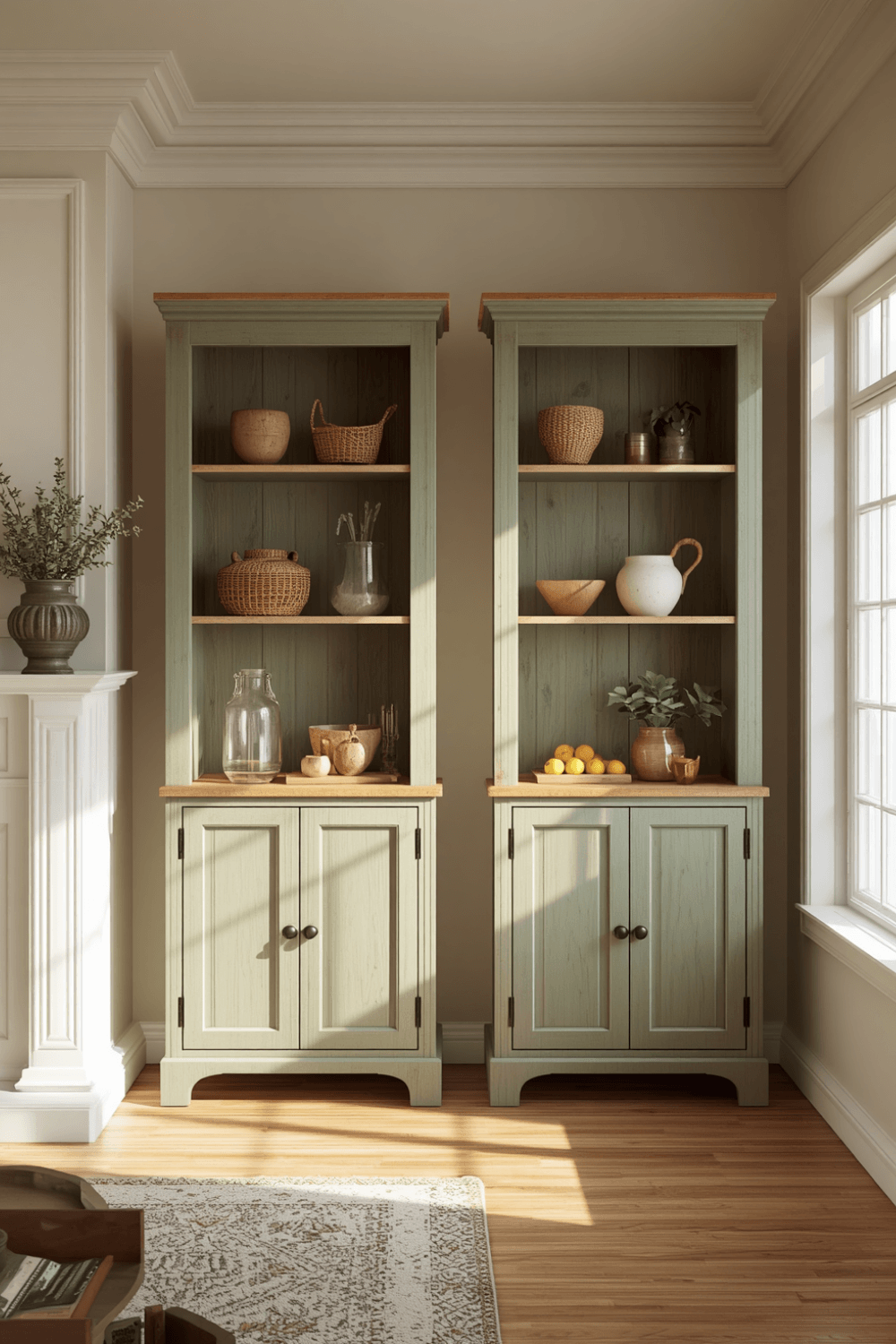 I now specifically look for simple black or aged bronze hardware with clean lines rather than heavily ornate options, especially on simpler flat panel or shaker-style cabinets. The hardware should feel like a natural extension of the cabinet, not a separate decorative statement fighting against it.
2. Add a farmhouse sink as a genuine focal point if you’re able to
I upgraded to a fireclay apron-front sink during a partial kitchen refresh, and it became the single element that did the most to establish that authentic farmhouse feel. If a full sink swap isn’t in the budget, even researching one for a future project is worth it, since it tends to anchor the whole aesthetic more than almost any other single change.
3. Consider open shelving for a portion of your upper cabinets
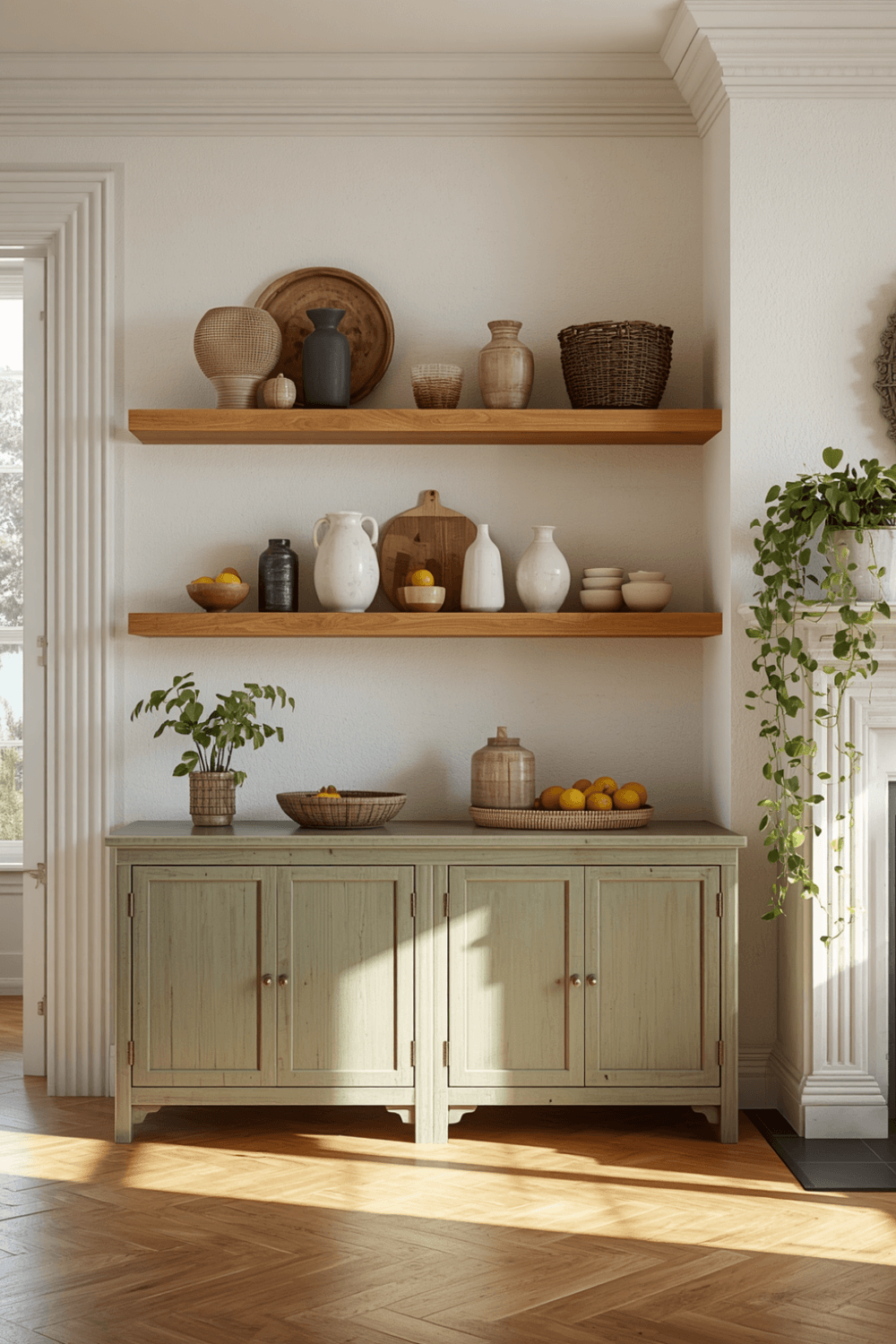 I removed the doors from two upper cabinets near my stove and left the shelves open, displaying simple ceramic dishware and a few glass jars. That mix of closed and open storage adds visual variety and that collected-over-time feeling that fully closed cabinetry throughout the whole kitchen doesn’t achieve on its own.
4. Choose a paint finish that reads as classic, not distressed for the sake of it
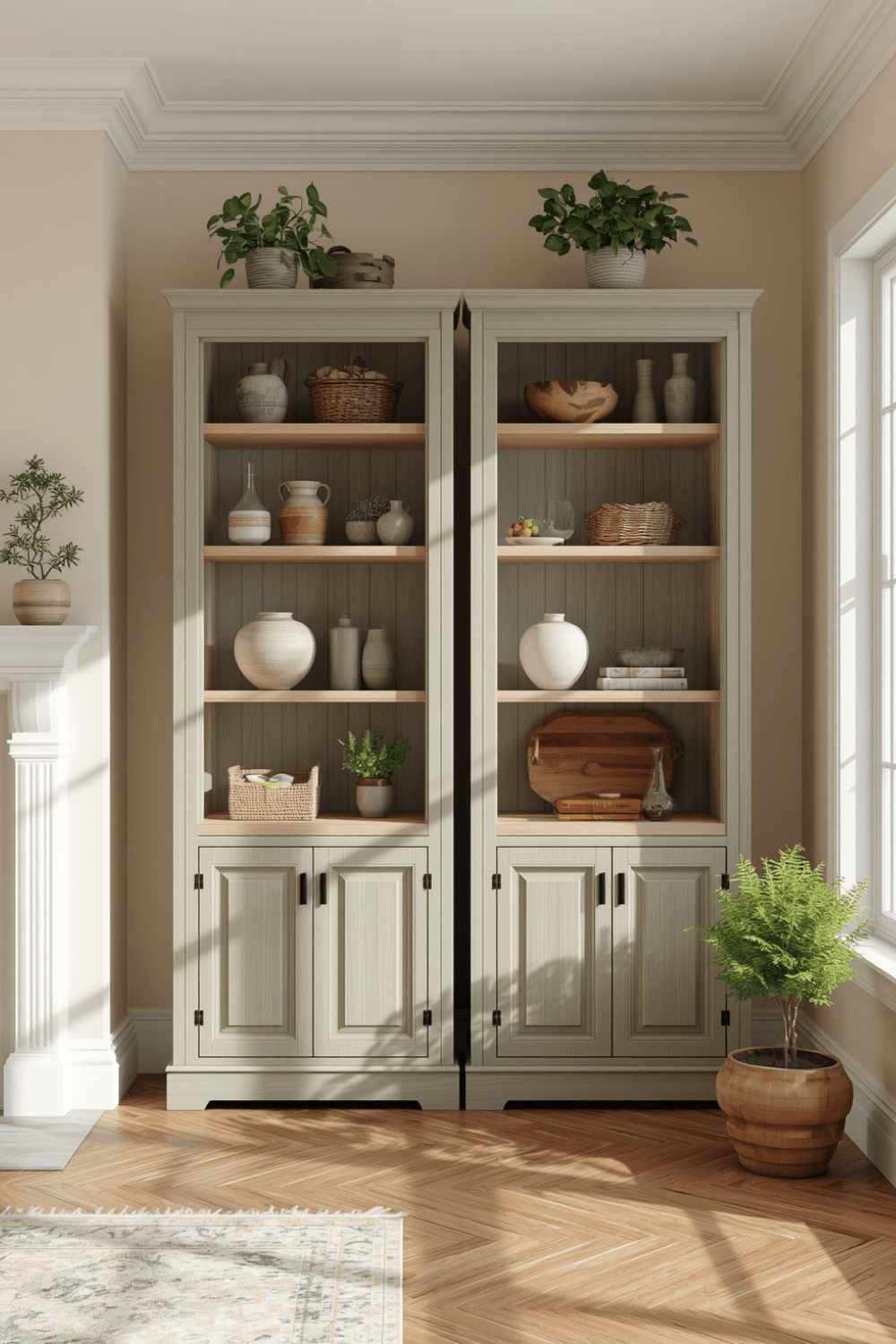
I painted my cabinets a warm off-white in a satin finish rather than attempting an artificially distressed or heavily aged look. Genuine farmhouse character tends to come from simple, timeless choices rather than manufactured wear that can look inauthentic if it’s overdone.
5. Add wood accents to balance painted cabinetry
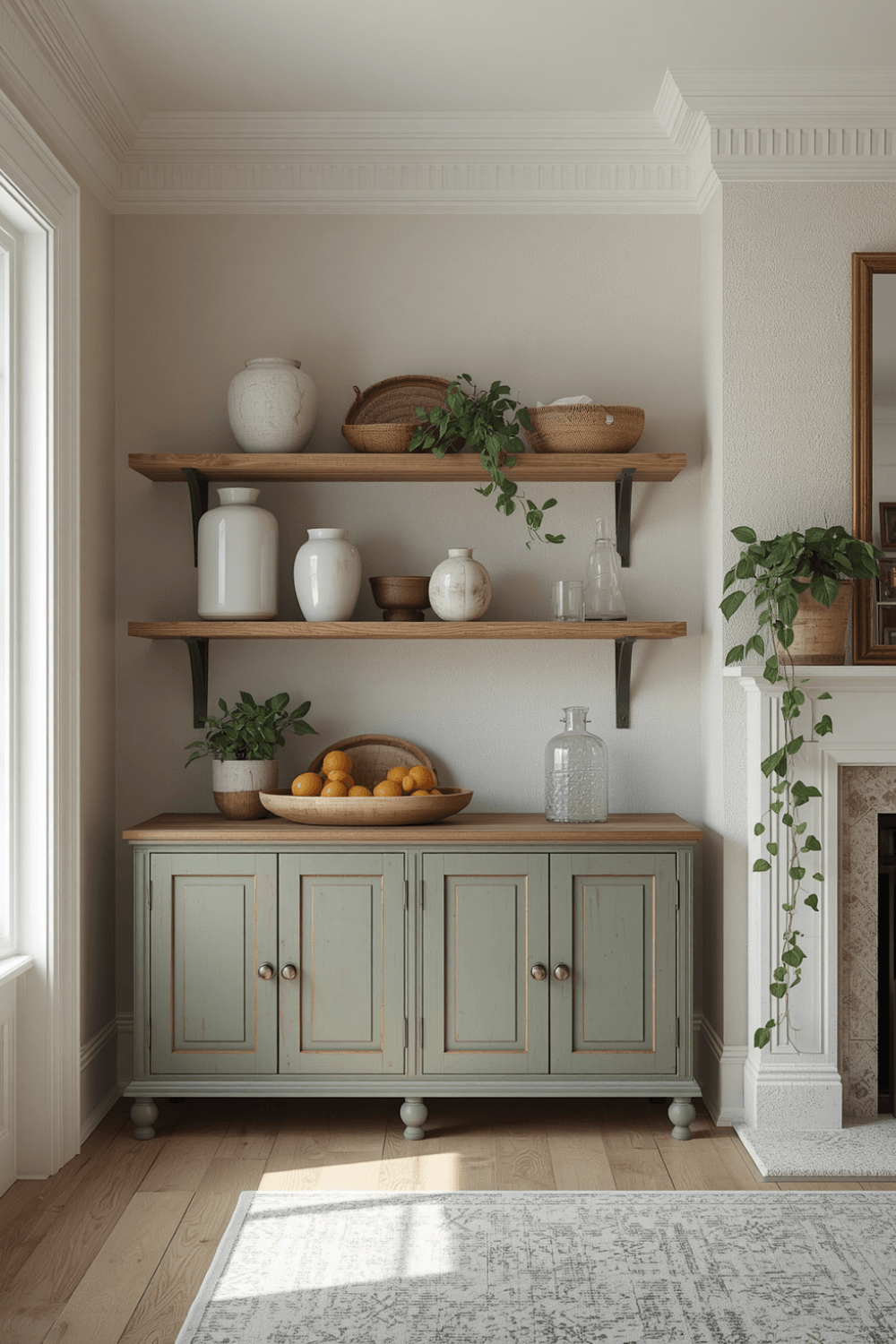
I kept a section of my upper cabinets in a natural wood finish instead of painting everything the same off-white, which added warmth and visual interest that an entirely painted kitchen can sometimes lack. Even a small wood element, like open shelving or a single accent cabinet, helps ground the space.
6. Use glass-front cabinet doors sparingly for visual interest
I swapped just two cabinet doors near my coffee station for simple glass-front versions, which lets a bit of curated dishware show through without opening up the whole kitchen’s storage to full display. It’s a lower-commitment way to add some of that open-shelving charm without giving up closed storage entirely.
7. Keep the overall color palette limited and cohesive
I stuck to warm white cabinets, black hardware, and warm wood accents throughout, resisting the urge to add more colors or finishes into the mix. A limited, cohesive palette reads as more intentional and genuinely farmhouse than a kitchen trying to incorporate every rustic element and color trend at once.
Real Examples From People I Know
A friend renovating an actual older farmhouse kept her original cabinet boxes, which had some genuine wear and character already, and simply repainted them a soft sage green with brass hardware rather than replacing them entirely. The real age and slight imperfections in the wood gave her kitchen an authenticity that new cabinets, however well styled, couldn’t fully replicate.
Another friend in a newer build leaned into open shelving for almost her entire upper cabinet section, paired with simple lower cabinets in a warm cream. She says the open shelving alone did more to establish that collected, farmhouse feeling than any hardware or paint choice could have on its own.
Common Mistakes to Avoid
Choosing overly ornate hardware for simple cabinet styles. It tends to overwhelm rather than complement plain flat panel or shaker doors.
Attempting artificial distressing that ends up looking inauthentic. A clean, classic finish often reads as more genuinely farmhouse than manufactured wear.
Painting every single surface the same color with no wood accent. A little natural wood balances an entirely painted kitchen and adds needed warmth.
Going fully open shelving without any closed storage. A mix of both tends to look more intentional and practical than committing entirely to one or the other.
Introducing too many colors or finishes at once. A limited, cohesive palette reads as more genuinely farmhouse than a kitchen trying to incorporate every trend simultaneously.
Final Thoughts
My cabinets didn’t need more decoration to finally feel like genuine rustic farmhouse style, they needed more restraint and a few carefully chosen details instead of everything I could find that looked vaguely farmhouse in a store. The hardware swap alone fixed most of what felt off about my original attempt.
If you’re working on your own farmhouse cabinets, choose simple hardware that complements rather than competes with your cabinet style, mix in a little open shelving or wood accent for warmth, and keep your overall palette limited and cohesive. That restraint is really what separates genuine farmhouse character from a kitchen that just looks like it’s trying too hard.