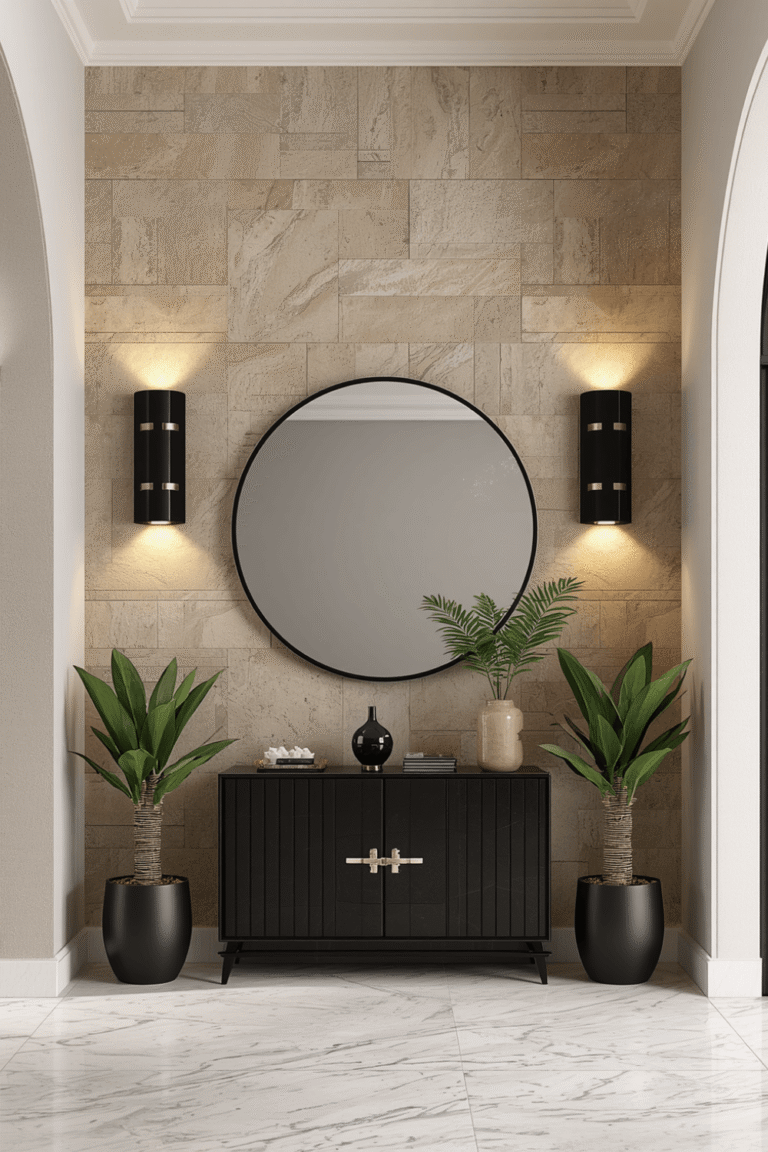
Luxury Entryway Ideas That Actually Work (Real Tips)
Luxury Entryway Ideas: What I Learned Turning a Junk-Catching Hallway Into an Actual Entrance
For the first two years in my house, my entryway was basically a shoe graveyard. A pile of mail on the floor, random shoes kicked off in every direction, and a coat hook that was somehow always overflowing even though I only own like six jackets. Guests walked straight past it into the living room because there was genuinely nothing there worth looking at.
I finally got serious about fixing it after a friend commented, half-joking, that she always had to step over something to get into my house. That stung a little, but it also pushed me to actually design the space instead of just letting it happen. Here’s what worked, what didn’t, and what I’d do differently if I started over.
A Luxury Entryway Isn’t About Size, It’s About Intention
My entryway is genuinely small, maybe five feet of usable wall space total. I used to think a “luxury” entrance needed a grand foyer with a chandelier and a huge console table. What actually changed the feeling of my space was intention, not square footage — every single item there now has a clear purpose and a clear spot.
That shift from “catch-all landing zone” to “designed entry point” made a much bigger visual and functional difference than I expected from such a small area.
My Mistake: Buying a Console Table That Didn’t Fit My Actual Habits
My first console table was a beautiful, narrow piece with zero storage underneath. It looked elegant in the store. In real life, I had nowhere to put my keys, mail, or the everyday clutter that needs a home, so everything just piled back up on top of it within a week.
I swapped it for a console table with two drawers and an open shelf underneath, and that single change fixed almost the entire clutter problem I’d been fighting for years. Storage wasn’t optional in my space, even though I initially treated it like a nice-to-have.
Step-by-Step: Creating a Luxury Entryway That Actually Functions
1. Audit what actually happens in your entryway daily
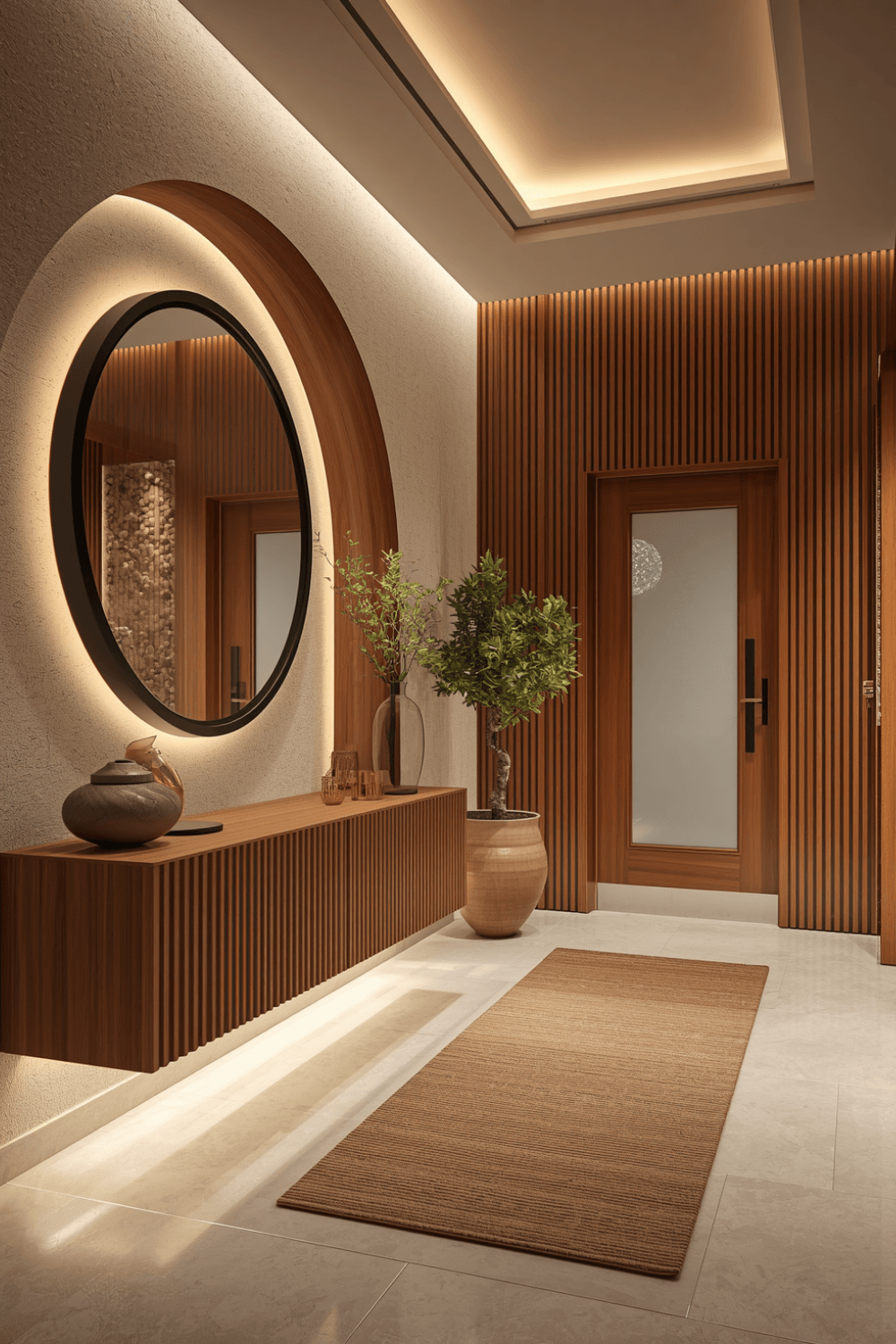
Before redesigning anything, I tracked what actually landed there for about a week — keys, mail, shoes, my bag, a jacket. That list shaped every decision after, instead of designing around a Pinterest photo that had nothing to do with my actual daily habits.
2. Choose furniture with real storage, not just style
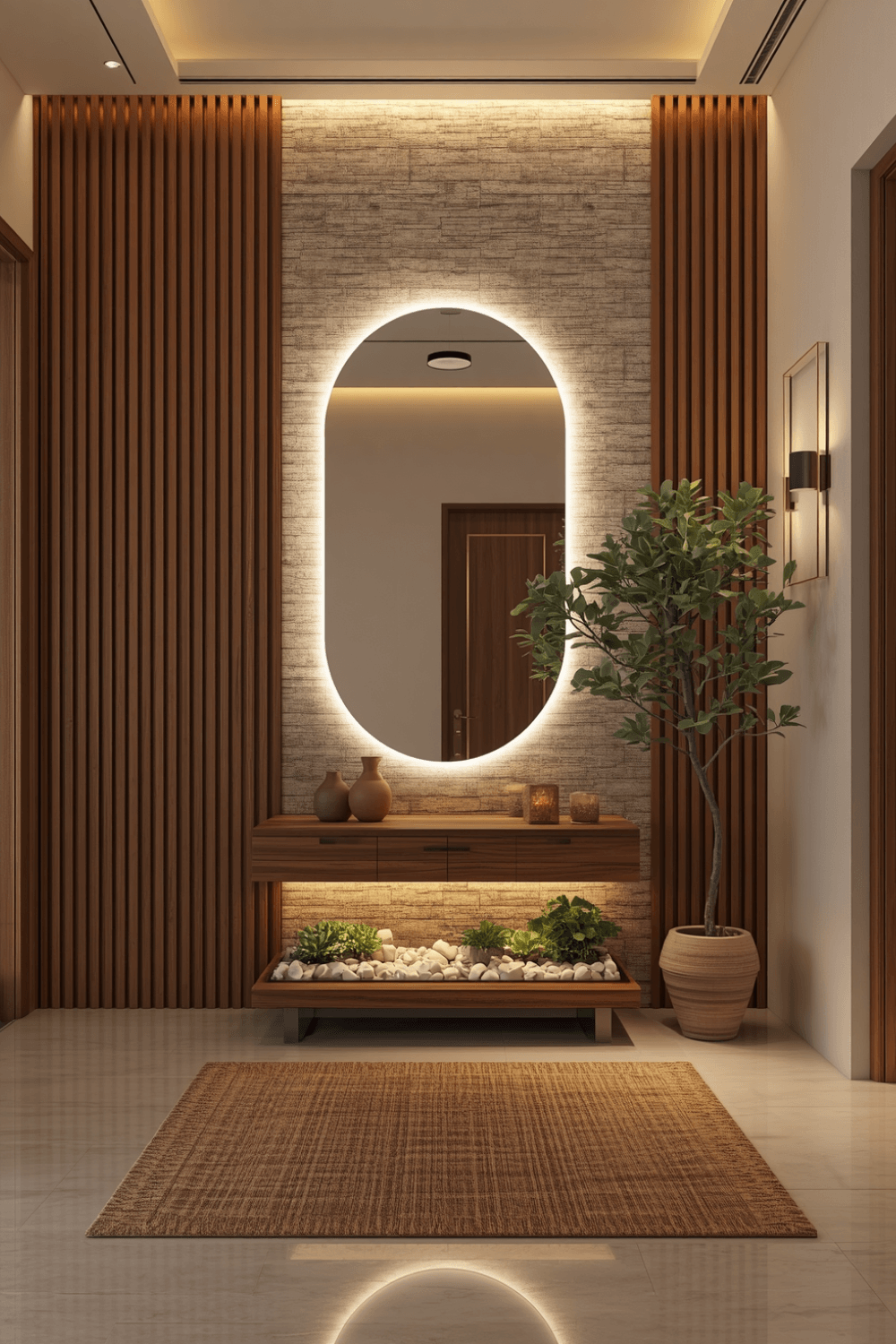
I learned this the hard way with my first console table. Now I look specifically for drawers, closed cabinets, or baskets underneath any entryway furniture, since open surfaces alone almost always end up as clutter magnets in a high-traffic spot like this.
3. Add a dedicated spot for keys and mail immediately
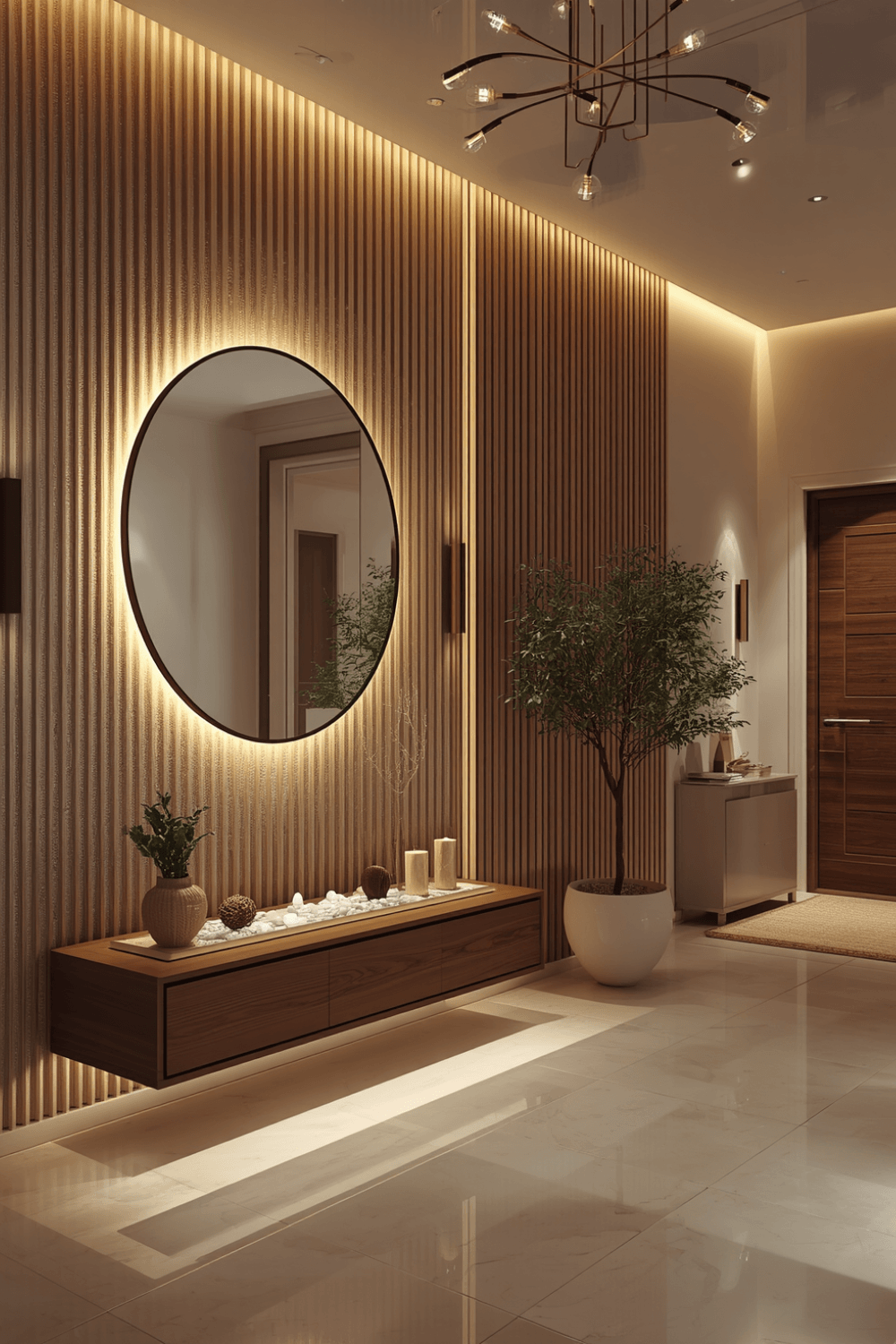
I mounted a small wall-mounted key rack with a few hooks right beside my front door, plus a shallow tray on my console table specifically for mail. Having a designated spot for these two things alone eliminated most of the random pile-up I used to deal with constantly.
4. Include real seating if you have the space
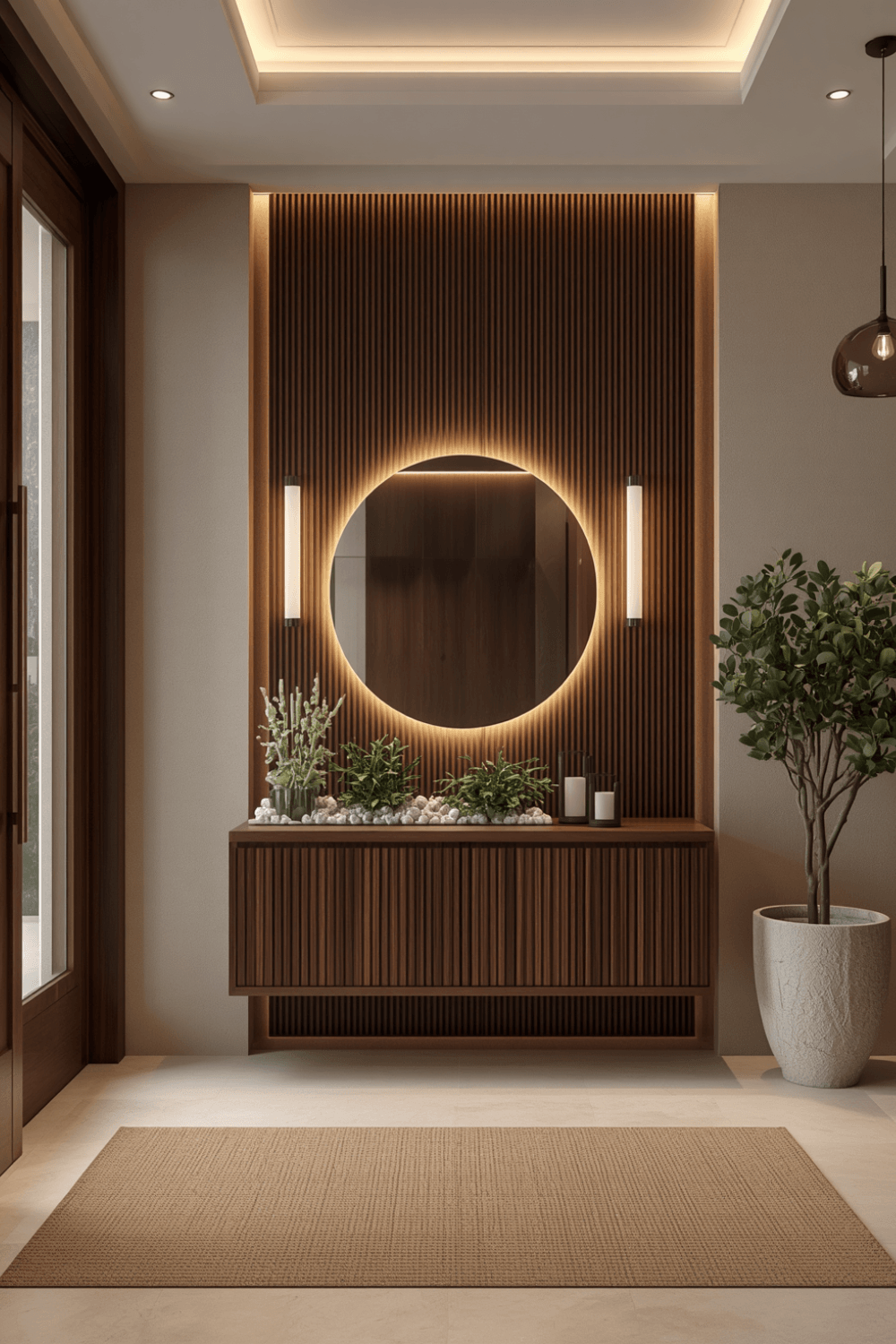
I added a small bench with storage underneath for shoes, which turned out to be one of the most-used pieces I’ve ever bought for this house. Even a narrow spot fits a slim bench, and it makes putting shoes on and off so much easier than balancing on one foot in the doorway.
5. Use a statement mirror to add light and depth
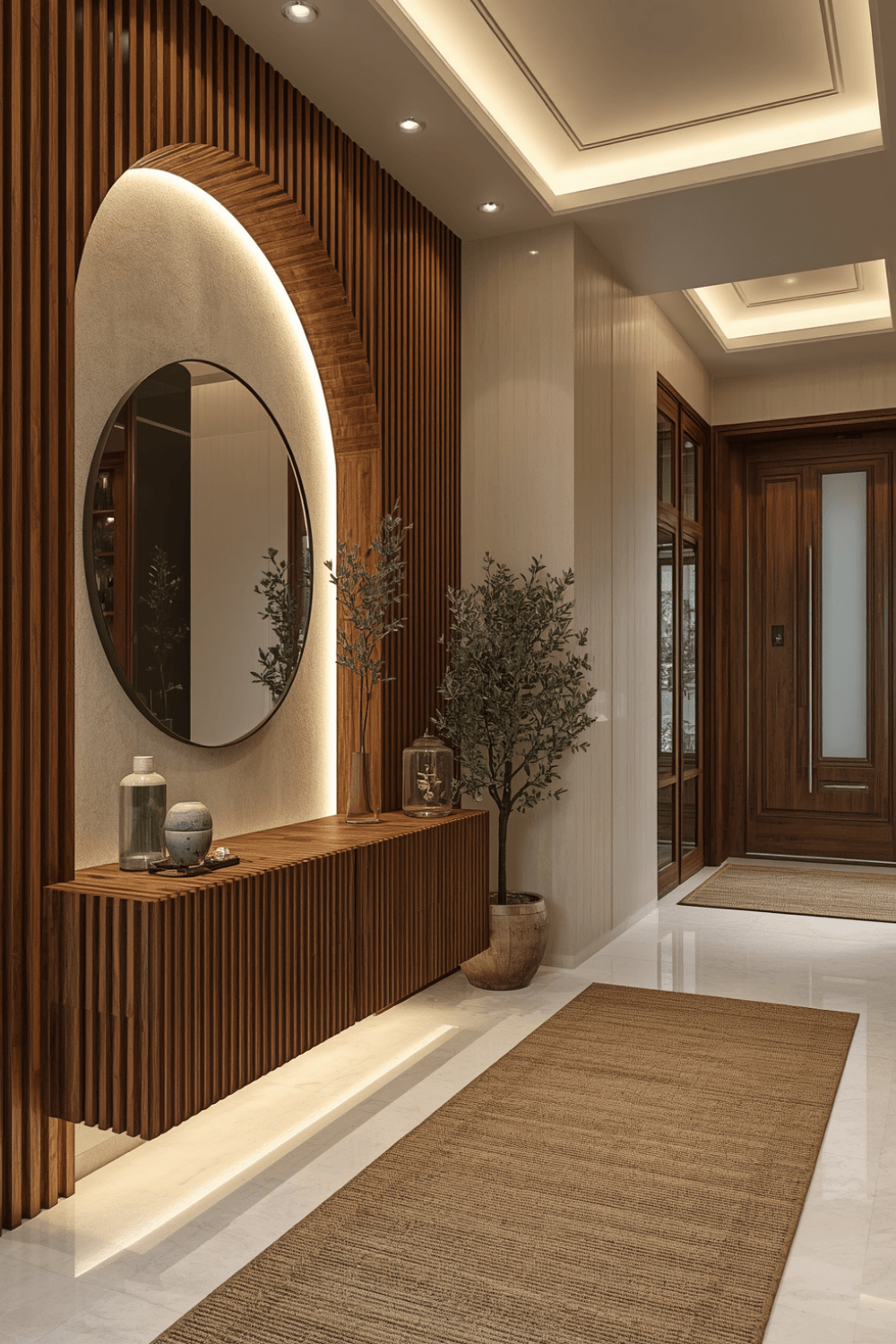
I hung a large arched mirror above my console table, and it made the whole entryway feel brighter and bigger immediately. It also serves an actual daily purpose — a last-look mirror before heading out the door, which genuinely gets used every single day.
6. Layer in lighting beyond the overhead fixture
My entryway had one weak overhead light that made everything feel dim and uninviting. I added a small lamp on the console table and a plug-in wall sconce near the mirror, and the warmth from that layered lighting changed the whole mood of walking in the door.
7. Add one meaningful decorative touch, not several small ones
I keep a single large vase with seasonal branches or flowers on my console table instead of a cluster of small decor pieces. In a tight entryway space, one intentional item reads as more luxurious than several competing for attention on a small surface.
Real Examples From People I Know
A friend with an even smaller entryway skipped a console table entirely and used a slim wall-mounted shelf with hooks below it instead, which kept the floor completely clear for walking through. It’s a great option if floor space is genuinely too tight for furniture.
Another friend transformed a wider entry hallway with a full bench, storage baskets underneath, a row of hooks above, and a large runner rug leading into the space. Because everything had a clearly defined spot, it stayed organized even with two kids constantly dropping bags and shoes there.
Common Mistakes to Avoid
Choosing furniture based on looks without considering storage. This alone caused most of my original entryway clutter problem.
Skipping a dedicated spot for keys and mail. Without one, these items end up scattered across whatever surface is closest.
Relying on a single overhead light. Layered lighting makes a much bigger difference in a small entry space than people expect.
Overcrowding a small surface with too much decor. One intentional piece usually reads as more polished than several small items competing for space.
Ignoring seating if you have even a small amount of room. A slim bench gets used daily and makes the whole space feel more functional.
Final Thoughts
My entryway went from an embarrassing pile of shoes and mail to genuinely one of my favorite small spaces in the house, and the shift happened because I finally designed it around what actually happens there every day instead of what looked good in a photo. The console table swap alone fixed most of the daily chaos I’d been dealing with for years.
If you’re working on your own entryway, start by tracking what actually lands there daily, prioritize real storage over pure style, and don’t underestimate how much a good mirror and layered lighting can do in even a genuinely small space. That combination is really what made mine finally feel intentional.