Modern Living Room Ideas That Actually Work (Real Layout Tips)
Modern Living Room Ideas: What I Learned After Rearranging Mine About Five Times
I used to think furniture shopping was the hard part of decorating a living room. Turns out, the hard part is everything that happens after you get the furniture home. I bought a beautiful sectional couch, dragged it into what I thought was the perfect spot, and then spent the next two months constantly annoyed that the room felt cramped and off-balance every time I walked in.
It took a genuinely embarrassing number of furniture rearrangements before this room finally clicked. I’m talking full weekends spent moving a couch around by myself, texting my sister photos asking “does this look weird So if your living room feels almost right but not quite, here’s what actually fixed mine.
My Biggest Furniture Facing the Wrong Focal Point
For the first few months, my whole seating arrangement faced the TV and basically nothing else. It worked fine for watching shows, but the second anyone came over to actually talk, everyone ended up awkwardly twisted sideways on the couch.
I finally rearranged everything to create a proper conversation area — couch and two chairs angled toward each other with a coffee table in the middle — and kept the TV as a secondary focal point instead of the only one. That single change made the room feel like an actual living space instead of a home theater.
Step-by-Step: Building a Modern Living Room That Works
1. Measure your room before buying anything
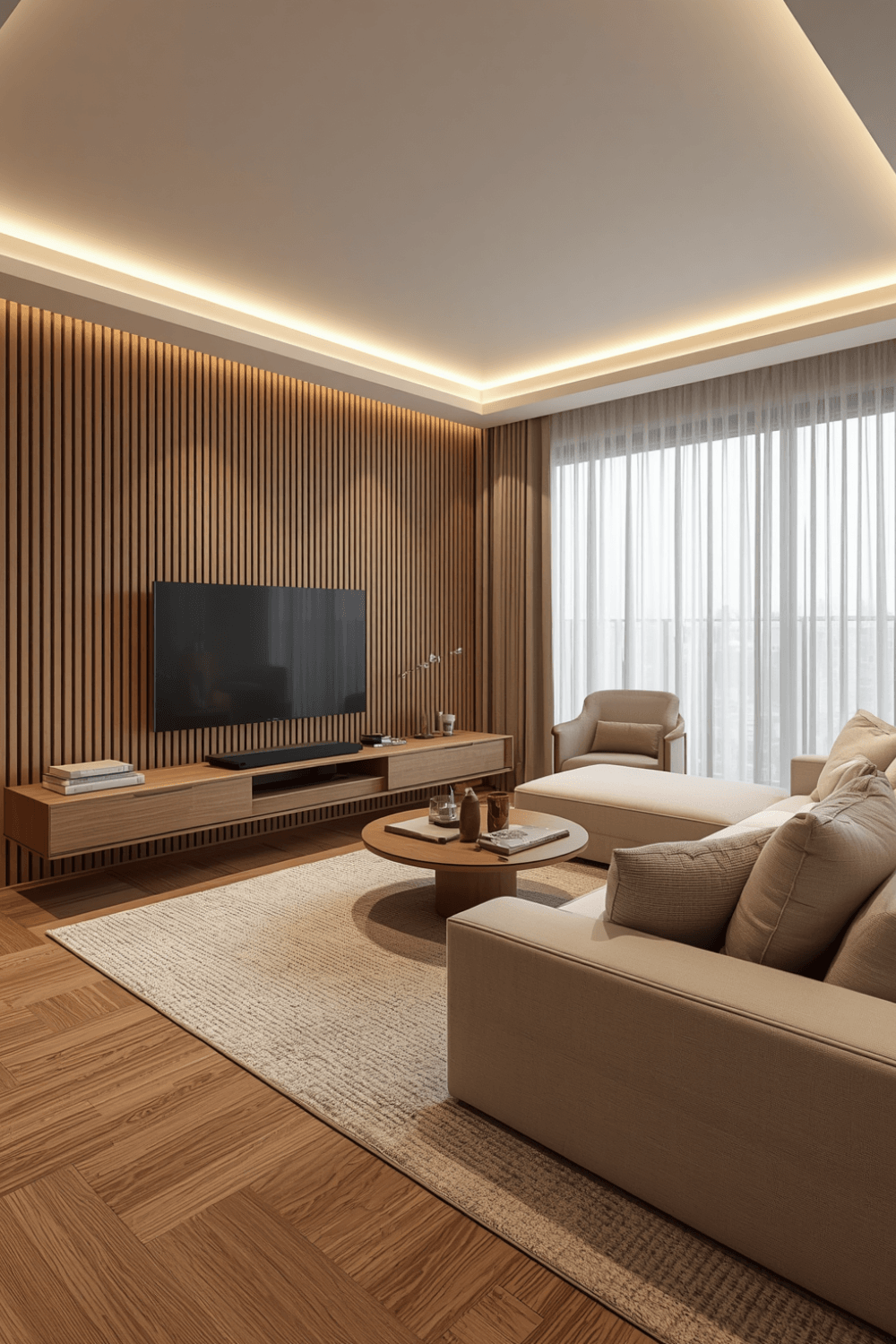
I learned this the hard way. My first sectional was almost too big for the space, and I spent weeks squeezing past the arm of it just to get to the window. Now I use a free app called MagicPlan to map out room dimensions and test furniture placement digitally before committing to anything.
2. Create a real focal point, not just a TV wall
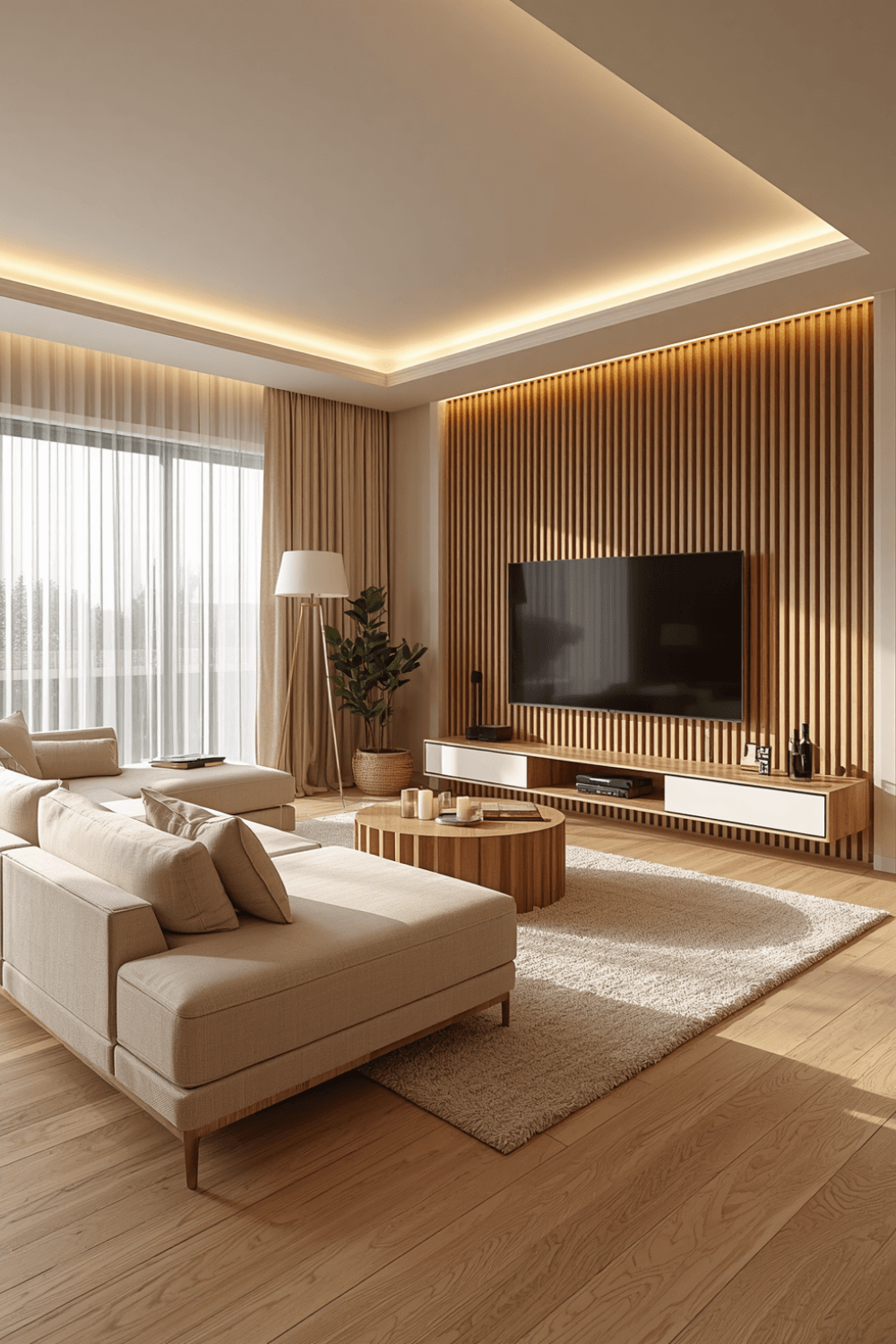
Pick something to anchor the room — a fireplace, a big window, a piece of art, or even a well-arranged bookshelf. My room didn’t feel complete until I added a large mirror above the console table across from the seating area. It gave the eye somewhere to land besides the TV.
3. Float furniture away from the walls
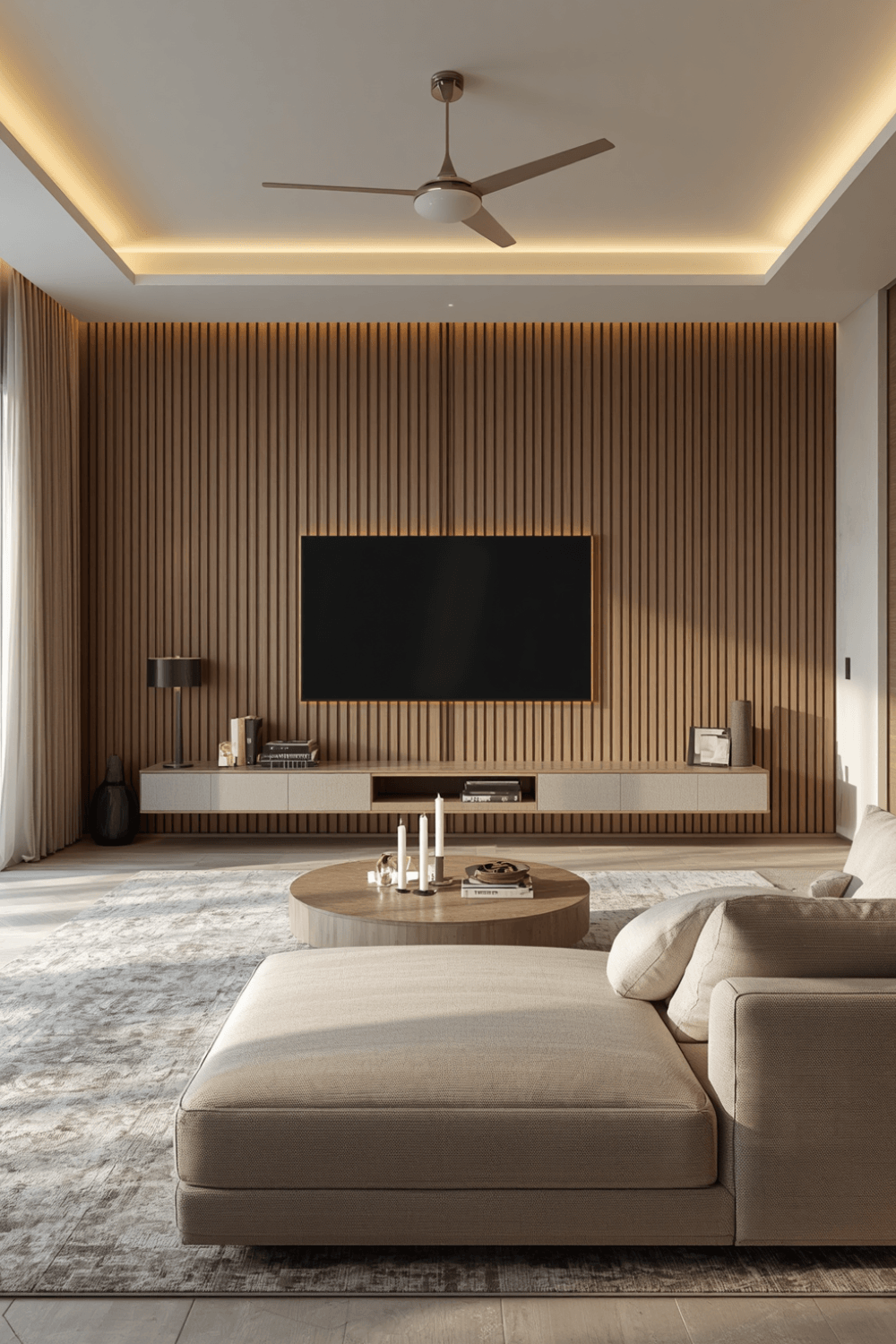
This felt counterintuitive at first, but pushing everything against the walls actually made my room feel bigger and emptier at the same time, if that makes sense. Pulling the couch a few feet off the wall and adding a console table behind it created a much more intentional, layered look.
4. Stick to a simple color base, then layer texture
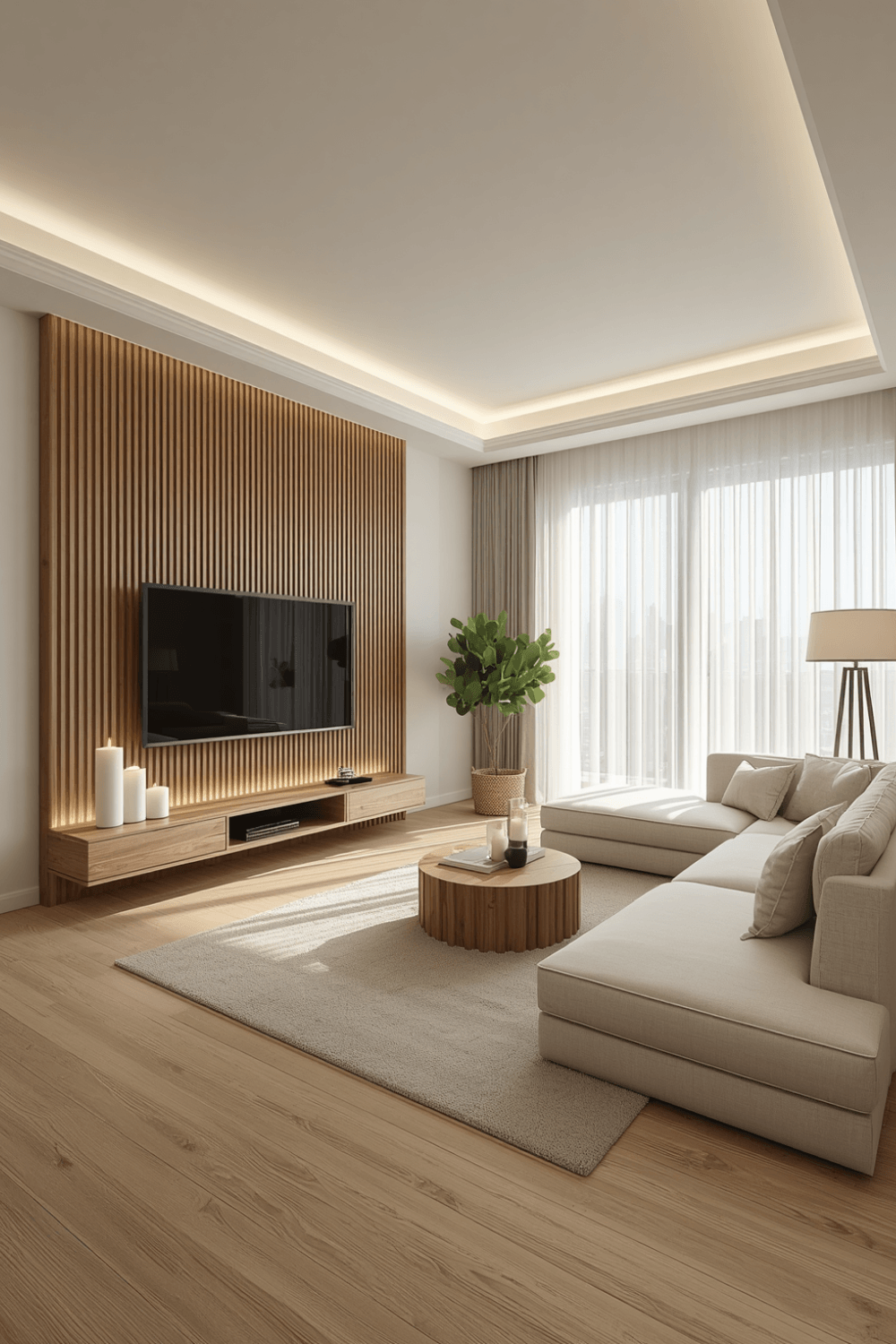
I kept my walls a warm greige and my big furniture pieces neutral, then added texture through a chunky knit throw, a jute rug, velvet accent pillows, and a couple of wood elements like my coffee table and shelving. Texture is what keeps a neutral room from looking flat or boring.
5. Use a rug that’s actually big enough
My first rug was way too small — just the coffee table sat on it while the couch legs floated off the edge. It made the whole seating area look disconnected. Now my rug extends under at least the front legs of every major piece of furniture, and it instantly ties the space together.
6. Layer your lighting instead of relying on one overhead fixture
A single ceiling light left my room feeling flat and a little clinical in the evenings. I added a floor lamp near the reading chair, a table lamp on the console, and a smart bulb setup through Philips Hue so I can dim everything and shift the color temperature depending on the time of day.
7. Leave breathing room, don’t overfill it
My instinct was to keep adding furniture and decor until every surface had something on it. A friend who works in interior design told me to remove one item from every surface once I thought I was done, and she was right — the room immediately felt calmer and more intentional.
Real Examples From People I Know
A friend with a small apartment living room swapped her bulky sectional for a smaller loveseat and two accent chairs instead, which actually opened up more usable floor space and made the room feel bigger, not smaller, despite having “less” seating on paper.
Another friend focused his whole budget on one large statement piece — a curved boucle sofa — and kept everything else around it simple and neutral. Years later it’s still the first thing people mention when they walk into his apartment.
Common Mistakes to Avoid
Buying furniture before measuring the room. This alone caused most of my early frustration and a couple of expensive return shipping fees.
Pushing everything against the walls. It often makes a room feel more disconnected, not more spacious.
Using a rug that’s too small. If your furniture legs aren’t at least partially on the rug, it tends to make the whole layout look unfinished.
Relying on one ceiling light for everything. Layered lighting changes the entire mood of the room, especially in the evening.
Overfilling every surface. A little empty space actually makes a modern room feel more intentional, not incomplete.
Final Thoughts
My living room didn’t come together in one weekend, no matter how much I wanted it to. It took several rounds of moving furniture, returning a rug that didn’t work, and finally understanding that “modern” needed some warmth mixed in to actually feel comfortable, not just look good in photos.
If you’re working on your own space, start with a real focal point, measure everything twice, and don’t be afraid to rearrange it a few times before it clicks. Mine went through five different layouts before I landed on the one that finally felt right.